
Tagged: Mui Wo

Randy Yu sounds alarm on Mui Wo population growth
District Councillor Randy Yu has called on government, police and transport providers to explain how they will cope with Mui Wo’s coming population boom.
The opening of two Housing Department estates in Mui Wo next August will add 700 new homes and increase the population by between 1,700 to 2,000 – a huge spike from the current level of around 5,400.
“The public is greatly concerned about the lack of community facilities,” Yu said in a question tabled to the Islands District Council.
Local residents are worried about the carrying capacity of the ferry and bus services, inadequate parking for cars and bikes, the level of medical services and the lack of police.
Yu, who represents South Lantau, said his office has even received calls from those who have purchased homes in the new estates expressing concern about the expensive ferry fares.
He called on the Transport Department, the Hospital Authority, police and the ferry and bus companies to attend next week’s District Council meeting to explain how they will address these issues.

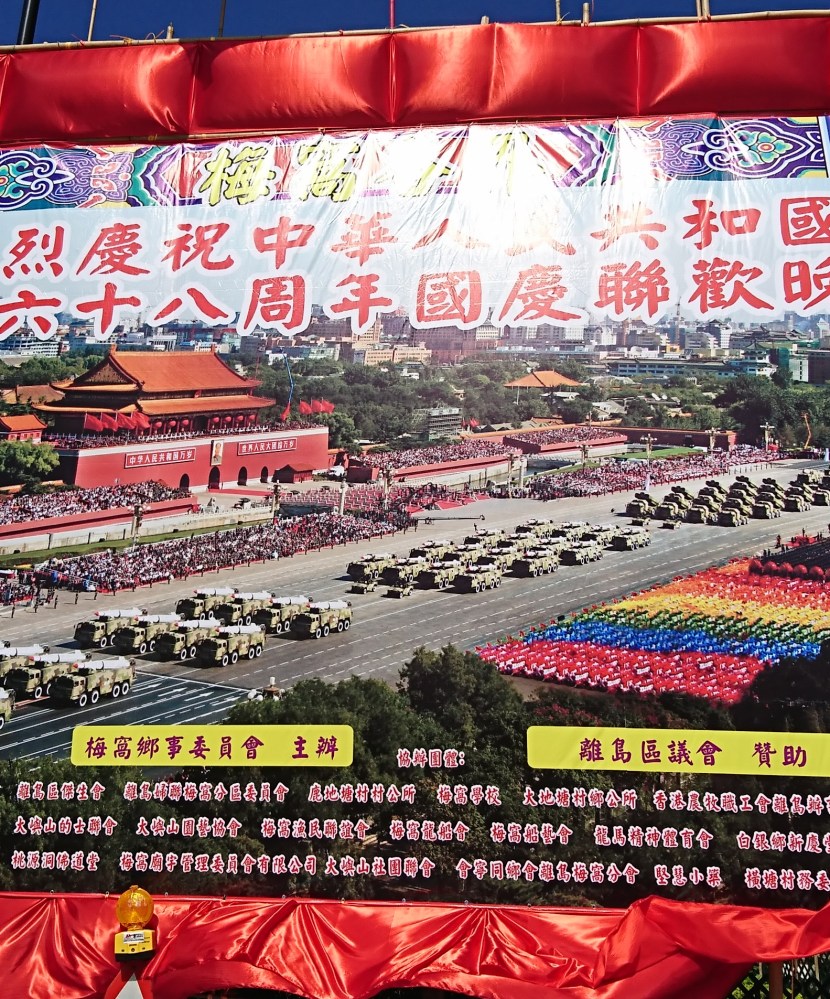
(Photo) Rural committee celebrates holiday with military theme
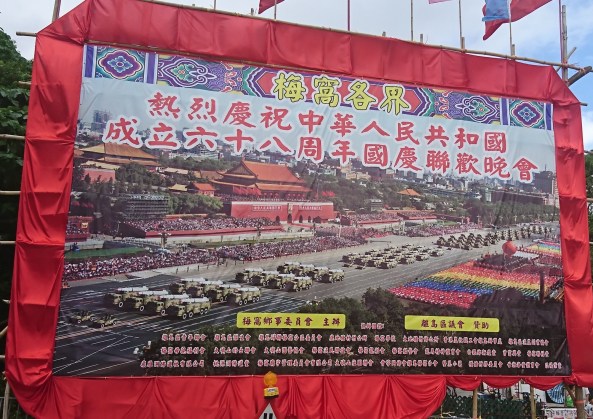
Mui Wo Rural Committee has erected this military-themed billboard to celebrate the October 1 holiday.
It announces an evening’s entertainment, though it doesn’t say when or where.
Translation: “Evening event to warmly celebrate the 68th anniversary of the establishment of the People’s Republic of China National Day. Organiser: Mui Wo Rural Committee. Sponsor: Islands District Council”
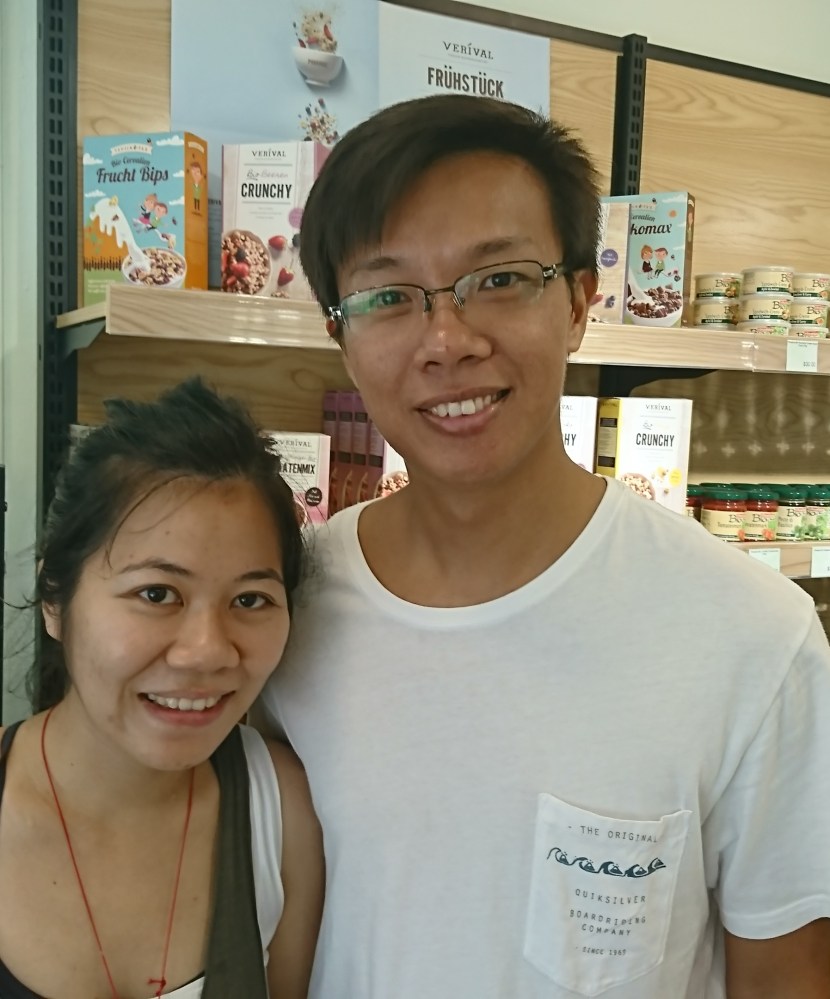
Greenstyle offers chemical-free and certified organic
The latest on Mui Wo’s increasingly diverse retail scene is Greenstyle, an organic store selling green foods and products.
Opened two weeks ago, the store is run by local couple Gary Tsang and Edith Ng. Gary previously used to sell solar and wind power equipment, while Edith worked in cosmetics.
“We use natural rather than chemical ingredients,” Gary said. As well as selling the products, “we want make more people understand more about the environment.”
Since last week Greenstyle has been selling fresh vegetables, including kale, tomato, carrots, red beetroot and sweet potato.
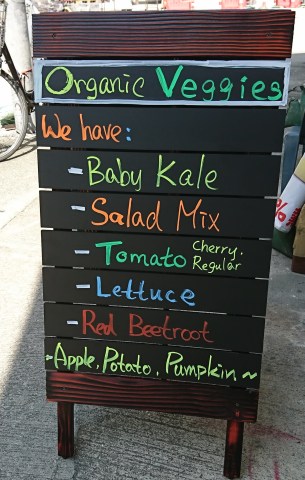
The vegetables are sourced from Ecofarm, an FDA-certified farm in Jiangxi, China, run by two former Hong Kong University professors.
Gary, whose grandfather has a farm in Cheung Sha, says he’s next planning to buy from local Lantau organic farms. An online store for the website is also on the way.
As well as food and snacks, Greenstyle stocks skincare, healthcare, natural household and baby food products. Most are imported through a local agent.
What: Greenstyle
Where: Shop J, Sea View Building, Mui Wo (opposite Park’n’Shop)
Web: www.hkgreenstyle.com
Contact: Email garytsang@hkgreenstyle.com Phone 2981 8860
Calls to investigate ‘suspicious’ Mui Wo rural land deals
A Mui Wo village leader was directly involved in six village house transactions and connected to another three in the space of two years, prompting calls for the transactions to be investigated.
Civic Party leader and barrister Tanya Chan said while there was no clear evidence that small house rights were being sold, the land sales were “suspicious” and should be scrutinised.
Eddie Tse from the Save Lantau Alliance (SLA) said the transactions by Luk Tei Tong village representative Lee Kwok Keung and his wife were “intriguing,” especially when they involved residents from other villages. He called for the Lands Department and the Town Planning Board (TPB) to probe the deals.
According to the Ming Pao newspaper and the SLA, Lee and his wife sold land that was used to build six indigenous houses, while another three are applying for approval to build.
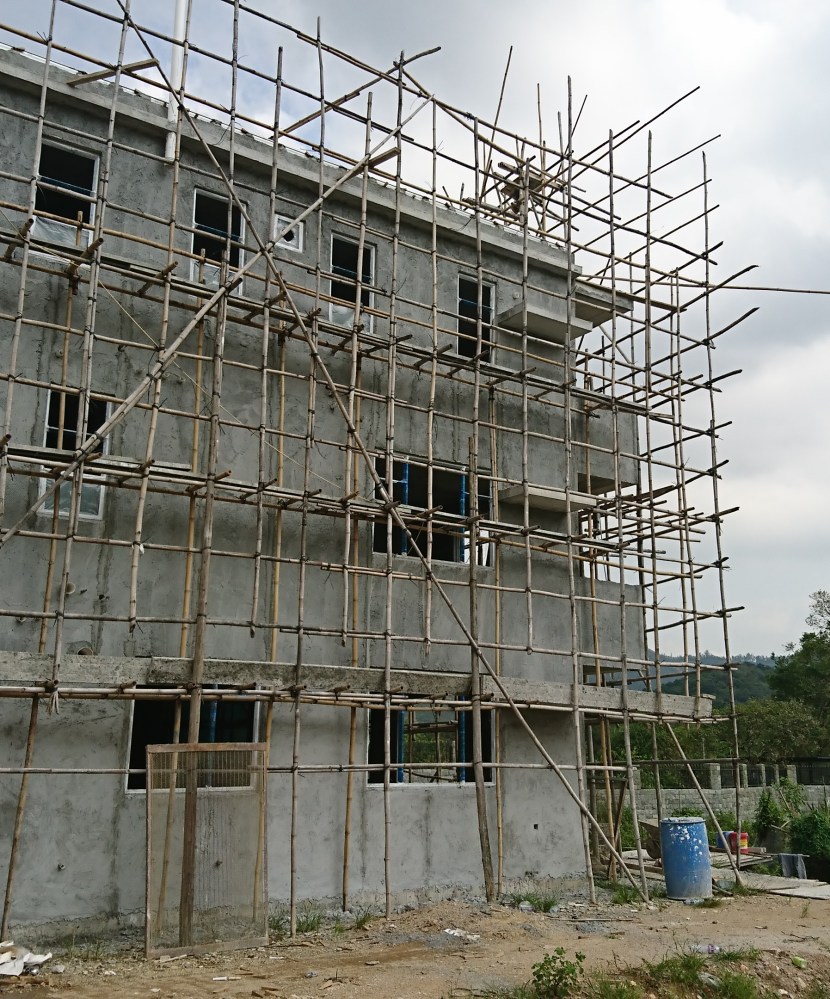
One plot of land, lot 288, was broken up and sold to six different buyers, including five from other villages.
Land sale contracts show Lee bought the lot for just under HK$2.78 million in 2011, and then selling it as six separate plots over 2012-2013 for HK$2.24 million – HK$540,000 less than he had paid. Every transaction was authorised by the same lawyer, Lee Kwok Yung.
Subsequently, a number of applications were made to build ding houses on those sites, which were approved in 2015 and 2016.

Lot 288
The six small houses, many with the same external appearance, have now been nearly completed.
Five of the buyers have addresses outside Mui Wo, including one in Australia, land sale documents show. Ming Pao reporters could not locate any of the buyers.
Lee’s wife, Fanny Mok Suk Fun, was involved in buying and selling another plot of land on the edge of Luk Tei Tong, lot 308. She had acquired it for HK$700,000 in 1999, split it into three pieces, and sold them off in 2004.
Then on the same day in 2008 Mok and a Ms Au-yeung Yuet-lan repurchased two of the lots at exactly the same price (HK$198,000). In 2014 the two lots were sold separately for the same price (HK$208,000) to two people now applying for ding approval. Both transactions were also executed by Lee Kwok Yung.
The third piece of land is also subject to a TPB application for building approval.
Speaking to a Ming Pao reporter by phone, Lee confirmed he had sold the land to residents of other villages and as village representative had dealt with the six small house applications.
However, when asked about his wife’s role the call dropped out. Reporters were unable to re-establish contact, and text messages were not returned.
The number of cross-village ding transactions in Lantau has soared since then-CE CY Leung announced ambitious Lantau development plans in his 2014 policy address.
In the two years prior, just three applications had been filed. But after the development plans were unveiled, the number of applications spiked to six in 2014, 14 in 2015 and six in 2016.
Under the Basic Law, indigenous male villagers are given the right to build a house on rural village land, but the system is open to abuse and, outside the privileged community of indigenous villagers, dissatisfaction is high.
Two years ago Sha Tin villagers were jailed for selling off ‘ding’ rights to a developer, and a 2015 Civic Exchange survey found that nearly two-thirds want to see the policy change.
However, successive chief executives, who hold power with support of rural bodies, have shown no interest in reform.

Residents head to the beach to clean up after Hato
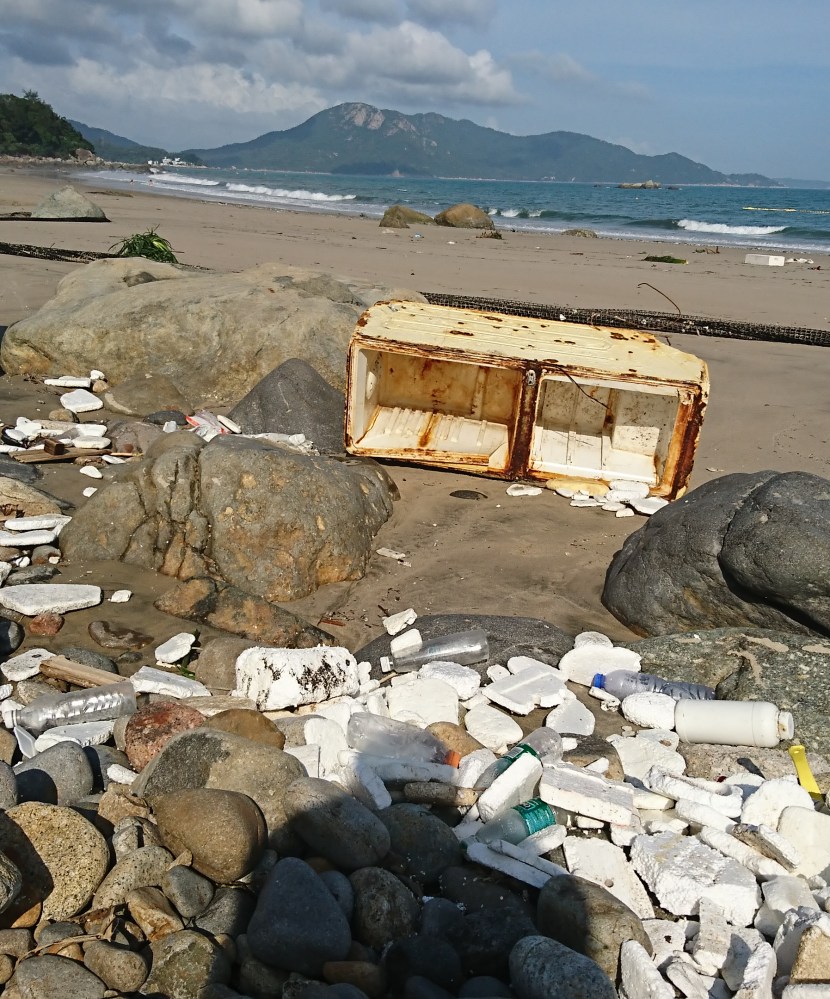
Local residents have organised beach cleanups for Cheung Sha and Silvermine Bay in the next two days.
Cheung Sha’s Frankie McYuen has called for help in removing rubbish from the beach Friday afternoon. He is generously laying on a barbecue and salad for all participants, starting from 4pm. He adds:
I have co-ordinated with the beach cleaner contractors so we will have some gloves, rakes and rubbish bags. (Approx. 20 sets)
Please bring your own tools if you have. And remember sunscreen, hats, spare T-shirts can always help.
Cheung Sha Beach today (Photo: Frankie McYuen)
In Mui Wo, Daphne Chu, who organised the palm oil cleanup of Pui O Beach two weeks ago, has called for volunteers to gather at Silvermine Beach at 9:30am on Saturday.
She advises participants to bring their own gloves and water. Register on Facebook before 5pm August 25.
Bringing the Chile vibe to Mui Wo
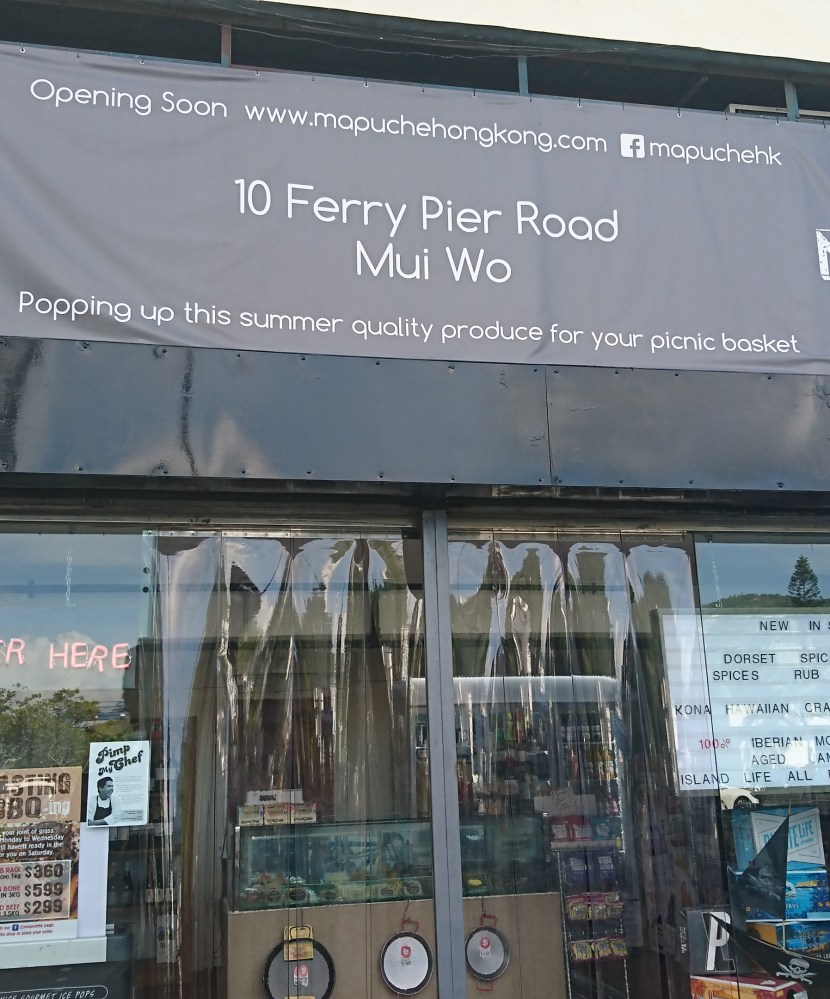
South Lantau has its first taste of Chile. Mapuche, which sells Chilean meats, cheeses and wines, opened in Mui Wo a month ago. Lantau News spoke to owners James and Paola.
How did you come to be on Lantau?
James: I came back to Hong Kong nearly four years ago. We had been running big Spanish restaurants in Central London. That’s how we met. I’m a restaurateur. I was running three to four restaurants, but it became a bit much after our twins were born.
I had money saved up, so we went first to Chile, where Paola is from. I got involved in a restaurant tech but Chile wasn’t quite ready for it. And my Spanish was pocito.
I grew up in Hong Kong, and my dad who lives in Tung Chung suggested we come back.
What gave you the idea for Mapuche?
James: Our idea was to do tapas tasting covering the 14 viticultures of Chile. The wines and the food that go together.
Myself, I’ve opened lots of big restaurants and closed lots of big restaurants. We’re not trying to be too ambitious. This is a project of love for me and my wife.
This is a project with my wife and hopefully it will take me away from town and we can become full islanders one day. My wife is the hero here – she is the person that is working every day and making it happen.
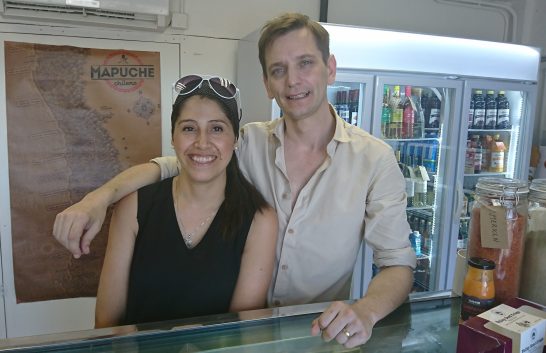
What does ‘mapuche’ mean?
Paola: The Mapuche are the indigenous inhabitants of Chile.
Why did you choose Mui Wo?
James: We started coming down here and we loved it. More recently we have engaged with the shopkeepers and the bar people here. Everyone has been so nice.
Paola: Because it’s a community. It’s nice to go around and everyone says ‘good morning’, ‘good afternoon.’ Lantau is very nice – it reminds me of Chile, especially South Lantau. Hong Kong is too big for me, especially with the twins.
What are you selling in Mapuche?
James: We started off with mainly Spanish products, the cheeses and the hams. The idea was stuff you could take to the beach that was not available in the supermarket, artisanal stuff – premium light chorizos, hams, stuff you can grab and chuck in your picnic basket.
We buy what we like to eat. Nothing here is available in the supermarket – the wines are all unique Hispanic varieties.

The idea was to call it ‘box my picnic’ – it was supposed to be a popup. But we realised people want the choice and the service. They want someone who knows about the wine.
Apart from the store, what else?
We’re doing these events called Pimp My Chef, where we bring a Chilean chef around to your house. These are the kind of events we hope to start doing just to get the idea of our food out there. We are tasting three different wine flights, with three different ceviches, with three different cuts of meat and three different reds from Chile.
We would like to turn this into a more café style shop experience, where you could come for coffee, light tapas, glass of wine. Very family-oriented and informal – you can bring your kids.
We have another floor upstairs we would like to use as a supper club. We would like to make it a tourist destination, pick people up by junk from Pier 9, bring them here for a dining experience for a few hours. That’s where we see some massive potential.
What: Mapuche
Where: Shop B, 10 Ferry Pier Road 10, Silver Centre, Mui Wo
When: Monday-Sunday 11am-9pm
Web: http://www.mapuchehongkong.com/
Facebook: https://www.facebook.com/mapuchehk/
A masterclass in waffle: govt officials meet Lantau community
In Hong Kong, public consultations are like elections; they happen but they mean little.
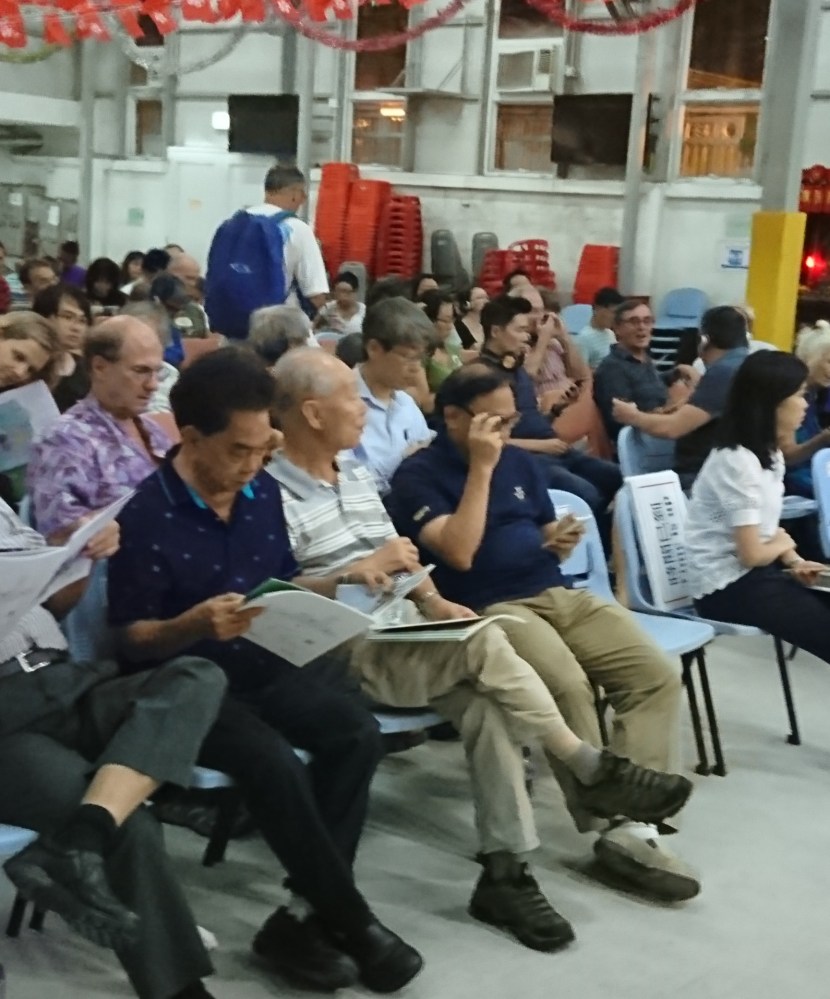
Last night’s meeting between officials from the CEDD and the Planning Dept and the Lantau community was a prime exercise in box-ticking.
After the forum Mui Wo resident Tom Yam, an outspoken critic of the development plans, posted an open letter to Robin Lee, the CEDD director for Lantau, pointing out the brief and tokenistic nature of the event.
If there were a highlight, it was probably from Robin Lee himself, who gave us a masterclass in dissimulation. If he were in Legco, he could singlehandedly sustain a filibuster.
Despite, or because of this, he occasionally managed get on multiple sides of the same issue.
On the vexed topic of cattle – something he acknowledged he knew nothing about – Lee suggested people should learn to live with cattle and buffalo while at the same time the animals should be shipped off elsewhere.
He railed against the idea that the Sustainable Lantau Office was loaded in favour of engineers over conservation experts (as reported yesterday, the top three layers of management are all engineers and planners), or that engineers lacked environmental knowledge.
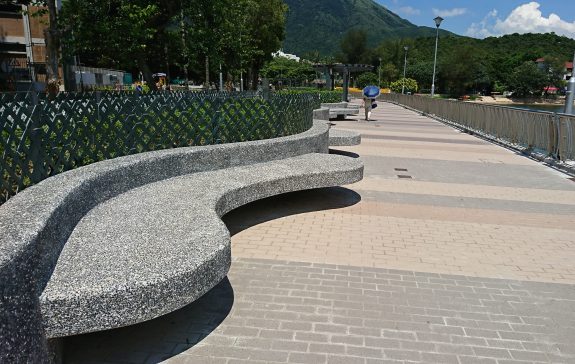
Lee said all engineers had to work with the environment, and he personally had been working on environmental issues since he graduated. Perhaps this is what he means:
The meeting had time for just 15 questions in 45 minutes. A slight majority was sympathetic to development plans, and the rest were critical in various ways, including Tai O’s Lou Cheuk-wing, who called for more development at that end of the island.
If one thing emerged it is that Mui Wo will be at the centre of the action, both in development plans and disputes over land use.
The Sustainable Lantau Blueprint urges the preservation of Mui Wo’s “rural township character,” but officials made it clear last night it will be a major population growth centre, starting with the new HOS apartments next year. The East Lantau Metropolis (ELM) envisages a freeway and an MTR running through it.
Meanwhile, since ELM was announced in 2014, there’s been a sharp rise in land deals between Mui Wo villagers. Watch this space.
Mui Wo Swimming Pool closed for cleaning after discovery of faeces
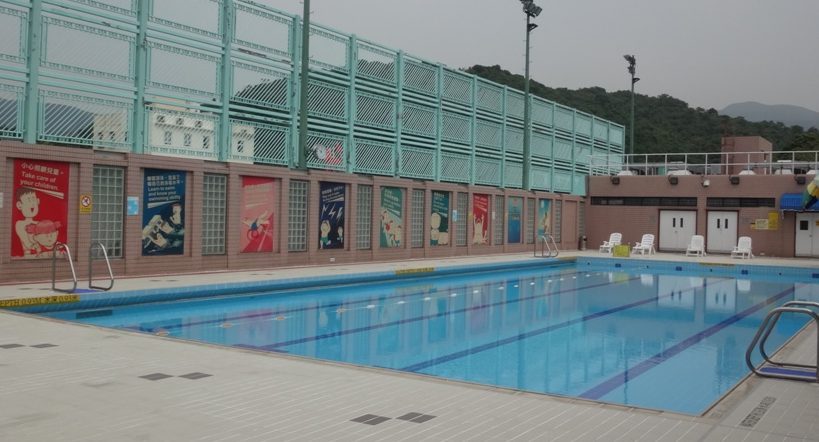
Mui Wo Swimming Pool closed for several hours today after the discovery of faeces in the pool.
The Leisure and Cultural Services Department announced this morning that the pool was “closed for cleaning and superchlorination following the discovery of a small amount of faeces.”
It reopened at 1pm.
“The department appeals to swimmers to be considerate and to keep the swimming pools clean. They are advised not to swim after a full meal and should use the toilet facilities if necessary before swimming,” the statement said.

Theatre production comes to Mui Wo
A first for Mui Woo – Hong Kong’s first Afrikaans theatre production.
It’s based on the true story of Wolraad Woltemade, a South African hero who in 1773 rode his horse into the sea off Cape Town to rescue shipwreck survivors but eventually drowned himself.
Lymari Alberts and director Jan Brink, the two performers in the play, first staged it in 2015.
Lymari had been inspired by a novel about Wolraad’s fiancée Mimi, who was waiting for him to propose to her on the night of the accident. The play Mooi Annie focuses on Mimi and her impatience and anxieties over her future husband.
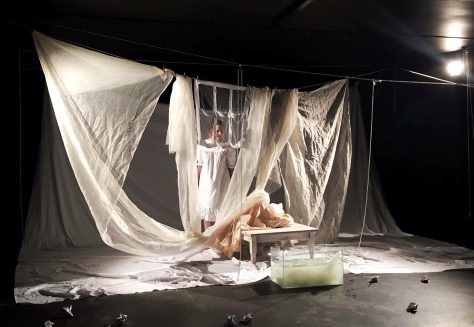
From the 2015 production
Lymari said she and Jan are both recently-arrived in Mui Wo and Hong Kong. “We’re still testing the waters with this being our debut production on Lantau.”
Director and performer Jan Brink describes the show, which will be staged at Stoep at High Tide, as “very interactive. We have simply forgotten the meaning of ‘fourth wall.’
“We have done this before though, so the audience is in safe hands.”
While Mooi Annie is in Afrikaans only, Lymari says her next production, Lungs, by Duncan Macmillan, will be staged twice, once in English and once in Afrikaans, in November.

What: Mooi Anni
When: 6-8pm, Sunday August 20
Where: Stoep at High Tide
Bookings required: Call Stoep 2980 2699 or message via Facebook/Messenger
Mui Wo’s coming population boom
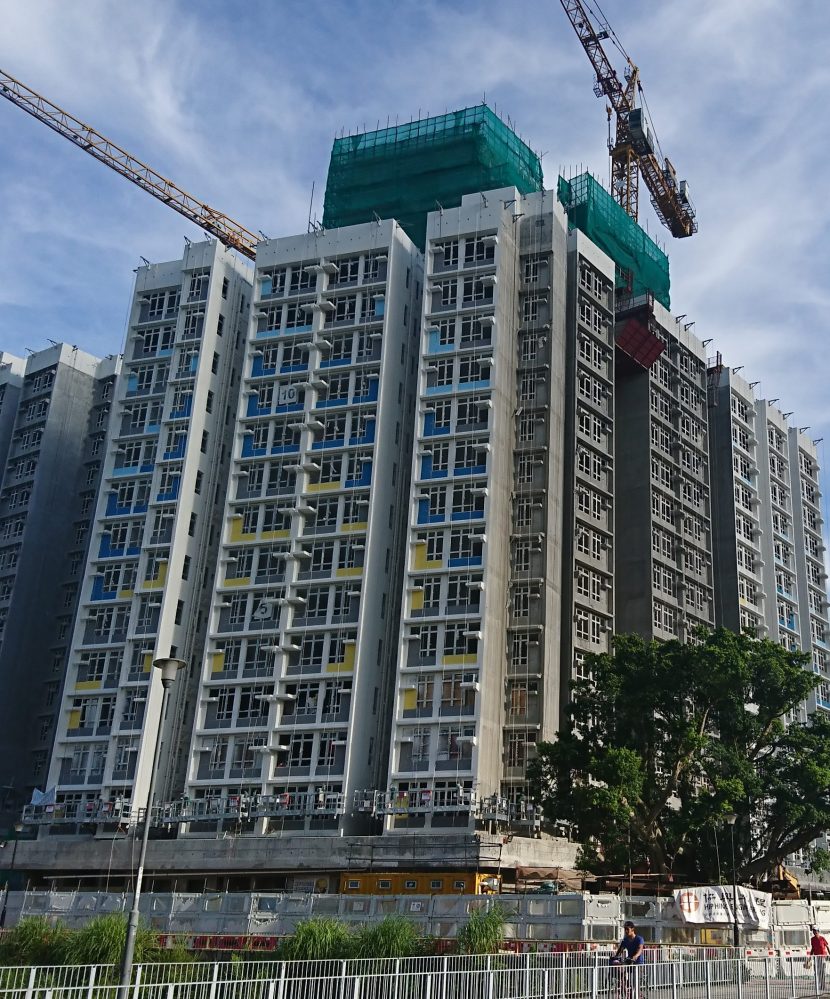
Around this time next year Mui Wo’s population will undergo a sharp expansion with the completion of two new public housing projects.
The new estates, Ngan Ho Court and Ngan Wai Court, will provide 700 new apartments, enough to support approximately 2000 new residents. That means the current Mui Wo population of around 5,500 will increase by 35% or more.
The bigger of the two will be Ngan Ho Court, at the end of Ngan Kwong Wan Road. It comprises two blocks, one 18 and the other 16 storeys, altogether containing 529 apartments.
Ngan Wai Court, which faces the rear of the Mui Wo clinic on Ngan Kwong Wan Rd, is a single 16-storey block with 170 homes.
Q: Why Mui Wo?
The Hong Kong government has built subsidised public housing since the 1950s. Today, 46% of the population lives either in public rental or subsidised sale flats. These new apartments are built under the Home Ownership Scheme (HOS), one of several different programmes aimed at increasing the supply of affordable housing. Dozens of HOS estates provide housing for hundreds of thousands of people, including in Yu Tung, Tung Chung, and Lung Hin, Tai O.
Q: Why this part of Mui Wo?
Most land in Mui Wo belongs to indigenous villagers whose privileges are enshrined in the Basic Law. Ngan Ho is officially zoned in Mui Wo Fringe, while Ngan Wai falls into no zoning plan at all. No indigenous villager in Mui Wo is giving up any of his entitlements to alleviate the housing crisis.
Q: When will people start moving in?
According to the builders, both housing estates will be completed by August 31 2018. New residents will start moving in after the date.
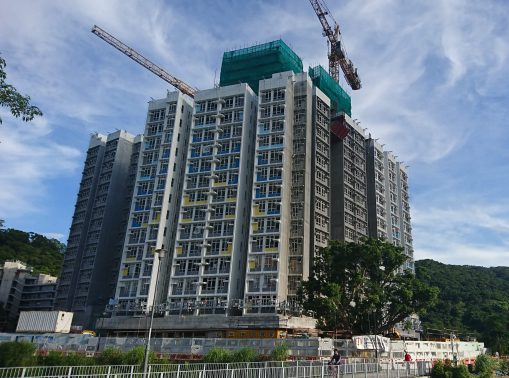
Ngan Ho Court
Q: Are these units to be rented or for sale?
For sale. The sale is carried out by ballot and according to certain eligibility criteria.
Q: These aren’t the first public housing projects in Mui Wo, right?
They’re not even the first on Ngan Kwong Wan Rd. The Ngan Wan Estate, built in 1988, has 400 rental apartments in four tower blocks, with a population capped at 1,300.
Q: That’s a lot of extra people moving in. Can our transport services cope?
We don’t know. The New Lantao Bus Company is considering running double-decker buses to Mui Wo. It says details of its preparations will be contained in a five-year plan for the Transport Department.
New World First Ferry said, in response to a query from Bob Bunker of Living Islands Movement:
“We are collecting the data from related governmental departments in order for us to review and devise the overall sailing arrangements in the following years. Please be assured that we will closely monitor the change of passenger demand and provide appropriate sailing arrangements.”
We will post the Transport Department’s reply when it arrives.
 Lantau Confidential