
Tagged: Mui Wo
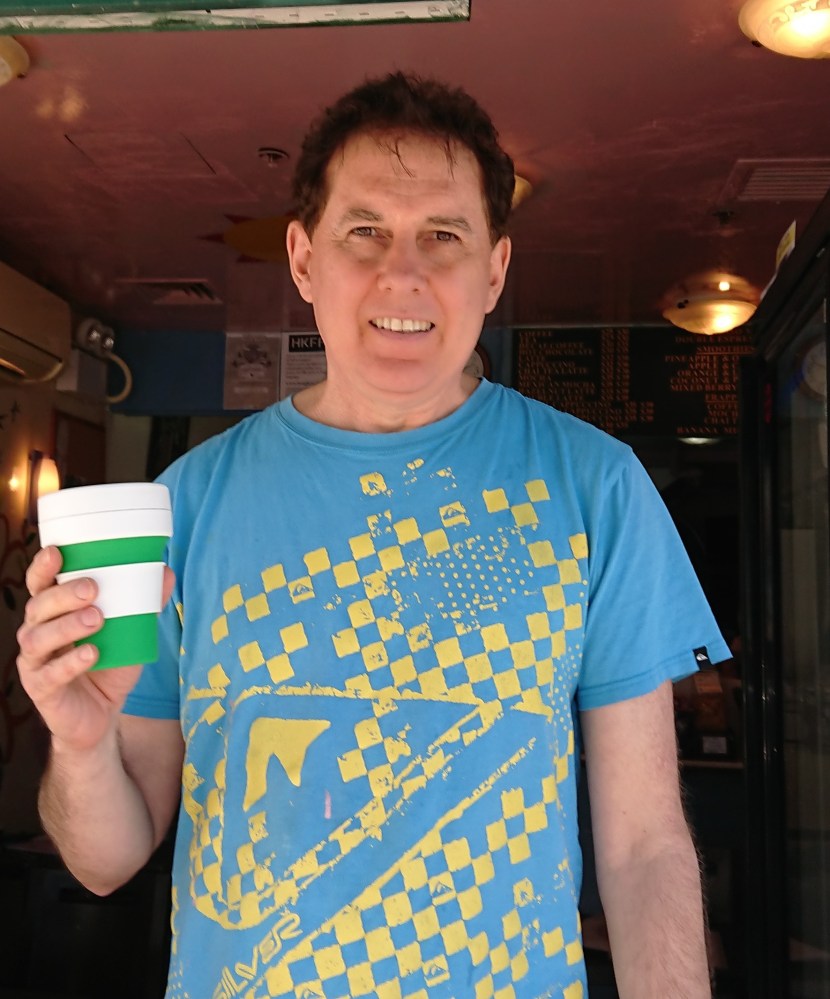
Reusable cups at Caffe Paradiso
Caffe Paradiso coffee shop in Mui Wo has started selling reusable cups.
It is not the first on Lantau to do so, but it is the first to sell these collapsible cups (below).
As Caffe Paradiso owner Tom Midgley explains, “People didn’t like the tall cups sold by Starbucks. They are too big to carry around all day and they leak,” he said.
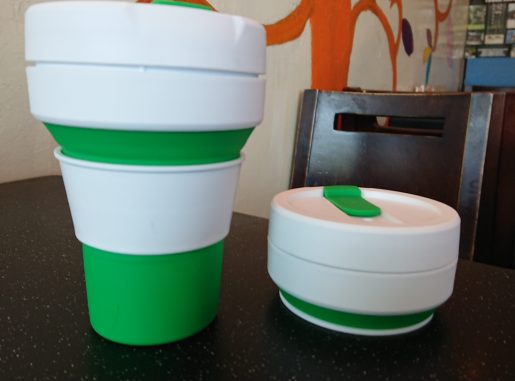
So he tracked down these from a US supplier.
The genius of the design is that the pliable main body, made of silicone plastic, becomes a firm surface by the addition of the white sleeve.
It then collapses into a convenient shape with a sealed lid.
Tom, who’s selling them for HK$120 each, says he’s almost sold out the first pack of 36 in the first week. He has ordered a second batch.
“I’ve already saved a lot of paper cups. And when you think some of those people buy a coffee every day, that’s about 300 cups and lids a year we’re saving.”
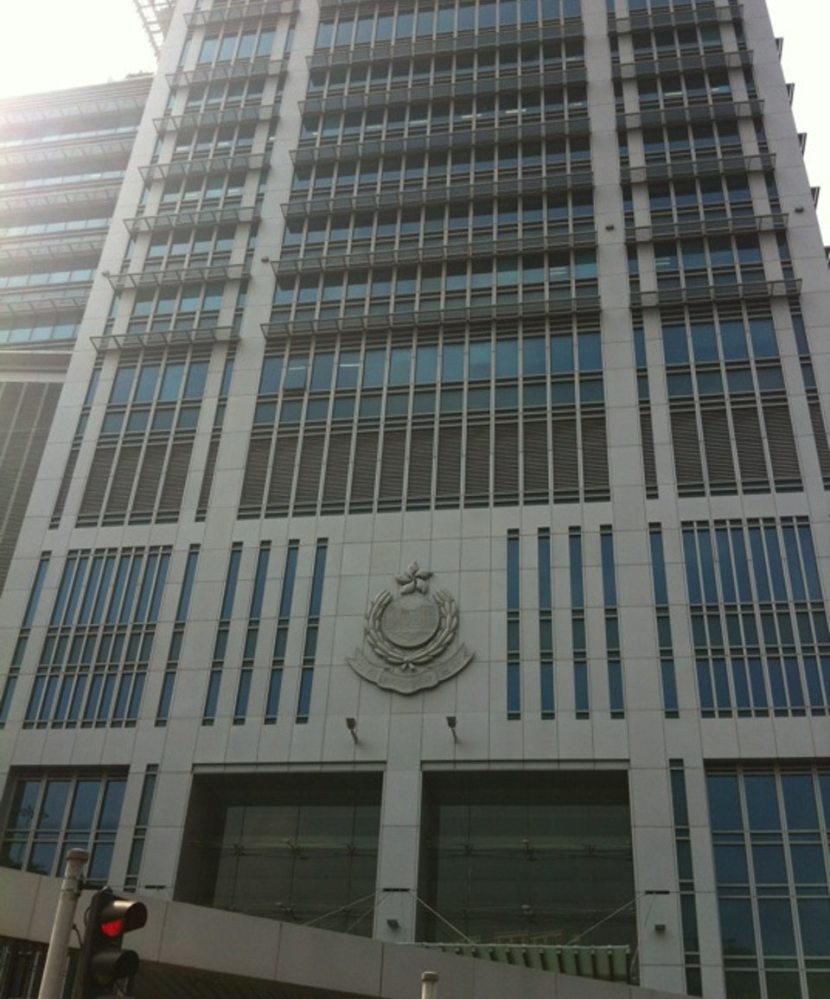
Anti-triad squad investigating Mui Wo car attack
Four men have been charged with criminal damage over an attack on a private car in Mui Wo on Sunday evening.
Anti-triad squad detectives are investigating the incident on Ngan Kwon Wan Road in which a group of men with clubs smashed a car belonging to a 28-year-old man named Yip.
Police later arrested two men, both named Chan, aged 23 and 28, at nearby Ngan Wan Estate. Another two, both aged 20, named Yau and Chan, were arrested at Tung Chung.
Police are still seeking a fifth man, Headline Daily reports.
The case has been put in the hands of the New Territories South Organised Crime and Anti-Triad Bureau.
Photo: Hip Hing
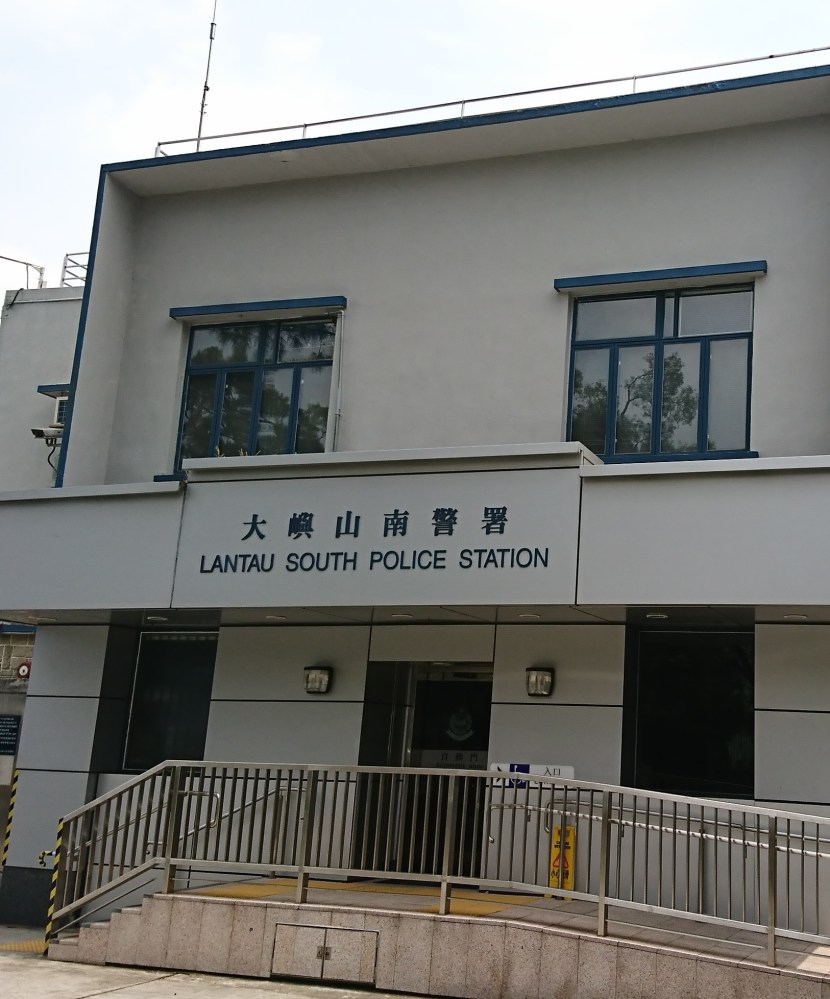
Police seek man over Mui Wo indecent assault
Police have issued a description of a man sought in connection with an indecent assault on Friday evening.
A 63-year-old woman reported the assault at 8pm which she said had taken place on Mui Wo Rural Committee Road .
She said the man was 40-50 years old, 160cm, with a thin build, short hair and wearing white shorts, Apple Daily reported.
A Lantau Police criminal investigation team is handling the case.

A north Lantau-Mui Wo transport tunnel is back on the agenda
A road or rail tunnel – or both – linking north Lantau to Mui Wo is back on the planning agenda, nearly two decades after being rejected on environmental grounds.
A CEDD study on residential development at Siu Ho Wan, east of Tung Chung, discusses the options for building one or both tunnels through the Lantau North Country Park to support future population growth.
It says the Siu Ho Wan development on reclaimed land would house more than 9,000 people, while the expansion of Tung Chung is forecast to add another 170,000 in the next ten years.
The study, by engineering firm Ove Arup, says the route of any new north-south transport connections would depend on the design of the East Lantau Metropolis (ELM). (Notably the study began in 2015 while the ELM was still being discussed by LanDAC.)
The report canvasses two railway tunnel routes to Mui Wo – one from Siu Ho Wan and the other from Tung Chung East station, due to come into service in the mid-2020s.
It says the route from Tung Chung East would be the most feasible, with fewer engineering issues, a lower cost and a direct interface into the MTR system.

Two possible rail routes (Source: CEDD)
The study also considers possible road tunnels to Mui Wo, suggesting the most practical point would be adjacent to the sewage treatment works.
But the potential route faces a number of constraints, including archaeological and scientific sites at Tai Ho Wan, the North Lantau Country Park and the marshes and freshwater sources around Mui Wo.
It says that with the extra population in Tung Chung and Siu Ho Wan, traffic volume on the North Lantau Highway would go beyond the “manageable degree of congestion” after 2031.
The contentious HK$400 billion ELM, built on 1000 ha of reclaimed land in the waters between Lantau and Hong Kong Island, will not be ready until at least the mid-2030s.
In 2000, the Transport Bureau recommended building a tunnel from Tai Ho Wan to Mui Wo instead of widening Tung Chung Road, at that point a narrow one-lane road.
In a decision unimaginable today, this was overturned by the-then Director of Environmental Protection and instead the widening of Tung Chung Road went ahead.
As the Transport Bureau explained:
The Siu Ho Wan study follows another CEDD report which examines the options for rail and road links from Tuen Mun through northeast Lantau to the ELM and Hong Kong Island.
Separately, the government is seeking HK$88 million for a feasibility study on a freeway from North Lantau to Yuen Long, a plan derided by opposition law-makers as a way to take vehicles to the ELM rather than fixing New Territories transport congestion.
Photo (top): Tai Ho Wan
Govt study proposes ELM road and rail links through northeast Lantau
A government study has proposed building road and railway links to the East Lantau Metropolis (ELM) through northeast Lantau, apparently abandoning an earlier plan to connect through Tung Chung and Mui Wo.
A report for the Civil Engineering and Development Department (CEDD) suggests building a ‘District Line’ railway route from Tuen Mun through northeast Lantau to the ELM and then to Hong Kong Island, HK01 reports.
The logical connecting point on Hong Kong Island would be Kennedy Town, the westernmost station on the Island Line. However, the line may not have the capacity, so the alternative would be to build a new station nearby and passengers interchange on foot.
The report also recommends building a road along a similar route, with discussion about where would be the best place to land it on Hong Kong Island.
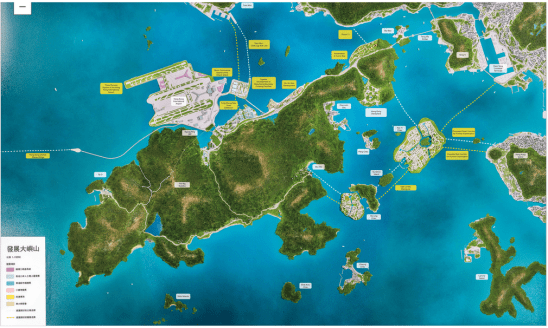
East Lantau Metropolis (Source: CEDD)
Neither of the studies examines transport links from Mui Wo or Tung Chung.
This contrasts with the Sustainable Lantau Blueprint, issued in June, which envisaged a railway connection from Tuen Mun to Tung Chung, then south to Mui Wo and onwards to the main part of ELM via Hei Ling Chau.
According to the Sustainable Lantau Office, a unit of CEDD, a study into Lantau’s internal and external transport networks is also underway.
Yet these reports are being undertaken before the major study into the ELM has begun.
With an estimated HK$400 billion price tag, the 1000ha reclamation in the central waters would be the biggest project in Hong Kong history.
The government is seeking $249 million in cash from Legco to conduct a technical feasibility study, but it has made no economic analysis of the ELM and has no plans to do so.
The project, which is not due to be completed until mid-2030s at the earliest, is premised on a Hong Kong population of more than 9 million. However, the government’s own forecast is that the population will peak at 8.22 million in 2043 and then start to decline.
Mui Wo gym isn’t getting a workout
The government-run fitness centre in Mui Wo is the least-used in Hong Kong, according to figures compiled by a legislator.
Luk Chung-hung, Legco member for the pro-Beijing labour organisation FTU, says the Mui Wo centre was used at a rate of just 14% in 2015 and 2016.
Other under-used government gyms include those at Ap Lei Chau, Kowloon Park, Tseung Kwan O and Peng Chau.
By contrast Ngau Tau Kok, the most heavily-used Leisure and Cultural Services Dept (LCSD) fitness centre, has had a utilisation rate of 98% and 85% in the last two years.
Luk told a press conference last week that the figures show the utilization rate of all 74 gyms is at a long-term low, Oriental Daily reports.
In most cases the less popular centres were the smallest.
Of the 17 least-used gyms in the first three months of the year, 13 were smaller than 100 square metres and had a utilisation rate of below 50%. But of the 13 that were bigger than 170 square metres, just three were below the 50% mark.
The legislator said in some centres the equipment was old and damaged, while people were also deterred by the requirement that they register and attend a briefing in order to become a member.
Lu said all new gyms should be at least 100 sq metres in size. He called on the department to better resource the fitness centres and to review their “distribution, targeting and functions.”
UPDATE: According to Luk’s office, the LCSD formula for measuring utilisation is the number of users ÷ maximum user capacity. The capacity number varies between peak and off-peak periods. Every gym user needs has to sign their name before entering, so the number of users can be calculated by counting signatures.
Remembering old Mui Wo
David Kam, a 13th generation resident of Luk Tei Tong, has seen more change in Mui Wo than all of his ancestors together.
When he was born in 1944, Lantau had no roads, no ferry to Central and no telephones. Villagers raised cattle and grew rice as they had done since the area was first settled nearly a thousand years ago.

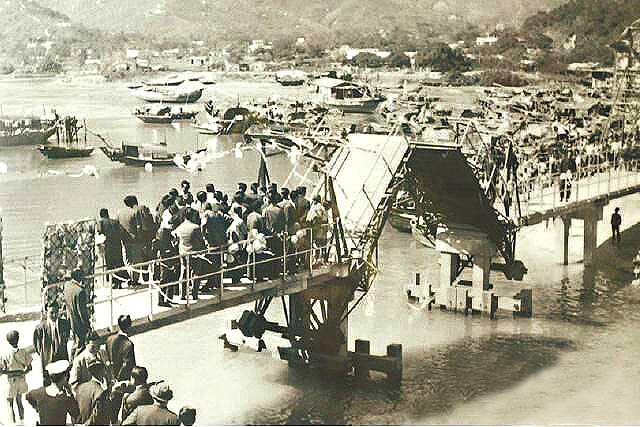
Silvermine River, 1950
In a history of Mui Wo he co-authored and published last year, David describes Lantau as “a self-contained kingdom.”
He reminds us that it is a collection of 20-odd villages, many of which we know today – Chung Hau, Pak Ngan Hung, Tai Tei Tung and so on. Of these David says Luk Tei Tung is the oldest, with a heritage of 400 years.
Mui Wo’s history goes back even further than that. It was a site for salt production as far back as the Song times. Salt production stopped centuries ago, but the pans remained until the remaking of the old township in the 1980s.
Legend has it that the last Song emperor was crowned in Mui Wo. Though that is likely myth, the imperial court, on the run from the Mongol invaders, spent several months on Lantau and descendants of some of those courtiers live in Tung Chung villages.

Ferry pier, early 1950s
David recalls that until very recently, Mui Wo was ‘Lantau’s front door.’ Summertime Silvermine Bay was crowded with Hong Kong holidaymakers.
“As far as Hong Kong people were concerned, the islands included only Cheung Chau and Lantau, and Lantau meant Mui Wo,” David says.
The Mui Wo that David grew up in in the 1950s was a different universe. He was born towards the end of the Japanese occupation, when the only transport connection was a kaido to Cheung Chau.
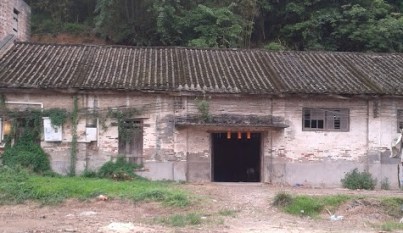
David’s family home in Luk Tei Tong
He had one pair of shoes that he would wear only when at school; he would take them off on the journey to and from home.
His spare time was taken up with work on the family farm. His would tend the family cattle herd, seeing see them off to the mountains in the morning and back down again in the afternoon.
The ties between the humans and their cattle were strong, David recalls. When he was seven years old, his mother decided to sell the family bull to a farmer from Cheung Chau. But when the buyer arrived, she swears she saw a tear in the bull’s eye and changed her mind.
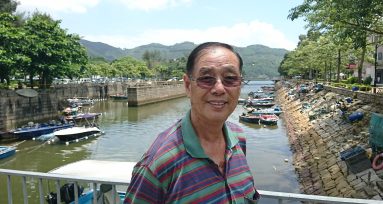
David Kam
Change came slowly to Mui Wo, and then in a rush.
South Lantau’s first road was built in the 1950s – basically the same coastal road today that connects Mui Wo to Shek Pik. In the early ‘60s it was extended all the way to Tai O as part of the Shek Pik Reservoir project.
It was the dam, not the road, that had the bigger impact. It dried up the flow of Mui Wo’s three rivers, making wetland rice farming impossible. Villagers turned to melons and other fruit.

Five Cent Bridge circa 1950
But those were still good times, David recalls.
“The 1950s to the ’80s were probably Mui Wo’s golden years. Post-war development was fast. It was a self-sufficient era. Farmers were growing crops, fishermen were catching fish.
“In the mornings near the Five Cent Bridge the fishermen would sell their catch and gather for breakfast. There would be barbecue under the famous banyan tree.”
The big changes came in the 1980s, when the government tore down the stilt houses on Silvermine River and built public housing on Ngan Kwong Wan Road.
The Chung Hau market stores – now the site of the playground and the hotel – that were the centre of commercial and social life were also demolished. The salt pans disappeared under the government building and wet market.
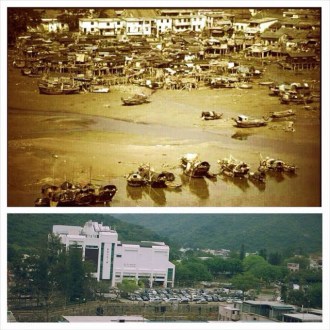
Silvermine River in 1950s (top) and 2000s (below)
Then in 1998, the Tung Chung line opened. Villagers continued to move out and city people coming to Lantau headed first to Tung Chung, forgetting about Mui Wo.
David is disappointed by the current development plans for Lantau, which he thinks overlooks Mui Wo. He has his own vision for Lantau development, involving major reclamation of the sea between Chi Ma Wan, Mui Wo and Hei Ling Chau.
“Since the MTR line opened, the mythology of Mui Wo has disappeared,” reflects David. It’s no longer the front door. “Lantau is now Tung Chung, Ngong Ping and Chek Lap Kok.”
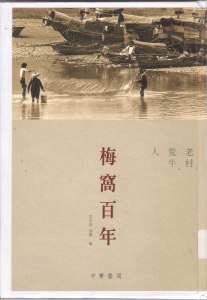
Title: A Hundred Years of Mui Wo – Old Villages, Wild Cattle, People 梅窩百年: 老村、荒牛、人 (Chinese only)
Publisher: Chunghwa Book Co.
Author: David Kam & Yau Yat
On sale: Village Bakery, Mui Wo & online
Excerpt: (In Chinese)
Photo (top): Five Cent Bridge circa 1970

Lantau rural chiefs defy govt with plan to oust cattle and buffalo
The ink is barely dry on the government’s long-term Lantau development plan, but one of its core principles is under challenge from rural chiefs in their latest attempt to expel cattle and buffalo.
The Sustainable Lantau Blueprint, issued in June, calls for the conservation of rural Lantau’s natural and cultural heritage.
It specifically demands the protection of the Pui O wetland, home to the local buffalo herd, which it acknowledges as as “part of [Pui O’s] cultural history” and an important means of showcasing Hong Kong’s rural history. It also seeks the preservation of Mui Wo’s “rural township character.”
However, the Islands District Council and local rural committees are once again lobbying the AFCD to remove Lantau’s remaining cattle and buffalo.
This time their plan is to shift them to Tai A Chau, an island in the Sokos with limited water supplies and no wetland that could support buffalo.
Despite this, the AFCD cattle team is understood to have told an October 12 meeting that the plan was feasible. However, they also said the idea was not practical because there was no way for them staff to conveniently reach the remote location.
The meeting, organized by the Islands District Council, was attended by Wong Man-hong and Fan Chi-ping – the heads respectively of the Mui Wo and Tung Chung rural committees – a member of the South Lantao Rural Committee, district councillor Randy Yu, LanDAC member Chau Cheun Heung, Bui O Public School principal Yu Mei Fong, Home Affairs Department officials and four representatives from cattle support groups.
One attendee told Lantau News the rural leaders argued that the move was necessary for safety reasons, although they were unable to explain why the buffalo posed a bigger safety threat than speeding traffic on EVA.
Despite the AFCD reservations, the rural councillors and Randy Yu urged the AFCD to go ahead with a trial.
The current effort to remove Lantau’s bovines is the latest of many.
In one notorious case in 2006, several dozen cattle were removed byAFCD truck to Fan Lau, but only three survived the journey.
In 2013, the AFCD experimented by swapping cattle herds between South Lantau and Sai Kung. One of the Lantau cattle died and many of the remainder, unable to food in the unfamiliar environment, had to be hand-fed. The trial was terminated after the department was hauled before a Legco sub-committee.
In the last two years the plan to remove the animals to Tai A Chau has emerged on a number of occasions, only for the government in each instance to deny it.
An online petition opposing the relocation states:
We believe that Lantau Island has absolutely sufficient capacity for the conservation of all cows and buffaloes. Any form of relocation out of Lantau Island is not needed. In addition, we demand the government to establish a long-term conservation policy, allocating resources to conserve them in their original habitats.

Mui Wo bus & ferry operators to add capacity but not new services
Lantau bus and ferry companies are adding capacity to meet the expected spike in passengers next year, but have no plans to schedule extra services.
With Mui Wo’s population expected to increase by as much as 40% in the second half of 2018, First Ferry has ordered five new large vessels and the New Lantao Bus Company is tendering for double-decker buses,
But First Ferry says even with the new boats it won’t have capacity for new services.
Transport, police and Hospital Authority officials as well as public transport operators appeared before the Islands District Council meeting early this week to explain how they are preparing for Mui Wo’s growth spurt. As many as 2000 residents will move into two new Home Ownership Scheme (HOS) estates starting next August.
First Ferry has bought five new 423-seat vessels – previously the largest carried just 403 passengers – and says two are already in service. The other three will be deployed from the first quarter of next year.
New Lantao Bus Company is planning to run double-decker buses on the 3M route between Mui Wo and Tung Chung. It said it held a successful trial early this year and has just tendered for 14 double-decker vehicles.
First Ferry communication manager Chow Suk Man told the council morning peak-hour fast ferries were currently running at 80-90% capacity. Already one of the new large ferries is being deployed at 7am from Mui Wo.
But in response to Councillor Randy Yu, who asked if a backup ferry could be deployed in morning peak period, Chow said there was not enough spare capacity.
“If there are school trips or organisations planning to take this particular ferry, and if we are informed in advance, we can arrange a spare ferry for such occasions,” she said. But there was no spare ferry for a permanent arrangement.
Chow acknowledged it was difficult to plan without knowing the exact numbers of likely passengers. The company had requested information from the Transport Department about the size of the working population.
NLB vice chairman Chan Ching Lung said the company believed the double-decker buses could increase carrying capacity by 40-50%. The bus operator runs four special services from Pui O each morning which are 70-80% filled, he said.
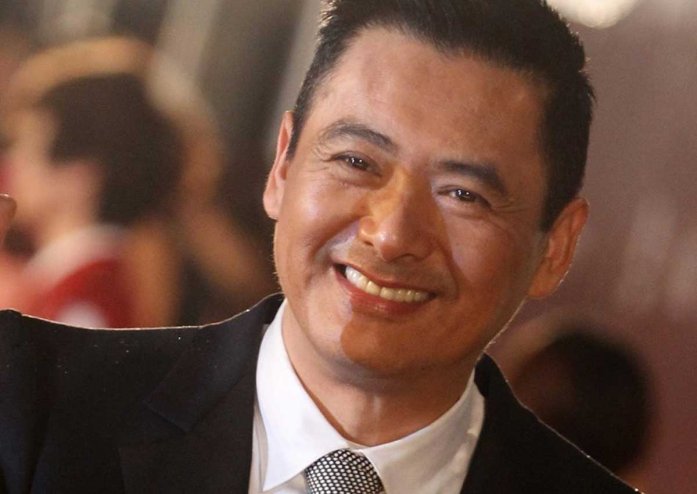
Star power shines on Mui Wo
Mui Wo felt the touch of superstar power last weekend as one of Hong Kong’s biggest movie stars, Chow Yun Fat, spent an afternoon here.
Chow, 62, once described by the Los Angeles Times as “the coolest actor in the world,” is one of Hong Kong’s best-loved and most successful actors, famed for his performances in films such as A Better Tomorrow, God of Gambling and Bulletproof Monk.
For Village Bakery proprietor Kit Lau, a true Hollywood-style encounter would have been for her idol to enter her store and fall in love with her cheesecake and cinnamon rolls.
But as it happened she heard was having a drink on the plaza outside China Bear so she rushed over, mobile phone in hand.

Chow and his friends were about to take the ferry, but he was more than willing to do a selfie. Said Kit:
It seems he already knew I was going to take a picture with him. [He was] very welcoming and I introduced our bakery to him and his friends. They were ready to go on boat so they couldn’t visit Village Bakery. He asked if I serve pineapple bun with a cube of salted cold butter, he will pay a visit next time
Lamma-born Chow’s other link to Lantau is his role of Sao Feng, based on legendary Lantau-based pirate Cheung Po-tsai, in Pirates of the Caribbean: At World’s End.
 Lantau Confidential