
Category: Local politics
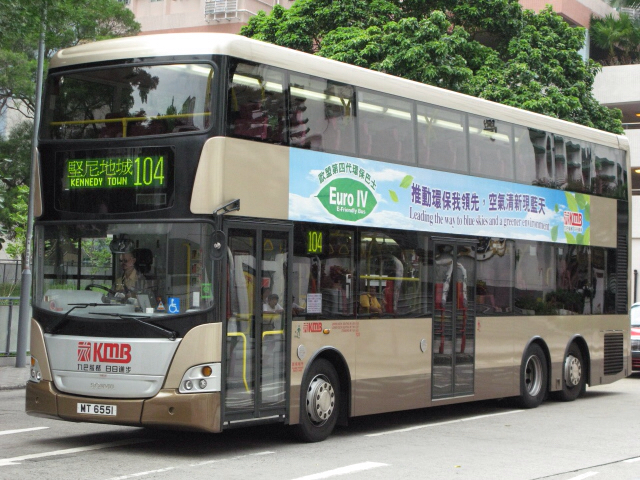
Randy Yu calls for double-decker bus review in wake of Tai Po crash
District Council vice chair Randy Yu has called on the Transport Department to review the safety of double-decker buses on Lantau roads before they are introduced later this year.
He said the Tai Po crash last month had stirred residents’ concerns about the safety performance of the new low-floored double-decker bus
Yu, who represents South Lantau, said the council had agreed that the new bus be launched on the 3M route after residents start moving into the Mui Wo HOS developments in August.
But the Tai Po accident, in which 19 people died, “once again raised concerns about the safety of double-decker buses on the 3M route,” Yu said in a question tabled for the Traffic and Transport Committee meeting next week.
“Given the special road environment on Lantau Island, residents in this district are concerned that double-decker buses may not be able to protect the safety of passengers,” he said.
He called on the Transport Department to road-test the new bus on the 3M route – between Tung Chung and Mui Wo – and report to the council on the results.
Another councillor, Amy Yung, the representative for Discovery Bay, called on the Transport Department to answer questions about the safety of the Discovery Bay-Tung Chung bus service.
Amy Yung demands answers on lack of consultation over council expansion
Islands District Councillor Amy Yung has called on council chairman Chow Yuk-tong and the Constitutional and Mainland Affairs Bureau to explain why the council will not add another directly-elected member ahead of the 2019 poll.
The bureau announced in October that it would add at least one extra member to ten of Hong Kong’s 18 district councils because of a population increase. Eight councils, including the Islands, remain unchanged.
But Yung, one of the two pan-democratic members of the Islands council, says it’s inexplicable that the district, with its wide geographic spread and growing population, did not meet the benchmark.
The decision was based on the 2016 census result and population projections.
In a question tabled for today’s meeting, Yung has called on the bureau to explain why it did not consult directly with IDC members, but spoke only with the vice-chairmen.
She has also asked why Islands District Council chairman Chow Yuk-tong did not consult with IDC members. Instead Chow, who was appointed to his council post, spoke only with rural committee chairmen.
She said the decision on the number of DC board seats “may not have a significant impact” on the rural committees that Chow spoke with.
“But the impact on other democratically elected district board members and their constituents is far-reaching.”
Eric Kwok, the other pan-democrat on the council, representing Yat Tung South, agreed it was necessary to increase the number of elected seats.
He says Yat Tung Estate, with more than 46,000 residents, was big enough to have three seats.
“Another one is South Lantau, the biggest constituency area in Hong Kong, but has just one seat. For many years, we have requested to divide it into two seats – one including Mui Wo, Pui O and old Tung Chung village, the other from Cheung Sha to Tai O. ”
Protestors dump Lantau waste at Govt House, warn of further action
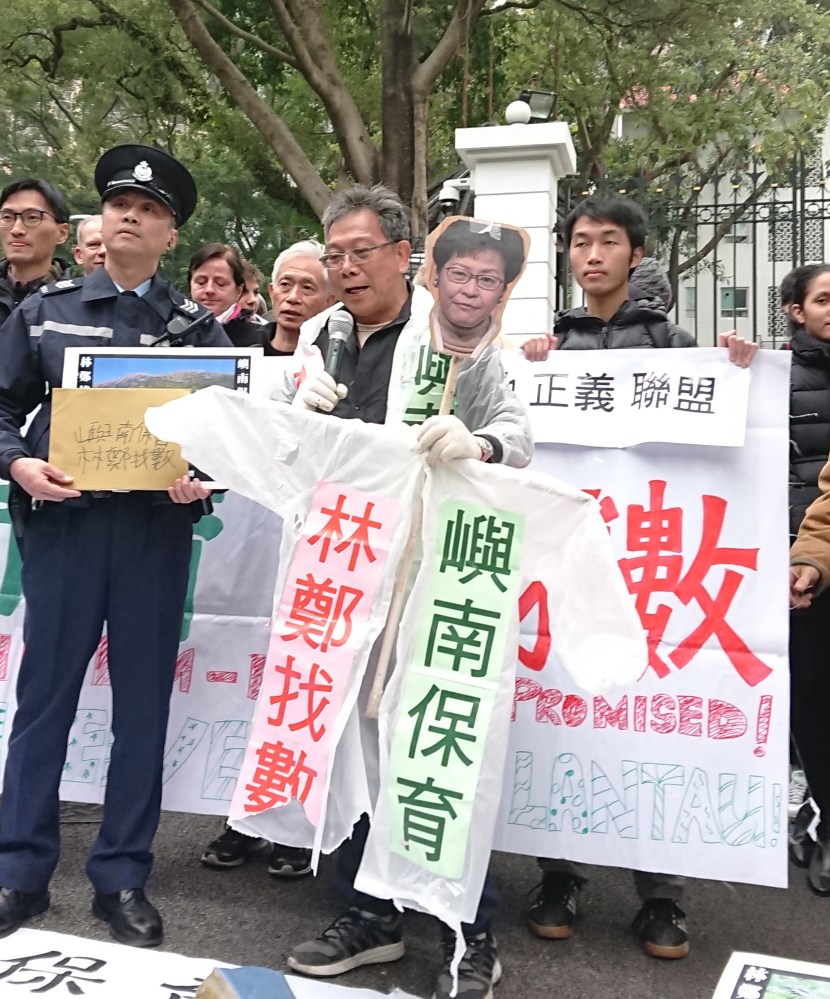
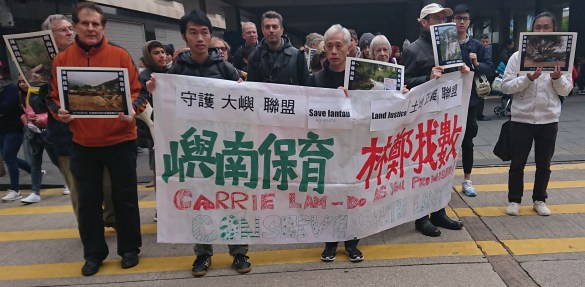
Demonstrators dumped construction waste outside Carrie Lam’s residence today to protest landfilling and wetland destruction, with Legco member Eddie Chu warning of further protests “if the government ignores us.”
The rally of about 30 people marched from Central ferry pier, bringing with them two trolleys filled with waste from South Lantau landfill sites.
Occupying Central
They poured the trash onto the ground at the Government House gate to remind Lam that conserving South Lantau and protecting the wetlands are her own policies.
A police sergeant accepted a petition on behalf of Lam.
A police contingent almost as large as the protest itself watched over the event.

Police presence
Eddie Chu told the demonstrators:
“We will come back if the government does not take the right actions to deal with this dumping issue.
“This is only the first action. There will be actions following if the government ignores us.
“We will not allow this to happen in South Lantau. We are not going to allow it to happen anywhere in rural Hong Kong.”
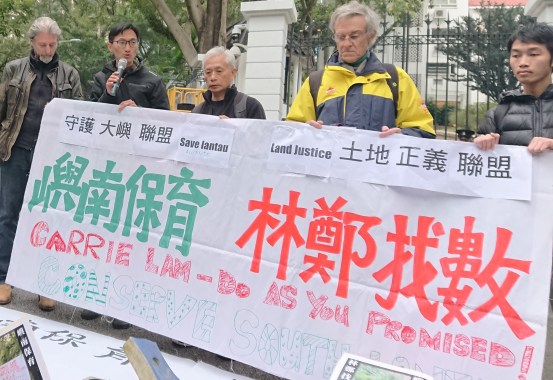
Paul Zimmerman (left), Eddie Chu (second from left)
Paul Zimmerman, head of Designing Hong Kong and a candidate for the architectural constitutency at the forthcoming by-election, said the government needed to introduce new legislation to protect rural Hong Kong.
“If you want development in Hong Kong you have to give confidence to people that conservation truly is conservation,” he said.
He said landfilling of the kind carried out in rural Hong Kong was “destruction on purpose, to create development value,” to ensure land was already destroyed so it could be rezoned.
But the symbolic waste dumping may come at a cost to the protestors. Organiser Eddie Tse, head of the Save Lantau Allianced said police had warned him he could be fined for dumping the waste.
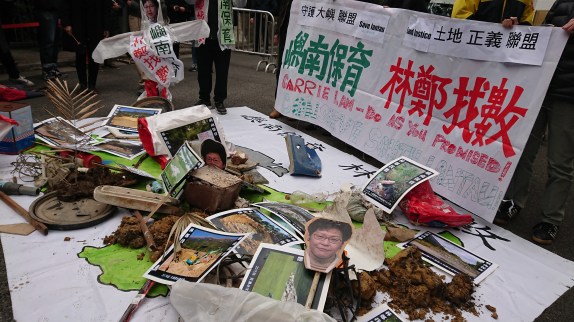
What a waste
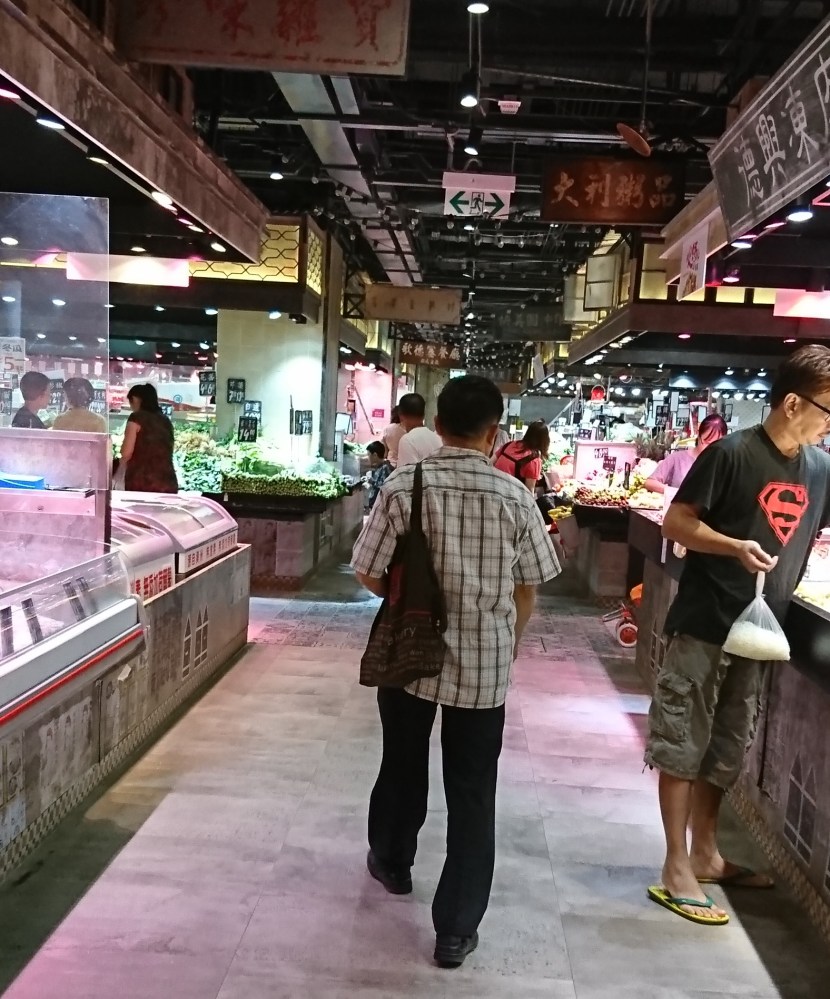
Tung Chung’s new public market won’t open until at least 2023
The government has rebuffed requests from district councillors to build a public market in central Tung Chung.
Food and Environmental Hygiene Department (FEHD) official have also declined to build a temporary market to serve residents before the new market is ready in five years.
Responding to Islands District Councillor members Eric Kwok and Holden Chow, the department says there is no room in the town centre for a market and it will go ahead with a site it has identified in Tung Chung east.
But that won’t be ready until residents move into Tung Chung east, one of the city’s major housing expansion projects, which won’t be finished until at least 2023.
Kwok says residents’ groups have been pressing the FEHD for three years on three possible sites: the temporary bus terminus on Tat Tung Rd, the vacant lot space behind the North Lantau and next to the bus depot at Chung Wai Street.
Until now, the department has not given a formal response.
In a written reply to Kwok, it said it had no plans to set up a temporary market, citing hygiene, safety, water supply and other issues.
“At this stage we are focusing our efforts on the construction of new public markets,” it said.
It said the new market was “conveniently” located next to the planned Tung Chung East MTR station, currently scheduled to open in 2026.
Kwok said new markets are also planned for the Ying Tung estate in Tung Chung east and Mun Tung, now nearing completion in Tung Chung west.
But both will be put to commercial tender, raising fears of a repeat of the Link REIT experience, he says.
Link REIT, a real estate trust which owns markets across Hong Kong, including Tung Chung’s Fu Tung, has been accused of pricing rents too high for small businesses and consumers.
Many Yat Tung residents travel out of Tung Chung to do their shopping because of the high local prices.
Chief Executive Carrie Lam committed to building a new public market in Tung Chung in her September policy address.
Government planners say Tung Chung’s population, currently below 90,00, will increase to nearly 250,000 over the next eight years as a result of new projects in Man Tung, Tung Chung west and Tung Chung east.
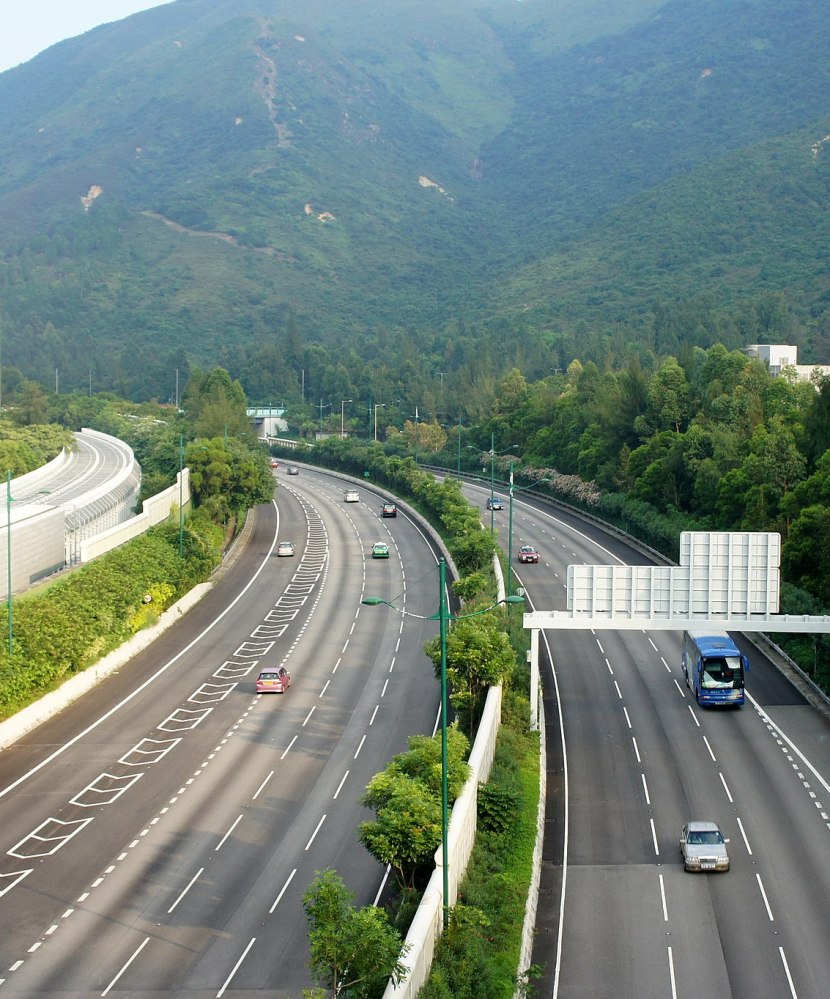
Police weigh more N. Lantau Highway patrols, but no cut in speed limit
Police say they will consider more frequent and more aggressive patrols on North Lantau freeway, but there are no plans lower the speed limit.
Police and Transport Department officials appeared at the Islands District Council last week to respond to queries about the recent spate of accidents on the 14-kilometre highway.
In the latest fatality, a taxi driver died in a five-car chain collision at Sunny Bay – the fifth death on the freeway since the beginning of 2016.
District Councillor member Amy Yung told the meeting that three accidents had taken place on the freeway in just 41 minutes on October 16.
She said she had raised the issue on a number of occasions, but accidents continued to occur.
She was “willing to bet that speeding is the major cause” of the accidents, and urged officials to consider cutting the speed limit and to increase police patrols.
Police acting district operations officer, Lo Tim Fat, told the meeting the accidents were a result of “many factors,” including weather, driver behaviour and road construction.
He said unmarked patrols, radar and speed cameras were already in operation, but they would consider increasing the number of patrols.
But the Transport Department has no plans to reduce speeds limits on the highway.
Senior engineer Yuen Kit Fung said the accident rate on North Lantau Highway was lower than other parts of the city, with 0.17-0.31 accidents for every 80,000 vehicles over the past five years. That compared with 1.18-1.28 rate for the city as a whole.
Photo (top): Mk2010 Wikimedia, Creative Commons
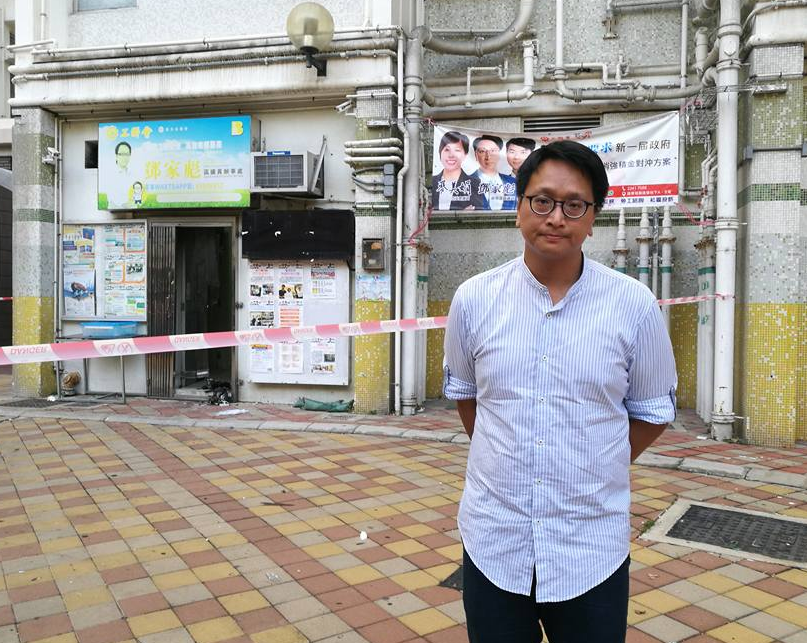
Police arrest woman over District Councillor office fires
Lantau police have arrested a 40-year-old woman over suspected arson of the Tung Chung office of Islands District Councillor Bill Tang Ka-piu.
Tang’s Yat Tung office was twice set alight yesterday afternoon, local media have reported.
In the first incident at around fire brigade was called after receiving a report at around 3:30pm that the office entrance was on fire.
Another attempt to light the door was made at 5:15. Police went to the scene and seized newspapers and a beer can.
The office, which was unattended because of the public holiday. suffered minor damage.
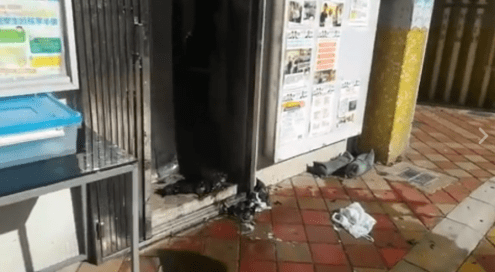
CCTV had shown a person loitering around the doorway at around 3:15 to 3:30 and had set alight a black plastic bag in the doorway.
Police later arrested a Thai national in Tung Chung. A spokesman said she has a history of mental issues and suicide attempts and has been sent to Princess Margaret Hospital psychiatric assessment.
Anyone who has information on the case is urged to contact the Lantau Criminal Investigation Team at 3661-1941 or 3661-1940.
Tang has been a District Councillor since 2008. He was Legco functional constituency member on behalf of the pro-Beijing Hong Kong Federation of Trade Unions from 2012-2016.
Photos: Bill Tang Ka-piu Facebook
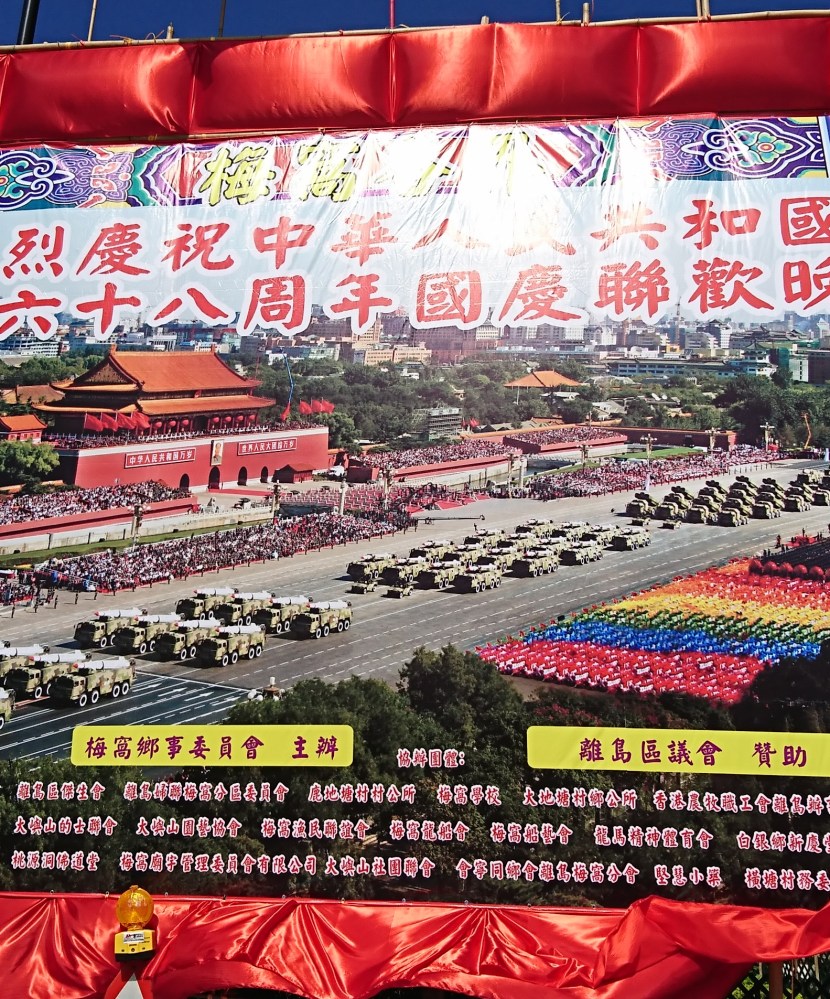
(Photo) Rural committee celebrates holiday with military theme
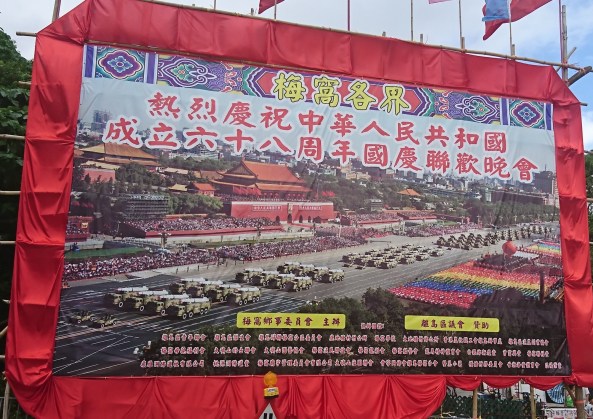
Mui Wo Rural Committee has erected this military-themed billboard to celebrate the October 1 holiday.
It announces an evening’s entertainment, though it doesn’t say when or where.
Translation: “Evening event to warmly celebrate the 68th anniversary of the establishment of the People’s Republic of China National Day. Organiser: Mui Wo Rural Committee. Sponsor: Islands District Council”
Calls to investigate ‘suspicious’ Mui Wo rural land deals
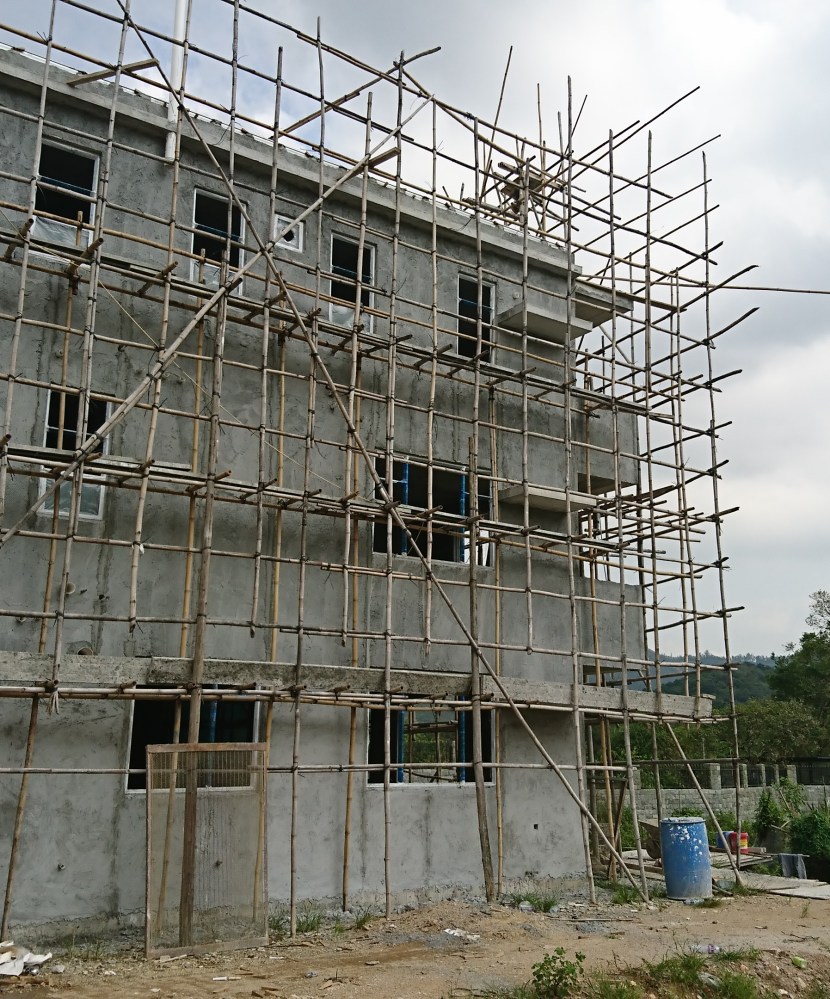
A Mui Wo village leader was directly involved in six village house transactions and connected to another three in the space of two years, prompting calls for the transactions to be investigated.
Civic Party leader and barrister Tanya Chan said while there was no clear evidence that small house rights were being sold, the land sales were “suspicious” and should be scrutinised.
Eddie Tse from the Save Lantau Alliance (SLA) said the transactions by Luk Tei Tong village representative Lee Kwok Keung and his wife were “intriguing,” especially when they involved residents from other villages. He called for the Lands Department and the Town Planning Board (TPB) to probe the deals.
According to the Ming Pao newspaper and the SLA, Lee and his wife sold land that was used to build six indigenous houses, while another three are applying for approval to build.
One plot of land, lot 288, was broken up and sold to six different buyers, including five from other villages.
Land sale contracts show Lee bought the lot for just under HK$2.78 million in 2011, and then selling it as six separate plots over 2012-2013 for HK$2.24 million – HK$540,000 less than he had paid. Every transaction was authorised by the same lawyer, Lee Kwok Yung.
Subsequently, a number of applications were made to build ding houses on those sites, which were approved in 2015 and 2016.

Lot 288
The six small houses, many with the same external appearance, have now been nearly completed.
Five of the buyers have addresses outside Mui Wo, including one in Australia, land sale documents show. Ming Pao reporters could not locate any of the buyers.
Lee’s wife, Fanny Mok Suk Fun, was involved in buying and selling another plot of land on the edge of Luk Tei Tong, lot 308. She had acquired it for HK$700,000 in 1999, split it into three pieces, and sold them off in 2004.
Then on the same day in 2008 Mok and a Ms Au-yeung Yuet-lan repurchased two of the lots at exactly the same price (HK$198,000). In 2014 the two lots were sold separately for the same price (HK$208,000) to two people now applying for ding approval. Both transactions were also executed by Lee Kwok Yung.
The third piece of land is also subject to a TPB application for building approval.
Speaking to a Ming Pao reporter by phone, Lee confirmed he had sold the land to residents of other villages and as village representative had dealt with the six small house applications.
However, when asked about his wife’s role the call dropped out. Reporters were unable to re-establish contact, and text messages were not returned.
The number of cross-village ding transactions in Lantau has soared since then-CE CY Leung announced ambitious Lantau development plans in his 2014 policy address.
In the two years prior, just three applications had been filed. But after the development plans were unveiled, the number of applications spiked to six in 2014, 14 in 2015 and six in 2016.
Under the Basic Law, indigenous male villagers are given the right to build a house on rural village land, but the system is open to abuse and, outside the privileged community of indigenous villagers, dissatisfaction is high.
Two years ago Sha Tin villagers were jailed for selling off ‘ding’ rights to a developer, and a 2015 Civic Exchange survey found that nearly two-thirds want to see the policy change.
However, successive chief executives, who hold power with support of rural bodies, have shown no interest in reform.

CEDD wants your opinion even if Randy Yu doesn’t
Good news, non-Chinese residents of Lantau.
The government thinks you’re worth talking to, even if our district councillor doesn’t.
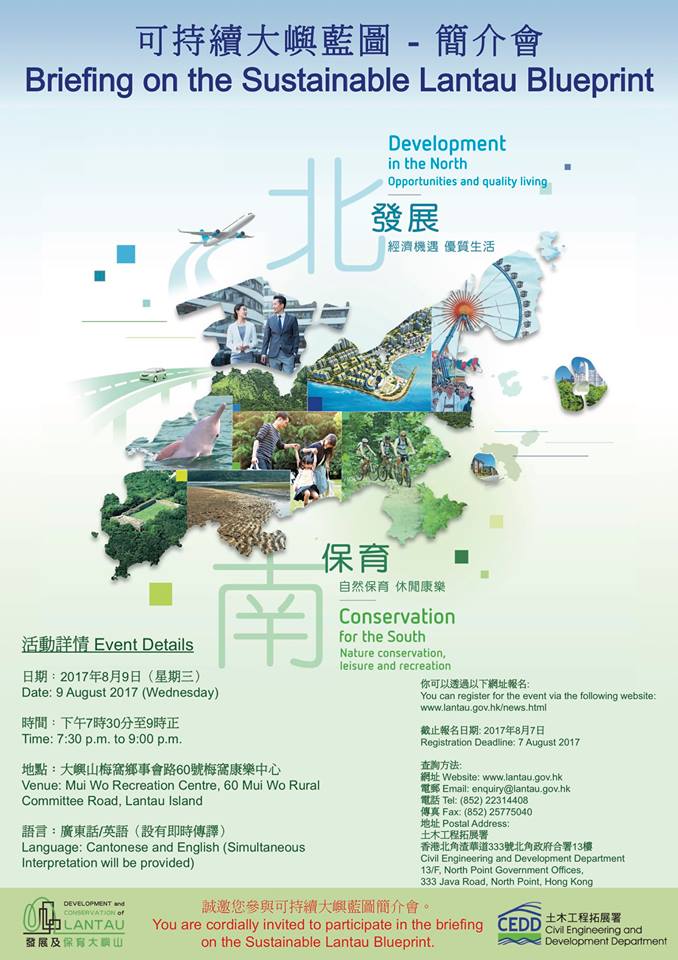
The Civil Engineering and Development Dept (CEDD) has finally issued an English-language invitation to a public forum in Mui Wo on the Sustainable Lantau Blueprint.
By contrast, Randy Yu, the Islands District Councillor announced the event on his Facebook page two weeks ago like this:
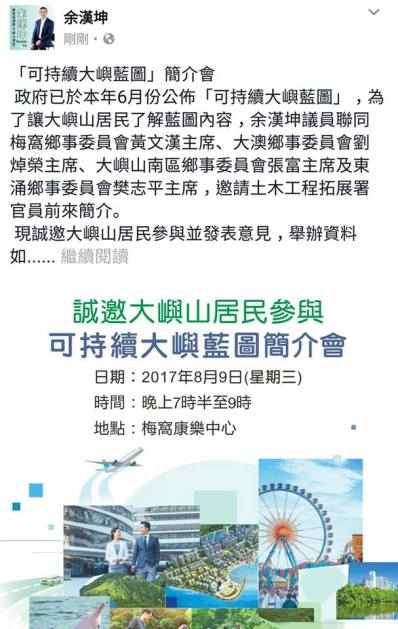
Early this year he incensed some residents when he held a public consultation (on East Lantau Metropolis) that only a few seemed to know about.
This time no one can complain about not being invited. Too bad a third of the community can’t read the invitation.
In fact, Yu’s entire Facebook page is in Chinese. If he has any interest in communicating with non-Chinese members of the community, there’s no sign of it – an unusual attitude for somebody whose job depends on winning people’s votes. Randy Yu and his staff also seem to be unaware that English is an official language.
Despite the rhetoric around sustainability, the August 9 event will be dominated by pro-development interests. As well as Yu and the CEDD, all four Lantau rural committees will be represented. A minor furore has broken out over the latest sign of environmental tokenism, the appointment of a recently-retired planning bureaucrat as Lantau’s ‘conservation coordinator.’
Those who wish to attend will need to register by August 7. Send your emails to enquiry@lantau.gov.hk.
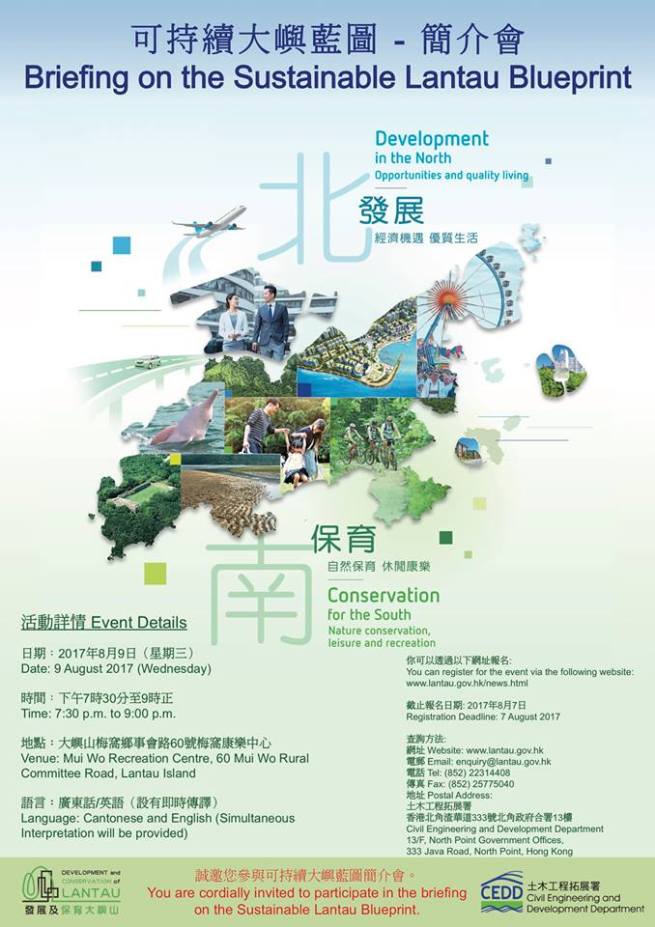
Here is the CEDD Chinese/English flyer, issued Friday:
Eddie Chu: Pan-dems, greens must target village elections
Legco member and rural land justice campaigner Eddie Chu has called on democrats and environmentalists to contest the coming 2019 village elections.
Speaking at a Living Islands Movement meeting on Friday, Chu most of the 1500 village representatives in Hong Kong villages are uncontested.
“We don’t have our candidates from the environmental or democratic movements. It’s such a huge gap,” he said.
Village elections are important because the government uses the local level support to lend legitimacy to projects such as the East Lantau Metropolis and the Macau Bridge, he said.
Chu was dubbed ‘king of the voters’ after he was elected to Legco with more votes than any other candidate ast last year’s poll. He said that as Legco member covering rural Lantau and western New Territories he had a “certain mandate” to become involved in the politics of Heung Yee Kuk and rural areas generally.
“In my experience during the election, many villagers, including indigenous villagers, are supportive of my election platform – conserve the environment and stop white elephant infrastructure projects – but they don’t have the confidence to come out. They want to come out as a group.”
Chu aims to create a new alliance among rural representatives to “create a new area for bargaining with the establishment. I think that is very crucial in building up our foundation,” he said.
He also pointed out the Heung Yee Kuk, the indigenous rural landowners peak body, was living on borrowed time.
“The kuk itself is under serious crisis itself because they don’t have the support of Hong Kong general public and Beijing is considering whether to abandon them. They need to shift their basic position. That’s my message to Kenneth Lau, the kuk leader: “If you want the kuk to continue to exist and have influence, then you have to democratise yourself.”
A 2015 survey by local think tank Civic Exchange found that 65% of Hong Kong people wanted a change to the small house policy.
 Lantau Confidential