
Category: development
Carrie Lam to review land supply plans
New Chief Executive Carrie Lam has promised to reopen public debate over the government’s land supply policies.
She says she will set up an expert panel to hold large-scale discussions on future land supply, which she acknowledges has been a controversial topic, with public opposition to the building of homes in country parks and plans for massive sea reclamation off Lantau.
Lam said she would wait for the report of the Housing Society, which was commissioned by the previous government to examine the potential for building homes in the Tai Lam and Ma On Shan country parks.
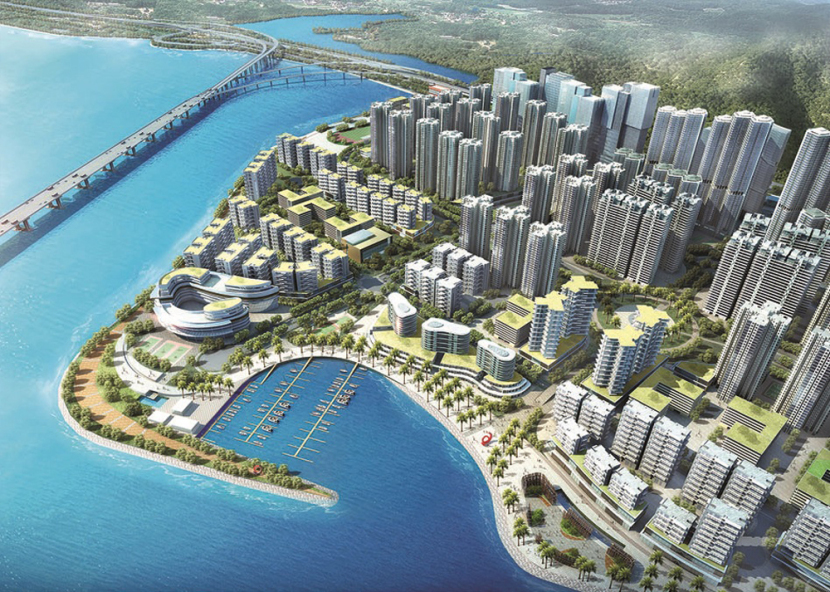
She did not specifically refer to the East Lantau Metropolis (ELM), but it has certainly created heated debate. The plan to build a new CBD on 1000 ha of reclaimed land between Lantau and Hong Kong is the government’s biggest land supply project, sparking wide community opposition and claims that the consultation ignored public opinion.
The Leung government’s decision build on a greenfield site in Wang Chau rather than on a brownfield site owned by a rural major landowner is yet another controversy.
Photo: Scale model of Tung Chung after completion of extension project in 2023
Butterfly Hill development breaches planning rules
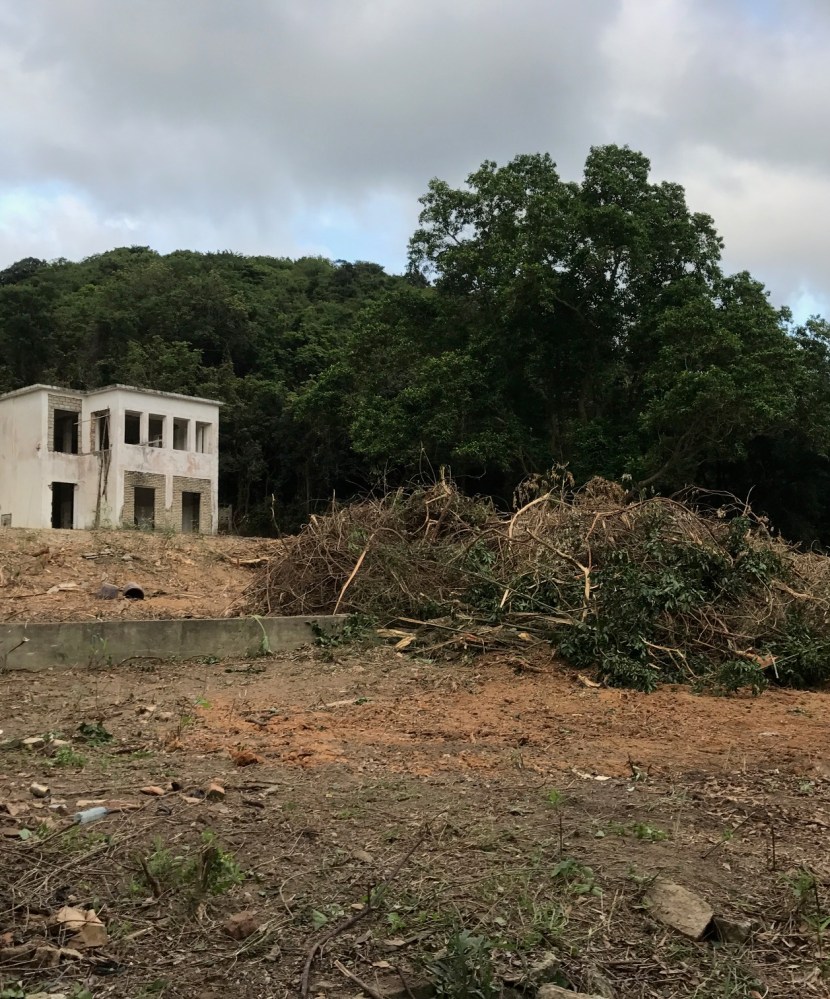
The construction of a new road, and plans to build new homes, on Butterfly Hill appears to be a clear breach of planning rules – but government agencies are unwilling to act.
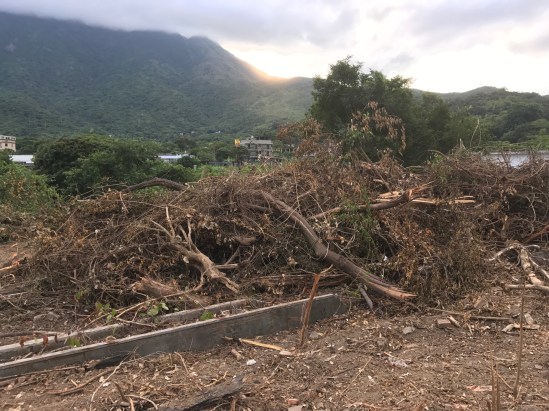
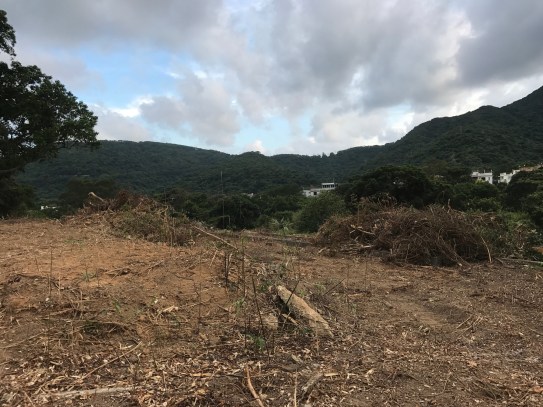
In the last six months a developer has cleared approximately a hectare of trees and vegetation and built a new road on the site, just northwest of old Mui Wo town. The developer is reportedly planning to build five homes.
But neither the Buildings Department nor the Planning Department has received an application for new housing or roadworks, Apple Daily reports.
The Planning Department said the land is zoned for agricultural use under the Outline Zoning Plan. Any kind of reclamation or building works would require the permission of the Town Planning Board. It would investigate any potential breach of the Town Planning Ordinance, it said.
Land clearance
However, Miffy Ng from Save Lantau Alliance says she had the same response when she informed the department of the construction work in March.
“It is clearly not to develop agriculture,” she said. She warned that the land was no longer protected by vegetation and was concerned about the risk of mudslides. “The ecology has been destroyed and the need for conservation is urgent.”
Ownership of the land is unclear. It is registered to Keymax Holdings (基明集團有限公司), which is wholly-owned by a British Virgin Islands registered company called Acota Services Ltd.
Butterfly Hill today

Lantau blueprint is just another sly sales pitch for East Lantau Metropolis
The Sustainable Lantau Blueprint is not terribly sustainable, is certainly not a blueprint and isn’t really about Lantau.
An actual blueprint explains how something will be done. The ‘blueprint’ released last week is a summary of projects already underway and some boilerplate about economic growth, along with a glowing endorsement of the East Lantau Metropolis (ELM).
It’s a poor return on what was supposed to have been three and a half years of effort, first by the Lantau Development Advisory Committee (LanDAC), followed by six months of public engagement and then further work by the CEDD.
Residents might be relieved that most of LanDAC’s ideas – a cable car to Sunset Peak, a wedding centre at Cheung Sha, an inflatables playground at Silvermine Bay and so on – were struck down.
But few people took any of those proposals seriously; the sole purpose seemed to be to convey the impression that the committee of business cronies and government supporters actually cared about the Lantau economy.
Instead, the real object of this exercise has been to bake the ELM into the planning process.
We shouldn’t be surprised. Since Beijing took control of the city 20 years ago, Hong Kong has become addicted to development projects of escalating cost – the Central bypass, Kai Tak Cruise Terminal, the high-speed rail link and, on Lantau, the Macau bridge and the Shek Kwu Chau incinerator.
It is a national phenomenon. As a weekend New York Times story put it:
“… critics say construction has become an end unto itself. Fueled by government-backed loans and urged on by the big construction companies and officials who profit from them, many of the projects are piling up debt and breeding corruption while producing questionable transportation benefits”
No Chinese official has ever been sacked for building a bridge or an airport. The ‘belt-road’ scheme now being peddled by the Beijing agitprop machine appears to be a way of exporting this economic model as well as excess production capacity.
China shows an ominous resemblance to the ‘construction state’ that dominated the Japanese economy in the 1990s and early 2000s, at one point accounting for 18% of GDP. As with Japan, China’s love affair with concrete is fuelled by the ready access to bottomless funds and the lack of an institutional brake.
The ELM, involving reclamation of 1000 ha and an estimated cost of HK$400 billion, will be the city’s biggest ever project. It deserves careful consideration but instead has been shunted through a series of committees before its inevitable approval.
As critic Tom Yam has pointed out, ELM’s forecast population of 9 million exceeds even the government’s own projection of a peak population of 8.22 million.
Housing aside, the blueprint struggles to explain the economic rationale for this new business district. Here’s a random sample:
“The CBD3 [ie, ELM] can be positioned as a new and smart financial and producer services hub to boost our economic development, provide a large number of employment opportunities, and lead to a more balanced development pattern in Hong Kong.”
This has as much depth as a tourist brochure yet is supposed to justify filling in a sizeable chunk of the harbour at a cost of hundreds of billions of dollars.
It is because the case for the ELM is so unconvincing that the blueprint slyly pitches it as a salve to the current housing crisis. It’s not.
Even if Legco decides to fund this palest of wan pachyderms, it won’t be providing housing or ‘producer services’ until the middle of the 2030s. You find that spelt out in the report, although if you comb the fine print you will see it conceded the ELM is for ‘long-term.’
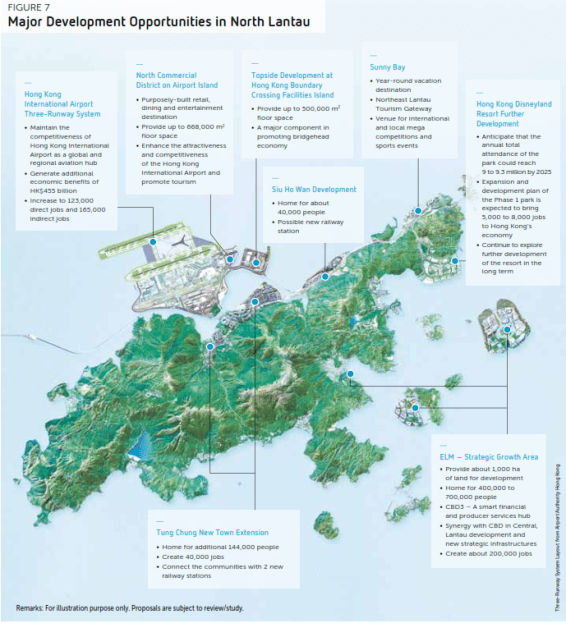
Lantau’s greatest development hits
The shallowness of the blueprint shows in two critical areas – transport and conservation.
Transport is the island’s pressing priority, but on this the blueprint has little to offer, except to remind us that the MTR is planning two new stations in Tung Chung and possibly a third in Siu Ho Wan (by happy coincidence the site of an MTR Corp development).
For the island’s south, it suggests expanding the ferry network. A nice idea, but basically a reprise of the 2007 proposal for “island-hopping ferries.”
The best Hon Chi-keung, Permanent Secretary for Development, could offer is that government would study how to improve the Lantau traffic network’s “ability to receive visitors.” That’s the kind of work that usually goes into a blueprint before it is published.
But transport is not just a problem caused by tourists. Peak hour transport in and out of Mui Wo is already close to capacity. No one has explained how ferry and bus services will cope with the extra load from the public housing now being built. As many as 1800 more people will start moving in next year, increasing local population by around 40%.
The same lack of clarity applies to conservation. The plan identifies areas that should be protected, but doesn’t explain how. For the steadily shrinking Pui O wetlands – currently the subject of a judicial review – the report lamely suggests that “measures” to halt its destruction “are being explored.”
To push ahead with the ELM, the government seeks a record HK$248 million for a feasibility study. It’s too late to be passed during the current administration, however.
That means the incoming CE has the opportunity to demonstrate she will guided by facts, not gulled by grand schemes. She can demonstrate leadership and conserve both the city’s finances and its natural heritage by axing this reckless monument to greed and extravagance.

Tung Chung finally to get special needs school
Thirteen years after it was first proposed, a HK$335 million special needs school is finally going ahead in Tung Chung.
Thelloy Development Group has won a HK$268 million contract to build the school for moderately and severely intellectually disabled children.
It was originally slated to be built on the then-vacant block opposite Lantau North Hospital, but was forced to move after local residents rejected it on grounds of noise pollution, traffic congestion and because it was “not supported.”
The school on Chung Mun Rd will have 18 classrooms and boarding facilities for 60 children. The first classes are expected to be held in 2019.
According to Education Bureau figures from 2014, 130 special needs children live in Tung Chung and the outlying islands.

Lantau blueprint scraps worst ideas, talks up conservation, upholds ELM
After three and half years of aggressive development plans from the Leung government, the Sustainable Lantau Blueprint is a return somewhat to the status quo.
The blueprint, produced by the Development Bureau, is closely aligned with the 2007 Lantau Concept plan. It even says so on the cover.
It scraps proposals for intrusive tourist facilities, ignores calls for new roads and urges greater conservation of key areas such as Pui O Wetlands and cultural heritage.
Notably it has dumped many of the unpopular proposals from LanDAC, such as the plan to extend Ngong Ping 360 to Tai O, install a chairlift to Sunset Peak and build water-skiing facilities in Shui Hau and a spa in Cheung Sha.
However, it upholds the government’s biggest development plan – the massive East Lantau Metropolis (ELM), the site of a future CBD and housing on 1000 ha of mostly reclaimed land in the waters between Mui Wo and Hong Kong island.

Above & below : What must be conserved
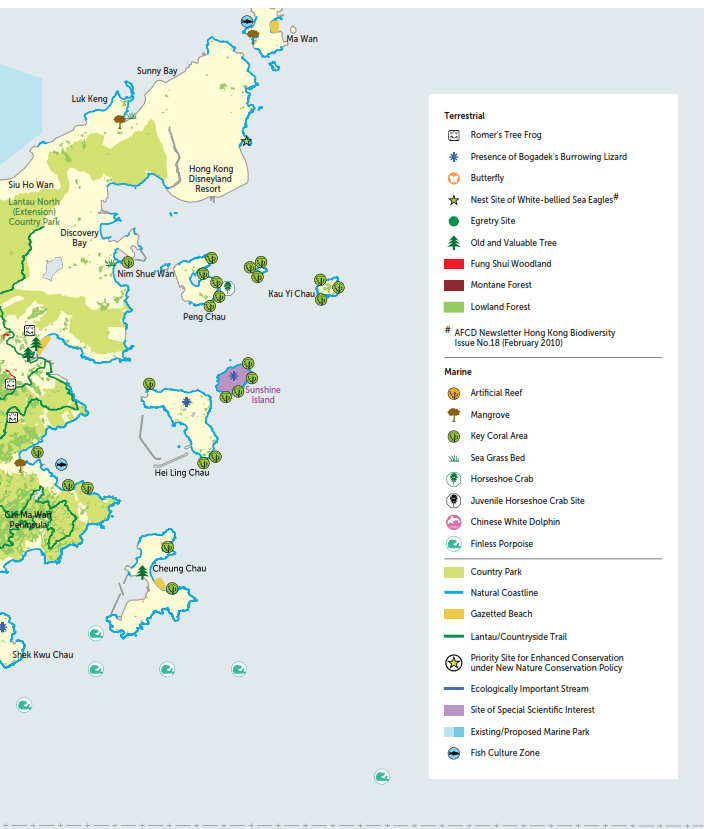
On the positive side for the environment, the blueprint on a number of occasions acknowledges the need to “conserve sites of natural and cultural heritage importance,” although it doesn’t say how this would be done.
For example, it appears to have taken on board community anger over dumping on the Pui O wetlands.
[The wetland] is rich in biodiversity of wetland plants and macro-invertebrates and is reminiscent of the living of farmers a few decades ago. The water buffaloes living there now are part of that cultural history. … Pui O can be an important educational resource to showcase the rural history of Hong Kong and the valuable wetland flora and fauna.
But while it says measures to protect the wetland “are being explored,” it has no detail.
It also runs up against the logic of the ELM. While it calls for the retention of Mui WO’s rural character, it also endorses the government proposal to build a highway from North Lantau through the town to the ELM.
On the vexed issue of Lantau transport, the document, like the 2007 plan, urges greater use of ferries for round-island transport between villages such as Cheung Sha, Shek Pik and Yi O. It also suggests convenient ‘hop-on hop-off’ short-distance transport services for South Lantau Rd and expanded cycling and mountain bike paths.
While the report has discarded many of LanDAC’s excessive development ideas, it has some of its own, including a beach volleyball court at Cheung Sha, a water sports centre at Pui O, and “an adventure park at an appropriate location.” It argues for the addition of “supporting facilities” on local hiking trails, including signage, information kiosks, “and provision of maps, toilets and emergency telephones.”
It also resurrects the government’s super-prison proposal from early in the last decade, suggesting Lantau’s correctional facilities may be relocated to Hei Ling Chau as a part of ELM.
Finally, and again without elaboration, it says it is exploring the feasibility of “themed camping grounds” in places such as Shui Hau, Tong Fuk, Pui O and Shek Pik.
Govt clips Pui O coastal conservation zone for sewage plant
The Town Planning Board has rezoned a slice of Pui O’s Coastal Protection Area (CPA) for a planned sewage treatment facility.
The board announced today it intends to rezone an area “south of South Lantau Road” for the planned treatment works. It does not specify the exact size or location of the rezoned slice of land.
Under the zoning plan approved in September 2014, 162.5 hectares of South Lantau land are designated as CPA, primarily in a strip between Pui O and Shui Hau.
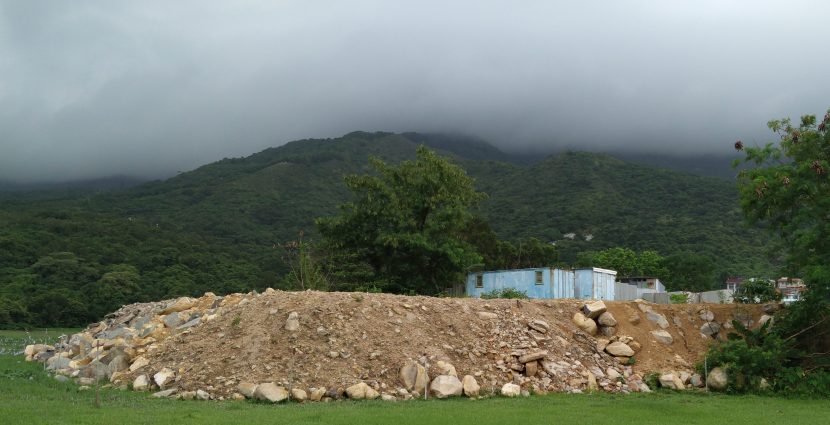
The CPA is intended to protect areas of conservation or ecological importance in Hong Kong coastal zones. However, the controversy over dumping on designated CPA land in Pui O – now subject to a judicial review – has underscored the weakness of the current CPA regime.
Members of the public can make submissions to the TPB over the rezoning. They can view the draft plan between now and August 2 at the Islands District Office in Mui Wo, the South Lantao Rural Committee in Pui O and the Islands District Office, 20F, Harbour Building, Central.
The current Outline Zoning Plan (OZP) can be viewed at the TPB website.
Photo: Dumping in Pui O wetland (file photo)

Another bridge on the way; govt unsure of impact on HK-Macau link
The government has made no assessment of how a second bridge across the Pearl River mouth will impact on the Hong Kong-Zhuhai-Macau (HZM) Bridge, a senior official admits.
The Shenzhen-Zhongshan bridge, to be built just 30km north of the HZM structure, will be completed as early as 2023. A third bridge, the Humen Second Bridge, 60km north of Hong Kong, will begin carrying traffic from 2019.
Legco member Jimmy Ng, who represents one of the industrial functional constituencies, said businesses “have great concern for the economic development of Lantau Island” because of the Shenzhen crossing.
In a written reply, Development Secretary Eric Ma said the Hong Kong government “has not conducted any comprehensive assessment on the daily traffic flow” or other aspects of the Shenzhen-Zhongshan bridge.
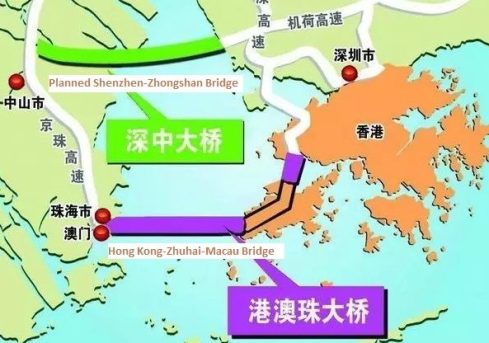
The Shenzhen-Zhongshan Bridge (green) will be just 32km north of the HZM Bridge (purple)
Ma also acknowledged the government had made no forecast of the likely traffic flow or economic value of the HZM bridge and related projects, which have cost around HK$130 billion. The last study to be carried out was in 2008, just before construction began.
Ma affirmed the government view that a series of developments on north Lantau and northwest Hong Kong would create fresh economic activity. He said Lantau would become Hong Kong’s “double gateway” to the world and the Greater Pearl River Delta (PRD).
Photo: Artist’s impression of Shenzhen-Zhongshan Bridge
ICAC arrests 21 over ‘fake concrete’ scam
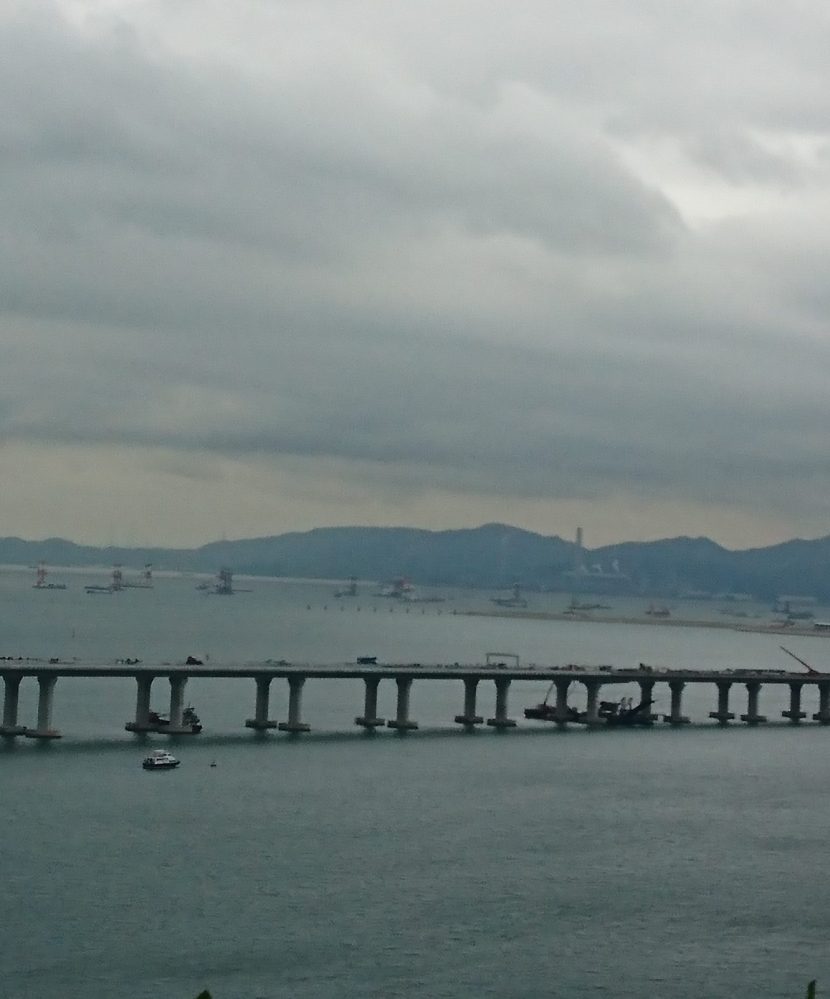
The ICAC has arrested 21 people suspected of involvement in faking test results for concrete supplied to the Hong Kong-Zhuhai-Macau bridge project.
The anti-graft agency said today it had detained two senior executives, 14 lab technicians and five lab assistants of a contractor to the Civil Engineering and Development Department (CEDD).
It said had launched operation Greenfield last Tuesday to investigate a corruption complaint from the CEDD.
It was revealed that when some of the tests were not conducted within the set time frame in compliance with the contract requirements, the site laboratory technicians and laboratory assistants might have adjusted the times on the testing machines to cover up the irregularities.
During the ICAC operation, it was further revealed that some of the laboratory staff might have replaced the concrete samples by using a metal calibration cylinder and/or high strength concrete cubes to falsify the tests, so that the tests would appear to have been conducted properly. It was suspected that the above malpractice might have started in early 2015.
Two senior site laboratory technicians had certified the false test reports, and “might have corruptly connived at the submission of the false reports to the CEDD,” the ICAC said.
It said the contractor had been carrying out tests for the CEDD since 2013. The 21 staff have all been released on bail pending further inquiries.
Raymond KS Chan, a former head of Geotechnical Engineering Office, has said that if use of the fake concrete was widespread, affected sections of the bridge would have to be rebuilt.
Development Secretary Eric Ma said today officials would review the bridge construction to see if any improvements were needed, SCMP.com reports.
“If the situation is not that serious, reviewing the existing construction is already enough. Otherwise we will take serious measures and follow up actions. But I do not have any information in hands now,” Ma said.
We can build in country parks – if we protect them
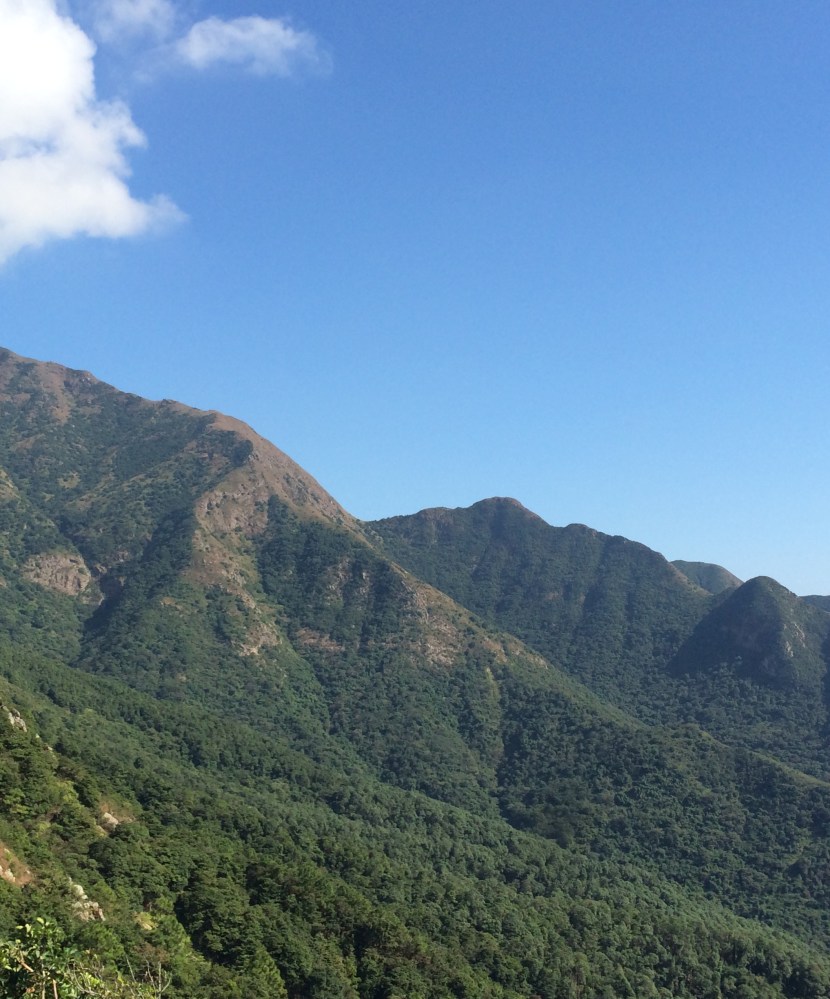
The Leung government is going about its country park housing plan in exactly the wrong way.
It has already identified two sites and has hired a property developer with no known environmental expertise to evaluate them.
What are the chances that the Housing Society will conclude that the Tai Lam and Ma On Shan country parks are in fact unsuitable for development?
It’s a short-term salami-slicing approach with easy-to-predict consequences: after green-lighting those two sites, other locations will be found for ‘evaluation,’ then a few more and then more again. After a decade, fresh areas of country park adjacent to the developed sites will be designated as ‘low ecological value’ by virtue of the environmental destruction next door.
In a couple of decades, having exhausted the park boundary areas, government leaders and developers will lead us to understand that any development at any location in any country park is acceptable. Destruction of the country park system will be complete.
Instead of this contrived process that galvanises public opposition we could take a holistic approach to both housing and environmental protection.
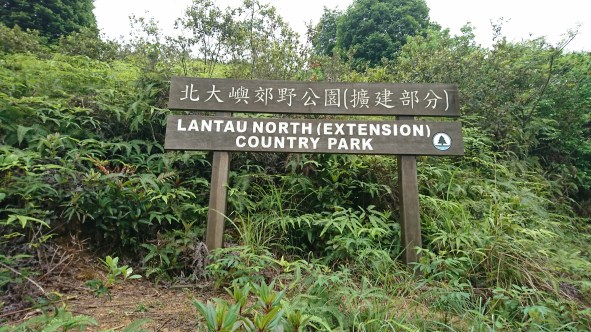
The background is that the country park system grew up in an ad hoc way in the 1970s, mostly comprising land too steep or rocky or remote for development. But it also left ecologically important sites outside the parks.
So let’s commission an independent expert panel – no government officials, no party hacks, no cronies – to identify the ‘low-ecological value’ sites on country park borders as well as the ecologically important sites not protected.
In doing so way we set markers for what is and isn’t ecologically important and build up a bank of land to for the years to come.
Once we’ve created the new park borders, let’s pass a law to guarantee they are inviolate for the next 50 years. And let’s protect those ecologically sensitive sites that can’t be added to parks by creating a body of law and a team of enforcement officers that will punish those who damage them.
We will lose some country park land, but extend protection to vulnerable sites. It shows a government willing to defend the city’s natural heritage while also making progress on housing and at the same time demonstrate an ability to collaborate with civil society.
It is the exact opposite to the current initiative. In delegating to the Housing Society Leung has made it clear he sees country parks as a storehouse of land for development, regardless of environmental impact or public expectation.
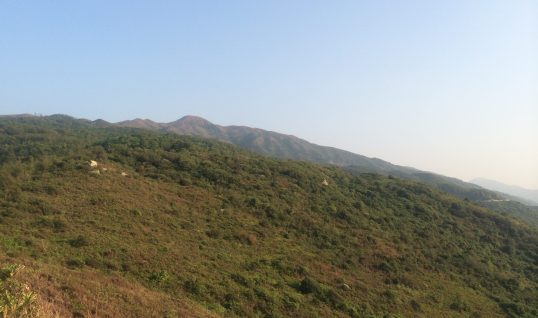
Fan Lau, Lantau South Country Park
This is an autocrat’s way of getting things done. It’s also another sign that we live in a construction state, primed to continually identify new development projects at public expense. The ‘Belt-Road’ scheme is the ultimate expression of this.
Lantau has been subject to these one after the other: the Macau Bridge, the Shek Kwu Chau incinerator and on the horizon, the East Lantau Metropolis.
During the Lantau development consultation last year government officials repeatedly assured citizens that south Lantau would remain a green zone protected by its country park status. We know now that that protection means nothing.

Silvermine Beach river crossing to be upgraded to twin bridges
The Wang Tong River bridge on Silvermine Beach is to be replaced by separate pedestrian and cyclist bridges under a Highways Department plan.
The existing 1.5-metre wide bridge will become a 35-metre long crossing comprising a 3.5-metre wide bikeway and two-metre wide pedestrian path.
In a submission to the Islands District Council traffic and transport committee the department said the current bridge is frequently congested “when both the local residents and tourists use [it] simultaneously.”
“The lack of segregation also raises road safety concerns as pedestrians, cyclists and village vehicles may come into conflict with each other during peak periods .”
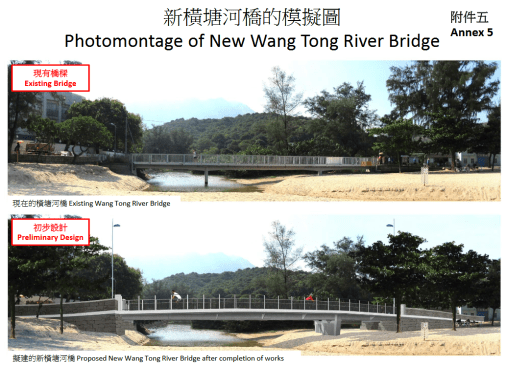
Source: Highways Dept
The department does not put a price tag on the twin-bridge project, but warns it will mean temporary closure of the existing bridge during different phases of construction.
It also does not specify how long construction will take but the environmental assessment report filed by the Environment Protection Department in 2013 said it would be approximately two years.
The project is the latest in the Mui Wo Facelift programme that has been underway for the past decade.
 Lantau Confidential
