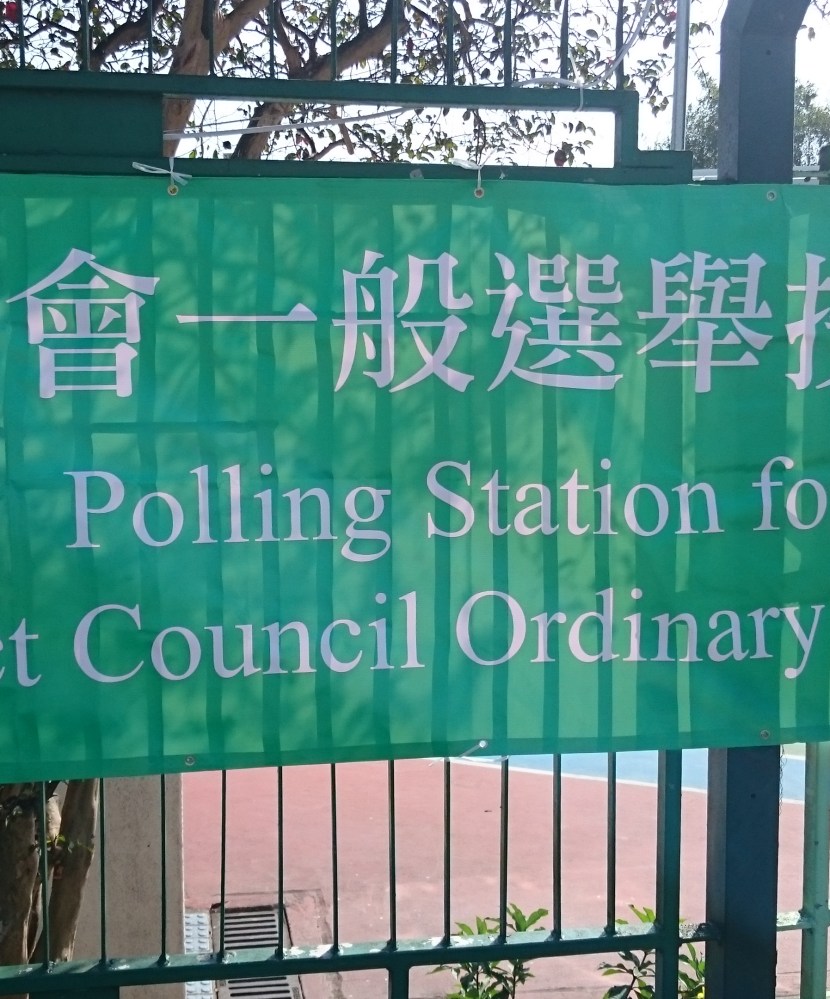
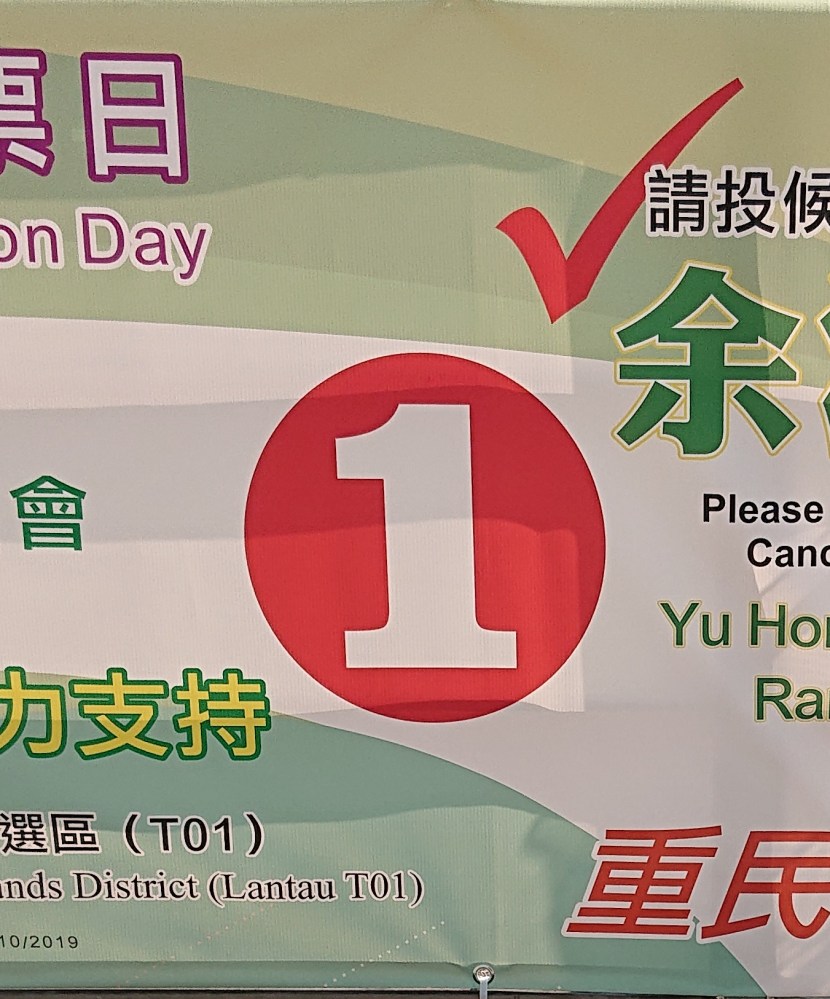
Randy Yu has hung on to his Islands District Council seat in the face of the massive democratic wave that swept Hong Kong yesterday.
Fung Siuyin from the pro-democratic Islands Connection won 47.9% of the vote to come within a whisker of a massive upset in a traditionally safe pro-government electorate.
As with the rest of Hong Kong, the Lantau race attracted a record turnout, with 5,517 casting a ballot, up 47% from 2015.
In a tense ballot count at the Mui Wo government complex late last night, the race looked set to go down to the wire after the Mui Wo result put Fung on 2315 votes, just 87 behind.
Yu
Fung
Tai O
698
422
Tong Fuk
173
138
Pui O
363
385
Mui Wo
1168
1370
Tung Chung
461
318
2863 (52.1% )
2633 (47.9%)
However, Yu picked up most of the votes in the Tung Chung booths, which includes old Tung Chung, remote north Lantau villages such as Sha Lo Wan, and Sea Ranch.
In the only formally-declared Islands council result, Civic Party member Amy Yung has comfortably held on to her Discovery Bay seat.
The democratic wave puts pressure on the new council to revisit the question of breaking up the Lantau seat. It is geographically the biggest constituency in Hong Kong and also 48% over population quota – way overdue to to be split into two.
He is assumed to be running for chairmanship should he win
tomorrow.
But while he may have been a district councillor these past four years, his main political role, and the source of his power, is his close connection to that uniquely Hong Kong outfit, the Heung Yee Kuk.
Yu describes himself as an independent and while he has no party affiliation he has married into the clan of the late Heung Yee Kuk strongman Lau Wongfat. The current kuk boss, Kenneth Lau, is his brother-in-law.
The kuk represents some 700 village rural committees
and in its own telling protects traditional rights and culture.
But for most Hong Kongers the kuk, the rural
committees and the indigenous house policy they defend are emblematic of the
culture of entitlement and cronyism that fuels their rage.
In a city with the world’s most unaffordable housing, the rural committees monopolise hundreds of hectares of valuable land. No wonder that 42% of Hong Kong want to see the small house policy abolished.
But the kuk is powerful – it has its own seat in Legco and its ‘rights’ are written into the Basic Law. Along with its opposition to modern democratic practice these make it a natural ally for a government that is a coalition of narrow vested interests.
Randy Yu’s main job is to preserve these privileges.
In person he is an affable fellow and it is impossible to imagine him, say, high-fiving a triad boss.
He has a track record in business environmental organisations, and was active in the revitalisation of the Tai O Heritage Hotel. There is no reason to doubt his personal journey, as revealed to the SCMP, of wanting to put something back into the community.
But his four years as district councillor seem to have
passed without a trace. It is difficult to find something, anything that he has
achieved.
Lantau News has on several occasions invited Yu to share his district council track record, but he did not respond.
Councillors may have limited power, yet most sitting members are able to point to, say, a better bus service or new street lights. But even Randy Yu seems to have trouble identifying his successes.
His election material cites the Mui Wo sewage treatment works, for example. But the contract for that project was issued nine months before he was elected.
Why waste time on people’s problems?
Lantau News asked the local community, via a Facebook page, of their interactions with Yu. None of the nearly 5000 members could recall Yu helping to solve any problems.
One woman, whose family member was badly injured in a fall near the ferry pier, said she had asked for help but received no reply from Yu’s office and ended up dealing with the government department herself.
The most likely explanation for all this is that Yu suffers from the malaise that afflicts the city: a lack of responsiveness that comes with a lack of accountability.
Regardless of what district councillors actually do, rural parties have a huge patronage network and a rusted-on supporter base. Why waste time on other people’s problems?
As an activist from another island community puts it: “The
establishment members have a huge base of support – they don’t bother doing
anything even for the local Chinese community.”
That is the source of Hong Kong’s crisis. Since 1997, one leader after another has been unable to tackle the city’s big issues – housing, inequality, air quality, democratic reform – because these would mean confronting the vested interests that keep them in power.
The current political impasse shows Hong Kong badly needs change. For all his good intentions, Randy Yu’s mission is to ensure that everything stays the same.
In a letter to the Sustainable Lantau Office (SLO), he said “vandalism continues unabated with seemingly little interest” from government officials.
Since officials last visited four months ago “there has been considerable further damage to the Pui O wetlands including multiple areas of fencing off, including across streams and mangroves,” he wrote.
“The
wetlands are now close to being unviable as a home to the unique
water buffaloes of Hong Kong, much loved by local people and visitors
alike.”
The SLO was formed in 2017 as part of
the government’s push to develop Lantau. Despite its name, it is a
unit of the CEDD, staffed mostly by civil engineers.
It is responsible for carrying out the government’s conservation policies as well as development, but has few staff with environmental expertise.
More wetlands clearance (Photo: Lantau News)
Another resident, Tom Yam of Mui Wo, says the SLO’s conservation efforts have been “an abject failure, with more pristine wetland damaged and no damaged land recovered.”
The agency has set “no specific results or deliverables,” and has “no management plan that holds individuals and organisation accountable,” he said.
“It makes a mockery of your claim to ‘conserve the south and develop the north’ in Lantau. We only see development in the north and degradation in the south.”
Chief Executive Carrie Lam has vowed on multiple occasions to protect the Pui O wetlands, the city’s last major remaining buffalo habitat, but has yet to enact any new policies.
She has promised but not delivered a HK$1 billion Lantau Conservation Fund.
Lerigo
asked if the office had taken any action to halt CLP’s
connection of electricity supply to illegal structures. “This is a
key driver of the environmental vandalism.”
He pointed out that a removal notice had been issued on an illegally-developed site seen by SLO officials on their most recent visit , yet “fencing is still there and has been expanded.”
Lerigo also asked:
If the SLO had taken any action to increase the level of conservation expertise. “Only four out of the SLO’s 111 staff have any professional expertise in conservation matters.”
If any progress had been made in setting up the Lantau Conservation Fund
The status of its proposal to use resumption or a managed scheme as a solution
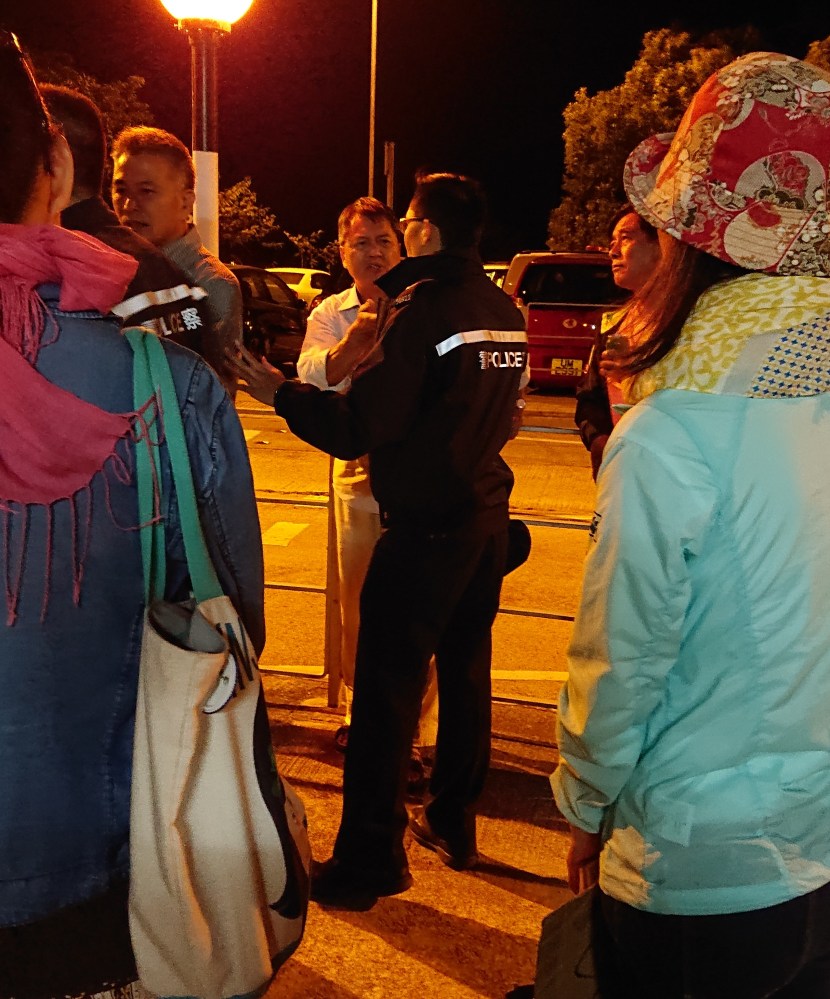
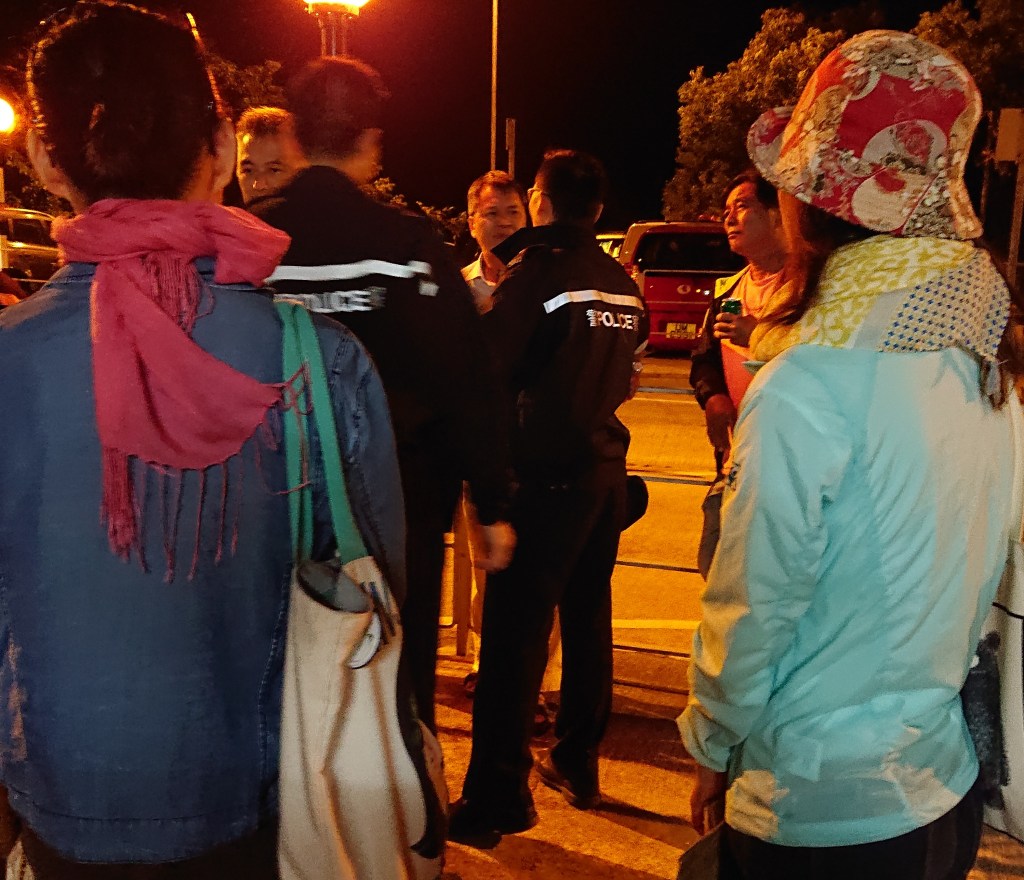
Police were called to Tong Fuk this evening after a canvasser for candidate Fung Siu Yin alleged she was assaulted by an unknown man.
The woman, a Mui Wo resident who declined to give her name, said she was handing out leaflets for Sunday’s district council poll when a man tried to take her campaign sign.
When she resisted, she said he struck her in the stomach and ran off. She said the contact was not forceful and she did not require medical attention.
The woman’s screams attracted a crowd, and she said she was “shocked” to find herself suddenly surrounded by about 12 people. Some of them abused her and threatened to attack her.
Lantau police mollify villagers
Another campaign volunteer called the police, who attended the scene at around 9:45 and spoke to the campaign workers and villagers. No arrests were made.
There is no suggestion that the incident was premeditated or involved any other political groups.
Fung Siu Yin is the challenger in Sunday’s district council poll and a part of a new face in local politics.
Standing for the Lantau seat, she is pro-democratic, green and a member of a new group called Islands Connect, which is ensuring that for the first time democrats contest seats in all four islands in the district.
Fung, 33, has lived in Tung Chung for 20 years. She has worked as a Legco research assistant for the past eight years, and is currently on Eddie Chu Hoi-dick’s staff.
She opposes Lantau Tomorrow Vision, which she says has had scant scrutiny from the council. If elected she would call public hearings across Lantau to debate the project.
She has also done a good deal of work on public transport issues, finding that South Lantau residents object to the Sunday fare hikes and want to see more frequent services of both bus and ferry.
Having spent her early career working on senior and social welfare issues, she also advocates expanding community centres and medical services for the elderly and wants to set aside land for a retiree-run community farm.
The vacant Mui Wo high school, the wetlands and the Mui Wo improvement works are also high on her agenda.
Here is a condensed version of Lantau News’ interview with Siu Yin.
Why are you running for District Council?
I have lived in Tung Chung for about 20 years. In 2014 I knew we had big developments coming into Lantau. From that we tried to have some education and oral history documentation to tell people what would happen.
In 2018,
the Lantau Tomorrow Vision was announced. In those four years, I had learnt
more about Lantau people, and we know more about their needs. There were many
problems with elderly citizens, and some education needs.
In our
group, Save Lantau Alliance, we discussed the elections and we wanted to have a
role, to have more debate in the community to talk about what we want for
Lantau’s future. That’s why we are
running for election this year.
How do you see the role of the district council?
They get a lot of information from the government, and the government often consults with them on education, bus services, medical services, etc.
The councillors also can vote for the chief executive and one of them can be elected to Legco. They can meet with different government departments, they can share their ideas. They have many ways to work with the government.
You talk about reforming the district council. What would you do?
The Islands District Council has 18 members, including eight ex officio. So many people don’t have a voice. So we want to open a platform. We want the residents in the Lantau community, who care about the community, they can voice out.
For
example, the bus company wanted to increase bus fares. They just informed the
district council but most Lantau people didn’t know. In May we did a street survey. We found more than 68% of people
didn’t know the bus company was applying to increase the fare.
We will have social media channels, like Facebook or WhatsApp. Give people many channels to share their opinions. We think if the district councils are working, then there will be less anger in the community.
Can district councils do anything to address the current political crisis?
We can open many forums to discuss what people are ask for. Is it reasonable or not reasonable, what is the meaning of the five demands, and so on. Because now you are blue, I am yellow, we are totally divided into two colours and we don’t want to talk to each other. It’s not a healthy relationship.
Lantau Tomorrow Vision is a huge project and the government seems determined to build it. What can you do in the district council?
The district council talked about Lantau Tomorrow Vision just once, for one or two hours, and then a show of hands.
If we can
get to District Council, we will have an agenda item to discuss Lantau Tomorrow
Vision. We want to have a public hearing.
It’s not local to Central, so we will have public hearings in Lantau –
in Mui Wo, Tai O, and so on, and we can hear people’s opinions.
How to help Lantau’s senior population?
Lantau has a population of about 24,000, of which about 7,000-8,000 are over 50. But we have just one elderly home in Mui Wo. Two years ago, the home in Tai O closed.
The medical
system is very important for them. We have just two clinics, with a limited
service level, in Mui Wo and Tai O. It’s not enough. Also in Mui Wo the
population has risen to more than 6,000. That’s why we ask the clinic employ
two doctors, now just one.
We ask for
community support service for the elderly. Some of them need help in cooking
and cleaning, so they can live in their homes. We would like to set up
community care services where they go to people’s homes, help cook and clean.
We also need community centres for the elderly, where they can read newspapers, sing together, have some health checks.
Right now
we have a small centre in Mui Wo. In Tai O – nothing. In South Lantau – zero.
NGOs provide services from Tung Chung, but that’s not reasonable. So that is
why we hope to have centres in South Lantau and Tai O.
Also,
elderly people feel bored. They say they would like to have a community garden.
They know how to farm. They can raise chickens; chickens can eat waste food
that humans won’t eat.
They can provide value in return – food, recycling, education for young people as well. So they become teachers. It’s more positive, right?
What is the status of the Mui Wo school?
The school [the New Territories Heung Yee Kuk Southern District Secondary School] has been closed for 12 years. We want to re-use the school for the elderly services, medical service and also education services – for kindergarten, primary school – so it is not wasted.
In the last few months we have had communication with the residents. Many of the Mui Wo kids are under six years old. They are going to Tai O, Tung Chung or Tsuen Wan for kindergarten. We see here is a need in the community. We have an empty school – it’s a perfect match.
You have done some work on public transport issues. What have you found?
Two months ago we did a survey and held a forum.
For buses, the most important thing people are concerned about is service frequency. People also worry about the safety of the double decker buses. On the upper deck most of them don’t have seat belts. There’s no room for luggage upstairs, either, so they have to put their suitcases in the aisle. It’s dangerous.
For both
bus and ferry, people want to cancel the extra charge for public holidays and
Sundays. They think it’s not reasonable.
The
government gives
subsidies to ferry companies. We want to improve transparency and open up
the financials of the ferry companies so we know how they are spending the
subsidies.
People also care about frequency. We need more ferries at peak times. The bus and ferry companies and residents don’t have the chance to communicate. District council members can create a platform for us to talk – we can hold a meeting once every two months.
The government has made promises over the Pui O wetlands but has done nothing. How can you help protect the wetlands?
We have a
law to protect the South Lantau wetlands and also to protect the buffalo. Two
years ago the government agreed to update the law, but this year the Chief
Executive Policy Address again failed to mention it.
I think
district council members can raise this issue again.
In South
Lantau and Mui Wo, we have different parties. One will love and care about the
environment. They know the ecosystem is very important for the community. The second – they want more development.
They have the intention to destroy the wetlands. They also have the intention
to move the buffalo and cows.
The first party includes many of the residents. They love the buffalos and love the wetland, but they are scared to speak out. If district council members can collect people’s ideas about the wetlands and how to deal with problems of the buffalo and try to find a way to form a community consensus.
Also we have connections with the FEHD and the EPD, some of them are friends. We ask them what are the problems they face. Resources? Manpower? Rural party problems? We want to know what the problems are and try to find a way to protect the wetland and the buffalos.
I think education is very important. We have some residents who know a great deal about the cattle and buffalo and are willing to share. If more people know how to communicate with the animals and understand their behaviour, that will help.
What is the progress of the Mui Wo facelift?
They call it the Mui Wo improvement works. The first question is: improvements for whom? For tourists or residents?
When we saw the plan from 2017, we didn’t see improvement for residents. They moved the bicycle parking far away, and then moved the restaurants into the ferry pier building.
We collected some opinions. People really strongly disagree with moving the bike parking. It’s not convenient for them. But now the problem is not enough space. That’s why we have bicycles everywhere. So people suggest that we should extend the bike parking because more people are moving here.
So we asked the CEDD for more information. They told us the plan was made in 2017, but can change and they are considering changes. But they don’t think it will happen immediately – maybe it might take another five or ten years to finalise this stage.
For the
residents we think that is good, so we have more time to discuss what we
need. Hopefully more time to debate and more time for them to change their plan so it works for residents,
not just tourists.
If Hong Kong leaders were trying to avoid controversy ahead of the District Council election, banning Joshua Wong was maybe not the way to go about it.
The exclusion of the 23-year-old activist poll became a global news story – to the doubtless bemusement of anyone actually familiar with district councils.
They are elected bodies, yes, but they don’t perform any meaningful governance. They are a branch of the Home Affairs Bureau with no power to make decisions, pass laws or raise revenue, and no income other than government grants.
Historically, they grew out of the neighbourhood support groups known as kaifong associations (街坊會) that the British formed back in 1949 (this wikipedia entry traces their history).
The district councils were created as a bridge between the unelected government and the governed, and that is pretty much their role today.
The Joshua Wong kerfuffle shows that, amid the worst political violence in 50 years, even the once-sedate District Council has become a political battleground.
With government support plumbing new depths over its inept handling of the protests, democrat forces are expected to perform strongly.
A hill to climb for democrats
But they have a hill to climb. Of the current 458 members in 18 District Councils, 327 are pro-government.
The gap is even more pronounced in the Islands District Council, where 16 out of 18 members are pro-government.
The Islands numbers are further distorted by the presence of eight ex officio members – rural committee chiefs who are automatically appointed. Our humble local body accounts for almost a third of the total number of ex officio councillors.
Though their influence has dimmed in the rest of the city they remain quite influential in the Islands council.
Case in point was the flap over the possible addition of an extra elected council seat.
Currently the Lantau electorate covers all of Lantau south and west of Tung Chung, including Shek Kwu Chau and the Sokos. It’s the largest electoral district of any kind in Hong Kong.
In a statement to the council in February 2018, she pointed out that while the rural appointees may not feel any impact, any decision made on a new electorate could have “far-reaching” consequences for elected members.
While the number of seats remains the same, there has been a slight restructuring for the 2019 poll; the seat of Yat Tung South has been abolished and replaced by Mun Yat.
From taxis to trash
For all their limitations, the district councils are
important in several ways.
First, as a sounding board for the government. Notoriously, Carrie Lam did not test her unpopular extradition bill at any district council. Her government did put the Lantau Tomorrow Vision to a vote, however.
Second, it’s the only place where local issues are raised and dealt with. Concerns are aired and government bureaucrats are grilled on problems from taxis to trash.
Fourth, the councils have an influence on the city’s
politics beyond their regular remit of streetlights and bus services.
Between them the 479 members will get to choose 60 members
of the chief executive election committee. One of the councillors also has the
chance to be elected to a Legco ‘super-seat.’
So, in this impassioned political season, there are plenty of reasons for you to get along to the polling booth on November 24.
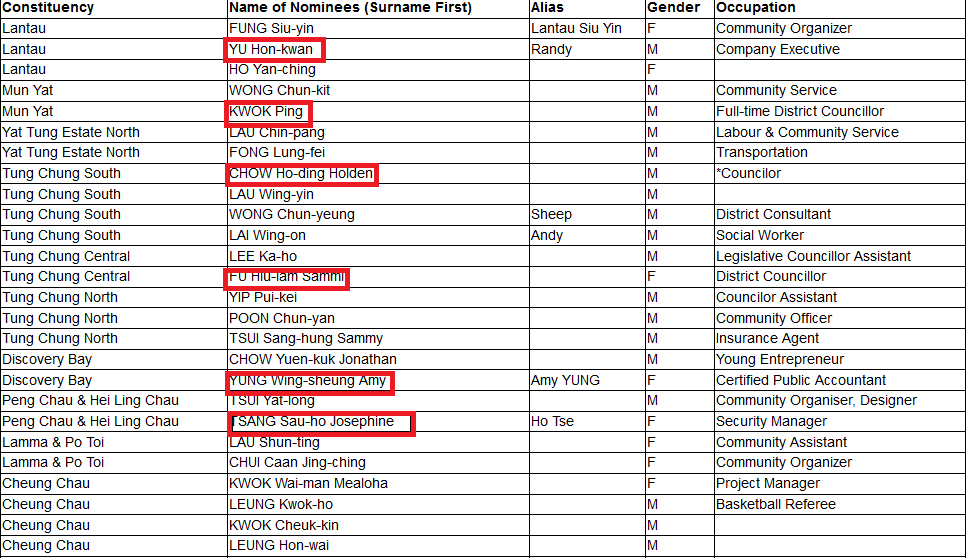
Islands District Council candidate list. Incumbent members indicated by red square
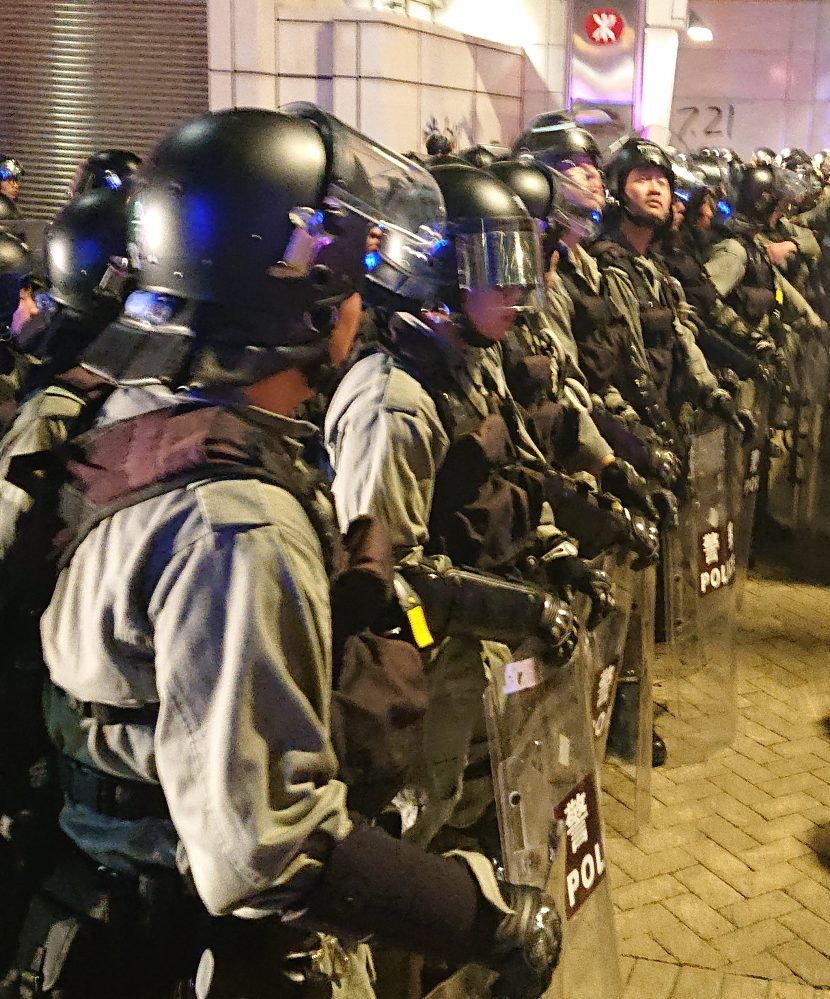
Tung Chung station and a number of other MTR stations may remain closed Monday after protestors vandalised machines and equipment today.
Following attacks on 32 stations across the city on Saturday evening, 12 MTR stations sustained damage today.
MTR Corp. described the damage as “very severe” and, without providing any detail, said some stations may remain closed Monday.
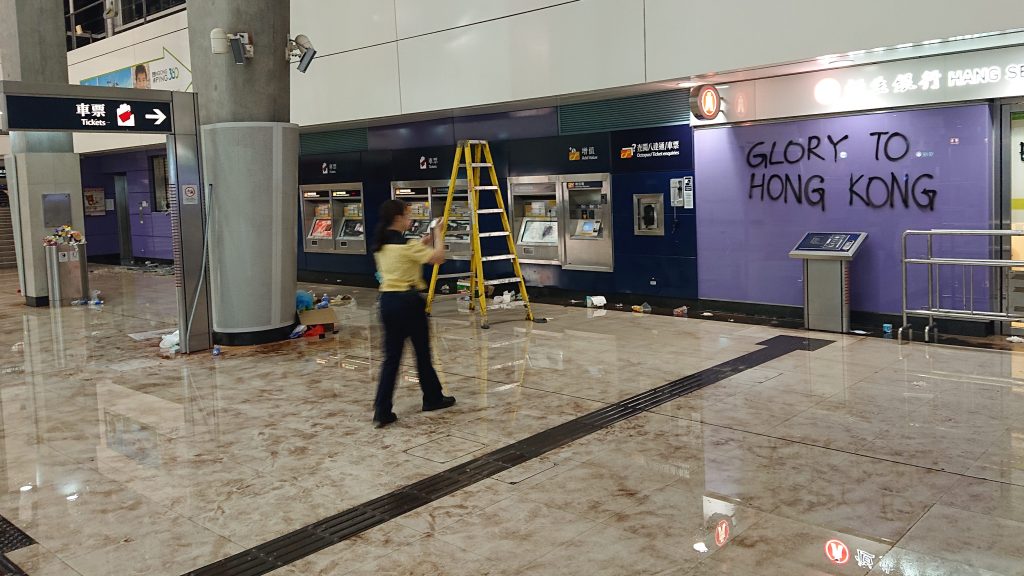
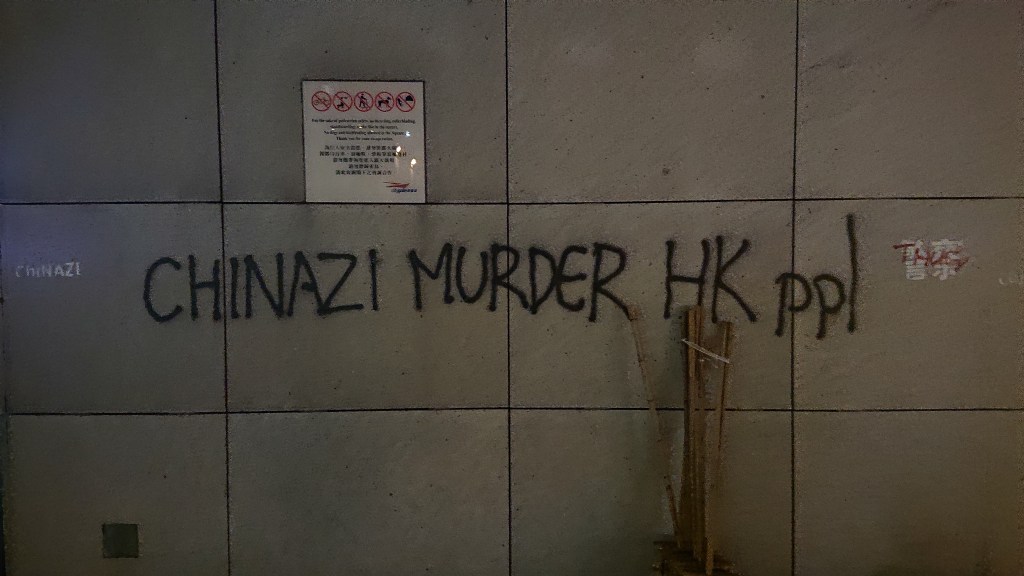
It said in the incidents on Sunday, which also included Tsing Yi, Tsuen Wan and Lai King stations that “people damaged CCTVs, ticket issuing machines and add-value machines, took away fire extinguishers and defaced stations.”
MTR Corp said it had had to close the Airport Express because of people entering the track and throwing stones and steel bars onto the tracks.
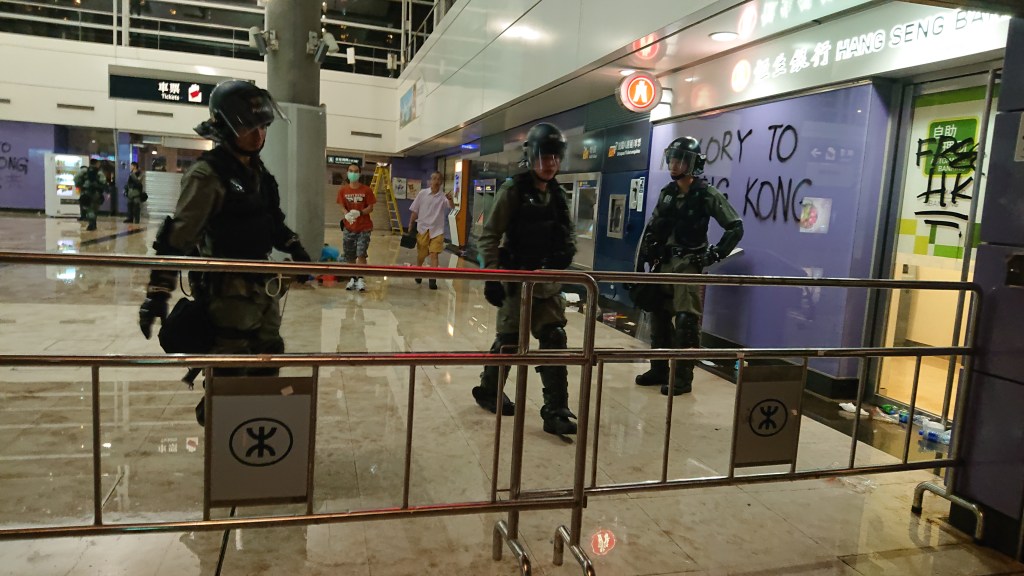
The protestors entered Tung Chung station and attacked ticket machines, sprayed graffiti and flooded the floor with water.
Some entered the Station Control Room, forcing staff to evacuate, MTR Corp said.
By the time police arrived in force at around 6:30pm most had departed.
Many were reported walking on the freeway towards Sunny Bay and the toll booth, where according to social media posts they were picked up by private vehicles.
Citigate mall and Fu Tung Plaza closed down following the incident, while local bus services were terminated at North Lantau Hospital.
Numbering about 200, riot police made a brief patrol around the MTR station before departing at 7:45pm.
MTR Corp said following the damage caused on Saturday night, Prince Edward and Mongkok stations were closed for repairs on Sunday morning while Kowloon Bay did not open until 4pm.
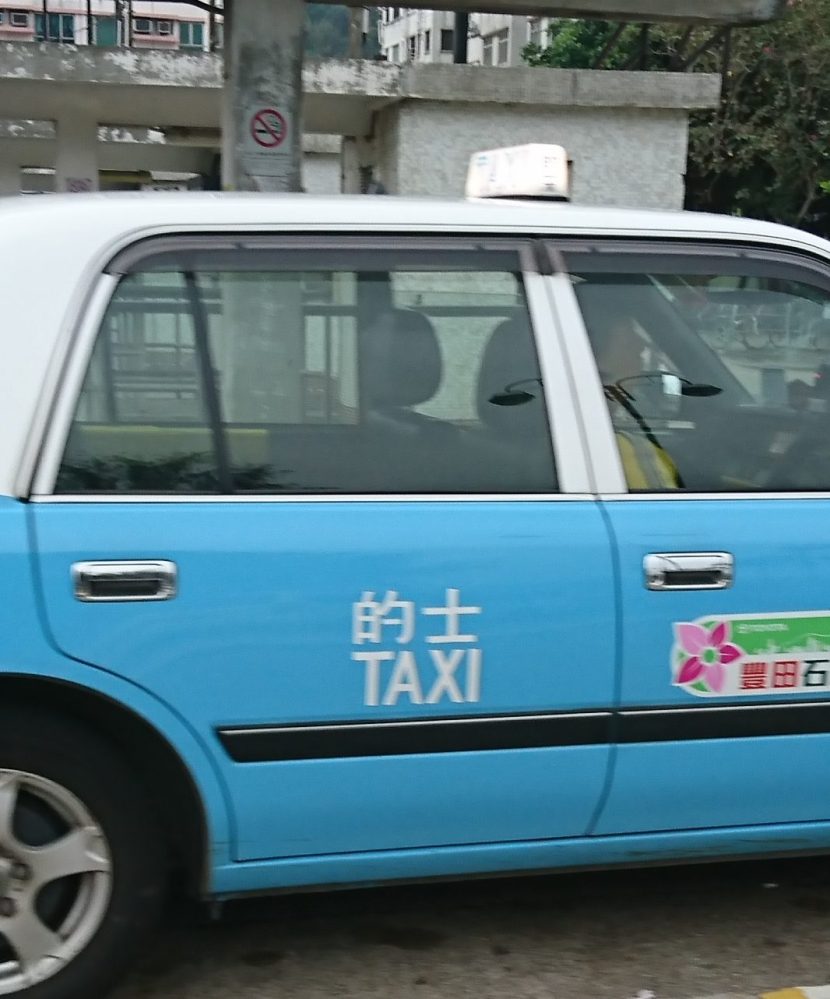
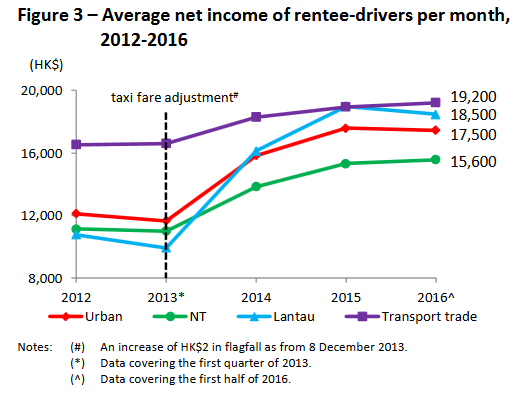
Lantau taxi drivers are possibly the best-paid in Hong Kong after incomes skyrocketed during the tourist boom 2013-15.
This chart (below), prepared by the Legco Research Office, puts the income for blue cab rentee-drivers at $18,500 a month, $1000 more than Hong Kong drivers and nearly $2000 more than NT drivers.
The auction of extra plates has eased taxi waiting times in Lantau, but it’s not clear what impact it has had on incomes.
However, the chart shows steep rise in Lantau taxi income in 2013-14, which was when local residents found taxis hard to come by.
That period coincided with strong growth of tourists, travelling mostly between Tung Chung, Disneyland and the airport, stranding Lantau’s small taxi fleet on the north coast.
It was a boon for drivers though. Average monthly earnings spiked from around HK$10,000 in early 2013 – the lowest of any drivers – to the highest in 2014.
But even the best-paid cabbies are paid less than truck and bus drivers, the figures show.
For that reason cab owners are increasingly looking beyond Lantau for drivers, which is why blue cabs are sometimes seen as far afield as Fanling, this story in Skypostreveals.
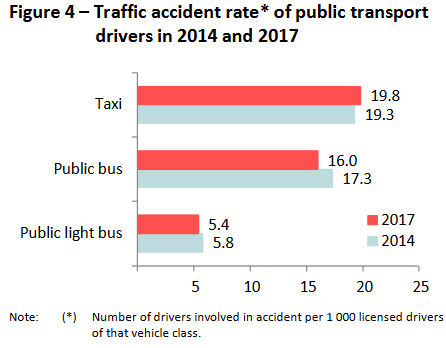
Another chart in the Legco paper shows that taxi drivers across Hong Kong are involved in more accidents than any other public transport category.









 Lantau Confidential