Lantau rescue fox can’t find a home

The abandoned marble fox rescued in South Lantau three weeks ago can’t find a home.

The young male was discovered in a distressed state in the catchwater near Tong Fuk and sent to Ocean Park for care.

But Ocean Park has announced that it can’t keep the animal because it is incompatible with the other species in its care. Genetic tests  show the animal is a red fox. 

After taking numerous factors into consideration, the Park concludes that the fox is not compatible with Ocean Park’s current collection, including the Arctic foxes, and the park is unable to provide a suitable facility with the desired level of animal welfare standards for the fox in the long run,

Elaborating, the SPCA said in a Facebook post that as well as not meeting with Ocean Park’s animal policies, the park also lacked the facilities and staff resources and expertise to take care of the fox.

It said Kadoorie Farm also couldn’t accommodate it for similar reasons.

The animal will remain at Ocean Park while the SPCA, Ocean Park and the Agricultural, Fisheries and Conservation Department discuss its future.

But for now no one can suggest where it will find a permanent home.

Here come the green minibuses

Lantau is about to get its first minibus service.

The Transport Department has called a tender for a green minibus service between the airport, the new bridge border crossing and Tung Chung North.

The circular route will be 22 kilometres long, with buses departing on average every 10 minutes apart. Fares will be capped at HK$11.30.

The service is expected to start when the Hong Kong-Macau bridge opens either late this year or in the first half of next year.

Cheung Honwah, chairman of the Hong Kong Public Minibus Bus Driver Association Association, said a number of owners were interested in the bidding for the contract, which also includes new routes in Tseung Kwan O, Tiu Keng Leng and Yuen Long, HK01 reported.

Cheung said he hoped the new service would be extended to include the Tung Chung MTR station.

In addition to the minibus service, the Transport Department is planning three new regular bus routes to carry passengers to the airport from Tung Chung, Sunny Bay and Disney, HK01 said.

Minibus route around airport and Tung Chung North


Saving the rhymes of Shui Hau

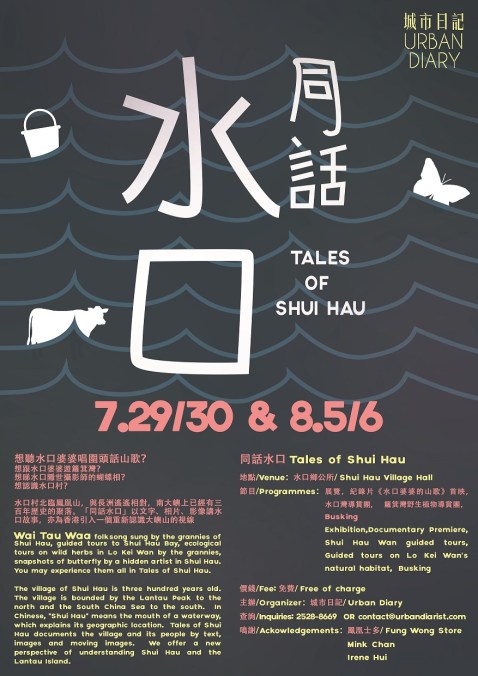
A team of Hong Kong artists, writers and documentary-makers has mined the rich 300-year-old folk history of Shui Hau for its latest work.

Producer Christopher Law and curator Chloe Lai from Urban Diary  went to the coastal village last year to collect villagers’ stories.  The result is a a documentary and exhibition that will be on display in Shui Hau this weekend.

One revelation is that most of the indigenous villagers speak a Cantonese dialect called Wai Tau.

“I was surprised as I had always thought that it was the language of the indigenous people in Yuen Long. I didn’t expect to be heard on Lantau Island,” Lai told HK01.

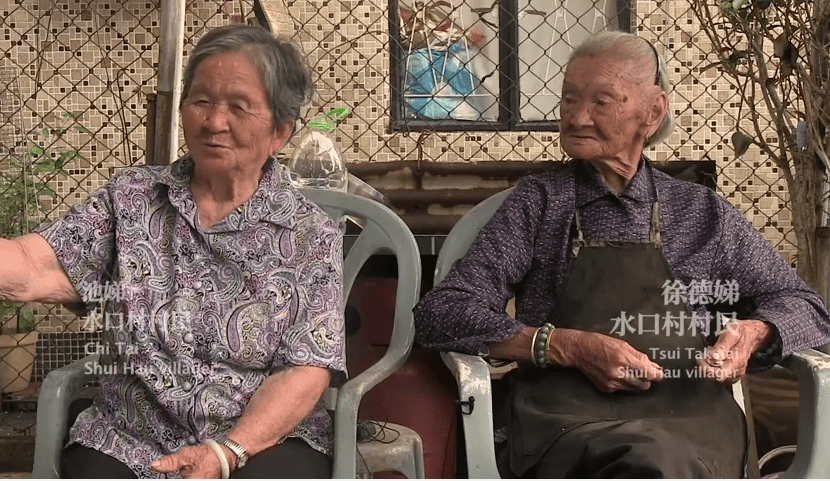
They found three older women who speak and sing in Wai Tau and made them the stars of their documentary, Rhymes of Shui Hau. Lai points out that Shui Hau has little written history,  making these women’s memories even more valuable.

Local resident Terry Boyce, who saw the documentary, said on Facebook:

The “stars” of the film are two Shui Hau “grannies” who talk about their childhood experiences living in Shui Hau in the 1920s/30s (one is now 91) and the oral tradition of singing songs in their native Wai Tau dialect. Of particular interest is that one of the “grannies” was born in Shek Pik village (which is now at the bottom of the Shek Pik reservoir). I think it is vitally important to try and preserve these oral histories and this small group of filmmakers are to be applauded for their efforts

The documentary and exhibition premiered in Shui Hau last weekend. They are on again this Saturday and Sunday, along with guided tours around the village and the nearby coastal area.

Theatre production comes to Mui Wo

A first for Mui Woo – Hong Kong’s first Afrikaans theatre production.

It’s based on the true story of Wolraad Woltemade, a South African hero who in 1773 rode his horse into the sea off Cape Town to rescue shipwreck survivors but eventually drowned himself.

Lymari Alberts and director Jan Brink, the two performers in the play, first staged it in 2015.

Lymari had been inspired by a novel about Wolraad’s fiancée Mimi, who was waiting for him to propose to her on the night of the accident. The play Mooi Annie focuses on Mimi and her impatience and anxieties over her future husband.

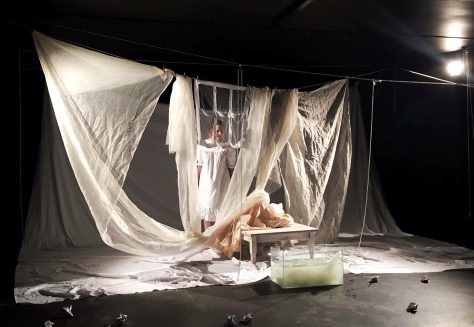
From the 2015 production

Lymari said she and Jan are both recently-arrived in Mui Wo and Hong Kong. “We’re still testing the waters with this being our debut production on Lantau.”

Director and performer Jan Brink describes the show, which will be staged at Stoep at High Tide, as “very interactive. We have simply forgotten the meaning of ‘fourth wall.’

“We have done this before though, so the audience is in safe hands.”

While Mooi Annie is in Afrikaans only, Lymari says her next production, Lungs, by Duncan Macmillan, will be staged twice, once in English and once in Afrikaans, in November.

What: Mooi Anni

When: 6-8pm, Sunday August 20

Where: Stoep at High Tide

Bookings required: Call Stoep 2980 2699 or message via Facebook/Messenger

Drunk driver pleads guilty over north Lantau road rampage

A 46-year-old CEO who broke through two roadblocks and led police on a 22-kilometre chase has pleaded guilty to dangerous driving and driving under the influence of alcohol.

The driver, Mo Lai-man, caused HK$300,000 in damage during a wild chase between Disneyland and Ma Wan on December 5 last year, Oriental Daily reports.

The pursuit began after a police patrol spotted Mo talking on his mobile phone while parked on Sunny Bay Road, near Disneyland.

He suddenly drove off on the wrong side of the road and ignored instructions from the officers to stop, sparking the pursuit.

He twice forced his way through roadblocks, damaging two police vehicles, two light trucks and another vehicle. When he finally stopped in Ma Wan, he was emotional, shouting that he wanted to die, and tried to jump from the freeway bridge, the District Court heard.

Aftermath (source: HK01)

He was later found to have contained 75 milligrams of alcohol per 100 milliliters of blood, well above the 50 mg limit.

Ma, the chief executive of China Dragon Membership Services, said he was distressed because of business debts and had intended to commit suicide.

The judge said the offences would usually require a prison term. He asked for a psychological and psychiatric report,  with Mo to be sentenced on August 17.

CEDD wants your opinion even if Randy Yu doesn’t

Good news, non-Chinese residents of Lantau.

The government thinks you’re worth talking to, even if our district councillor doesn’t.

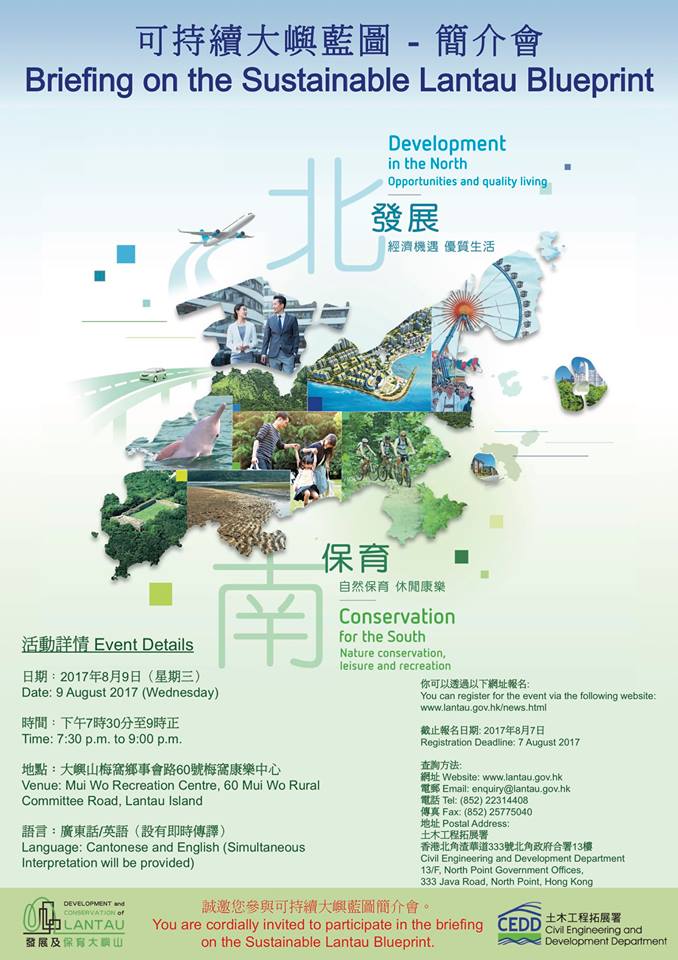
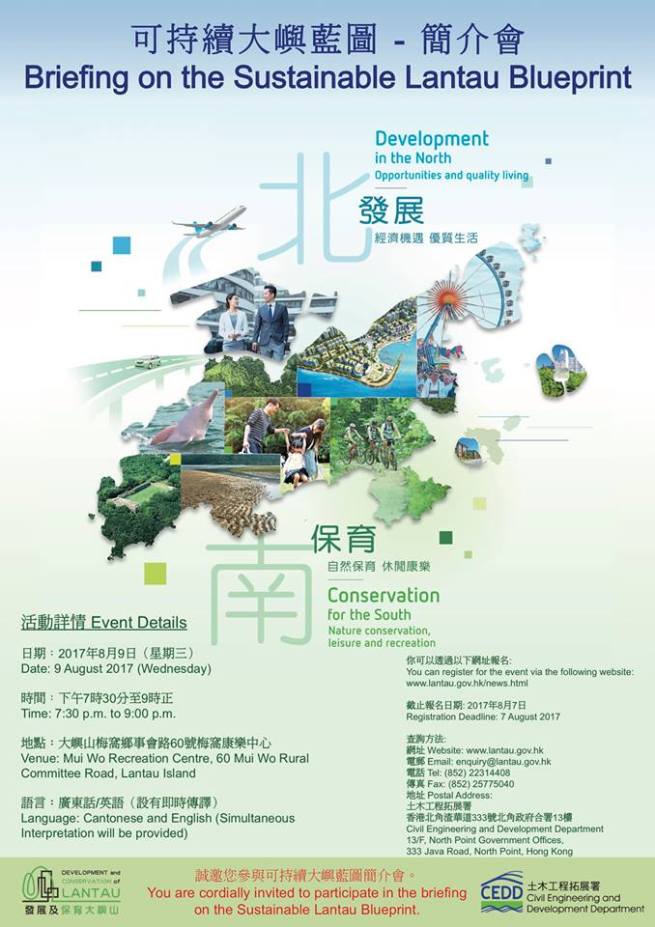
The Civil Engineering and Development Dept (CEDD) has finally issued an English-language invitation to a public forum in Mui Wo on the Sustainable Lantau Blueprint.

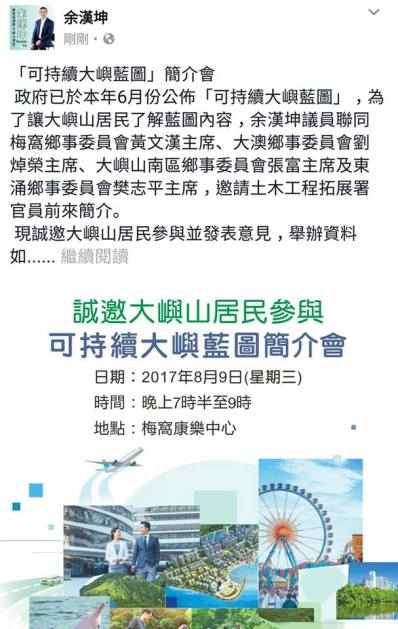
By contrast, Randy Yu, the Islands District Councillor announced the event on his Facebook page two weeks ago like this:

Early this year he incensed some residents when he held a public consultation (on East Lantau Metropolis) that only a few seemed to know about.

This time no one can complain about not being invited. Too bad a third of the community can’t read the invitation.

In fact, Yu’s entire Facebook page is in Chinese. If he has any interest in communicating with non-Chinese members of the community, there’s no sign of it – an unusual attitude for somebody whose job depends on winning people’s votes. Randy Yu and his staff also seem to be unaware that English is an official language.

Despite the rhetoric around sustainability, the August 9 event will be dominated by pro-development interests. As well as Yu and the CEDD, all four Lantau rural committees will be represented. A minor furore has broken out over the latest sign of environmental tokenism, the appointment of a recently-retired planning bureaucrat as Lantau’s ‘conservation coordinator.’

Those who wish to attend will need to register by August 7.  Send your emails to enquiry@lantau.gov.hk.

Here is the CEDD Chinese/English flyer, issued Friday:

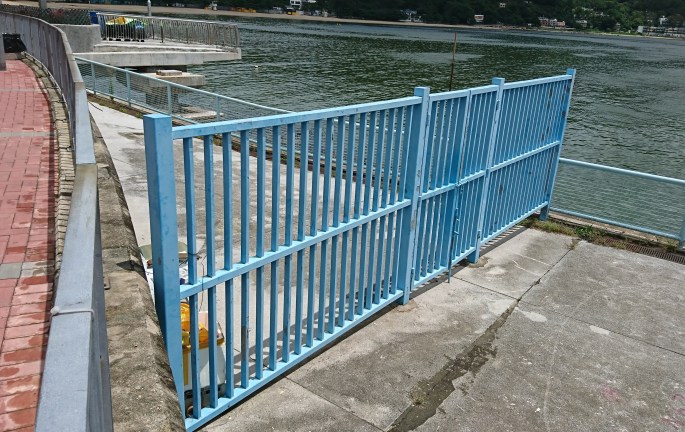
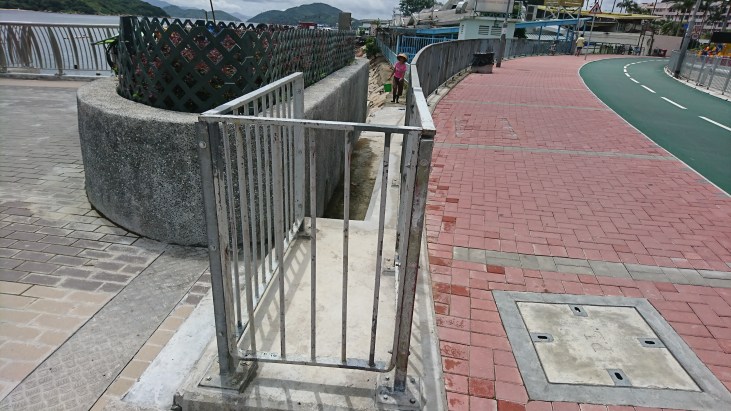
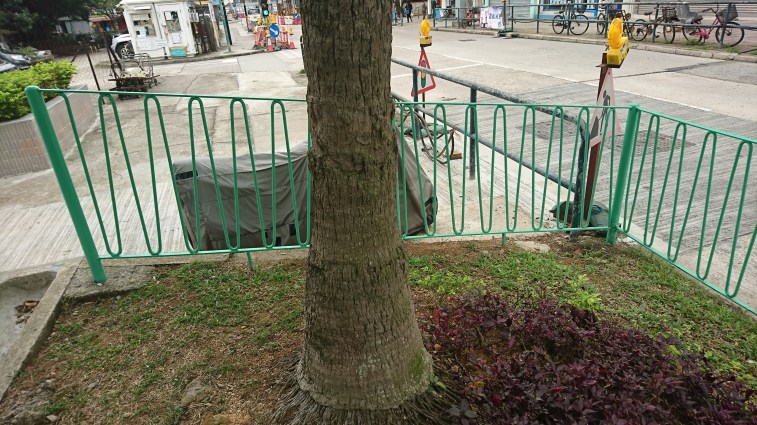
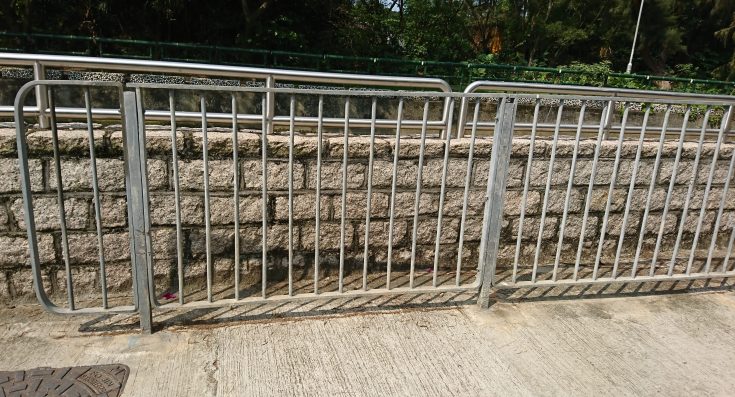
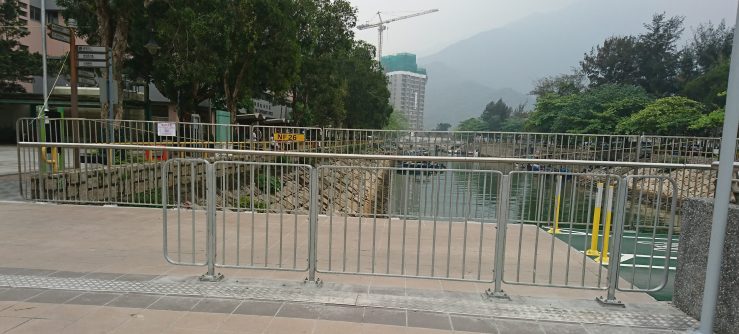
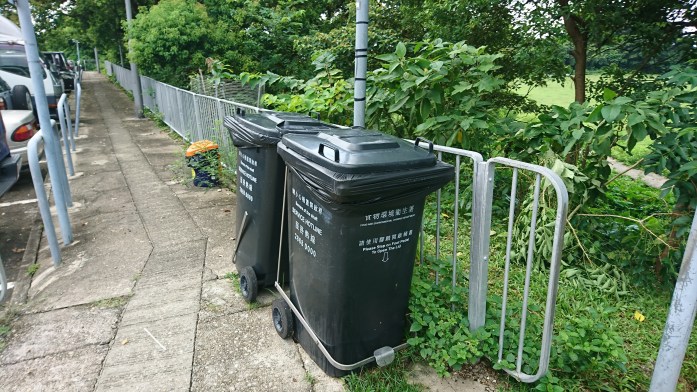
The Great Fences of Lantau

Donald Trump is having trouble building his beautiful wall at the Mexico border. Sad!

We don’t have a lot of walls on Lantau, but we have fences – it’s a core competency .

So, here they are – Lantau’s Top Ten Greatest Fences.

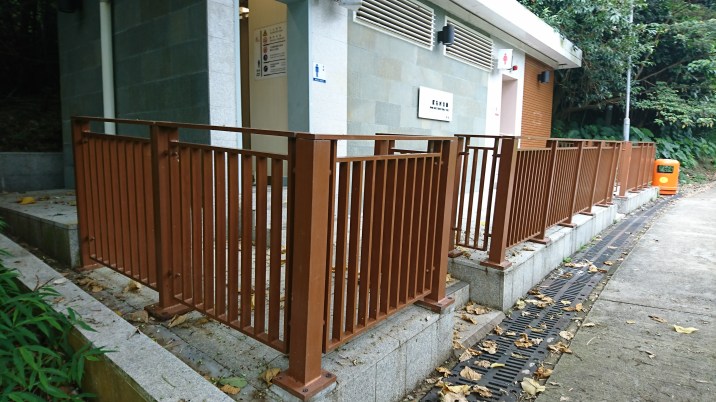
#1. The public toilet perimeter fence

Eliminates the threat of falling toilet patrons

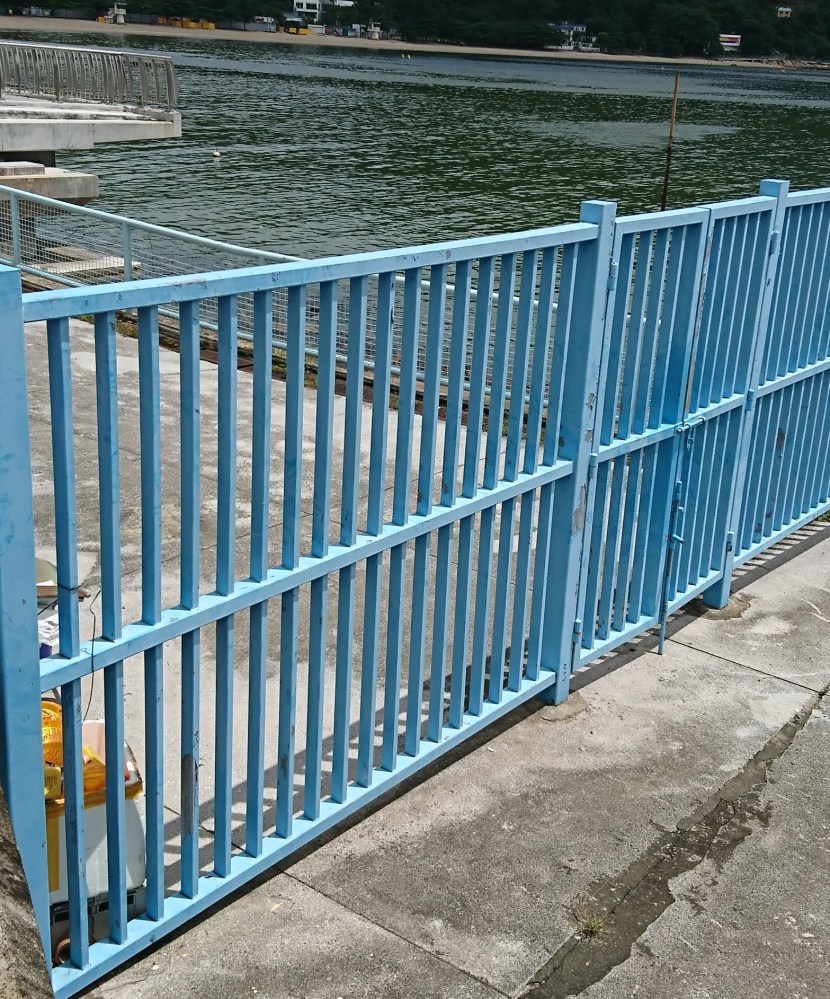
#2. The double fence

Why build one when two will do?

#3. The concrete enclosure fence

When your vacant concrete space needs protection

#4. The attention-to-detail fence

Let no square inch of cement go unguarded

#5. Green fence

Nothing says ‘green’ like a fenced-in garden

#6. The wall fence

Even walls need protection

#7. The quiet rural road fence

For those traffic blackspots with no traffic

#8. The extension fence

When you need an extra barrier, even if you’re sure not why

#9. The car park backstop fence

A sanctuary from dangers that lurk

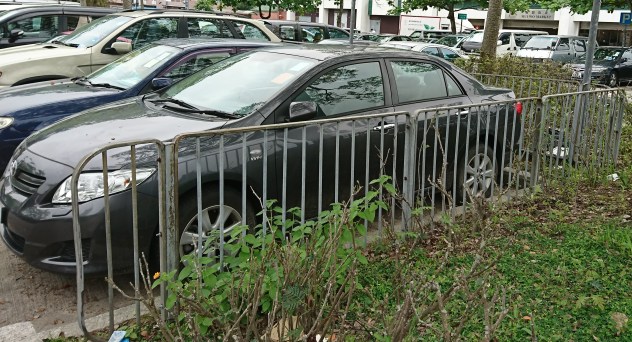
#10. Car door defence fence

A barricade against the peril of vehicle doors


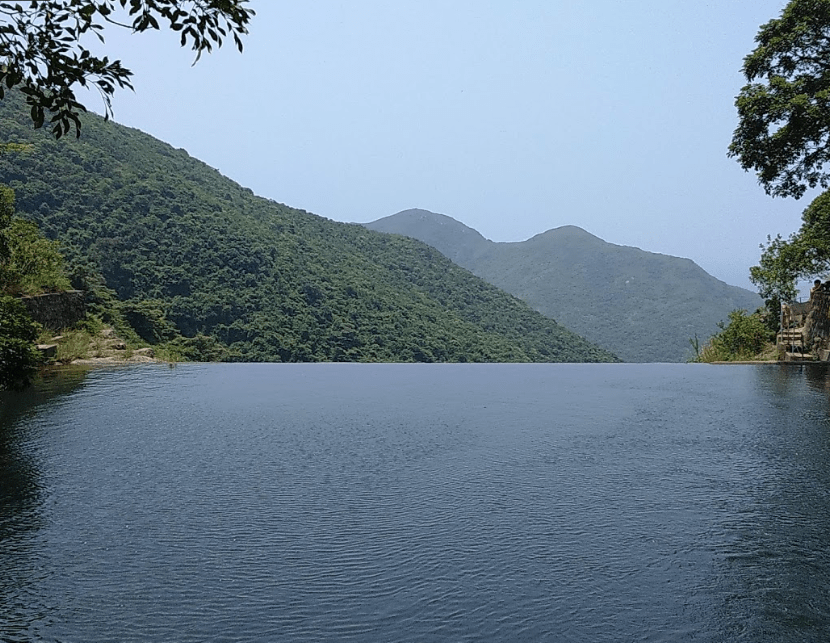
Hikers fined for swiming in Yi O infinity pool

Two people have been fined HK$500 for swimming in the Man Cheung Po infinity pool at Yi O.

The site, a 30-minute walk from Tai O, is a popular summer destination for its spectacular waterfall and pool, but is also protected under the Waterworks Ordinance.

The Water Supplies Department (WSD) received a complaint that people had entered the water catchment area in June and worked with police to identify the offenders, the Oriental Daily reports.

Crowds at the pool (Source: Oriental Daily)

The two were convicted in West Kowloon Magistrates Court on July 24 for being in a water catchment area in violation of the Waterworks Ordinance.

Under the Waterworks Ordinance, it is an offence for any person to enter a water facility to swim, with a penalty of a fine of up to $50,000 and two years’ prison.

Mui Wo’s coming population boom

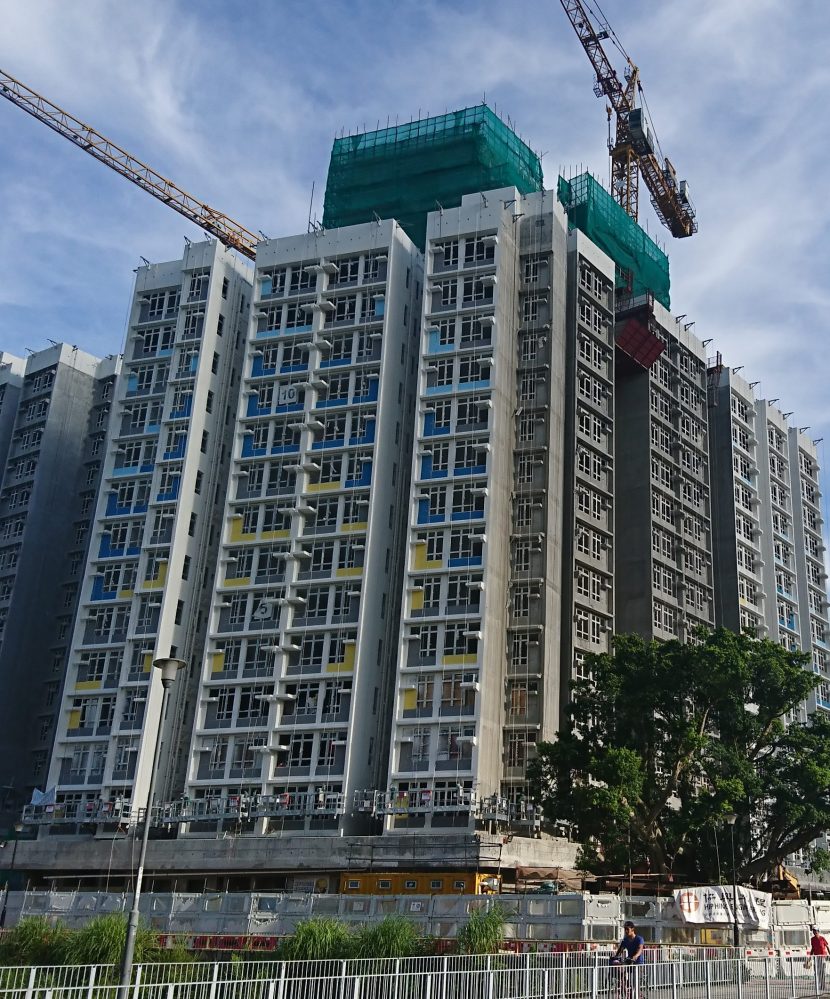
Around this time next year Mui Wo’s population will undergo a sharp expansion with the completion of two new public housing projects.

The new estates, Ngan Ho Court and Ngan Wai Court, will provide 700 new apartments, enough to support approximately 2000 new residents. That means the current Mui Wo population of around 5,500 will increase by 35% or more.

The bigger of the two will be Ngan Ho Court, at the end of Ngan Kwong Wan Road. It comprises two blocks, one 18 and the other 16 storeys, altogether containing 529 apartments.

Ngan Wai Court, which faces the rear of the Mui Wo clinic on Ngan Kwong Wan Rd, is a single 16-storey block with 170 homes.

Q: Why Mui Wo?

The Hong Kong government has built subsidised public housing since the 1950s. Today, 46% of the population lives either in public rental or subsidised sale flats. These new apartments are built under the Home Ownership Scheme (HOS), one of several different programmes aimed at increasing the supply of affordable housing. Dozens of HOS estates provide housing for hundreds of thousands of people, including in Yu Tung, Tung Chung, and Lung Hin, Tai O.

Q: Why this part of Mui Wo?

Most land in Mui Wo belongs to indigenous villagers whose privileges are enshrined in the Basic Law. Ngan Ho is officially zoned in Mui Wo Fringe, while Ngan Wai falls into no zoning plan at all. No indigenous villager in Mui Wo is giving up any of his entitlements to alleviate the housing crisis.

Q: When will people start moving in?

According to the builders, both housing estates will be completed by August 31 2018. New residents will start moving in after the date.
 

Ngan Ho Court

Q: Are these units to be rented or for sale?

For sale. The sale is carried out by ballot and according to certain eligibility criteria.

Q: These aren’t the first public housing projects in Mui Wo, right?

They’re not even the first on Ngan Kwong Wan Rd. The Ngan Wan Estate, built in 1988, has 400 rental apartments in four tower blocks, with a population capped at 1,300.

Q: That’s a lot of extra people moving in. Can our transport services cope?

We don’t know. The New Lantao Bus Company is considering running double-decker buses to Mui Wo. It says details of its preparations will be contained in a five-year plan for the Transport Department.

New World First Ferry said, in response to a query from Bob Bunker of Living Islands Movement:

“We are collecting the data from related governmental departments in order for us to review and devise the overall sailing arrangements in the following years. Please be assured that we will closely monitor the change of passenger demand and provide appropriate sailing arrangements.”

We will post the Transport Department’s reply when it arrives.

MTR to build another 14,000 apartments on Tung Chung Bay

Yet another North Lantau Coast development is on the drawing board.

The latest is MTR Corp’s residential and retail project at Siu Ho Wan, about three kilometres east of Tung Chung.

The 30ha development, on top of the MTR rail depot, will create 14,000 apartments and 320,000 square feet of shopping malls, Economic Times reports.

Much of it will be low-rise, with altogether 108 buildings planned to house 38,000 people. The development will also include three schools, four kindergartens and a public transport interchange.

More than a quarter of the residential buildings will be built along the coast, looking out across Tung Chung Bay. More than 40 low-rise residential blocks will face North Lantau Highway.

However, the project is some time away. Construction is not expected to start until 2023 when work on the low-rise homes is due to get underway, and initial occupants are scheduled to move in in 2026. The final stage of the three-part project is forecast to complete in 2038.

The development will also include a new MTR station, due to start construction in 2016 and be completed in 2026. It is the third new station planned for the area, along with Tung Chung West and Tung Chung East.