
Category: Transport

Govt promises review after doubling subsidies to private ferry operators
After doubling subsidies for private ferry operators, the government has promised a review of the viability of islands services – but has made it clear it will resist making any major changes.
In the new three-year licensing period, which started on July 1, the Transport Department will tip HK$412 million in public funds into the biggest ferry companies.
These so-called Special Helping Measures (SHM) are in addition to other government support, such as the waiving of fuel duty and footing the bill for pier maintenance. The department does not put a value on these, but says that without the SHM fares will have to rise by 30%.
The current SHM are up 115% from the HK$190 million subsidy in the previous period and will go to just two companies – New World First Ferry (NWFF), which runs the Mui Wo and Cheung Chau routes, and Hong Kong and Kowloon Ferry (HKKF), which services Peng Chau and Lamma.
The other six outlying island ferry operators will receive no cash at all. In a paper to Legco, the Transport Dept acknowledges that some of these are running at a loss, but offers no explanation as to why only the biggest and best-connected firms receive financial support.
The subsidy has grown substantially since introduced in the 2011-2014 period at just HK$112 million.
It applies to eight different areas of ferry operation, the biggest of which is for vessel maintenance, which accounts for nearly 60% of the HK$412 million. For the first time, it also includes a subsidy for depreciation, which the department says will go to the acquisition of two new vessels.
To put the latest SHM into perspective, they are nearly half as much again as the HK$280 million invested by NWFF, the biggest operator, in its fleet.
The escalating outlays reinforce the criticisms of the ferry system that it is fragmented and unprofitable and that the three-year licensing term discourages operators from investing in their fleets.
The Transport Dept says it will review the long-term financial viability of the current system in 2019, including the possible extension of licence periods.
But it says that the idea of the government procuring vessels and outsourcing the operations breaches policy of putting all public transport in the hands of private companies.
The Islands District Council last month passed a motion calling on the government to conduct the review this year. Assistant Transport Commissioner Irene Ho, who attended the meeting, saying it involved a lot of complicated issues.
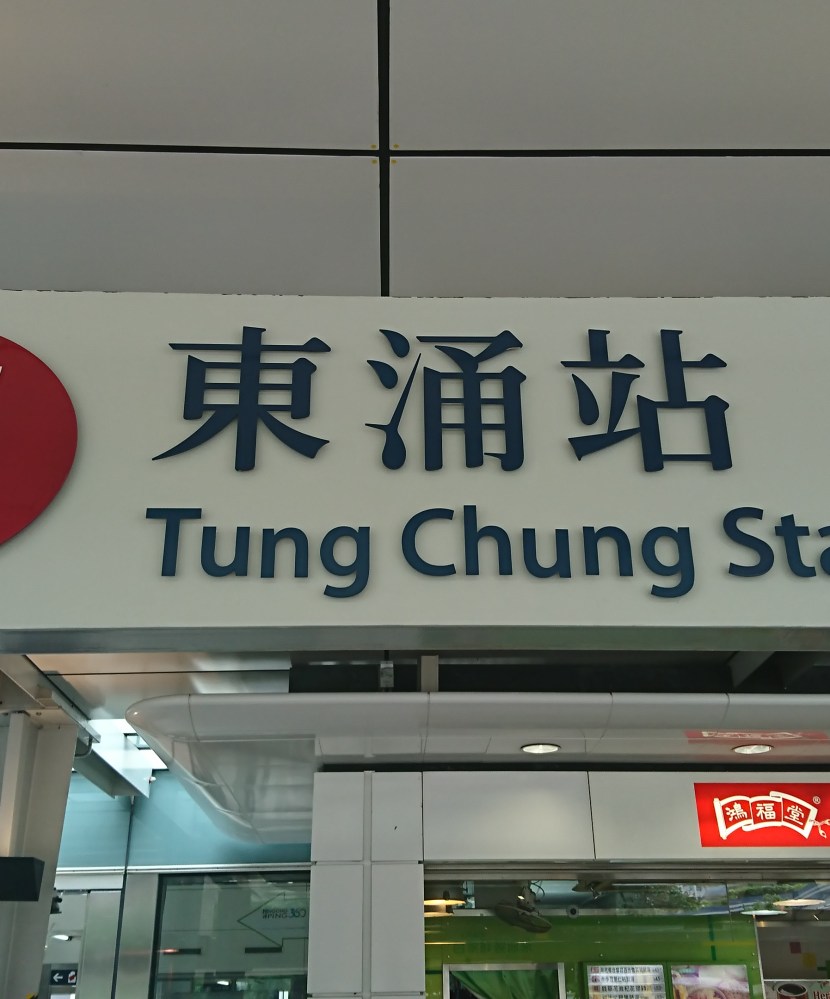
Govt eyeing light rail, MTR to connect Tung Chung and airport
Tung Chung residents could be able to ride to Chek Lap Kok via light rail or the Airport Express under proposals now being considered by government agencies.
But even if approved it will likely be years before either becomes a reality.
Transport Secretary Anthony Cheung has told Legco he is reviewing an Airport Authority study into the feasibility of a rail shuttle using spare capacity on the Airport Express line, running between the proposed Tung Chung East MTR station and Chek Lap Kok.
Cheung said the report, completed last month, to assess the feasibility of the light rail scheme “as well as how the matter should be taken forward.”
In January the government formally asked the MTR Corp to submit proposals for the construction of new stations at west and east Tung Chung to support new housing developments.
But Cheung admitted that the Tung Chung East station won’t be ready until 2026. Until then residents will travel to Tung Chung MTR via mini-bus.
He added that the Civil Engineering and Planning departments are investigating “different transport connectivity proposals” for public transport between the Hong Kong-Macau bridge border crossing, North Lantau and Chek Lap Kok airport.
One of the schemes is for a light rail system, in response to requests from the public and Legco. The study is expected to be completed by the end of this year.

WEEKEND NEWS: Another MTR fault; Shirley Kwan; Raking it in
Local MTR service was hit with yet another failure near Tung Chung station on Saturday morning.
A signalling breakdown at 8:25 am meant that passengers had to wait 15 minutes for trains from Hong Kong to Tung Chung and five minutes from Tung Chung. Services returned to normal at 8:50.
The line ground to a halt for an hour in early April because an equipment failure caused a train to stop, blocking the line.
* * *
Singer Shirley Kwan attended Lantau North Police Station on Friday afternoon, Apple Daily reported.
While she and her male companion declined to give details, the singer was arrested in March following an incident at the Auberge Discovery Bay Hotel in which an hotel staff member was assaulted. Police say a 50-year-old woman will appear in West Kowloon Magistrates Court on May 24 on charges of criminal intimidation and assault.
* * *
One property investor is already profit-taking from the Hong Kong-Macao Bridge – by selling parking spaces, Ming Pao reports. Since late last year Hung Lungtsuen has been buying parking lots in Tung Chung, anticipating a rise in demand after the bridge opens next year. He sold one parking lot, acquired for more than HK$90 million, for HK$110 million early this year.
* * *
Unpopular Education Secretary Eddie Ng has drawn a lot of press this weekend for his appearance dancing with students at the Buddhist Fat Ho Memorial College in Tai O on Friday.
Local media have contrasted this with his repeated failures to appear at hearings on the controversial local school assessment system, TSA. While on Lantau Ng also paid a visit to Po Lin Monastery.
Photo: Wiki Commons
Time to Uberize Lantau’s transport network
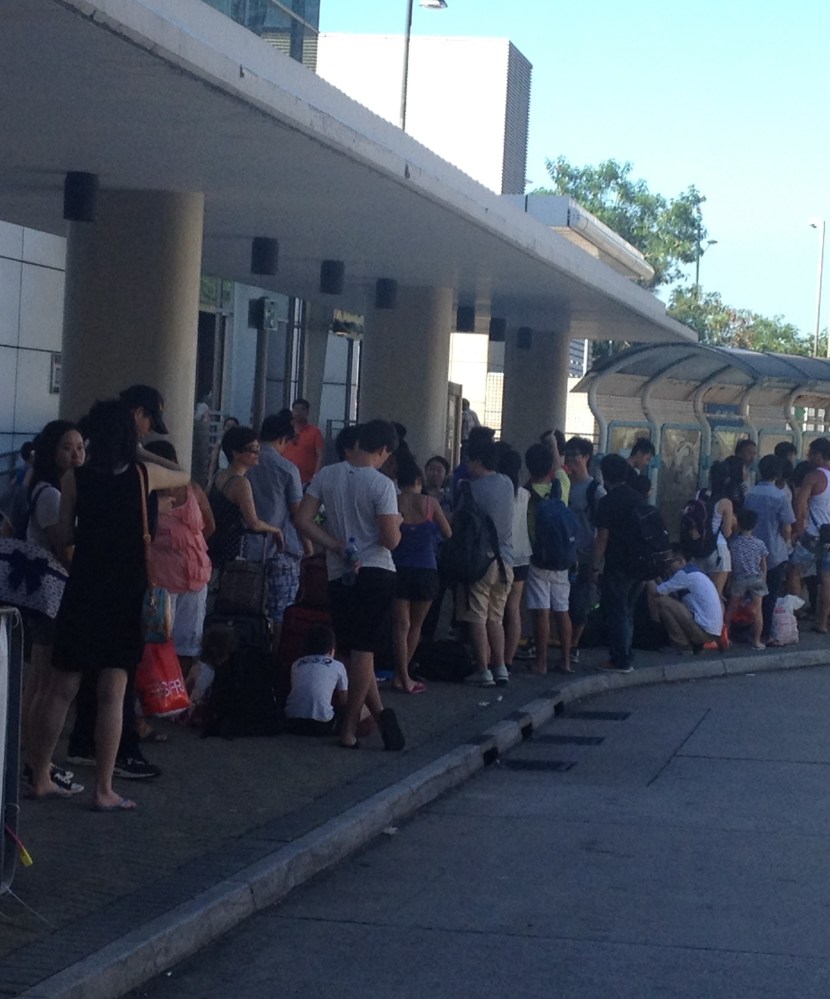
Golden Week holiday period has come and gone and once again Lantau’s traffic network was hopelessly choked.
Visitors waited two hours or more in the Tung Chung taxi queue for a ride to South Lantau, the Apple Daily reports.
Rather than idle under the hot sun, some took one of the half-dozen seven-seater people carriers charging $400-$500 per vehicle to Po Lin Temple.
This is the kind of entrepreneurialism for which Hong Kong, prior to the food truck fiasco, was renowned. It is illegal, however, and the Transport Dept, instead of expressing concern about the tourists’ discomfort – not to mention the failure of its policies – has vowed to work with the police to hunt these criminals down.
The problem is the city’s taxi industry is dominated by the owners, who have paid up to HK$7 million for a red plate. David Webb estimates this fleet of creaky old Crown Comforts is worth HK$118 billion, and it is the government’s role to protect the financial well-being of this powerful interest group.
Hence the resistance to change. In ‘Asia’s world city,’ drivers are unable to receive payment in any form but cash and are untroubled by competition from ride sharing services.
Lantau’s problems are exacerbated by the limited road network and government’s determination to squeeze as many people as possible onto the island for leisure-making.
The choice is either limit the demand for transport or increase the supply.
We’re not going to cap the number of visitors, so let’s look at lifting transport capacity. In the medium term we might upgrade the Tung Chung-Tai O ferry service and add extra and bigger buses, but the obvious immediate fix would be to track down the owners of those seven-seaters and issue them holiday period permits.
For local residents, it’s not just Golden Week. The taxi and bus services are maxed out over most weekends, especially in the hotter months. If you’re a South Lantau resident needing to catch a weekend flight you’re better off begging a lift from your neighbour.
We wouldn’t be in this fix if the government hadn’t banned Uber and Didi services. Smart technologies are designed to provide the kind of flexibility to solve precisely these kinds of problems. When Golden Week rolls around again in October, you can bet the only change will be the Transport Dept inspectors trying to catch those providing a desperately-needed service.

The trouble with EVA
Mui Wo’s EVA is a hot mess, but change may be coming.
Contrary to popular belief, it is not illegal to drive on the emergency vehicle access road through the Mui Wo hinterland.
The road, created decades ago by the CEDD when it built the drainage and sewerage system, has never been gazetted and remains a private road. The only roads where it is illegal to drive without a permit are short sections near the junction of Ngan Shek and Ngan Shu streets (above) in Mui Wo.
The Transport Department is reviewing the road’s legal status and whether it needs to be upgraded. The options are to retain as it is, to upgrade it and formally declare it a prohibited zone, or even to open it up as a public road. But with at least half a dozen government agencies and local rural committee involved, any change will take time.
EVA is under the purview of the District Office, a unit of the Home Affairs Department. But administration of the road also involves the Transport, Lands and Highways departments, police and fire services, and even Architectural Services and Building Services departments.
South Lantau police commander Chief Inspector David Bennett says that the push to develop Lantau South and the extra population that will bring means government agencies are required to look at whether declaring an EVA road “is a realistic prospect.”
He said that at his first meeting with Mui Wo leaders two years he asked if they could identify the EVA road – none could. Broadly speaking he says the ‘EVA road’ is the Rural Committee Rd. As a private road, it is not illegal to drive on it without a permit. Vehicles cannot be prosecuted for speeding, although police can hand out fines for reckless driving.
To reach the EVA road drivers must pass through the prohibited zones on Ngan Shu or Ngan Shek streets. It’s technically an offence to drive on those without a permit and police may be able to prosecute if they have a witness or evidence of the offence taking place.
The Mui Wo EVA is quite different from others in Hong Kong in being close to population. In Yuen Long and Shek O the EVAs have clear rules and are not in built-up areas.
Bennett says that in the short-term physical upgrades may be likely, such as installation of mirrors, warning signs, yellow lines and passing places.
In the long term, the question is “what does the District Office expect of this road in terms of meeting community expectations?”
Lantau taxi fares up again
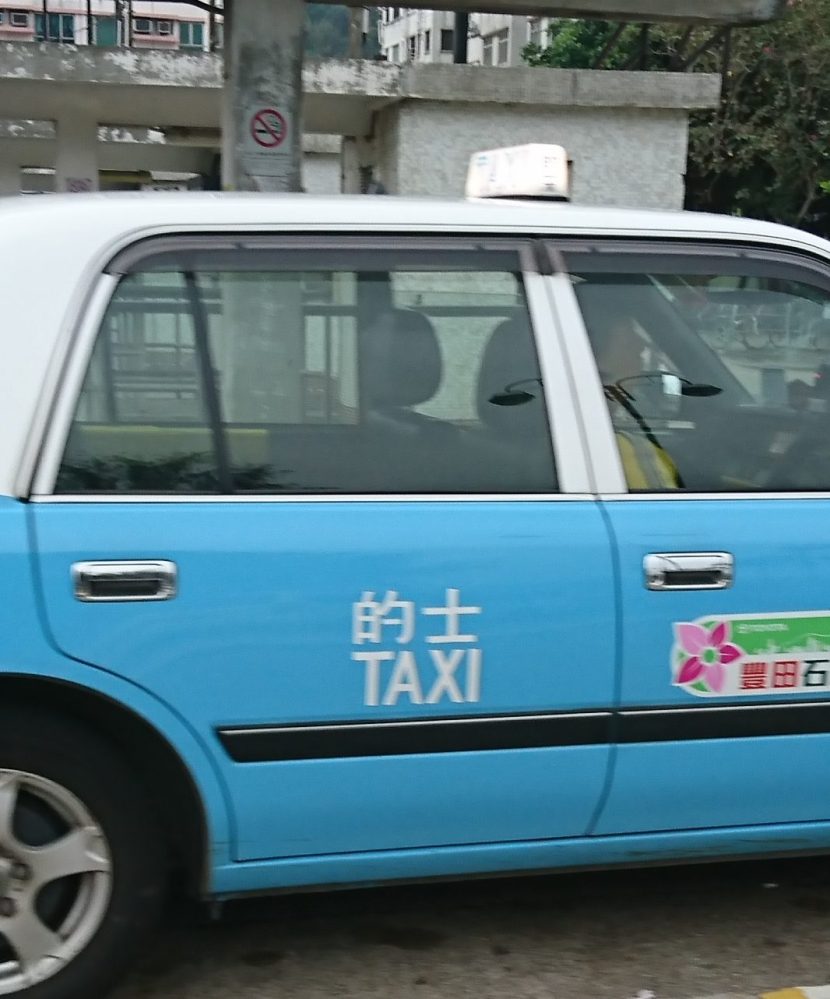
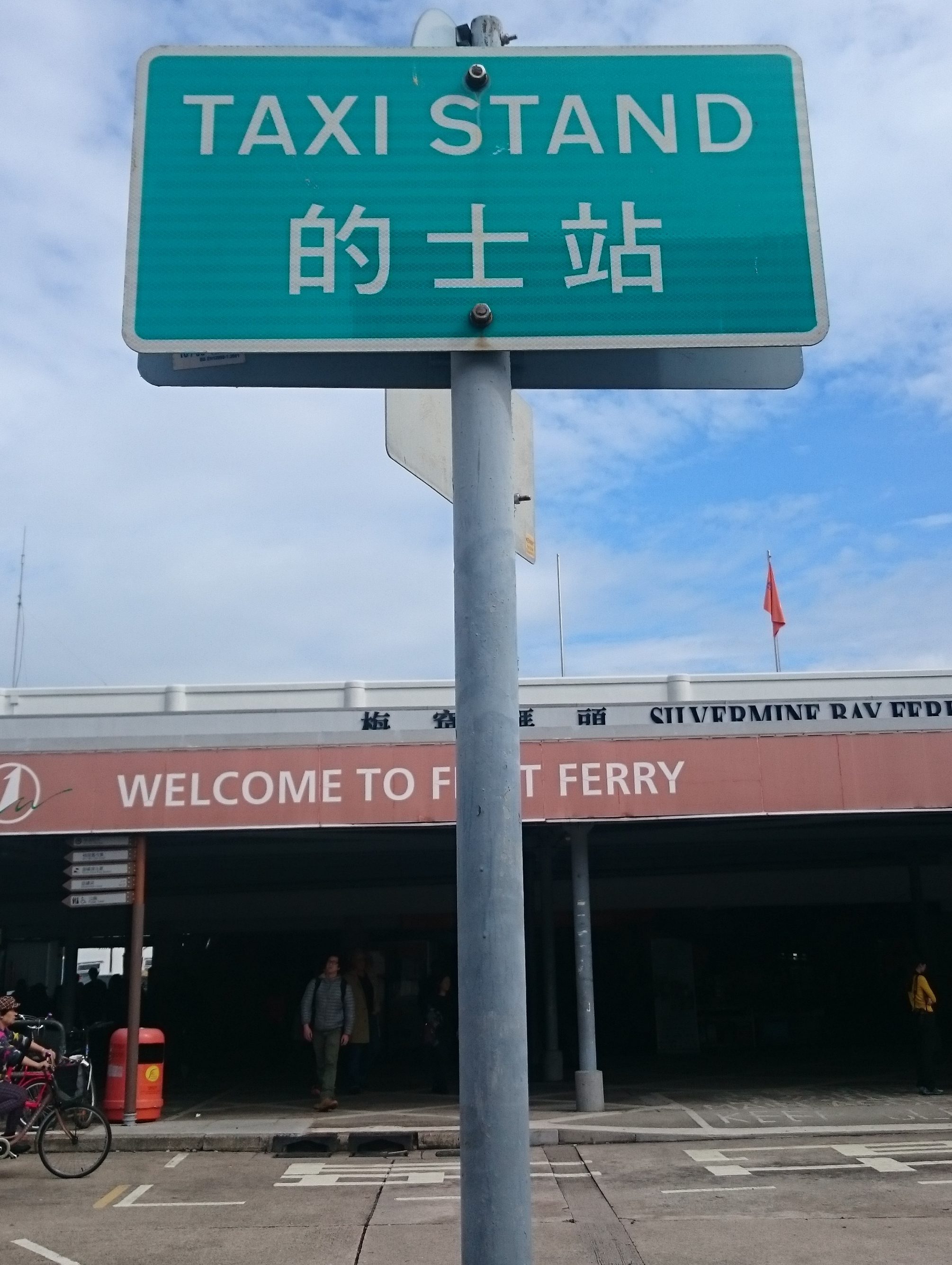 Lantau taxi fares are on the rise once more. From April 9, the flagfall charge will be hiked 11.7% and the incremental charge 7%.
Under the new rates, approved by the Transport & Housing Bureau and endorsed Tuesday by the chief executive in council, the flagfall will increase from $HK17 to HK$19 and the incremental charge – for every 200m – will rise from HK$1.40 to HK$1.50.
Hong Kong and New Territories cab fares will also increase by HK$2 per flagfall. In the initial application last April, Lantau drivers had sought to increase the flagfall by HK$4, Apple Daily reported.
In the last price rise in December 2013, the blue taxi flagfall was hiked from HK$15 to HK$17 and the red taxi from HK$20 to HK$22.
Lantau unscathed as Typhoon Nida heads inland
Lantau residents dodged a bullet overnight as Typhoon Nida passed without incident. No injuries or major damage were recorded, Lantau police said.
Across Hong Kong only three people sought hospital treatment, RTHK reports.
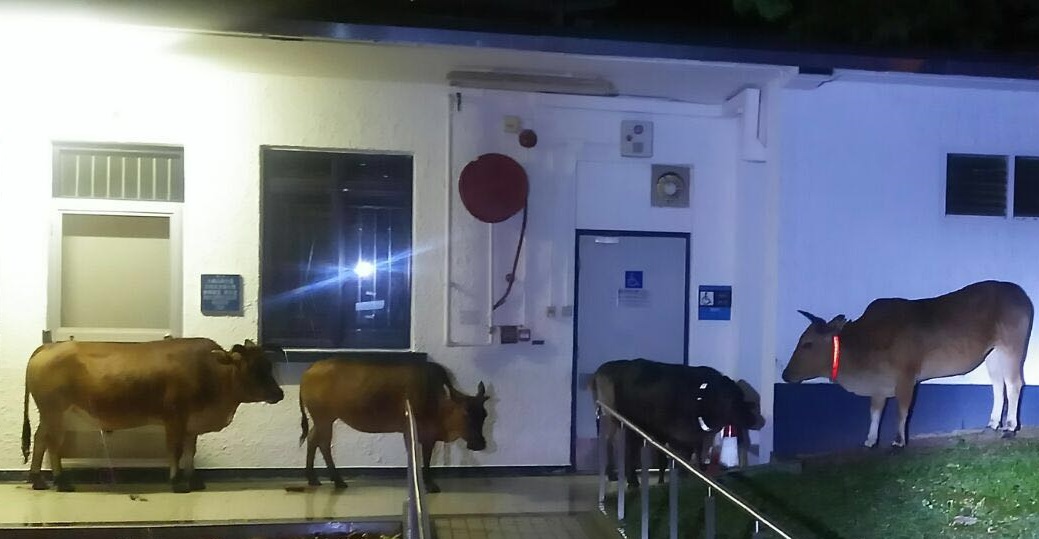
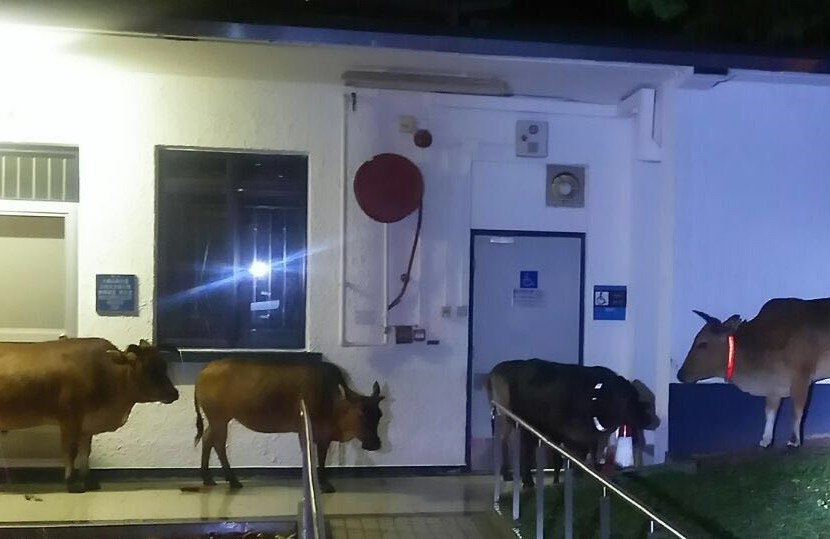
Cattle take shelter at the Cheung Sha police base
Hong Kong Observatory replaced the T8 signal with the T3 strong wind warning at 12:50 pm. Continue reading
We will enforce the law, says Lantau’s top cop
Here’s a message from Lantau’s police chief: we will enforce the law.
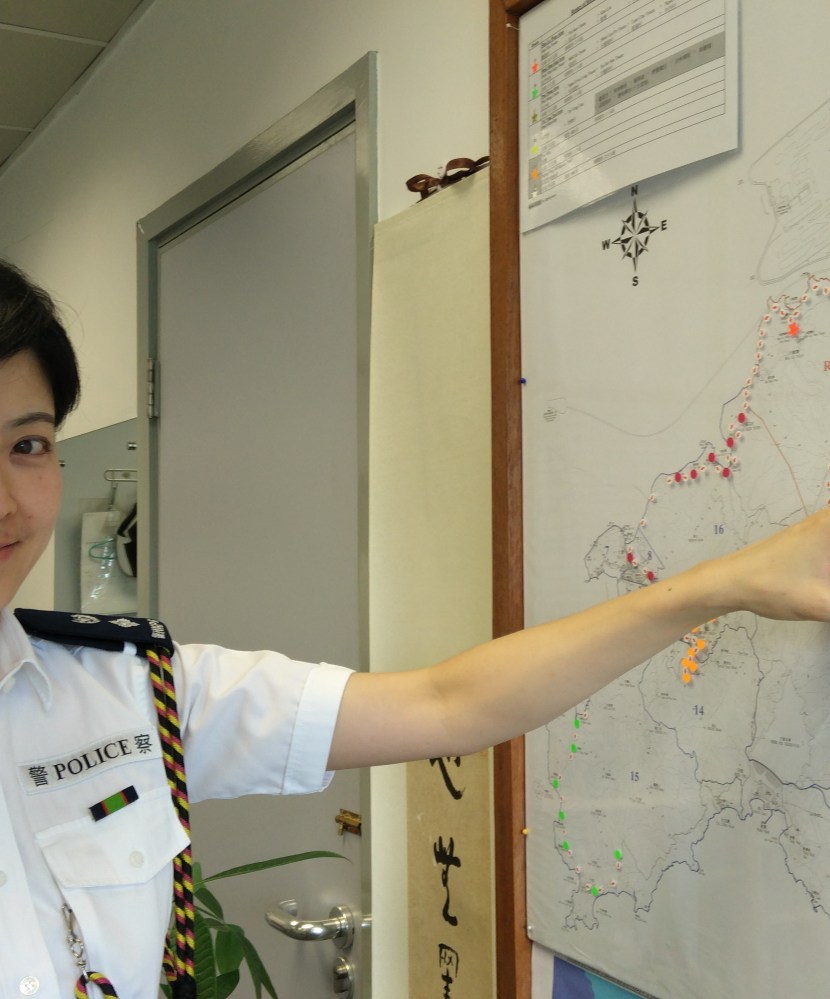
The new district commander, Senior Superintendent Alice Lee (above), says crime and community safety are her top priorities and that bovines and incense trees need to be protected.
With just 300 police covering an area roughly twice the size of Hong Kong Island, she adopts what she calls collaborative and intelligence-based policing – in other words, finding ways to work with the community.
But she acknowledges that traffic issues are critical because of the island’s narrow roads and growing vehicle numbers, and makes it clear that her officers will uphold the law.
In response to the rising road risks, the number of traffic bookings has grown sharply: police issued 201 tickets in the first half of this year and 473 last year, compared to just 278 in 2014.
Inevitably, the number of complaints has also soared. Lee and her team are visiting all of the local rural committees to discuss the issue and explain their traffic policies.
“I need to do some publicity and education on our village representatives so they can spread the message. Because they are puzzled – why ticket us? They are not happy.”
Limited parking
Parking tickets are an especially sensitive issue because of the limited spaces available, particularly around Mui Wo.
“I can’t tell [them] that I won’t ticket them. I’m here to enforce the law,” Lee said.
She does make it clear police will issue tickets to illegally parked cars that cause danger and obstruction to other road users. They will also book vehicles illegally parked next to parking meters.
Lee acknowledged the vexed issue of vehicles using the emergency access road in Mui Wo. She could not discuss it in detail but said: “We understand the community concerns, and actions are in the pipeline now.”
Her approach to the equally contentious issue of cattle and buffalo is more straightforward.
“Care to the cows and buffalos remain our top priority, though sometimes they do slow down our traffic. But I would say their lives are precious and they are a species that we humans should be protecting. We need to educate drivers to be careful on the narrow roads of Lantau Island.”
She jokes that the old Cheung Sha police station regularly hosts visitors from the local herd. “They often flock to the Cheung Sha operations base, eat the grass there and take a rest. We will let them stay there.”
The South Lantau idyll couldn’t be more different from Lee’s previous posting. Densely-packed Kwun Tong, where she served until five months ago, has 700,000 people and nearly three times the number of officers.
It experiences every kind of crime, Lee recalls. The biggest difference with Lantau is the high level of commercial crime – that barely exists on rural Lantau. Police here deal with offences like home burglaries and illegal immigrant, and personal crimes such as criminal damage and domestic disputes.
They also deal with a distinctively Lantau problem – incense tree theft. Hong Kong’s name 香港 (fragrant harbour) derives from the aromatic agarwood produced by these trees. It’s in hot demand from wealthy mainland Chinese, and Lantau and the New Territories are prime targets.
Lee says police have received no reports of logging this year, although a number of trees have been prepped for chopping. She says police need help from the community in identifying locations of trees and reporting logging.
Call us
Lantau police responsibilities will widen further with the opening of the Hong Kong-Macau bridge, theoretically at the end of 2017. Lee’s team will be responsible for policing the landing point and the Hong Kong end of the bridge, meaning an extra 150 police will be attached to the local force.
It may also mean the reopening of the old Cheung Sha police base to accommodate the extra officers, depending on the outcome of a review of office needs.
Lee brings the language and ideas of 21st century management to her role. Her conversation is punctuated with references to community engagement, knowledge management, service quality and feedback.
And she actually invites residents to complain.
“Tell us if you are dissatisfied with our performance,” Lee urges. “If you want to make a formal complaint, we will refer you to the Police Complaints Office. But if you just want to reflect your opinion to, we are happy to receive it. It’s important that we get the feedback from you. Its very important that our officers should learn.”
Double decker buses to trial on South Lantau

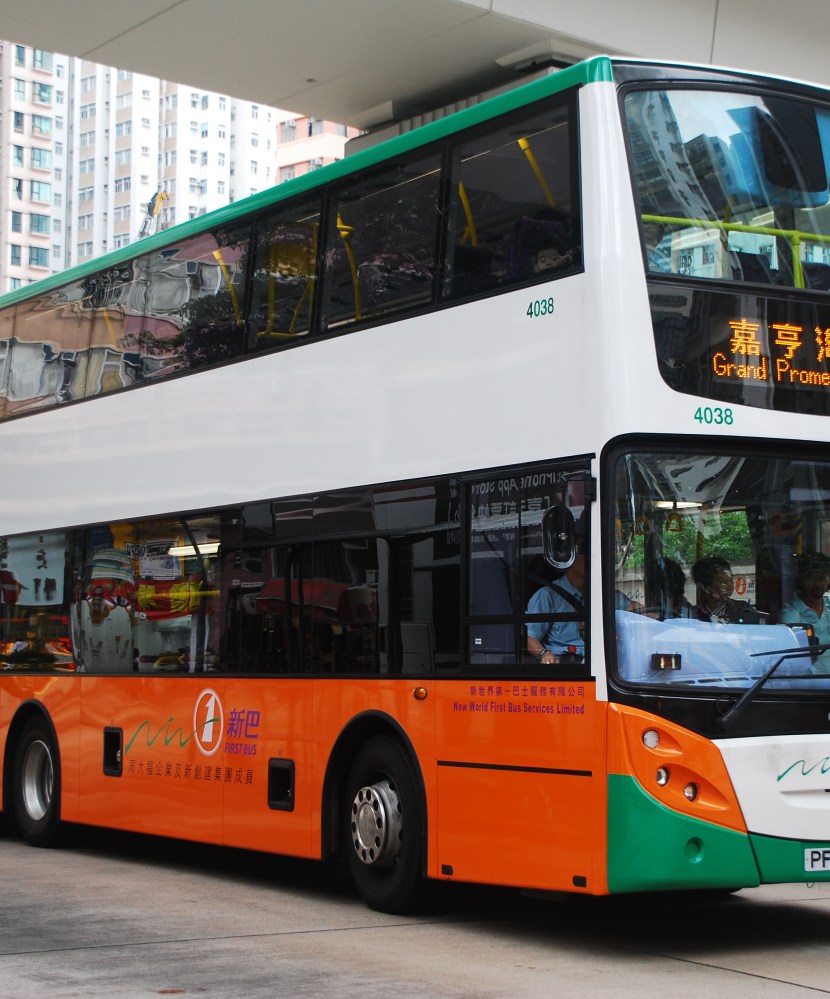
The New Lantao Bus Co (NLB) is considering a trial of double decker buses on South Lantau to cope with an expected spike in population
Deputy general manager Benny Chan said the company was in discussion with the Transport Dept on testing two-decked vehicles on the 3M route between Tung Chung and Mui Wo.
He said the plan was still in its early stages, and no timetable has been set. If it does go ahead, he said most likely it would be divided into two phases – first on Tung Chung Rd only and then on South Lantau Rd. Continue reading
Prosecutions soar for Lantau closed road breaches
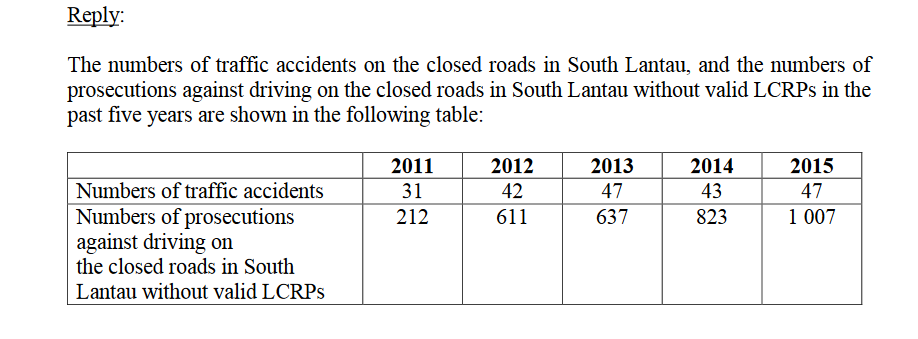
Prosecutions of drivers entering South Lantau without a permit have risen by nearly three-fifths in the last two years, according to Transport Dept figures.
Police prosecuted 1007 drivers last year, up from 823 in 2014 and 637 in 2013, the department said in answer to a question from Legco member Kwok Ka Ki.
South Lantau police chief David Bennett, a former traffic policeman who took on the post early last year, has said he would make road safety a priority.
 Lantau Confidential