
Category: HZM Bridge
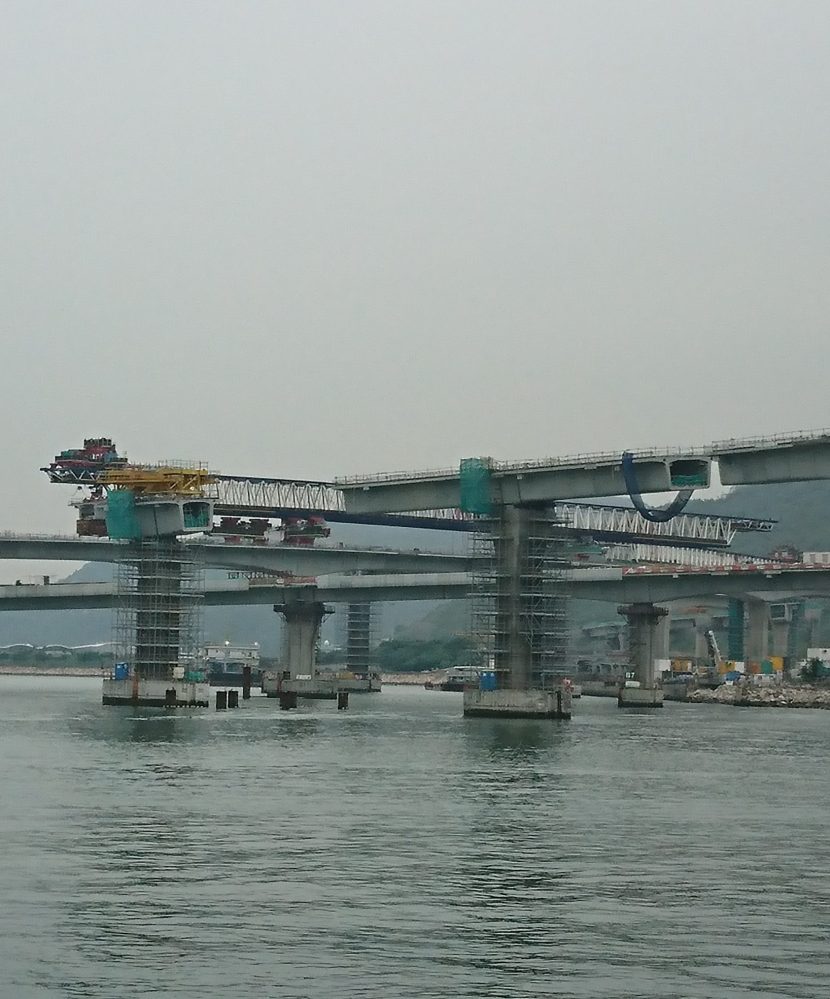
Tung Chung ozone worse, but PM2.5 has improved
The ozone level in Tung Chung has worsened in the last five years, but the presence of all other major pollutants has declined, according to government figures.
Air quality data released to Legco today show ozone levels increased 9% between 2013 and 2017, but level PM2.5 particulates fell 19% and sulphur dioxide is down 36% (see below).
Responding to a question from People Power member Raymond Chan, Environment Secretary Wong Kam-sing said the high ozone level was a result of “the influence of regional pollution.”
Chan said a number of Tung Chung residents had told him they felt local air quality had deteriorated in recent months and feared the opening of the Macau bridge would make the air even worse.
But Wong said apart from ozone, the level of air pollutants in Tung Chung was within government air quality targets.

Source: EPD
But he admitted that no assessment of the air quality impact of the HK-Macau bridge had been made since 2009. The 30-kilometre main bridge is due to open in May.
Wong said a Highways Department study prior to construction had concluded that “air quality at sensitive receivers in the vicinity” of the bridge would comply with government targets.
He said there was no plan to further review Tung Chung air or the effects of traffic crossing the new bridge.
But he said the EPD would continue to monitor the air quality across Hong Kong, including Tung Chung, and was also reviewing the current air quality objectives (AQOs).
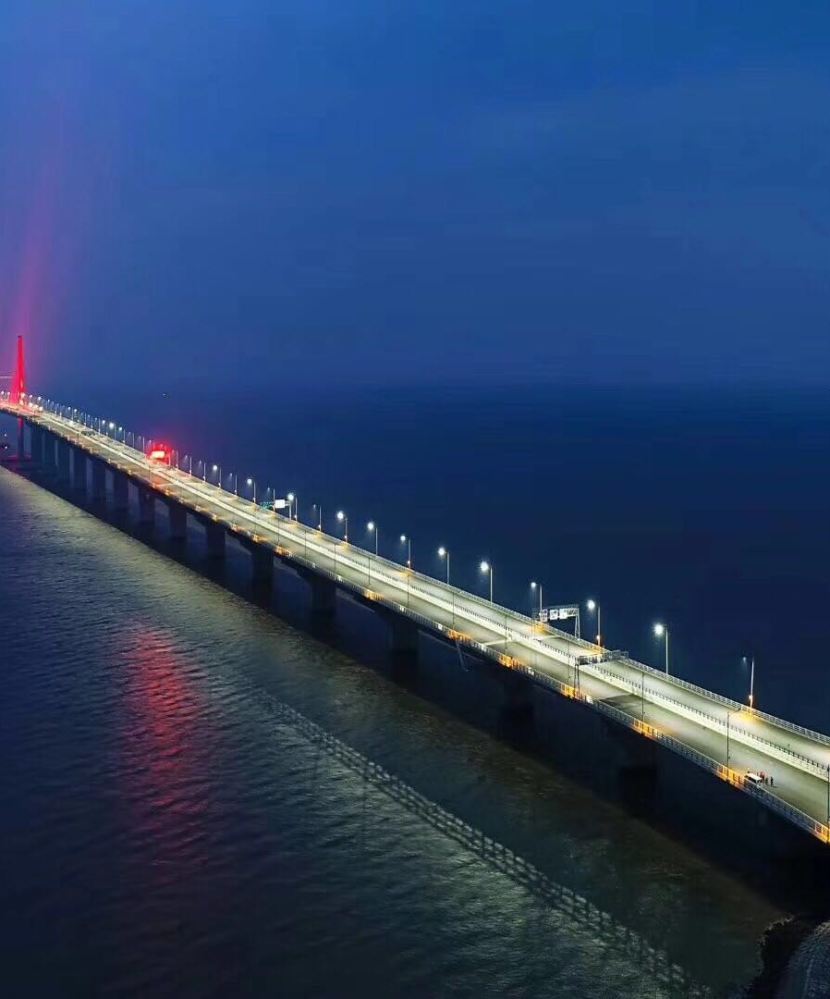
Vehicles will drive on right and pay renminbi tolls on HK-Macau bridge
Vehicles on the new HK-Macau bridge will drive on the right and pay tolls in renminbi, the HZMB Management Bureau has announced.
The Zhuhai-based agency, which oversees construction and management of the 42km link across the Pearl River mouth, also confirmed that each city would have its own customs and immigration checkpoint.
The bridge and the checkpoints will be in operation 24 hours a day, China News Service reports.
Originally scheduled to start operation in 2016, the bridge-tunnel project is due to open in May after a series of construction delays and budget over-runs.
The bureau said that as the main bridge is in mainland waters, vehicles will drive on the right-hand side, mainland style. The speed limit will be set at 100kmh.
Because of the complexities involved in getting vehicles to swap lanes, they will also drive on the right-hand along the 12km link road in Hong Kong territory.
However, it is not clear whether local traffic regulations and other laws will apply on that stretch, which runs parallel to Lantau’s north coast (Lantau News has sought a response from the Transport Department).
The bureau has also confirmed that 140 shuttle buses will be deployed to carry passengers across the bridge, initially every ten minutes and eventually every three to five minutes.
Twenty toll lanes have been set up to collect cash or non-cash payments in remminbi. It will accept electronic payments including ETC, MTC and Alipay.
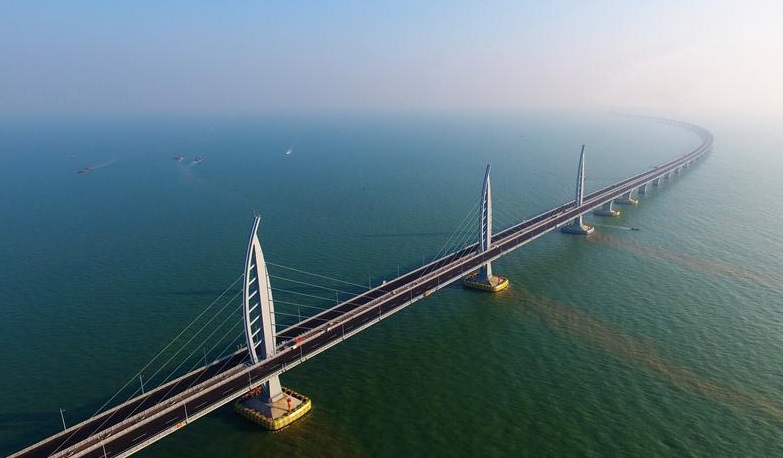
HK-Macau bridge ready for trials
The Hong Kong-Zhuhai-Macau bridge is ready for testing ahead of its forecast opening date in May.
Officials from the three cities agreed at a meeting in Zhuhai on Tuesday to go ahead with joint trials on the 30-kilometre main bridge, HK01 reported.
Touted as the world’s longest sea bridge and including a 6.7-kilometre tunnel, it has been under construction across the Pearl River mouth since 2009.
The bridge was due to open in 2016, but has been delayed by a series of engineering problems and accidents. Ten workers have died on the Hong Kong segment of the project.
A lab technician has been jailed for eight months for falsifying test results on bridge concrete, while three contractors have been found guilty over a 2014 accident that killed one workers and injured four others.
The main bridge, originally expected to cost 15.7 billion yuan, is now costing 25 billion yuan, with Hong Kong footing the bill for a fifth of the cost overrun.
The other key elements of the HK$120 billion Hong Kong end of the project – an 11-kilometre viaduct and link road along the north Lantau coast, and the border crossing facilities on Chek Lap Kok – have also been completed.
However, the nine-kilometre tunnel and freeway link between Chek Lap Kok and Tuen Mun will not open until at least 2020.
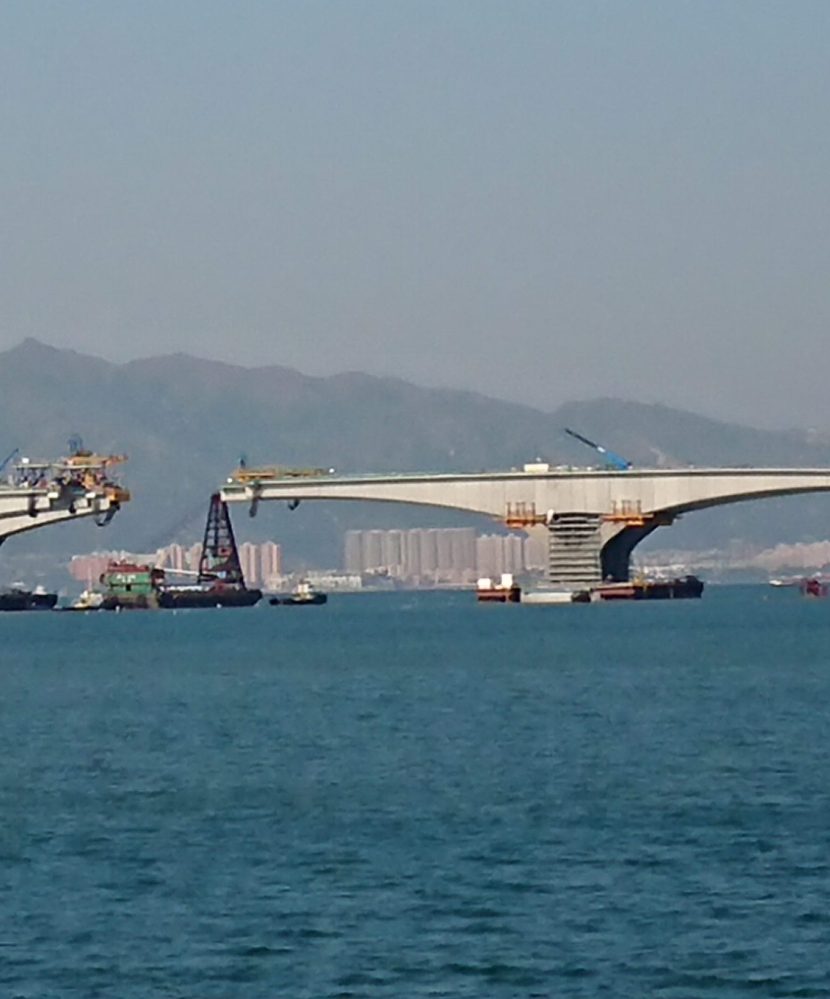
Tuen Mun freeway won’t open until at least 2020
The freeway from Chek Lap Kok to Tuen Mun, the last piece of the Hong Kong-Zhuhai-Macau Bridge project, will not open until at least 2020.
Transport & Housing Secretary Frank Chan told Legco that the ‘southern connection’ – a flyover across Tung Chung Bay to the North Lantau Highway – is forecast to be finished in the first half of 2019.
However, the northern link, a tunnel under the strait to Tuen Mun, would not be ready for traffic “until 2020 at the earliest,” Chan said.
Known officially as the Tuen Mun-Chek Lap Kok Link (TM-CLKL), it is the most expensive piece of the HZM project, with a price currently estimated at HK$46.71 billion, according to the Highways Department.
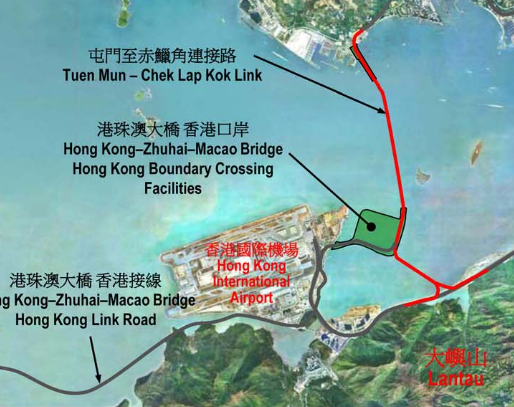
The last piece of the HZM project (Source: Highways Department)
As well as offering a more direct path to Shenzhen for HZM traffic, it also provides a second connection to the western Kowloon peninsula from Lantau.
Chan denied that the tunnel would be impacted by the shifting tubes in the seawalls supporting the artificial island that hosts the bridge border crossing.
According to the Highways Department, the reclaimed land “had not shown any unusual settlement,” he said. “Upon the completion of the seawalls and the reclamation works, the settlement rate will slow down.”
Chan also said the opening of the bridge, reportedly set for May, was being held up by the need to speed up “clearance conditions” at the three border crossings.
Govt may build new car park for local residents, visitors at HZM crossing
The government is considering the construction of car parks for both visitors’ and local residents’ vehicles at the HK-Macau bridge border, Transport and Housing Secretary Frank Chan said yesterday.
He told Legco that under the current design the Hong Kong crossing, next to Chek Lap Kok Airport, has no inbound car park, although it has 650 spaces for local private cars.
By comparison, Macau has created 3,800 parking spaces for visitors’ private cars.
Chan said the CEDD and Planning Department were now conducting a feasibility study on how to optimise the land around the border crossing.
He said depending on outcome of the study, the government would “consider providing parking spaces (including the feasibility of inbound car park)” to meet the needs of both Hong Kong residents and visitors.
The Transport Department has rejected claims that the limited number of parking spaces at the border crossing would impact on Tung Chung. It has said that it expects most visitors to arrive by public transport.
The Guangdong and Hong Kong governments announced last month that the quota for Hong Kong cross-boundary private cars across the HZMB will increase from 3,000 to 10 000.
HK-Macau bridge tipped to open in May
The scandal-plagued Hong Kong-Zhuhai-Macau bridge is due to open in May, according to mainland media.
The bridge, which will cost Hong Kong taxpayers more than HK$120 billion, has been delayed by a series of problems since construction began in 2009, including shifting pilings in the founations, accidents that have killed ten workers and a scandal over falsification of test records.
The China Daily reported that the final commissioning date would depend on the completion of border facilities in Zhuhai and Hong Kong, but unnamed sources expect it to open in May.
The project includes a 29.6km main bridge, including a 6.7km tunnel which surfaces a kilometre off north-west Lantau, a 5km-long viaduct link to the border crossing at Chek Lap Kok, the facilities at reclamation at the border, and a 9km freeway and subsea tunnel connection to Tuen Mun.
The main bridge, originally expected to cost 15 billion yuan, went 60% over budget.
Envisaged in the early 2000s, supporters of the bridge today struggle to identify the economic return it will deliver for the enormous cost.
In recent months government officials have taken to describing it as part of the nebulous ‘Greater Bay Area’ scheme.
Another bridge across the Pearl River mouth will link Shenzhen and Zhongshan, 30km north of Hong Kong, from 2023.
The bridge has prompted fears over increased pollution and parking shortages in Tung Chung and additional traffic in South Lantau.
Tolls for the bridge have been provisionally set at 150 yuan (HK$182) for private cars and 200 yuan (HK$242) for cross-border coaches.
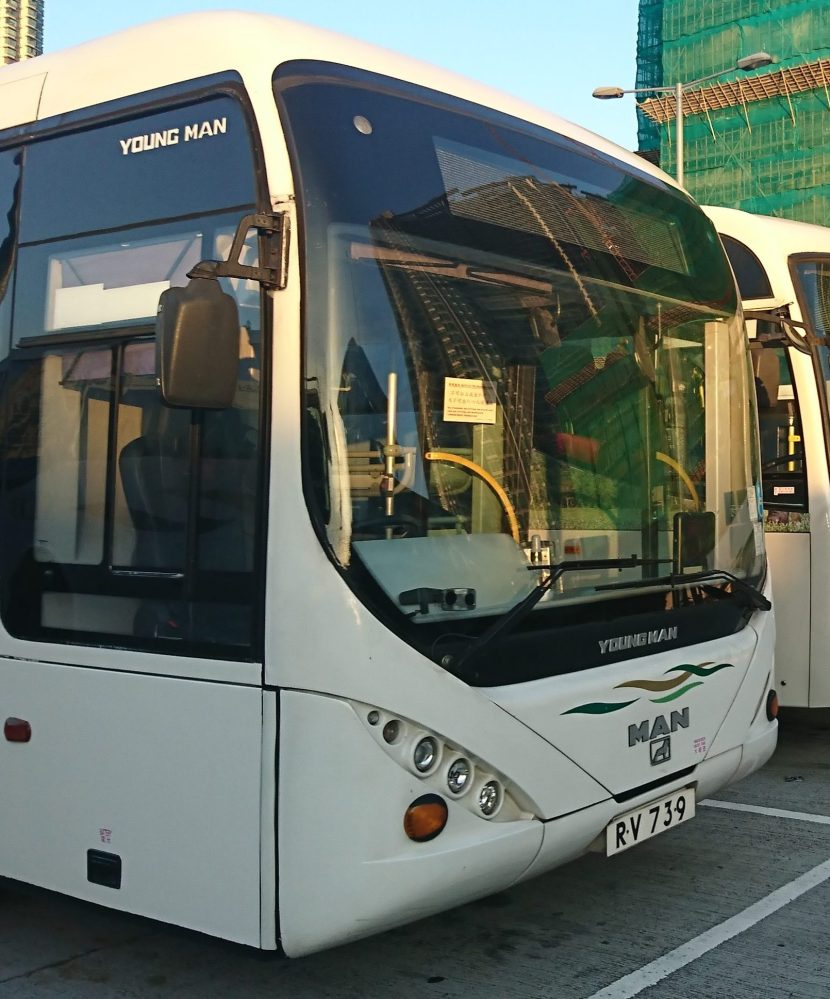
Two new bus routes to link Tung Chung and airport
With the opening of the HK-Zhuhai-Macau Bridge, Tung Chung residents are to get two new bus routes to the airport.
The service, due to start when the bridge opens, will eventually run 24 hours a day, HK01 reports.
New Lantao Bus (NLB) and Citybus have won the tenders to provide service on three new routes between the new border crossing and North Lantau,
NLB will carry passengers on two routes from the new Tung Chung West housing development, through Tung Chung and then to the airport and new border crossing.
Citybus will run between the border and Sunny Bay.
The Tung Chung route will take about 10 minutes, with two to three stops, according to Transport Dept advice to NLB. Fares are yet to be determined.
The company expects it will need 11 to 12 buses to operate on the two routes. In future, it will need to hire an additional 30 drivers to provide a 24-hour service.
Officially, the bridge is still due to open by the end of 2017, but because of a series of delays appears likely to open for traffic some time in 2018.
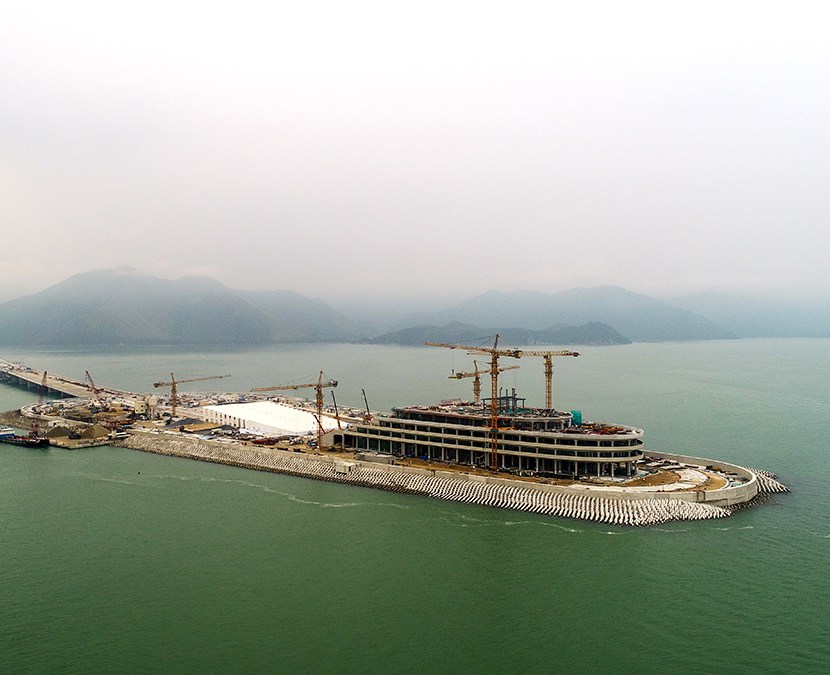
HK-Macau bridge is 10b yuan over budget and still has no start date
The main bridge portion of the Hong Kong-Zhuhau-Macau Bridge is 10 billion yuan (HK$11.8 billion) over its original budget of 15.7 billion yuan and appears likely to miss its year-end target opening date.
In a statement today, the Transport and Housing Bureau attributed the 64% overrun – the latest in a series of blowouts at the controversial project – to an “escalation in the construction costs arising from the increase in labour and material costs as well as the refinement of the design and construction.”
It said the 10 billion yuan figure was based on contractors’ estimates. State Council had been advised of the overrun, while in Hong Kong the bureau would seek extra funds from Legco.
The statement added that three sides – Hong Kong, Macau and Beijing – had “agreed to make their best endeavours to… achieve the target of completing” the main bridge by the end of the year.
However, the commissioning date was still unclear and would be determined by a task force, it said.
For the Hong Kong public purse, the blowout is not quite as bad as it seems.
Under the original funding formula, the city contributed just 42% of the estimated cost and will shoulder the same portion of any additional expenditure.
And in the context of the entire scheme, the bridge itself is a relatively small cost.
The 29.6 km main bridge, which includes a 6.7km tunnel, is just one of four projects that are currently estimated to cost the SAR HK$118.5 billion.
According to the HZMB Authority, these are:
- the main bridge (HK$7.95 billion)
- Hong Kong Link Road – the viaduct and tunnel running along Lantau’s north coast to Chek Lap Kok (HK$25.0 billion)
- Boundary crossing facilities – 150ha of reclaimed land and the cargo and passenger clearance centres, public transport and other facilities being built on top (HK$38.9 billion – originally HK$30.4 billion)
- Tuen Mun-Chek Lap Kok Link – a bridge and tunnel connection to Tuen Mun (HK$46.7 billion)
These estimates don’t include the other project, the freeway north from Tuen Mun toward the border, which has not yet been costed.
The bridge was originally scheduled to open in 2016, but has been delayed because of a series of mishaps, in particular at the Hong Kong end.
Since that target was missed, Hong Kong and mainland officials have said the bridge would be ready for service by the end of 2017. When Xi visited the project in July, he was assured the timetable would be met.
With less than seven weeks to go that seems unlikely.
Photo (top): Tunnel entrance near Lantau coast (Source: HZMB Authority)
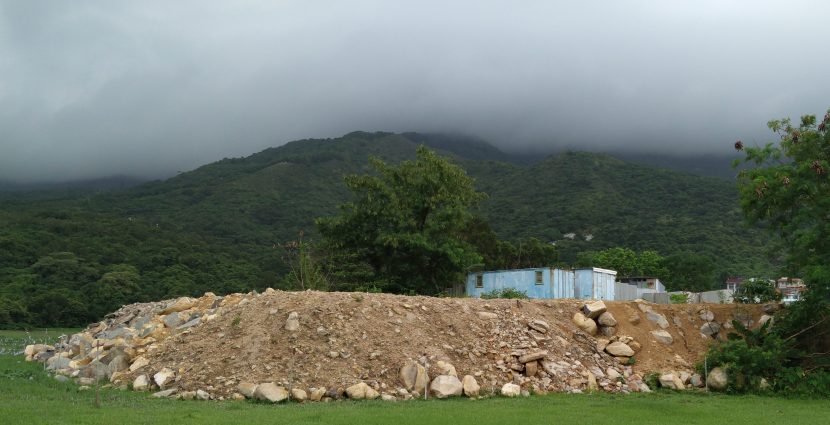
Lam promises Lantau conservation cash and a start on Shek Kwu Chau
Cash for local conservation projects, a solar power trial and the start of work on the Shek Kwu Chau incinerator top the list of measures affecting Lantau in Carrie Lam’s first policy address.
Lam announced she would make available funding for “countryside conservation initiatives” in areas of Lantau, including Pui O, Tai O and Shui Hau. She said the government would

The Environment and Conservation Fund is a government body, set up in the mid-90s, which in its last funding round in 2013 was granted $5 billion.
A new body, the Countryside Conservation Office, may also be a source of funds for Lantau conservation. It has a $1 billion kitty and a brief to “co-ordinate conservation projects that promote sustainable development of remote countryside.”
Another green project on the drawing board is the implementation of large-scale floating solar farms on the surface of Shek Pik and a dozen other Hong Kong reservoirs, following successful trials at Shek Pik and Plover Cove.
The project with possibly the biggest impact on South Lantau in the coming years could be is the Shek Kwu Chau incinerator – officially known as ‘the integrated waste management facilities.’ Work on the project, just one kilometre off Lantau’s south coast, is due to get underway soon.
The EPD issued a tender for the $21 billion project last December. Lam said the government intended to
Complete the tendering exercise and commence the design and construction works for the phase 1 project of the Integrated Waste Management Facilities for [municipal solid waste] treatment.
As reported earlier, most Lantau commuters will likely qualify for the planned fare subsidy scheme.
In other initiatives:
* A “district cooling system” is under consideration for the new development projects at Tung Chung and the HK-Macau bridge landing zone. A district cooling system is a centralised system of chilled pipes that can cool multiple buildings.
* Lam confirmed the government would go ahead with a review of the city’s heavily-subsidised ferry services, including the possibility of extending the licensing period or even offering subsidies for vessel replacement.
* The CE said she would encourage “the extension of optical fibre networks to villages in rural and remote areas.” Currently 117,000 people in 380 villages lacked access to high-speed fibre, Lam said.
Photo (top): Pui O – ready for conservation?
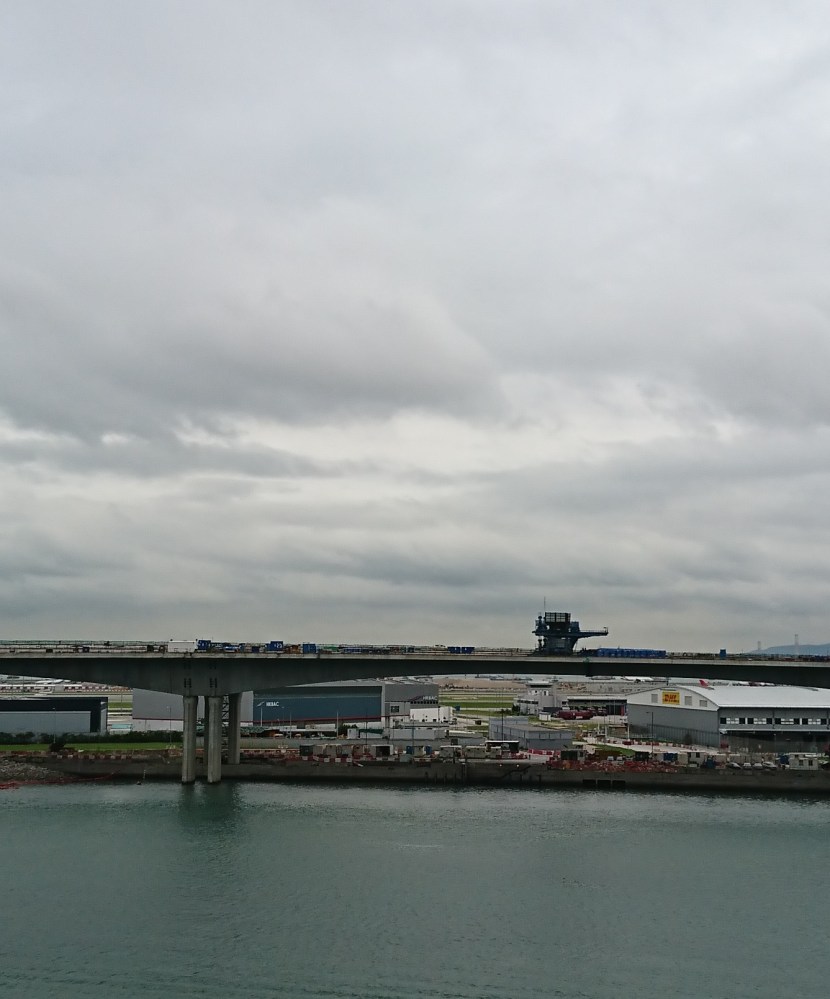
LaDA wants restrictions eased so bridge visitors can reach Lantau tourist spots
A local business lobby has called on the government to ease restrictions on HK-Macau bridge arrivals to make it easier for them to visit Lantau tourist spots.
The 30km bridge-tunnel across the Pearl River mouth, under construction since 2010, is officially due to open by the end of this year, two years after the original deadline.
Lantau Development Alliance (LaDA) chairman Spenser Au says his group had called on the government to allow tourists coaches to take visitors to Lantau Island attractions, but so far officials had resisted.
He says buses should be allowed into restricted areas to pick up passengers arriving on the 130-ha artificial island next to the airport. If not “there will be a large number of passengers stranded on the island in the future,” HK01 reports.
LaDa, which is backed by major developers and Lantau tourism operators, also urges the construction of a pedestrian link between the bridge arrival zone and the new business district north of the airport. It seeks the extension both the MTR and road connections to Tung Chung and a wider use of ferry transport to the airport and around Lantau as well.
Additionally, Au said the arrival of the HK-Macau bridge can make North Lantau a medical tourism destination. He called for the government to establish a pilot medical centre in the bridge landing area.
Under current plans the HZM Bridge landing zone is intended to support 500,000 square metres of space of retail, restaurants and entertainment.
 Lantau Confidential