
Category: Environment

Landowner flouts law with brick wall around wetland site
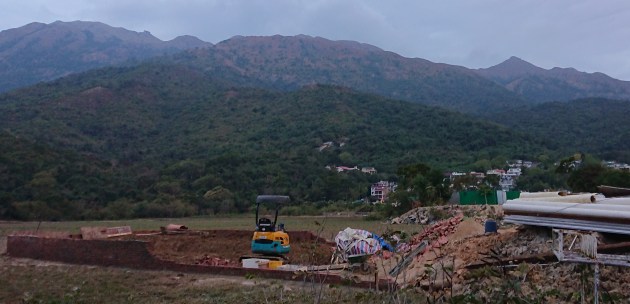
The owner of a Pui O wetland site already in breach of several environmental laws has begun building a brick wall around the plot.
Construction of the wall at the site, next to the Pui O beach car park, began on Tuesday.
The Environmental Protection Department (EPD) says its surveillance camera captured fly-tipping – a criminal offence – on the site between November 20 and 23 on the site. The owner applied to the Town Planning Board to change the land use to agriculture on November 27.
The Pui O wetland is zoned Coastal Protection Area under local planning rules, but this carries no enforcement or penalty.
Under the Waste Disposal Ordinance, landowners are allowed to dump landfill on their site if they receive ‘acknowledgement’ from the EPD – but the fly-tipping took place before the ‘acknowledgement.’ Additionally, all landfill dumping is banned from CPA sites.
EPD officials, who visited the site along with Planning Department and Civil Engineering and Development Department (CEDD) officials last Friday, have ordered the owner to stop landfilling, but have taken no action to enforce their order.

The wall also appears to be in breach of rules that prohibit fixed structures on wetland.
Local residents have filed a complaint to the Ombudsman over the EPD’s unwillingness to use its powers to stop destruction of the site. The complaint states:
EPD have taken no steps to physically stop the landowner by way of injunction or similar legal instrument or by arrest, despite having evidence of a criminal offence. This will result in the destruction of a pristine wetland habitat, the protection of which clearly falls within the jurisdiction of the EPD.
The landfill dumping and wall construction also fly in the face of the government’s own policy.
The Sustainable Lantau Blueprint, issued in June, set down the conservation of the Pui O wetland as one of its environmental priorities.
The report acknowledges the wetland as a valuable ecological and cultural site as well as a crucial buffalo habitat.
Ombudsman called on to probe ‘criminal’ wetland dumping
Local activists have filed a complaint with the Ombudsman over the failure of the Environmental Protection Department (EPD) to prevent illegal dumping on the Pui O wetland.
A letter to the Ombudsman says the EPD had given the go-ahead for landfill on a site, despite knowing that fly-tipping, a criminal offence, had already taken place.
It says the landowner has ignored the EPD’s demands to cease, yet the department has taken no steps to prevent further destruction or to arrest the landowner, despite “evidence of a criminal offence.”
The Ombudsman complaint follows a visit to the wetland by EPD, CEDD, AFCD and Planning Department on Friday in which they were unable to explain the government’s unwillingness to use its powers to prevent landfilling “on a pristine piece of wetland habitat.”
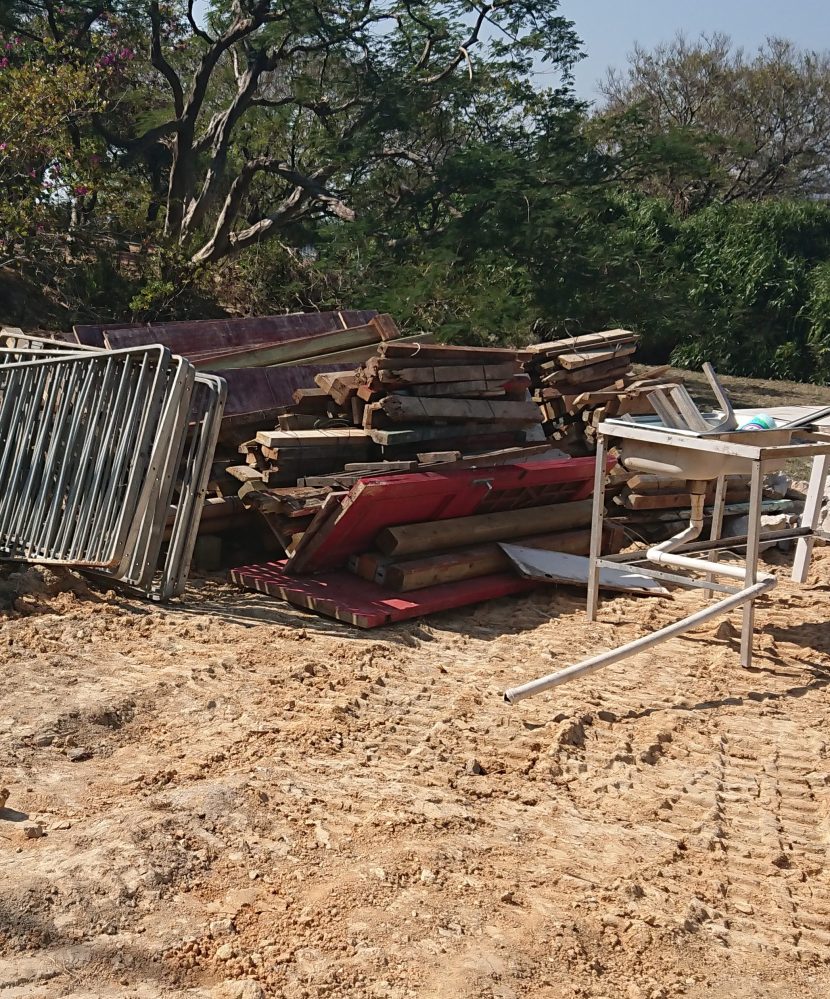
Under questioning by local residents at the site – farcically adorned with a kitchen sink – an EPD official admitted that if he saw a truck dumping construction waste he would take no action.
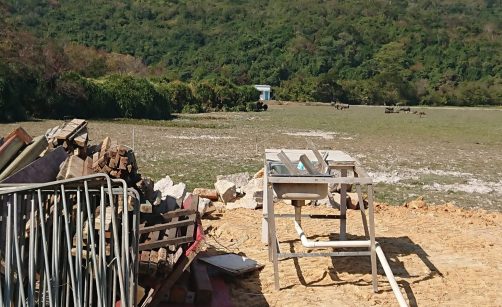
The kitchen sink
Hours after the meeting, residents called police after sighting further landfilling and clearance on the site.
The owner has applied for Town Planning Board approval to have the 400 sq metre plot rezoned as agricultural land.
The plot is designated Coastal Protection Area which, despite the name, offers no protection.
In fact under Hong Kong Waste Disposal Ordinance, dumping can take if the EPD “acknowledges” it, although the Coastal Protection Area regulations specifically rule out landfilling.
In the case of this site, the dumping began before the acknowledgement was granted, which is illegal.
Additionally, the EPD’s practice in handing out acknowledgements, which have caused the degradation of other parts of the Pui O wetland, is being tested in a judicial review.
The case has been heard but the judge has not yet handed down a decision.
The Ombudsman complaint argues that the EPD erred in giving the acknowledgement when a judicial review decision is pending.
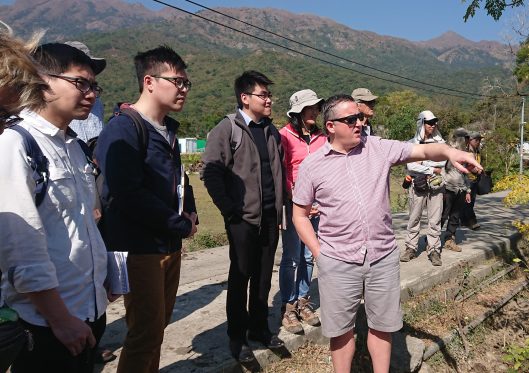
Ham Tin resident Martin Lerigo (right) with EPD and Planning Department officials
The Sustainable Lantau Blueprint, issued in June, acknowledged the Pui O wetland as a conservation priority, specifically referencing “illegal dumping activities of construction waste” in the village.
It says an inter-departmental working group had been formed to tackle fly-tipping and would “take a pro-active role to strengthen measures against illegal dumping of construction waste.”
The Living Islands Movement has written to Carrie Lam, arguing that the EPD’s role in approving landfill on a wetland “directly contradicts your stated policy intent. ”
It adds: 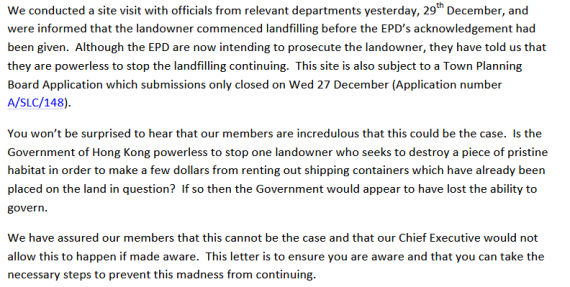

Another slice of Pui O wetland under threat
Yet more of the Pui O wetlands is under threat of disappearing.
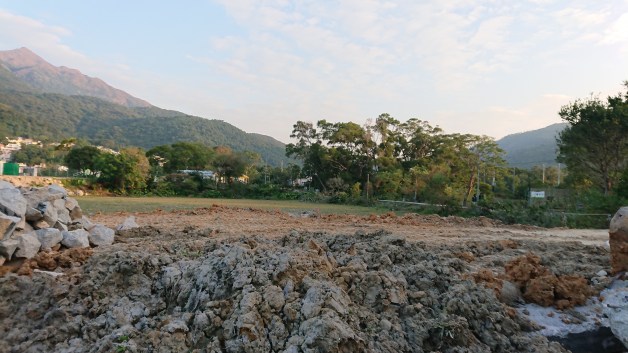
A landowner is seeking to turn more than 400 sq metres of wetland into agricultural land.
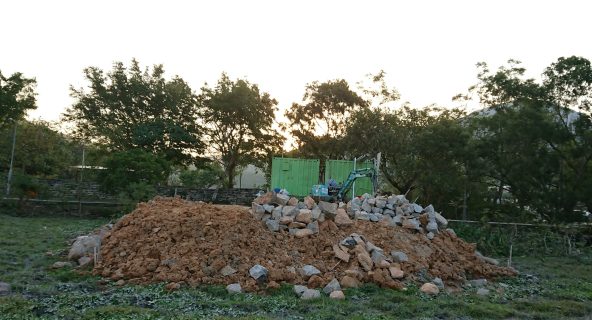
Already an area of approximately 150 sq metres has been covered with landfill.
Although the wetland is officially designated Coastal Protection Area (CPA), that offers no protection.
Under the city’s baffling planning and environmental laws, it can only be protected if it is zoned for development.
Just as inexplicably, the Environmental Protection Department (EPD) can give the go-ahead for landfill. A notice on the Pui O site indicates it has EPD “acknowledgement.”
The owner also has applied to the Town Planning Board (TPB) for permission to change the land use to agricultural.

Michael Lau, director of wetland conservation at WWF-HK, says he has reported it to the EPD “as yet another example of illegal landfilling about which they appear completely unable to do anything.”
Local environmentalists point out that the EPD notice appears to have been erected after landfilling began.
They also express surprise that the EPD has taken the step to approve the landfill while a judicial review (JR) is underway questioning that power and the way it is exercised.
The JR, filed two years ago, has been completed but the judge has yet to deliver a decision.
Additionally, if this part of a conversion to agricultural land, the landowner appears to be in breach of zoning regulations by having begun before the application is approved.
It is the latest of a series of assaults on the Pui O wetland, which is not organic wetland but is abandoned farmland that has been regenerated by the presence of water buffalo.
The buffalo now find their habitat is disappearing, as landowners dumped waste, carried out landfill, converted to farm land or fenced-off wetland areas.
It is made more complex because most of the land is held by private landowners.
There is some support from rural leaders for a land-swap, in which the government would exchange equivalent land for the wetland plots.
But the first such land swap was completed in June in Sha Lo Tung, a dragonfly breeding ground and an area described of “high ecological importance.” Yet that involved a single landowner and still took a dozen years to complete.
In her September policy address, Chief Executive Carrie Lam flagged up “conservation initiatives” in Pui O and other Lantau villages, but gave no specifics.
Those wishing to object to the landfill and conversion of wetland can object to the TPB or write to the Lantau officer plyau@epd.gov.hk or Robin Lee, head of the Sustainable Lantau Office robinkblee@cedd.gov.hk.
After weekend of bad air, fresh winds forecast to lift Tung Chung haze
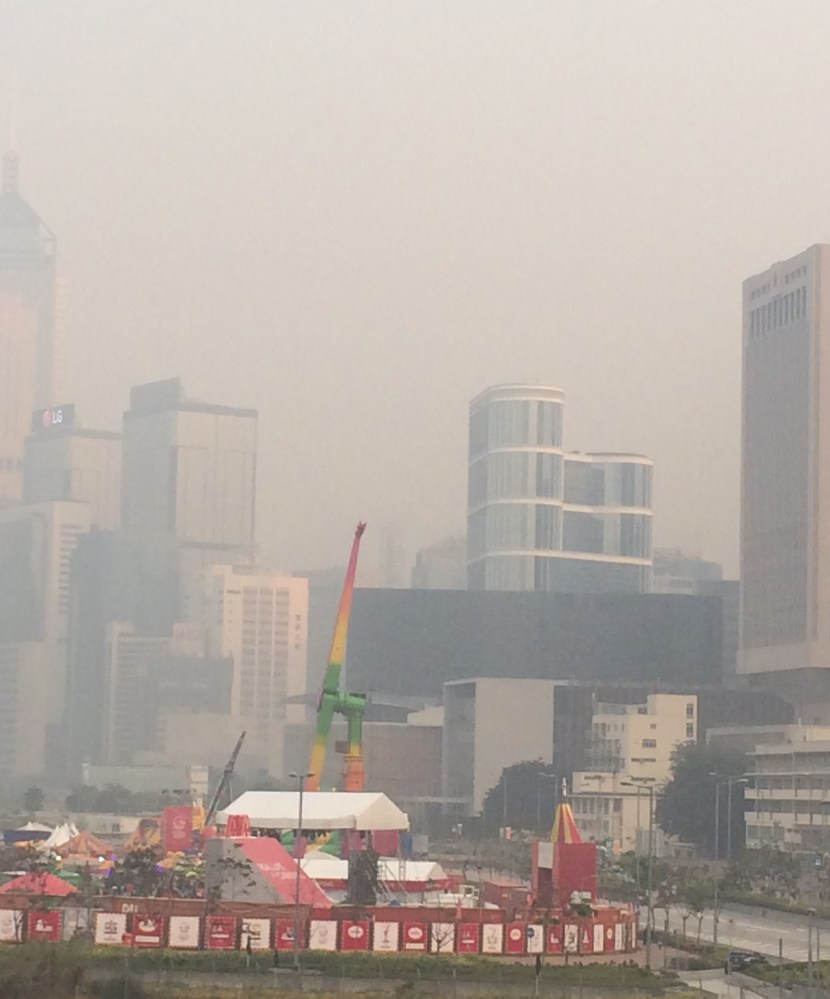
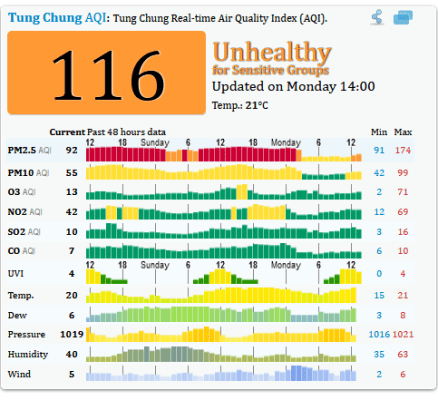
After a weekend of bad air, relief for Tung Chung residents may come as early as tonight with the arrival of fresh east or northeasterly winds.
For almost all of the weekend PM2.5 concentrations in Tung Chung and across the city were recorded at the ‘unhealthy’ level by the ACQI air quality index. At that level active everyone, “especially children, should limit outdoor exertion,” ACQI advises.
The Environment Protection Department Air Quality Health Index (AQHI), which has a different methodology, registered slightly lower readings, but still recorded Tung Chung in the ‘high’ zone for much of the weekend.
It warns of “moderate to very high” health risks this afternoon.
A government health warning issued Sunday afternoon explained:

However, the Hong Kong Observatory forecasts moderate east to northeasterly winds, “fresh tonight,” and bringing “one or two rain patches over the coast of Guangdong.”
But it adds that until then pollution levels will remain higher than normal.
At 2pm today Tung Chung’s air rated ‘unhealthy for sensitive groups’ on the ACQI chart.

EPD issues HK$31b contract for Shek Kwu Chau incinerator
After years of delay and controversy, the Environmental Protection Department (EPD) has finally issued the tender for the construction and operation of the waste incinerator on Shek Kwu Chau.
A Singapore-China joint venture, Keppel Seghers-Zhen Hua, has won the main tender to build and operate what is officially known as an integrated waste management facility.
The EPD has not disclosed the size of the contract, but Singapore-based Keppel-Seghers says it will be worth HK$31 billion.
The incinerator, just off Chi Ma Wan, will be built on a 16ha site at the south end of the island.
It will burn approximately 3000 tonnes of municipal waste daily after it comes into service in 2024.
Just 200 tonnes of that amount will be recycled, while several hundred tonnes of ash will be shipped by barge to the Western New Territories (WENT) landfill site at Tuen Mun.
It will also generate up to 480 million kilowatt hours in electricity capacity per annum – equivalent to 1% of Hong Kong’s total electricity consumption – that can be exported to the grid.
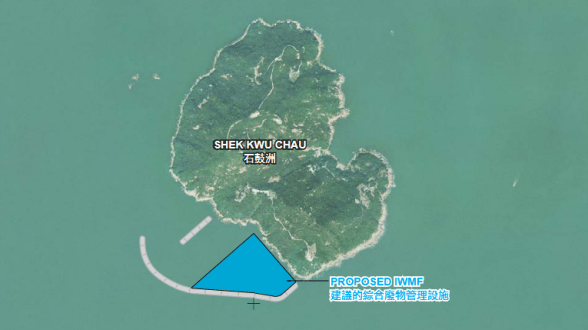
Keppel-Seghers says the construction, to be carried out by Zhen Hua, will “involve the reclamation of an area of about 16 ha, design, engineering and construction of breakwaters, as well as of the IWMF, and its related port facilities on the reclaimed island.”
Keppel Seghers will provide its proprietary waste-to-energy (WTE) technology, which has been successfully deployed for over 100 WTE projects around the world, as well as WTE project implementation and execution of the mechanical treatment plant, power island and desalination facilities.
After the plant is commissioned Keppel has won the right to operate it for 15 years.
The government has argued that the incinerator, first proposed in 2008, is essential for the city to deal with its mountain of household solid waste, estimated to be 5.7 million tonnes in 2015, of which the EPD says just 35% was recycled.
But the project has been criticised for its location, cost, use of old technology and its impact on air quality and marine life.
The initial site of Tsang Tsui was vetoed by rural kingmaker Lau Wong-fat because it was located next to his home village of Lung Kwu Tan.
It sparked a series of protests and a judicial review from a Cheung Chau resident on health grounds. Former EPD deputy secretary Christine Lou even described it as “dioxin-spewing”.
But with construction about to begin, the incinerator, fumes and barges are to become a permanent feature of the South Lantau coast.

Expanded marine park off South Lantau coast will aid dolphins, says WWF
The plan to create Hong Kong’s largest marine reserve around the Soko Islands has won the blessing of WWF.
But the proposal from the EPD and AFCD also raises questions about the future of the islands.
The two departments have suggested expanding the original proposed reserve around the Soko Islands to include a large area to the east.
The new 2067ha South Lantau Marine Park would be Hong Kong’s biggest.
The proposal to the Country and Marine Parks Authority describes the enlarged area as “compensation” for the controversial incinerator to be built on the southern edge of Shek Kwu Chau Island, HK01 reports.
Additionally, a small area around the two main Soko islands, Tai A Chau and Siu A Chau, would be excised from the park for fishing.
Samantha Lee Klaus, manager oceans conservation at WWF-Hong Kong, says scientific studies have shown a large marine protected area “is much more conservation-effective than the scattered, small ones.”
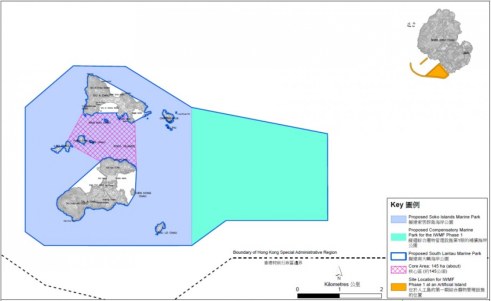
The proposed new marine park (Source: AFCD-EPD)She told Lantau News:
Sokos waters are known to be the only habitat which we can find both Chinese white dolphins and finless porpoises at the same time in HK… As such, the proposed marine park is going to play an important role in conserving the marine environment and species.
But more importantly, the government shall allocate much more resources to strengthen the enforcement in combating the illegal fishing – this marine park is right next to the HK-China border, and illegal fishing has been reported by many fishermen in this area.
Aside from the marine conservation aspect, the plan once again puts on the Sokos, a group of islands two kilometres off Fan Lau on Lantau’s southwest tip, into the spotlight.
According to Oriental Daily, the South Lantau Rural Committee had argued that the park would constrain “future development” on the islands. But it’s not clear what that future would entail.
The islands have a chequered recent history. They were occupied until the 1980s, when Tai A Chau, the biggest island, was used as a camp for Vietnamese refugees.
The smaller island, Siu A Chau, contains a low-level radiation waste site.
In the 2000s CLP came up with a plan to build an LNG terminal on Tai A Chau, but abandoned it after public complaints.
In 2014-15 LanDAC, the government-appointed Lantau development body, discussed building a holiday spa on the island, but rejected it after CEDD found it to be unviable.
(This is still the case, although the EPD was forced to released a statement last night affirming it after the EDP-AFCD paper erroneously claimed the spa would go ahead.)
A month ago, it was revealed Lantau rural leaders had planned to ship the island’s cattle and buffalo to Tai A Chau. That plan, too, has been rejected by the AFCD because of the difficulty in accessing the location.
Lantau butterfly find points to climate change
The discovery of a tropical butterfly on North Lantau last month is a sign that ecological zones are shifting as a result of global warming, according to the Environmental Association.
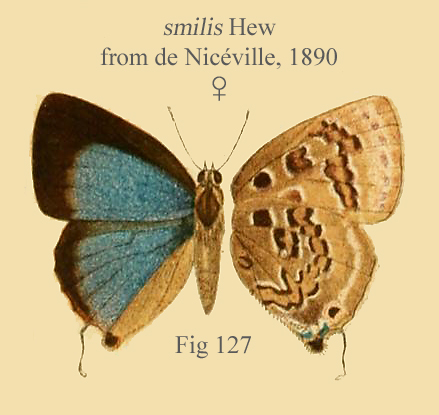
The butterfly, Deudorix smilis, was spotted at Sha Lo Wan on October 28 – the first sighting of this species in Hong Kong.
“It is normally found in areas deep within tropical regions like India and Indonesia,” Environmental Association chief secretary, Dr Yau Wing-kwong, wrote in a letter to the South China Morning Post.
But it is not a one-off.
Another tropical butterfly, the Prosotas nora, was first seen in Hong Kong in November 2015 and has now made the city a permanent home, Yau said, noting that it is now enjoying “a baby boom.”
He pointed out that climate studies have shown that for every degree of global warming, the isotherm, or line of average temperature, will move by more than 160km.
This discovery sends a strong signal, indicating that global warming is moving ecological species northwards, as isotherms … simultaneously move north.
Although much climate change evidence is derived from complex mathematical models and data, it is beginning to affect the ecological world on a much wider, quicker and bigger scale than ever before. This is a clear, strong message and warning that we all act together to combat global warming and climate change, before it is too late and irreversible.
The Environment Association is a privately-funded conservation promotion and education foundation.
Photo (top): Wikimedia

Lantau rural chiefs defy govt with plan to oust cattle and buffalo
The ink is barely dry on the government’s long-term Lantau development plan, but one of its core principles is under challenge from rural chiefs in their latest attempt to expel cattle and buffalo.
The Sustainable Lantau Blueprint, issued in June, calls for the conservation of rural Lantau’s natural and cultural heritage.
It specifically demands the protection of the Pui O wetland, home to the local buffalo herd, which it acknowledges as as “part of [Pui O’s] cultural history” and an important means of showcasing Hong Kong’s rural history. It also seeks the preservation of Mui Wo’s “rural township character.”
However, the Islands District Council and local rural committees are once again lobbying the AFCD to remove Lantau’s remaining cattle and buffalo.
This time their plan is to shift them to Tai A Chau, an island in the Sokos with limited water supplies and no wetland that could support buffalo.
Despite this, the AFCD cattle team is understood to have told an October 12 meeting that the plan was feasible. However, they also said the idea was not practical because there was no way for them staff to conveniently reach the remote location.
The meeting, organized by the Islands District Council, was attended by Wong Man-hong and Fan Chi-ping – the heads respectively of the Mui Wo and Tung Chung rural committees – a member of the South Lantao Rural Committee, district councillor Randy Yu, LanDAC member Chau Cheun Heung, Bui O Public School principal Yu Mei Fong, Home Affairs Department officials and four representatives from cattle support groups.
One attendee told Lantau News the rural leaders argued that the move was necessary for safety reasons, although they were unable to explain why the buffalo posed a bigger safety threat than speeding traffic on EVA.
Despite the AFCD reservations, the rural councillors and Randy Yu urged the AFCD to go ahead with a trial.
The current effort to remove Lantau’s bovines is the latest of many.
In one notorious case in 2006, several dozen cattle were removed byAFCD truck to Fan Lau, but only three survived the journey.
In 2013, the AFCD experimented by swapping cattle herds between South Lantau and Sai Kung. One of the Lantau cattle died and many of the remainder, unable to food in the unfamiliar environment, had to be hand-fed. The trial was terminated after the department was hauled before a Legco sub-committee.
In the last two years the plan to remove the animals to Tai A Chau has emerged on a number of occasions, only for the government in each instance to deny it.
An online petition opposing the relocation states:
We believe that Lantau Island has absolutely sufficient capacity for the conservation of all cows and buffaloes. Any form of relocation out of Lantau Island is not needed. In addition, we demand the government to establish a long-term conservation policy, allocating resources to conserve them in their original habitats.
Developer withdraws Pui O caravan park plan
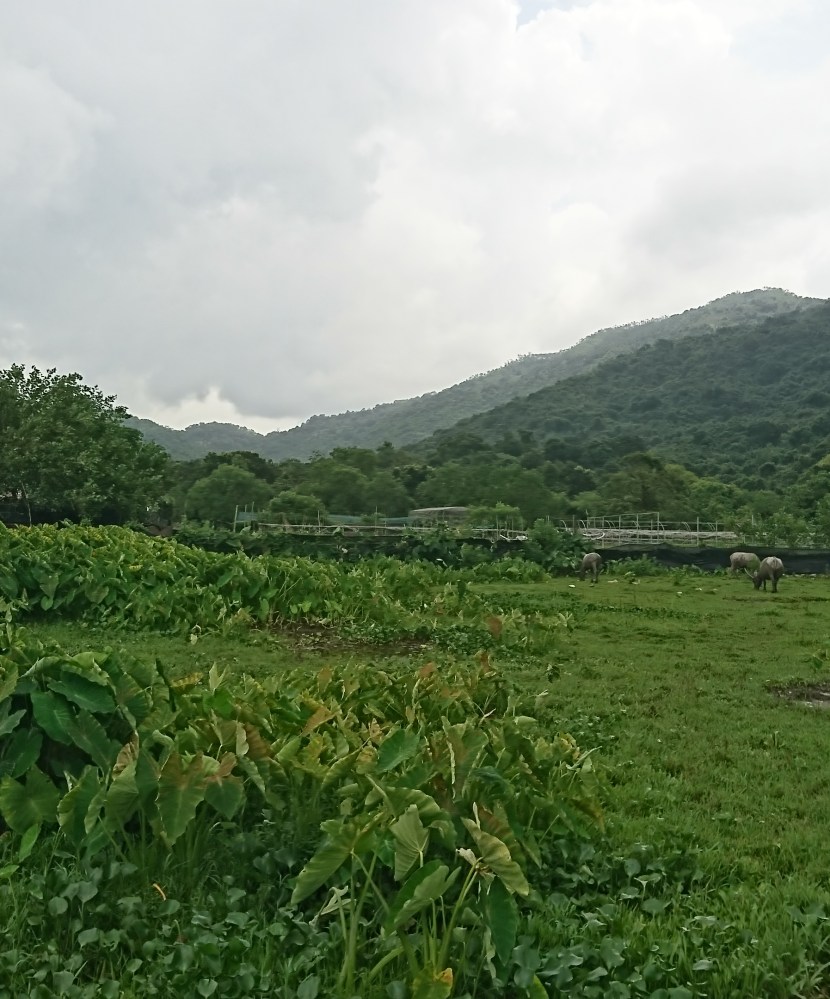
Pui O business group JK Group Limited has withdrawn its application for a caravan park and holiday camp.
The application to the Town Planning Board (TPB) was originally scheduled to be heard in June, but was extended twice because of the number of objections.
The TPB was due to review the case today, but the board’s website reveals that the plan was “withdrawn by the applicant.”
In a post on its web page last month JK Ltd attacked what it called “misleading and dafamatory expressions made by several foreigners in the social media.”
It said it regarded “such behaviour as a commercial attack rather than an environmental issue.”
Tung Chung bad air index hits ‘very high’ – more on the way
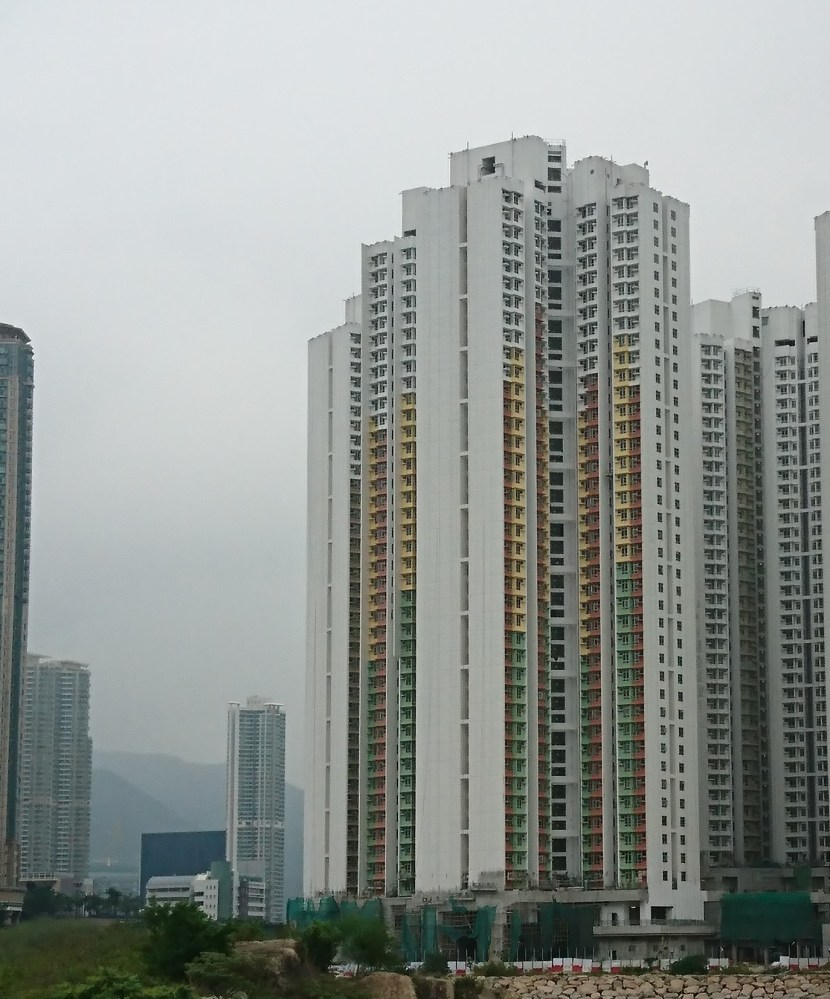
Tung Chung’s air quality readings again reached ‘very high’ yesterday, with more bad air forecast for later this week.
EPD air monitoring stations in Tung Chung recorded pollution in the ‘high’ and ‘very high’ levels for four hours late yesterday afternoon, peaking at 5pm.
The ozone reading was 162.7 micrograms, more than 50% above the World Health Organization standard of 100 micrograms per cubic meter. The concentration of fine particulates, PM2.5, reached 58.2 micrograms, 25 micrograms higher than the WHO standard.
The outlook for today is moderate, but the World Air Qualty Index website predicts further high levels this week, in particular Wednesday morning and early Saturday morning.
The high pollution levels across Hong Kong and much of Guangdong are the result of a northeast monsoon which is bringing dry sunny weather and light winds – ideal conditions for photochemical smog.
Under the EPD’s Air Quality Health Index (AQHI), a reading of 7 is high, 8-10 is very high, and above 10 is serious.
In ‘very high’ pollution conditions the EPD advises children, the elderly and those with heart or respiratory diseases to reduce outdoor exertion and stay indoors, especially those living in areas with heavy vehicle traffic.
 Lantau Confidential