
Category: development

Govt HK$550m Lantau Tomorrow funding request goes to Legco on Friday
As if Hong Kong politics were not combustible enough: the contentious Lantau reclamation project is back.
The HK$624 billion scheme to build a new CBD on reclaimed land near Lantau is the biggest and costliest in Hong Kong’s history.
The government will go to the Legco Finance Committee this Friday to seek final approval for HK$550 million for the first stage of the project – planning and engineering studies.
The proposal passed the public works subcommittee in May.
Under the scheme the government plans to create 1200ha of land for premium office space and housing for up to 1 million people around Kau Yi Chau, an island halfway between Lantau and Hong Kong.
A second stage, yet to be studied, involves building a further 500ha near Hei Ling Chau, just off Mui Wo.
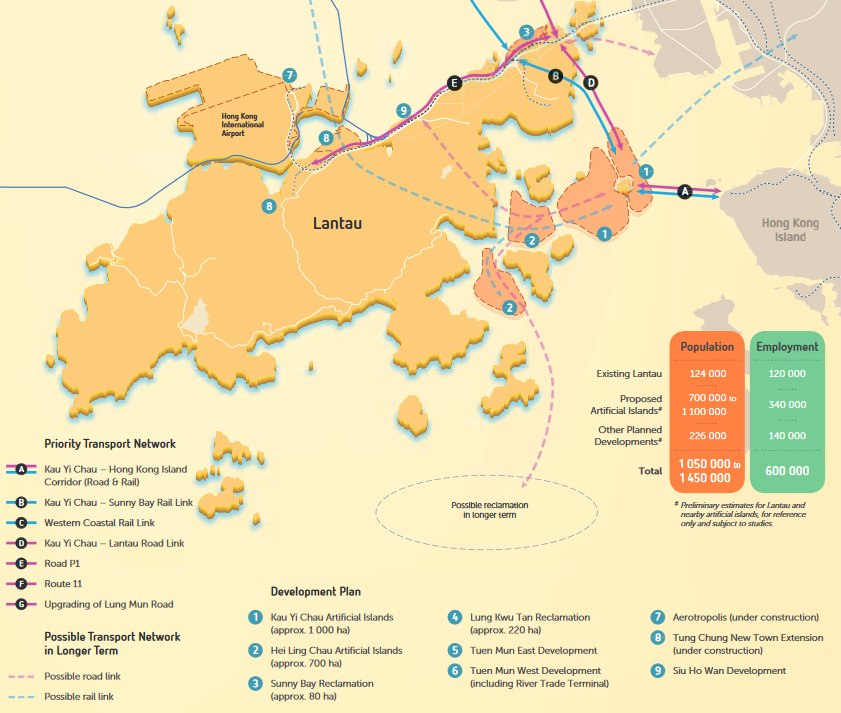
Critics have assailed the plan over its cost and environmental impact and poorly thought-out transport arrangements
They question the government’s figures and say it has ignored existing land stocks such as brownfield land and vacant government sites as well as tens of thousands of empty apartments.
In a briefing paper, the CEDD said it required the funds to proceed
with the planning of the KYC [Kau Yi Chau] Artificial Islands, including the formulation of detailed land use proposals, as well as the road and rail connections linking the KYC Artificial Islands with Hong Kong Island, Northeast Lantau and coastal area of Tuen Mun.
If it begins on schedule the study would complete in mid-2023, the paper said.
The biggest costs in the study are the consultants’ fees for the artificial islands (HK$190 million) and for transport infrastructure (HK$160 million).

Luk Tei Tong villagers to protest today against ‘illegal’ columbarium
Luk Tei Tong villagers will hold a protest this afternoon over construction of a private columbarium inside a local temple.
They say the columbarium would breach land use regulations and result in a large number of visitors to the small village, which connects to Mui Wo by a single path.
Luk Tei Tong indigenous village head Tsang Wunwai says residents are unanimously opposed to the columbarium, which has been enabled by the introduction of a private columbarium law last year.
The To Yuen Tung Temple, which was built in the 1960s, has applied for a licence to build a private columbarium.
It is not clear how big the columbarium will be. According to an Oriental Daily report, the temple will have 4,000 slots for urns, while HK01 reports the number as “more than 1000”.
Tsang told HK01 that the columbarium would affect daily village life and called on the new Private Columbaria Licensing Board to reject its application. He said he wouldn’t rule out the possibility of blocking traffic to the village.
He said residents discovered that urns were being hosted on the site about five or six years ago and had complained to several government departments.
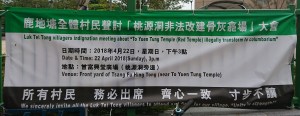
Indignation meeting today
The villagers argue that the project is illegal because the Lands Department has determined is that storing human ashes on the site breaches its land use provisions.
However, the application is now with the PCLB, along with more than 140 others.
The Food and Environmental Hygiene Department says the To Yuen Tung application was still being processed. It must prove to the licensing board that all requirements have been met, including land use, planning, fire safety and environmental impact.
The To Yuen Tung application is one of six such from across Lantau.
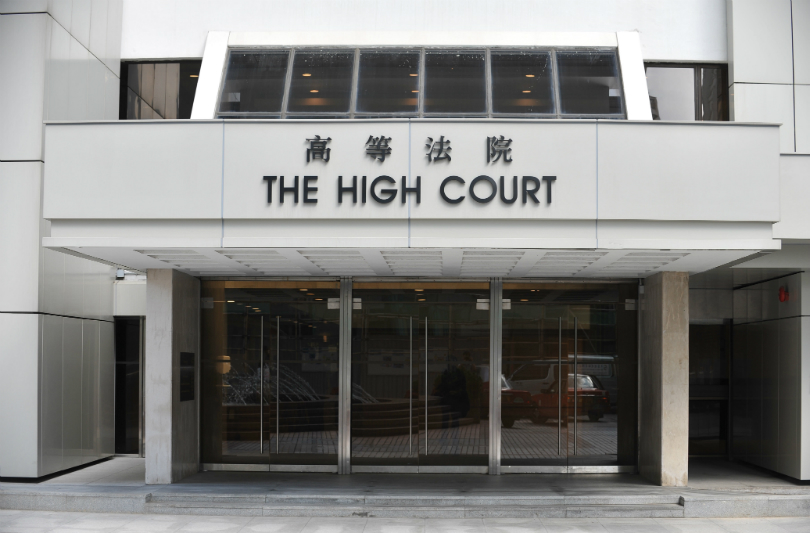
The Lands Department found that one site, Nim Yuen village near Tung Chung, was also in breach of land use rules, but the department lost its case before the High Court to have it shut down.
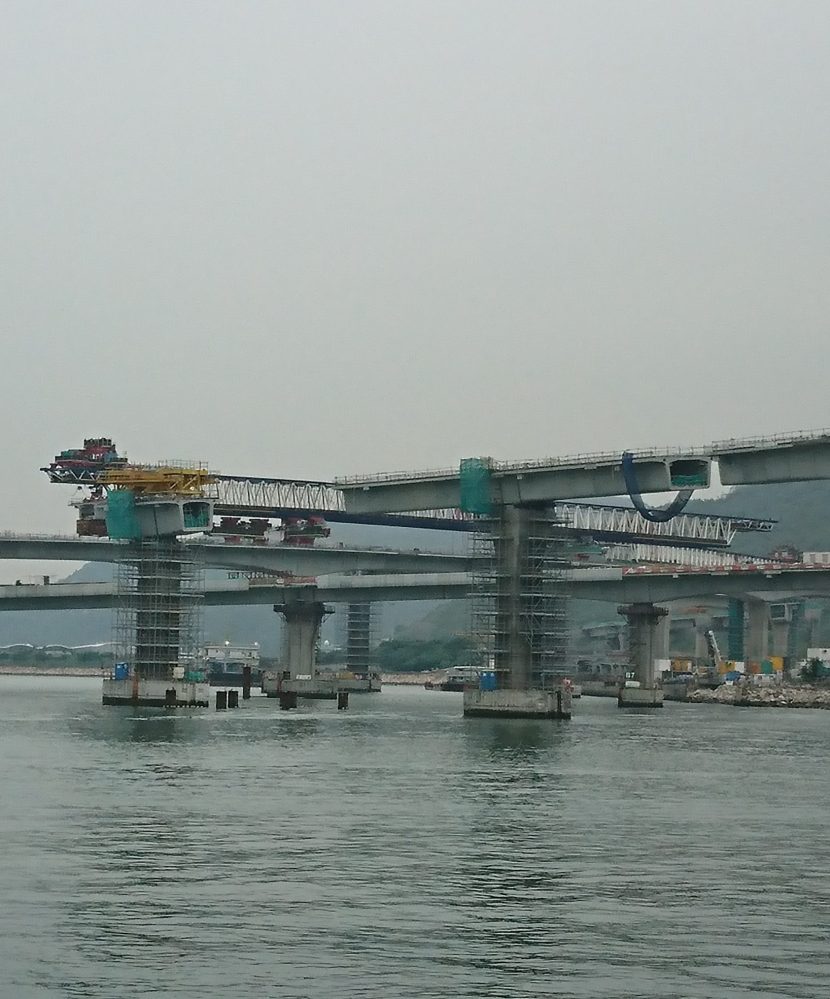
Photo (top): Under construction (Source: HK01)
Court throws out govt attempt to shut down Tung Chung columbarium
The government has failed in its effort to shut down a private columbarium in Nim Yuen village near Tung Chung.
The Court of Appeal today rejected the government’s case that the columbarium, with an estimated 30,000 niches, was “an offensive trade.”
The owner, Uni-creation Investments Ltd, had begun the business three years ago after acquiring the land from indigenous villagers, RTHK reported.
But the Lands Department decided that it contravened the government lease.
After the government had sought to resume the plots, Uni-creation took it to court. It won the case in a lower court, but lost after the government appealed.
The Court of Appeal agreed with the original decision that the government’s evidence was weak. According to RTHK:
The appeal court said while, in general, one may feel uneasy “living next door to the dead,” in this case, clan graves and urns containing human remains had existed in the village well before the columbarium opened.
And, in fact, the judge noted, all the land in the village was bought up by the company and no one lives there anymore.
The court further found that a columbarium was not an offensive business, and that legislation already existed to regulate them.
Despite the lack of local residents, villagers protested the plan.
Uni-creation had acquired the land from a number of local residents, including Nim Yuen representative Kwan Wai-on, between 2006 and 2008.
The district office in 2012 had approved the reconstruction of the village homes for personal “domestic use.”
Uni-creation director Cheng Yung-hing is also a former Lands Department official and a director of the company running the columbarium business, SCMP.com reported.
Lantau residents don’t feel consulted on development plans: survey
A survey of Lantau residents and visitors has found that just half believe the level of consultation over government development plans for the island has been inadequate.
In addition, more than two-thirds were worried that the air quality of Tung Chung would deteriorate after the opening of the Hong Kong-Zhuhai-Macao Bridge.
The survey of 302 people in Tung Chung, Mui Wo, Pui O and Tai O was carried out by the Baptist University College of International Education last October. Just under half of the respondents were Lantau residents, 37% were tourists and 9% were local employees.
Only 56% had heard of the government’s Sustainable Lantau Blueprint, released in June, the Economic Times reported.
Half considered the level of government consultation inadequate or very inadequate, and only 8% considered it adequate.
They were also concerned about air pollution – 70% expect the opening of the HZM Bridge will make the air in North Lantau and Tung Chung worse – and the growing traffic loads in South Lantau, with 54% believing the volume of vehicles should be linked to the environmental carrying capacity.
Dr Karen Wu, a lecturer at the college, said the general public believed that development of Lantau should prioritise conservation of natural heritage and culture ahead of transport development. She said authorities should focus on protecting threatened conservation hotspots.
A Development Bureau spokesperson told the Economic Times that “as a whole, there is general public support” for the government’s Lantau plans.
However, the survey confirms what the government’s own polling has shown, which is that Hong Kong people have reservations about Lantau development, in particular over the East Lantau Metropolis proposal.
Tom Yam, a Mui Wo resident and vocal critic of the ELM, points out that the government has consistently overlooked public opposition. He wrote in an scmp.com op-ed last August:
After last years’ public consultation on the future of Lantau, the government claimed general support for its development plan, ignoring the fact that more respondents opposed specifically the construction of the East Lantau Metropolis than supported it.
That survey had found that just 31% agreed on the creation of the ELM on artificial islands, with 56% opposing it.

Massive Tung Chung Bay reclamation gets underway
Work on the reclamation of 130 ha of Tung Chung Bay to create land for housing formally began today.
Government officials descended on north Lantau this morning to don the traditional yellow hard hats for the ceremonial project start.
Combined with the removal of 150 ha of the northern side of the bay to create an artificial island for the HK-Macau bridge, the new project will reduce the bay, once two kilometres wide, to a narrow channel.
A HK$12 billion contract to carry out the reclamation was let to a Singapore-China joint venture, Build King-SCT, last month.
The Tung Chung east project is the biggest part of what is officially known as the Tung Chung New Town Extension – the biggest project in the district since it was built two decades ago.
It is intended to provide 40,000 homes, with the first people forecast to move in in 2023. Another 9,000 homes are to be built at Tung Chung west near Shek Mun Kap. More than three-fifths will be public housing.
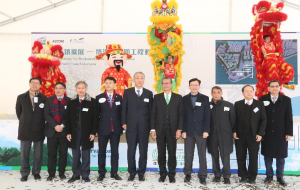
Led by Paul Chan (centre), today’s dignitaries included Islands District Council chairman Chow Yuk-tong (third from right) and various works officials
Finance Secretary Paul Chan – who as Development Secretary was the chief salesman for the East Lantau Metropolis – used the occasion to hail the importance of reclamation, which has slowed down in the last two decades.
Between 2000 and 2015, Hong Kong generated a total of only 690 hectares of land (ie, an average of more than 40 hectares annually) through land reclamation, far less than the 3,000 hectares between 1985 and 2000 (that is, an average of 200 hectares per year About ten Victoria Parks), a decrease of nearly 80%.
Without elaborating, Chan argued that reclamation is synonymous with urban growth, noting that nearly half of the city’s population lives in ‘new towns’ – urban areas such as Tsuen Wan, Tuen Mun and Shatin that were built in the 1970s and 80s.
Tseung Kwan O and Tung Chung were created in the 90s, but no new residential districts have been developed since.
Chan says up to now Tung Chung has lacked the scale of other new towns like Shatin, which has 700,000 people, and Tai Po 280,000, to support local facilities.
Originally anticipated to house 200,000 people, today has little more than 80,000. Chan blames the shortfall – again without any details – on the Asian financial crisis in the late 1990s and SARS in 2003
He says the expansion will bring a “substantial improvement in local facilities” to the district, including two new MTR stations, a 3 ha playground, “post-secondary education facilities, clinics, large-scale public markets and more than 5 km of promenades.”
The expansion will also provide 870,000 sq metres of commercial floor space will be used for office, retail and hotel development, enabling more local job opportunities.
Tung Chung east reclamation begins following issue of $12b contract
Work on Tung Chung east, the biggest expansion of the district since it was built 20 years ago, is now underway following the issue of a HK$12.1 billion contract for reclamation work.
The project will involve a massive reclamation of 130 ha of Tung Chung Bay between Tai Ho and Tung Chung, including construction of 4.9km in seawalls.
The work will be carried out by Build King-SCT, a joint venture led by listed civil engineering firm Build King, the government announced yesterday.
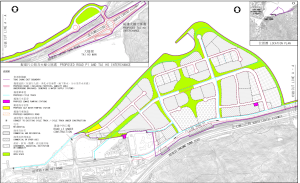
Tung Chung East reclamation (CEDD)
Work began on December 29 and under the current timetable the first parcel of land will be handed over to the Housing Department in 2020.
The first residents are expected to move in in 2023. When completed, Tung Chung east will provide 40,000 new flats.
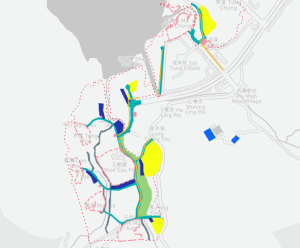
Tung Chung west (CEDD)
Another 9,000 apartments will be built at Tung Chung West around the villages of Shek Lau Po, Ngau Au, Lam Che, Mok Ka and Shek Mun Kap.
Site investigation work began in July and detailed infrastructure design is underway, CEDD told the Islands District Council last month.
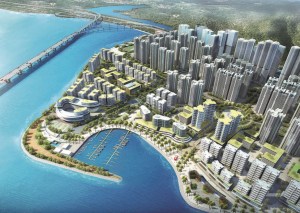
Tung Chung East, artist’s impression (CEDD)

A north Lantau-Mui Wo transport tunnel is back on the agenda
A road or rail tunnel – or both – linking north Lantau to Mui Wo is back on the planning agenda, nearly two decades after being rejected on environmental grounds.
A CEDD study on residential development at Siu Ho Wan, east of Tung Chung, discusses the options for building one or both tunnels through the Lantau North Country Park to support future population growth.
It says the Siu Ho Wan development on reclaimed land would house more than 9,000 people, while the expansion of Tung Chung is forecast to add another 170,000 in the next ten years.
The study, by engineering firm Ove Arup, says the route of any new north-south transport connections would depend on the design of the East Lantau Metropolis (ELM). (Notably the study began in 2015 while the ELM was still being discussed by LanDAC.)
The report canvasses two railway tunnel routes to Mui Wo – one from Siu Ho Wan and the other from Tung Chung East station, due to come into service in the mid-2020s.
It says the route from Tung Chung East would be the most feasible, with fewer engineering issues, a lower cost and a direct interface into the MTR system.
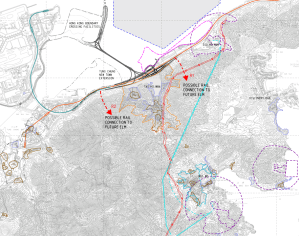
Two possible rail routes (Source: CEDD)
The study also considers possible road tunnels to Mui Wo, suggesting the most practical point would be adjacent to the sewage treatment works.
But the potential route faces a number of constraints, including archaeological and scientific sites at Tai Ho Wan, the North Lantau Country Park and the marshes and freshwater sources around Mui Wo.
It says that with the extra population in Tung Chung and Siu Ho Wan, traffic volume on the North Lantau Highway would go beyond the “manageable degree of congestion” after 2031.
The contentious HK$400 billion ELM, built on 1000 ha of reclaimed land in the waters between Lantau and Hong Kong Island, will not be ready until at least the mid-2030s.
In 2000, the Transport Bureau recommended building a tunnel from Tai Ho Wan to Mui Wo instead of widening Tung Chung Road, at that point a narrow one-lane road.
In a decision unimaginable today, this was overturned by the-then Director of Environmental Protection and instead the widening of Tung Chung Road went ahead.
As the Transport Bureau explained:
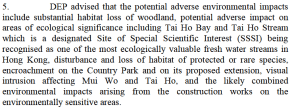
The Siu Ho Wan study follows another CEDD report which examines the options for rail and road links from Tuen Mun through northeast Lantau to the ELM and Hong Kong Island.
Separately, the government is seeking HK$88 million for a feasibility study on a freeway from North Lantau to Yuen Long, a plan derided by opposition law-makers as a way to take vehicles to the ELM rather than fixing New Territories transport congestion.
Photo (top): Tai Ho Wan
Govt study proposes ELM road and rail links through northeast Lantau
A government study has proposed building road and railway links to the East Lantau Metropolis (ELM) through northeast Lantau, apparently abandoning an earlier plan to connect through Tung Chung and Mui Wo.
A report for the Civil Engineering and Development Department (CEDD) suggests building a ‘District Line’ railway route from Tuen Mun through northeast Lantau to the ELM and then to Hong Kong Island, HK01 reports.
The logical connecting point on Hong Kong Island would be Kennedy Town, the westernmost station on the Island Line. However, the line may not have the capacity, so the alternative would be to build a new station nearby and passengers interchange on foot.
The report also recommends building a road along a similar route, with discussion about where would be the best place to land it on Hong Kong Island.
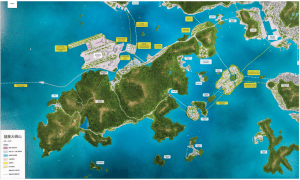
East Lantau Metropolis (Source: CEDD)
Neither of the studies examines transport links from Mui Wo or Tung Chung.
This contrasts with the Sustainable Lantau Blueprint, issued in June, which envisaged a railway connection from Tuen Mun to Tung Chung, then south to Mui Wo and onwards to the main part of ELM via Hei Ling Chau.
According to the Sustainable Lantau Office, a unit of CEDD, a study into Lantau’s internal and external transport networks is also underway.
Yet these reports are being undertaken before the major study into the ELM has begun.
With an estimated HK$400 billion price tag, the 1000ha reclamation in the central waters would be the biggest project in Hong Kong history.
The government is seeking $249 million in cash from Legco to conduct a technical feasibility study, but it has made no economic analysis of the ELM and has no plans to do so.
The project, which is not due to be completed until mid-2030s at the earliest, is premised on a Hong Kong population of more than 9 million. However, the government’s own forecast is that the population will peak at 8.22 million in 2043 and then start to decline.
Top ten Lantau News stories for 2017
10. Two arrested over indecent assault on Tung Chung bus
Two men were charged following an alleged sexual assault on a bus – one the alleged assailant, the other the victim’s boyfriend.
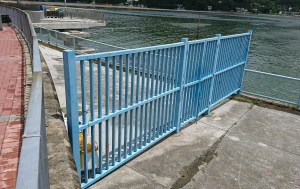
9. The Great Fences of Lantau
Metal railings saturate the Lantau landscape, sheltering residents against the dangers that lurk, our photo essay reveals.
8. Tung Chung east reclamation to begin by year-end
The Civil Engineering and Development Department issued a tender for reclaiming 130 hectares from Tung Chung Bay and building seawalls and infrastructure – the biggest part of the Tung Chung expansion project.

7. Rat snacks at Yat Tung noodle stall (pic)
A photo of a rat snacking on a chicken wing at a Yat Tung noodle bar went – what else? – viral.
6. MTR to build another 14,000 apartments on Tung Chung Bay
The MTR joined Tung Chung’s building boom, revealing plans for a residential and retail project at Siu Ho Wan, currently the site of its North Lantau depot.

5. Here come the green minibuses
The Transport Department called a tender for a green minibus service between the new bridge border crossing and Tung Chung.

4. After 18 years on the beach, the Stoep gets new lease of life
The much-loved Stoep closed its doors at Cheung Sha Beach and re-invented itself at Mui Wo. The beachside restaurant had become a destination for a generation of Hong Kongers.
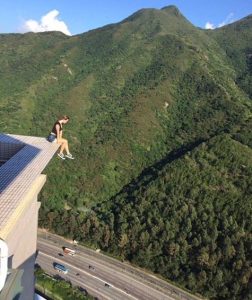
3. Rooftopping teens breach security in Tung Chung high-rise
Teenagers broke through the security at Caribbean Coast to go roof-topping and create some hair-raising photos to share with their friends. MTR, the Caribbean Coast manager, said it was immediately aware of the breach and ordered the teens off the roof.

2. Thousands of Lantau commuters in line for fare subsidy
Thousands of South Lantau and Tung Chung residents qualified for a new public transport subsidy of up to HK$300 a month for long-distance commuters.
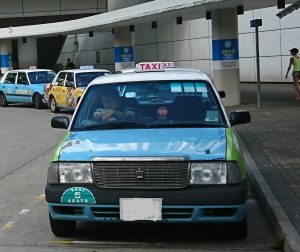
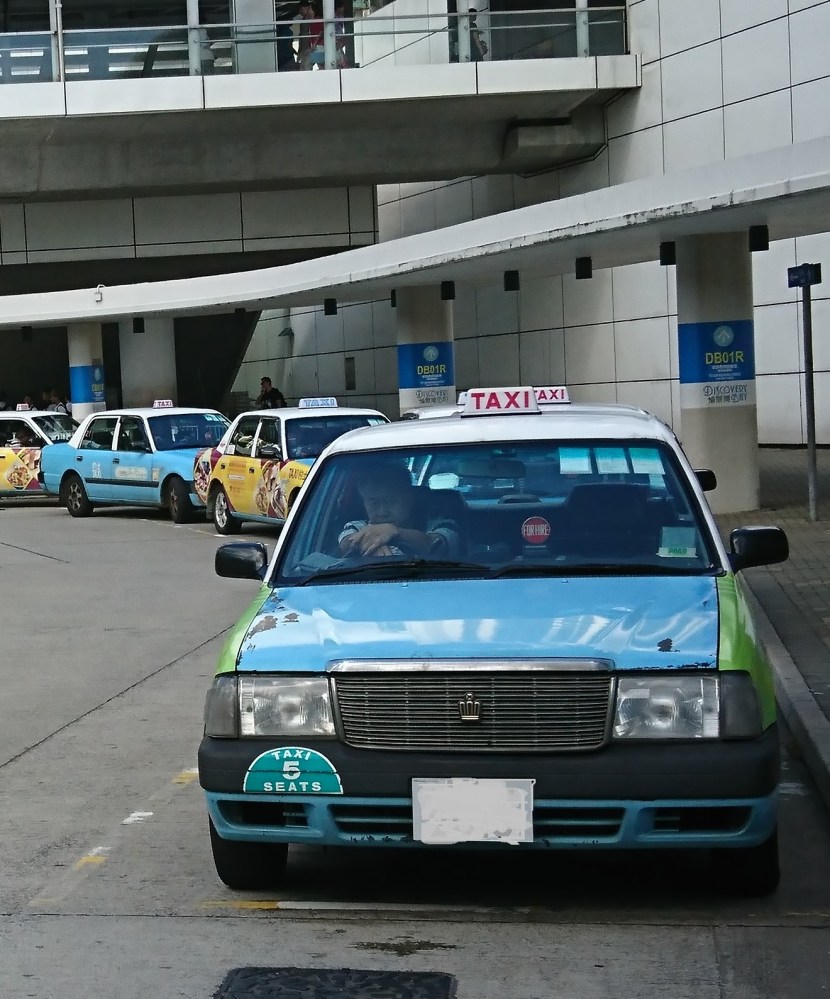
1. Lantau cab driver arrested for overcharging during typhoon
A 60-year-old blue cab driver was arrested for overcharging. Following complaints about cabs refusing fares and hiking prices, plainclothes officers went to the Tung Chung MTR stand just before T8 was hoisted for Typhoon Merbok. The driver was later fined HK$1000.
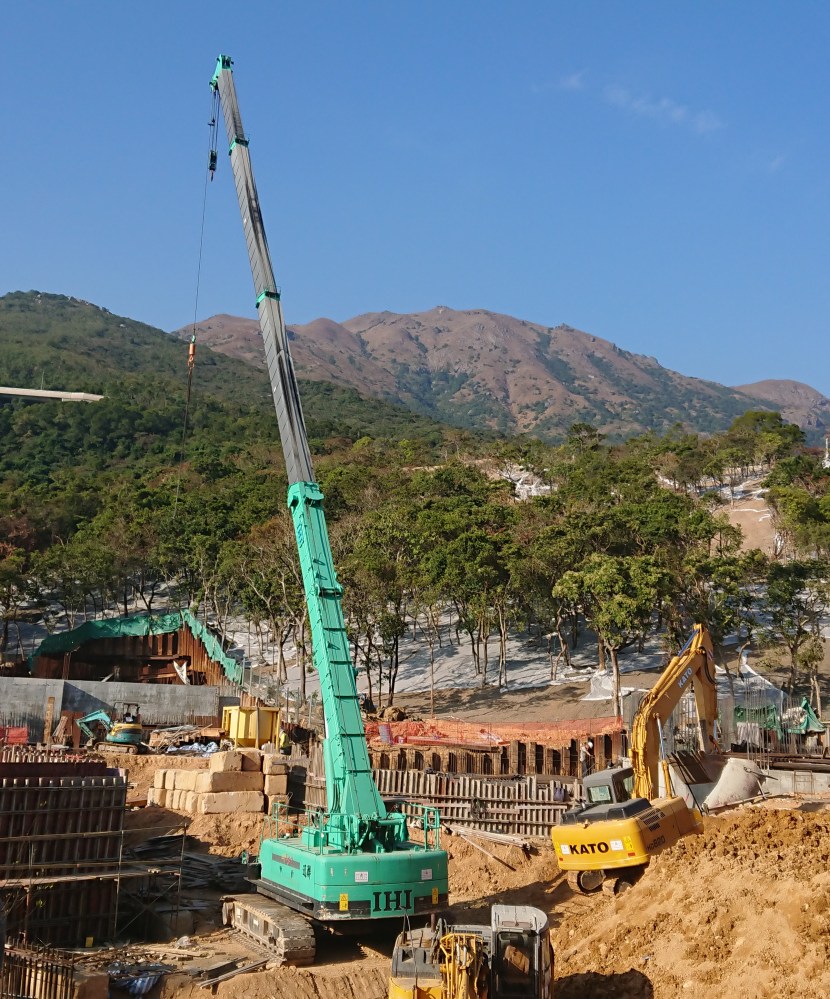
Another Cheung Sha luxury development gets green light
A developer has been given the go-ahead to build six luxury residential blocks at Cheung Sha.
According to the Building Services Dept, each block will be three storeys, with a gross floor area across the projfect of 3322 sq m (35,756 sq ft) and usable area of 1779 sq m (19,149 sq ft).
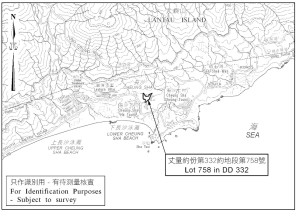
The developer, New Advance Ltd, a subsidiary of Neutron Property Fund, acquired the 4,212 sq metre site, just behind the Cheung Sha Fire Station, three years ago for HK$290 million.
At that price, the developer will need to sell each building for a total of HK$50 million just to recoup the land acquisition costs alone.
Work on the site and foundations by mainland developer Sino Ocean is already well underway.
When complete the new development will join White Sands, Botanica Bay and a planned project near the San Shek Wan roundabout at the top end of the local property market.
 Lantau Confidential