Eight reasons not to build East Lantau Metropolis

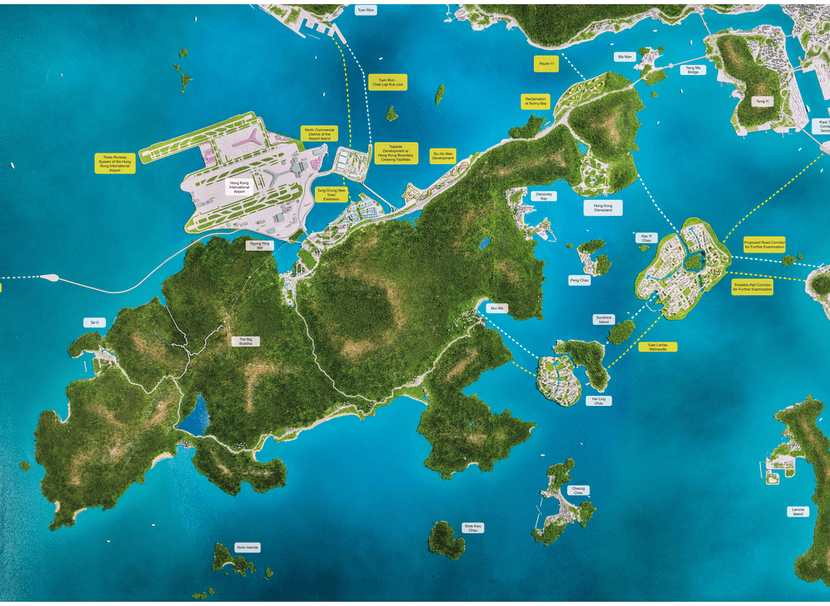
The deadline for the public consultation on Hong Kong 2030+ looms on April 30 – the last chance for Lantau people to register their views on the plan to run a freeway across the island to connect Mui Wo to Central via a new commercial centre built on reclaimed land.

Here’s why it shouldn’t be built.

  1. The ELM won’t fix Hong Kong’s housing problem

Hong Kong has the world’s most expensive home prices – a wretched record it has held for the past seven years. That requires solutions now, not in the mid-2030s when the first ELM homes are ready.

  1. The ELM is the worst solution to the housing shortage

The ELM is the slowest, most expensive and environmentally harmful way to provide affordable housing. It proposes to house up to 700,000 people on a site from anywhere between 1000 and 2400 hectares, comprising the islands of Hei Ling Chau and Kau Yi Chau and extensive harbour reclamation. Some alternatives:

  1. The ELM will solve a problem that doesn’t exist

The ELM is based on a forecast population of 9 million. Yet the government’s own figures anticipate that the city’s population will peak at 8.22 million in 2043, after which it will decline. The government has suggested it is a ‘contingency’ – in other words it wants to commit public funds to the city’s biggest ever infrastructure project on the basis that it might be needed.

  1. The ELM has no economic case

The ELM is intended to be Hong Kong’s third CBD – a concentration of high-end office and retail, in addition to the abundant stock that exists in Central-Admiralty and East Kowloon (in the case of office space) and Causeway Bay and Tsim Sha Tsui (retail), not to mention the flood of new retail stores at the forthcoming HZM bridge landing zone. The government has not made the case for these other than claiming that direct links to both the Pearl River west bank and Central will create economic activity.

Property consultant Leo Cheung from Icon City says the government’s economic projections “belong to the unknown.” A new city centre of that scale will require up to a quarter of million jobs – there is no sign of where they will come from.
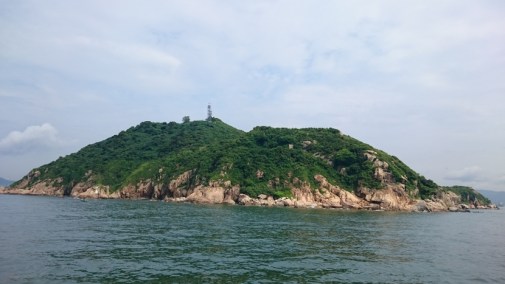
Prime real estate CBD material: Kau Yi Chau

  1. If we build the ELM they won’t come

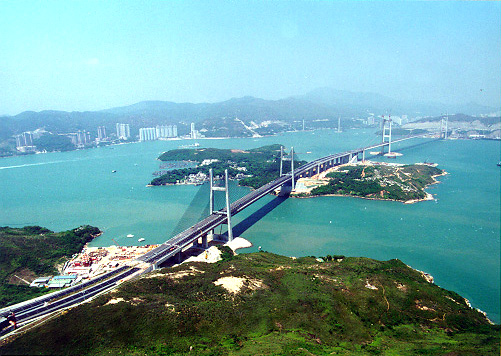
Since 1997, Hong Kong has built one white elephant after another – Stonecutters Bridge (HK$2.76 billion), the Kai Tak Cruise Terminal (HK$6.6 billion), Central-Wanchai bypass (HK$36 billion), the Hong Kong-Zhuhai-Macau bridge (HK$140 billion and climbing) the high-speed rail link (HK$90 billion and also climbing) and, coming soon, the Shek Kwu Chau incinerator (HK$22 billion). Hong Kong bureaucrats love to pour concrete instead of trying to solve actual problems. Their bosses in Beijing love it, too. China is now exporting its excess construction capacity across Eurasia through its ‘One Belt One Road’ scheme. Heavy public works may have worked well for developing China in the past 30 years, but add little value to a city that already has advanced infrastructure.

  1. The ELM is environmentally destructive

Hong Kong leaders repeatedly stress they aim to balance conservation and development, yet invariably they find that the ‘balance’ comes down on the side of environmental degradation. This has been the case with Shek Kwu Chau, HZM bridge and the third runway. If an environmental assessment of ELM is made, it is guaranteed that the Environmental Protection Department will determine that it meets all the environmental criteria.

Special mention must be made of the repeated claim that this planned concentration of concrete and glass on reclaimed land and fed by freeways will be ‘low-carbon.’

  1. Hong Kong can no longer manage large projects

The ELM promises to be the greatest money pit of all. There is no costing yet, but according to a private estimate, based on previous projects, it will cost HK$400 billion.

This city once had a reputation for financial rectitude. The continued delays and cost overruns on the HZM bridge and the Guangzhou express rail link indicate a reckless approach to managing taxpayer assets and reinforce the view that sound economics are far less important than making a favourable impression in Beijing.

  1. The ELM has been shrouded in deception

From the outset it has been clear the government is determined to impose ELM on the city, regardless of its cost or public opinion. After introducing the ELM in his 2014 policy address CY Leung created a new advisory body stacked with developers and government supporters. After they predictably voted for ELM, the government held a ‘consultation’ that with equal predictability found that most Hong Kong people support the project, despite the thousands of written objections. The government has never showed any evidence for this claimed level of support. It also has never issued any of the consultancy studies that have examined the project. This disdain for public opinion was symbolised by the construction of a 3D model of ELM exclusively for visiting Beijing official Zhang Dejiang while the public consultation was still underway, containing details then unknown to the public.
North Lantau freeway to charge toll both ways

The bad news is motorists will have to pay a toll in each direction on the Lantau Link freeway. The good news is it won’t cost any more.

The new rule will take effect on December 15, a result of the opening of the Hong Kong-Zhuhai-Macau bridge, also expected at the end of the year.

The current toll of $30 is in fact the two-way toll, but it is charged once once because virtually all traffic on the road is two-way.

That will change with the arrival of the bridge, which will allow drivers to head for destinations across the Pearl River.

However, it won’t change for taxis. To ensure they won’t be discouraged from airport pickups, they will still be permitted charge a HK$30 surcharge both ways.

Buffalo back in Tung Chung after 30 years

A young water buffalo has relocated himself to Tung Chung valley – the first in the region for three decades.

He was spotted last week by LBA members near Shek Mun Kap. LBA chair Ho Loy said the buffalo, who is four or five years old, was a shy male who had been chased away from the Ham Tin herd.

But there is no wetland suitable for buffalo, and no other buffalo, in the area, so Ho has proposed returning him to the Shui Hau wetland, where one of the big bulls passed away three years ago. “There’s no point in sending him back to Pui O,” she said.

The AFCD cattle team says he will be difficult to capture if he is in forest or near villages, but are happy to catch and relocate him if he gets near a road or is a threat to traffic or his own safety.

Prior to development in the late 1980s, Tung Chung had for centuries been a farming and fishing settlement with a regular population of buffalo that were used as work animals.

We can see Tung Chung’s last buffalo in this RTHK 1988 documentary on Tung Chung’s last farms. It in Cantonese but we can see buffalo helping in the sowing and harvesting at 2:18 and 6:39.


WSD probing cause of burst water main

Water supply in South Lantau has returned to normal after a burst water main left three villages without water for more than a day.

The pipe burst at around 6am Sunday morning, disrupting service to several hundred households in Cheung Sha, Tong Fuk and Shui Hau.

Water Supplies Department dispatched a team to the area and switched off all local water supply at 8amThe team worked through the night to restore the service by 10am today, a spokesperson said.

The initial reports of loss of supply came from Cheung Sha, but the fault was eventually identified near Shui Hau. The cause of the failure is now being investigated, although it may have been an ageing pipe, the spokesperson added.

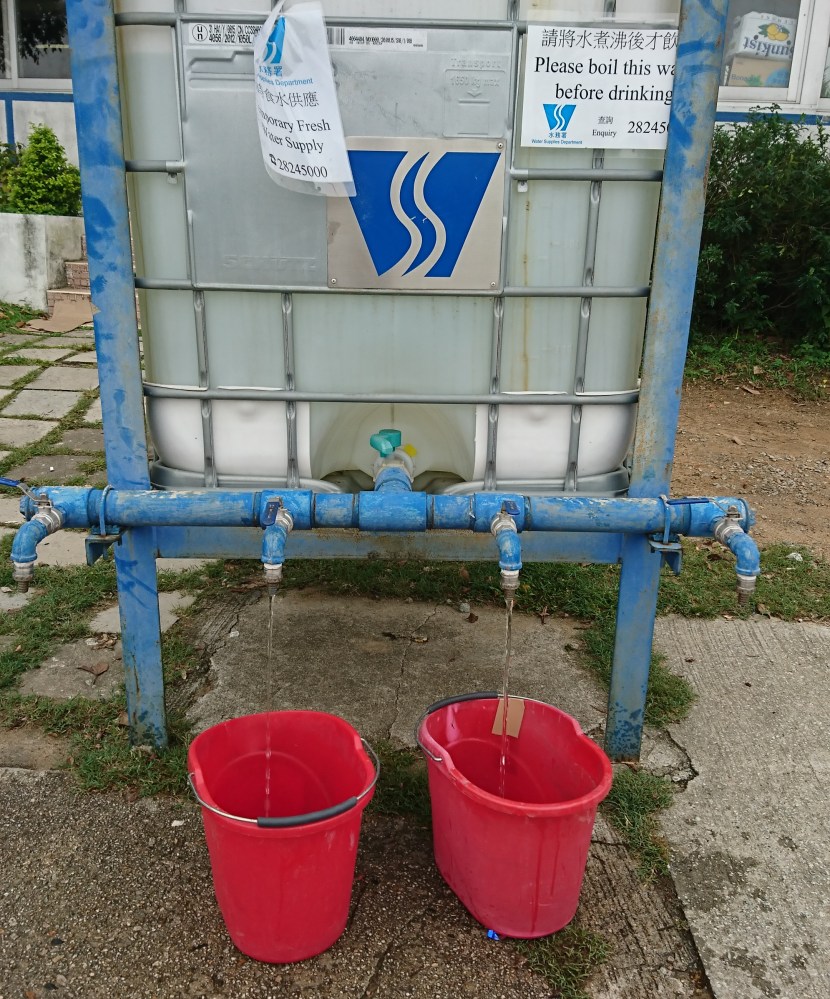
The department also sent four water wagons and 15 mobile water tanks to provide temporary supply to the villagers.

The trouble with EVA

Mui Wo’s EVA is a hot mess, but change may be coming.

Contrary to popular belief, it is not illegal to drive on the emergency vehicle access road through the Mui Wo hinterland.

The road, created decades ago by the CEDD when it built the drainage and sewerage system, has never been gazetted and remains a private road. The only roads where it is illegal to drive without a permit are short sections near the junction of Ngan Shek and Ngan Shu streets (above) in Mui Wo.

The Transport Department is reviewing the road’s legal status and whether it needs to be upgraded. The options are to retain as it is, to upgrade it and formally declare it a prohibited zone, or even to open it up as a public road.  But with at least half a dozen government agencies and local rural committee involved, any change will take time.

EVA is under the purview of the District Office, a unit of the Home Affairs Department. But administration of the road also involves the Transport, Lands and Highways departments, police and fire services, and even Architectural Services and Building Services departments.

South Lantau police commander Chief Inspector David Bennett says that the push to develop Lantau South and the extra population that will bring means government agencies are required to look at whether declaring an EVA road “is a realistic prospect.”

He said that at his first meeting with Mui Wo leaders two years he asked if they could identify the EVA road – none could. Broadly speaking he says the ‘EVA road’ is the Rural Committee Rd. As a private road, it is not illegal to drive on it without a permit. Vehicles cannot be prosecuted for speeding, although police can hand out fines for reckless driving.

To reach the EVA road drivers must pass through the prohibited zones on Ngan Shu or Ngan Shek streets. It’s technically an offence to drive on those without a permit and police may be able to prosecute if they have a witness or evidence of the offence taking place.

The Mui Wo EVA is quite different from others in Hong Kong in being close to population. In Yuen Long and Shek O the EVAs have clear rules and are not in built-up areas.

Bennett says that in the short-term physical upgrades may be likely, such as installation of mirrors, warning signs, yellow lines and passing places.

In the long term, the question is “what does the District Office expect of this road in terms of meeting community expectations?”

Roast chicken finds roost in Mui Wo

Tung Chung reclamation: Govt seeks $21b, green group warns of threats

The government is pushing ahead with plans to build 40,000 new apartments on reclaimed land in Tung Chung Bay – but a green group has called for the project to be scaled back by a third.

The Development Bureau is seeking HK$20.6 billion from Legco for the 120ha reclamation. A second stage will involve reclaiming a further 80ha. The projects are part of the Tung Chung New Town Extension plan which aims to add another 120,000 homes in the area by 2030. Continue reading

The fall and rise of The Sea Ranch

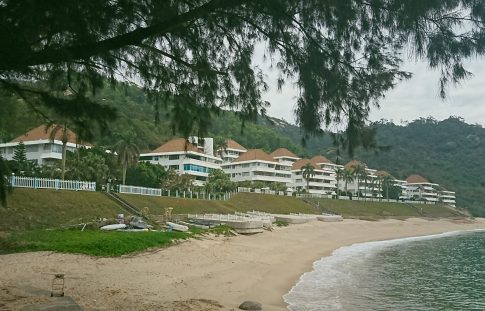
Shaggy beards and big sunglasses aren’t the only 70s icons making a revival. The Sea Ranch, for years Lantau’s monument to shattered dreams, is making a comeback.

Residents are slowly returning to the site on the tip of Chi Ma Wan and property values are rising.

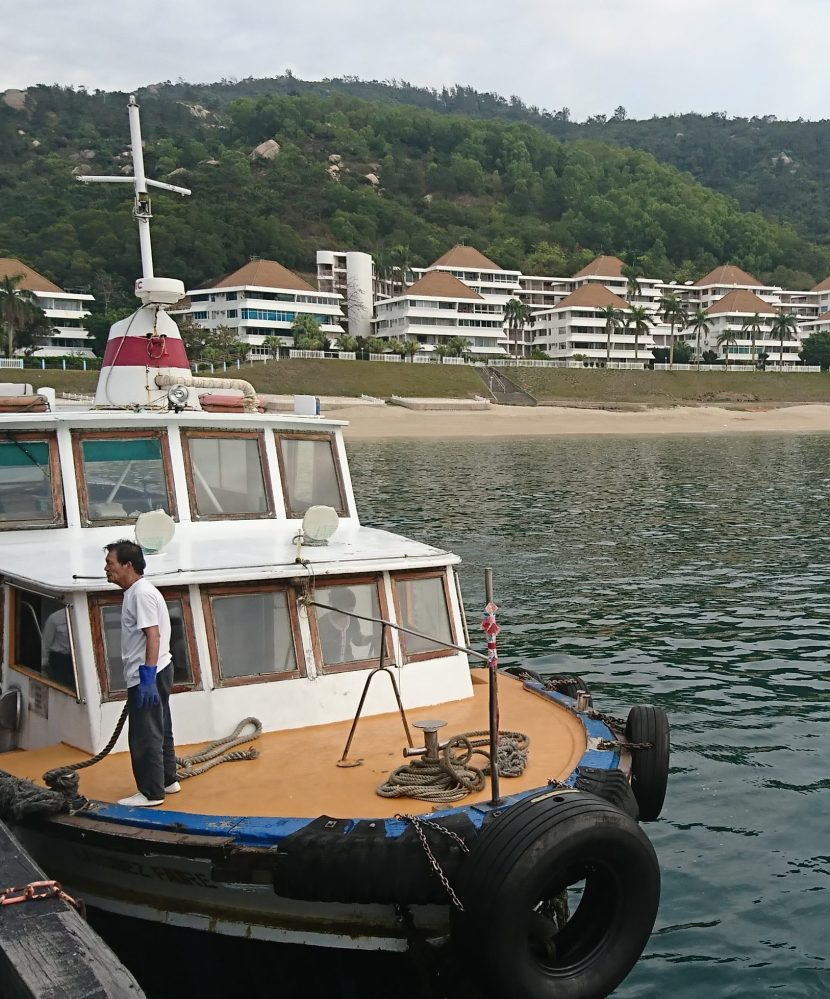
Like Discovery Bay, The Sea Ranch was built as an upmarket coastal resort accessible only by ferry. It opened in 1979, several years before DB, but was never big enough to sustain itself and after a series of legal disputes among the owners it finally closed in 2002. Continue reading

Fabulous coastal walk

The hike: Shui Hau to Shek Pik

Distance: 6km  Time: 2 to 2 1/2 hours

This lovely and undemanding coastal walk is one of Hong Kong’s most under-rated. It passes a good swimming beach, picnic spots and campsites and offers spectacular views across the South China Sea.

It’s a relatively short walk and can be done either from the Shui Hau or Shek Pik ends. It could complete the day for energetic short-term visitors who have done the temples and stilt houses in Ngong Ping and Tai O in the morning. Continue reading

A smarter lock to deter Lantau bike thieves?