Police seize $3m in contraband in Tung Chung raid

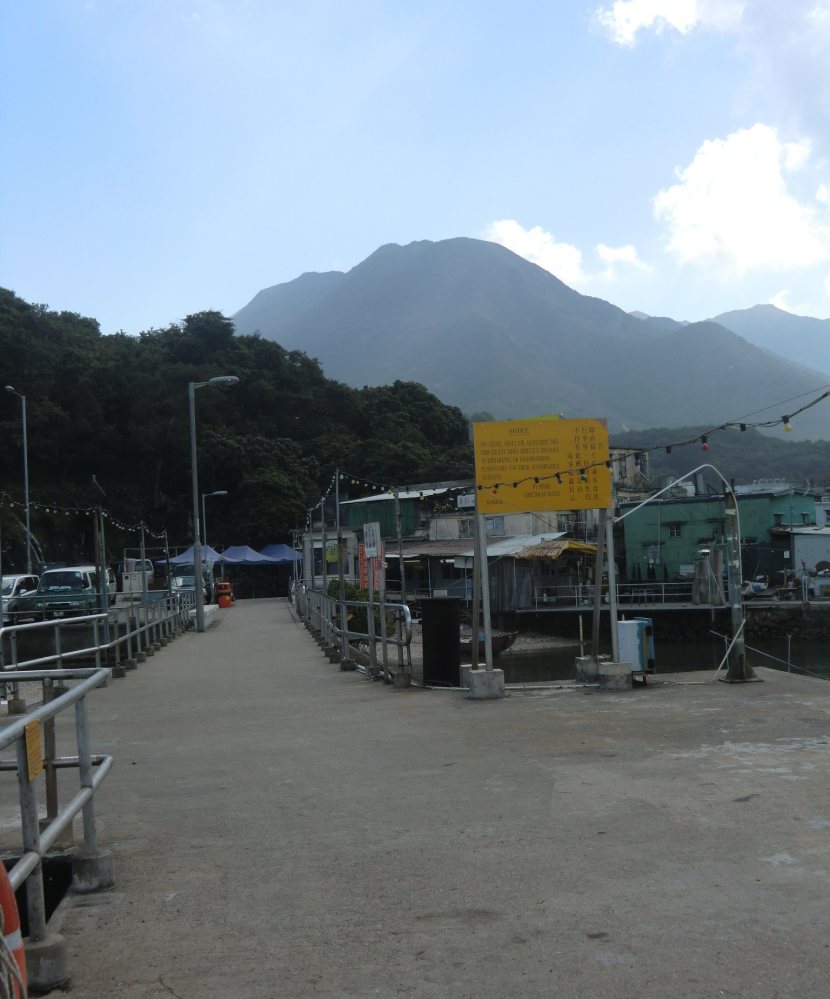
Police seized HK$3 million worth of contraband electronics and coral goods early yesterday morning following an overnight operation in Tung Chung.

In a joint operation by Marine Police and Customs say they intercepted six suspected smugglers loading a sampan at the Ma Wan Chung pier at 1am Wednesday morning, Oriental Daily reported.

The men escaped in the boat, but left behind goods including mobile phones, hard disks, tablets, electronic watches and coral. The Customs Department is continuing to investigate.

Cheung Sha site sells for $210m, smashing record and expectations

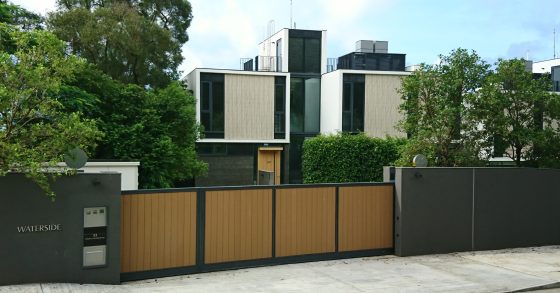
A developer has paid a record HK$210 million for a Cheung Sha residential site, 50% above the forecast price.

The price equates to up to HK$19,667 per sq ft, beating the previous highest price in the district of HK$15,100, paid in 2013.

The Lands Department announced yesterday that a Hong Kong firm, Golden United Development, a unit of Leap Up Investments, had won the tender for the coastal site from eight other bidders.  One of Leap Up’s directors is by Chan Sze-ming, the son of the vice-chairman of listed firm Agile Property Holdings, the Oriental Daily reports.

The site, Lot 763 in DD 332, with total area of 2,480 sq m, had been expected to fetch HK$110 to HK$140 million, or HK$10,000-13,000 per square foot.

By contrast a neighbouring residential site went for just $7,996 per sq ft three years ago.

The rise in valuations and the strong interest from bidders including Albert Yeung’s Emperor Group, Sino Land and Wheelock Properties underline how hot the local market has become for high-end homes.

Victor K.F. Lai, managing director, of Centaline Property Agency, said despite the higher than expected price, it was a good one for the developer.

With the coming of the Hong Kong-Zhuhai-Macao Bridge, Cheung Sha has become an attractive site for low-density luxury development, he says.

“The area is sitting on appreciation potential,” he told Economic Times.

Palm oil spill: beaches reopen but questions remain

Two weeks after a maritime collision caused a massive palm oil spill, the impact is receding and some of the oil is to be recycled, but key questions remain.

The circumstances surrounding the accident are not clear. It has not been explained why Guangdong officials took two days to notify Hong Kong about the spill on the city’s boundary.

It is also not known how much material remains in the water and the longer-term impact on marine life and coastlines.

The government, which is yet to confirm the exact location of the event, denies misleading the public by claiming it occurred in the Pearl River Estuary. Technically the site of the collision, 12 kilometres south of Lantau, is part of the estuary, but the description suggests the Pearl River to Lantau’s west or north-west.

What we know about the location is through Roy Tam, the head of environmental group Green Sense, who says he learnt from the Marine Department that the collision took place just south of Dazhizhou island, four kilometres from the Hong Kong maritime boundary.

The site of the collision, 12km south of Lantau (Source: Green Sense)

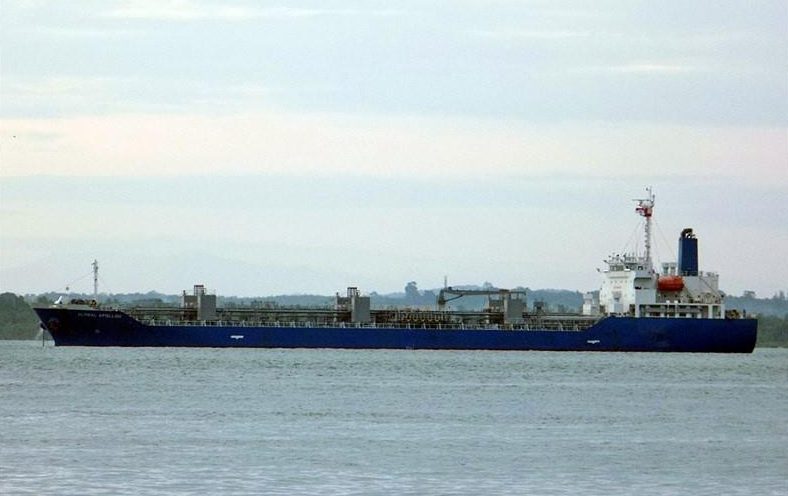
Green Sense has posted a video showing the route of the Panama-registered tanker, Global Apollon, on the morning of August 3. It was carrying 9000 tonnes of palm oil from Indonesia when it collided with Singapore-registered container ship Kota Ganteng.

The 10,700-tonne vessel is still anchored off Guishan, just west of Dazhizhou, according to shipping website maritimetraffic.com.

Tam and other activists have criticised Guangdong authorities about the delay in informing the Hong Kong government and urged them to improve their incident reporting systems, Apple Daily reports.

The Marine Department has said it is consulting with the Justice Department over legal action against the shipowners.

In another development, the Environment Protection Department is reported to have struck a deal with two companies to recycle some of the 207 tonnes of palm oil stearin collected on local beaches. But an EPD official admitted to SCMP.com:

…only some of the palm oil collected would be suitable for recycling. Some of it had been contaminated and would inevitably end up in a landfill.

The Leisure and Cultural Services Department reopened Pui O Beach on Tuesday afternoon. All Lantau beaches affected by the spill are now open to the public, although five Hong Kong beaches remain closed.

With the worst of the immediate impact over, the longer-term impacts need to be monitored. The government says its testing shows that the oil content of water “remains at a low level.”

But it is not clear how much oil remains in the water and how it will impact on the marine environment. In sufficiently large volumes palm oil has the ability to soak up bacteria, infecting all levels of the food chain.

Photo (top): Global Apollon (Source: maritimetraffic.com)

Bringing the Chile vibe to Mui Wo

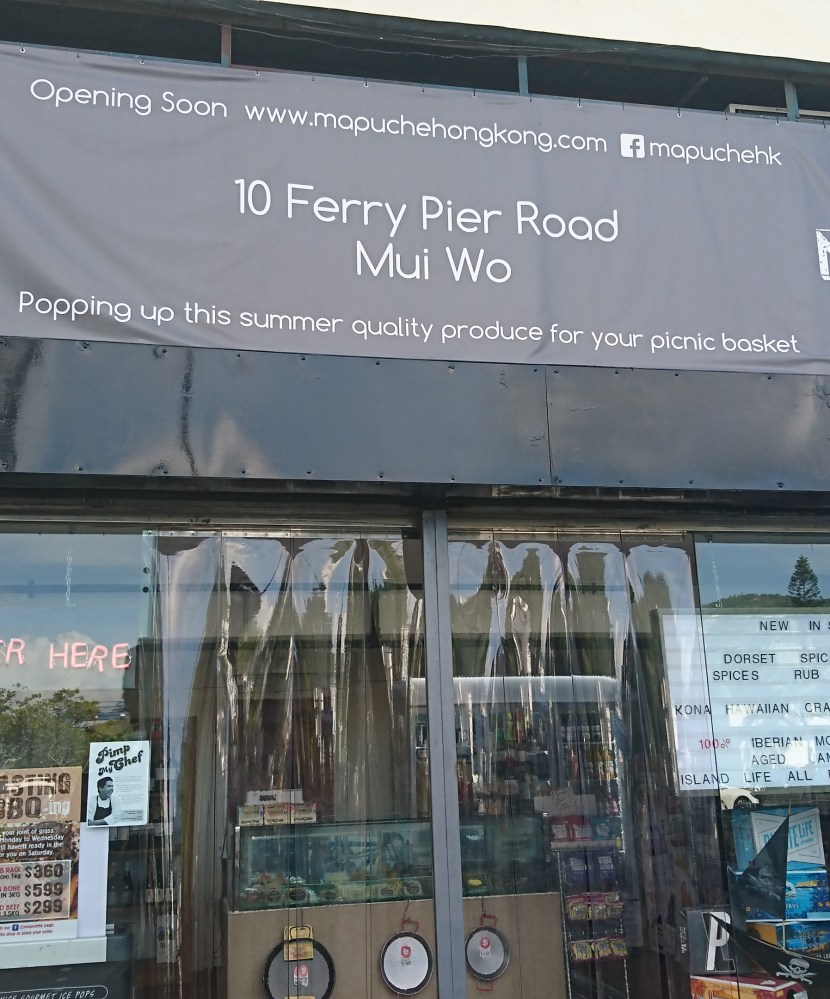
South Lantau has its first taste of Chile. Mapuche, which sells Chilean meats, cheeses and wines, opened in Mui Wo a month ago. Lantau News spoke to owners James and Paola.

 How did you come to be on Lantau?

James: I came back to Hong Kong nearly four years ago. We had been running big Spanish restaurants in Central London. That’s how we met. I’m a restaurateur. I was running three to four restaurants, but it became a bit much after our twins were born.

I had money saved up, so we went first to Chile, where Paola is from. I got involved in a restaurant tech but Chile wasn’t quite ready for it. And my Spanish was pocito.

I grew up in Hong Kong, and my dad who lives in Tung Chung suggested we come back.

What gave you the idea for Mapuche?

James: Our idea was to do tapas tasting covering the 14 viticultures of Chile. The wines and the food that go together.

Myself, I’ve opened lots of big restaurants and closed lots of big restaurants. We’re not trying to be too ambitious. This is a project of love for me and my wife.

This is a project with my wife and hopefully it will take me away from town and we can become full islanders one day. My wife is the hero here – she is the person that is working every day and making it happen.
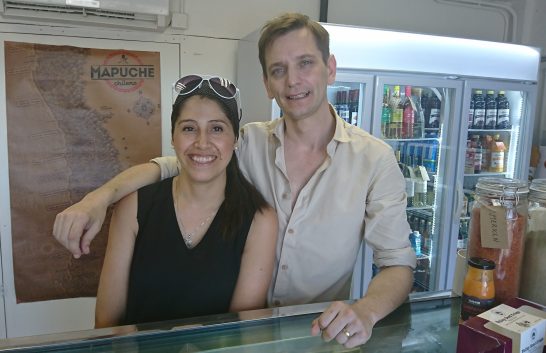
What does ‘mapuche’ mean?

Paola: The Mapuche are the indigenous inhabitants of Chile.

Why did you choose Mui Wo?

James: We started coming down here and we loved it. More recently we have engaged with the shopkeepers and the bar people here. Everyone has been so nice.

Paola: Because it’s a community. It’s nice to go around and everyone says ‘good morning’, ‘good afternoon.’ Lantau is very nice – it reminds me of Chile, especially South Lantau. Hong Kong is too big for me, especially with the twins.

What are you selling in Mapuche?

James: We started off with mainly Spanish products, the cheeses and the hams. The idea was stuff you could take to the beach that was not available in the supermarket, artisanal stuff – premium light chorizos, hams, stuff you can grab and chuck in your picnic basket.

We buy what we like to eat. Nothing here is available in the supermarket – the wines are all unique Hispanic varieties.


The idea was to call it ‘box my picnic’ – it was supposed to be a popup. But we realised people want the choice and the service. They want someone who knows about the wine.

Apart from the store, what else?

We’re doing these events called Pimp My Chef, where we bring a Chilean chef around to your house. These are the kind of events we hope to start doing just to get the idea of our food out there. We are tasting three different wine flights, with three different ceviches, with three different cuts of meat and three different reds from Chile.

We would like to turn this into a more café style shop experience, where you could come for coffee, light tapas, glass of wine. Very family-oriented and informal – you can bring your kids.

We have another floor upstairs we would like to use as a supper club. We would like to make it a tourist destination, pick people up by junk from Pier 9, bring them here for a dining experience for a few hours. That’s where we see some massive potential.

What: Mapuche

Where: Shop B, 10 Ferry Pier Road 10, Silver Centre, Mui Wo

When: Monday-Sunday 11am-9pm

Web: http://www.mapuchehongkong.com/

Facebook: https://www.facebook.com/mapuchehk/

UPDATE: Govt under scrutiny over oil spill location and beach hazards

(UPDATING EARLIER STORY)  The government handling of the palm oil spill is under scrutiny on multiple fronts with the revelation that it took place just 4km from local waters and amid claims that it is downplaying the health risks.

Roy Tam from environmental group Green Sense says he’s been told by the Marine Department the collision on August 3 took place only 5.7 kilometres away from the Soko Islands, just off Lantau’s southern coast, and only four kilometres from local waters.

But the government has described the incident as taking place in the Pearl River Estuary, which does cover waters south of Lantau, but the phrase suggests it was some distance from the city and most likely west or northwest of Lantau  Tam told told Hong Kong Free Press:

“I don’t understand why the Hong Kong government did not use a more familiar name to refer to the location of the crash. When they say ‘Pearl River estuary,’ the inference is that it is far away from Hong Kong. However, the collision happened only four kilometres from us… ”

The government has also begun reopening beaches,  including three on Lantau, but has been accused of ignoring the health hazards posed by the palm oil debris. The Food and Environmental Hygiene Department believes Hong Kong beaches could be hit by as much as 700 tonnes of palm oil next week, depending on currents.

Robert Lockyer, a marine environmental campaigner who has organised cleanup operations on Lamma, warns that while palm oil is safe in small quantities, in large volumes it functions “like a huge petri dish for bacteria.”

He urges the public to stay away from all beaches until the spill has been completely cleaned. Several volunteers who had helped collected oil debris on Lamma over the weekend had become ill, reporting vomiting, diarrhoea and nausea, he said.

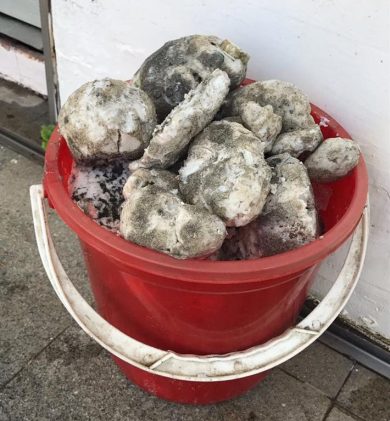
Collected from Pui O Beach on Saturday(Photo: Daphne Chu)

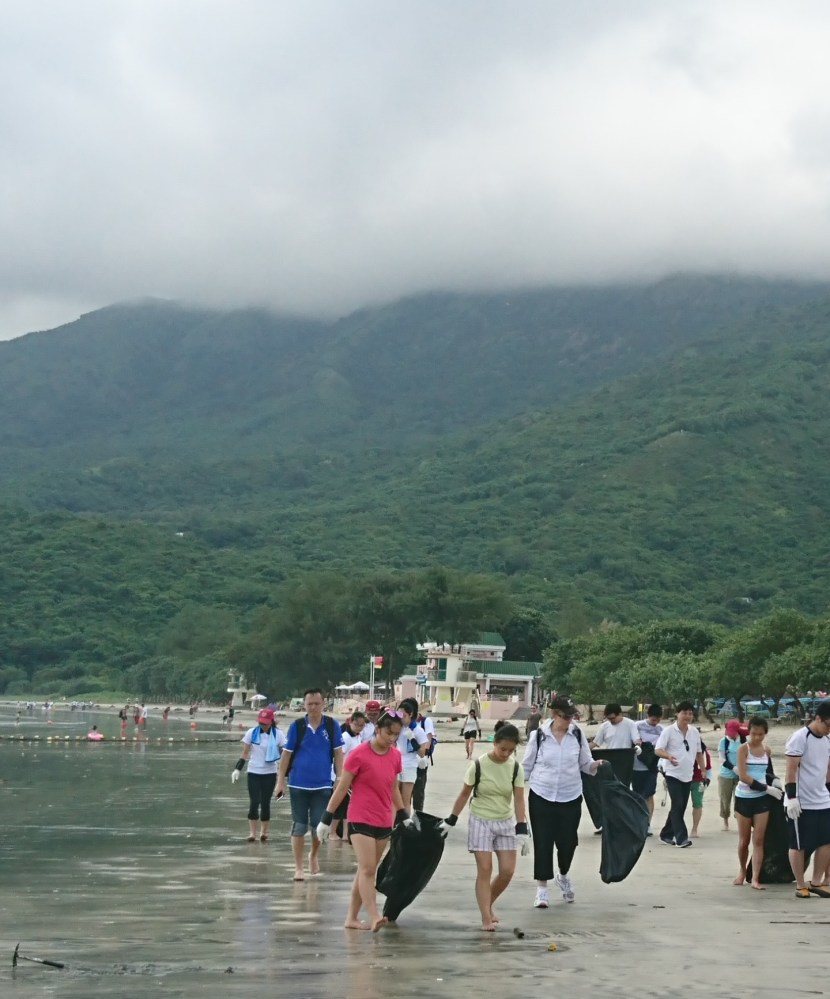
Lamma beaches and Pui O Beach on Lantau remain closed, but last Saturday the government announced Upper Cheung Sha, Lower Cheung Sha and Tong Fuk beaches had reopened to the public.  Volunteer cleaning operations took place at Pui O as well as Lamma on the weekend.

Lockyer said local people were collecting the material and taking it home for candles or soap-making, believing it to be safe. One woman even said she would use it to cook food for pets. “We need to get the information out that this is not cool to be taking home.”

A press release issued on behalf of Lockyer and the volunteers states:

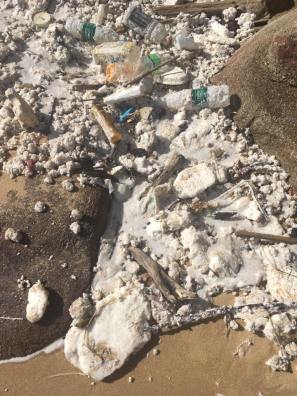
The palm oil coats plastic trash and the plastic trash floats ashore, collecting marine bacteria and micro-organisms as it lands on the beach or in the sand and decays. Clumps of palm stearin absorb micro-plastics, marine debris and chemicals dumped into the sea.

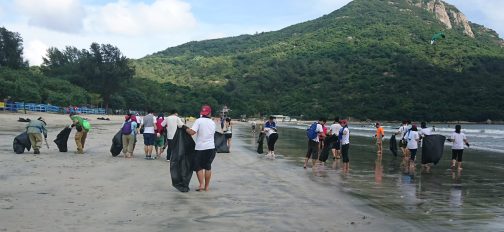
Volunteers collect palm oil on Pui Beach

A spokesperson for the Environmental Protection Department said it would continue monitoring the situation. “It has been safe so far,” she added.

The department said today it had found a “significant improvement” in the level of oil in the water but urged swimmers to “not to play with or take in palm stearin, and to rinse their feet before entering changing rooms.”

It said it would work with other departments in monitoring the spill helping the cleanup, “with a view to reopening the remaining beaches concerned as soon as possible.”

A masterclass in waffle: govt officials meet Lantau community

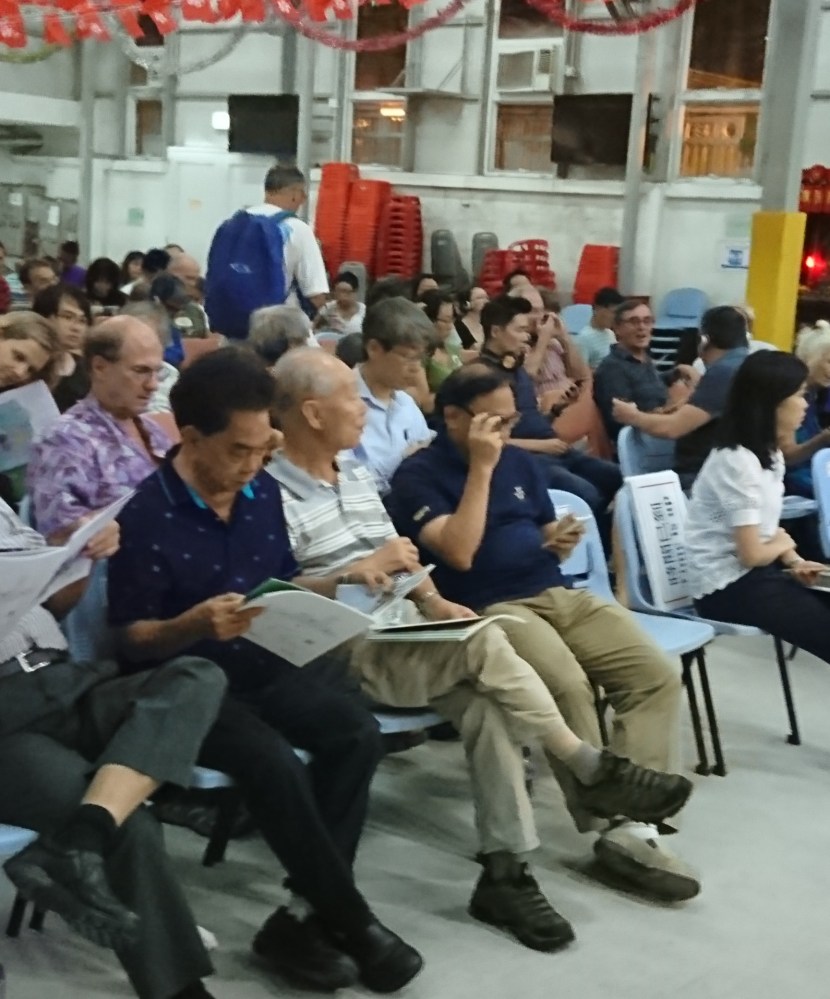
In Hong Kong, public consultations are like elections; they happen but they mean little.

Last night’s meeting between officials from the CEDD and the Planning Dept and the Lantau community was a prime exercise in box-ticking.

After the forum Mui Wo resident Tom Yam, an outspoken critic of the development plans, posted an open letter to Robin Lee, the CEDD director for Lantau, pointing out the brief and tokenistic nature of the event.

If there were a highlight, it was probably from Robin Lee himself, who gave us a masterclass in dissimulation. If he were in Legco, he could singlehandedly sustain a filibuster.

Despite, or because of this, he occasionally managed get on multiple sides of the same issue.

On the vexed topic of cattle – something he acknowledged he knew nothing about – Lee suggested people should learn to live with cattle and buffalo while at the same time the animals should be shipped off elsewhere.

He railed against the idea that the Sustainable Lantau Office was loaded in favour of engineers over conservation experts (as reported yesterday, the top three layers of management are all engineers and planners), or that engineers lacked environmental knowledge.

Lee said all engineers had to work with the environment, and he personally had been working on environmental issues since he graduated. Perhaps this is what he means:

The meeting had time for just 15 questions in 45 minutes. A slight majority was sympathetic to development plans, and the rest were critical in various ways, including Tai O’s Lou Cheuk-wing, who called for more development at that end of the island.

If one thing emerged it is that Mui Wo will be at the centre of the action, both in development plans and disputes over land use.

The Sustainable Lantau Blueprint urges the preservation of Mui Wo’s “rural township character,” but officials made it clear last night it will be a major population growth centre, starting with the new HOS apartments next year. The East Lantau Metropolis (ELM) envisages a freeway and an MTR running through it.

Meanwhile, since ELM was announced in 2014, there’s been a sharp rise in land deals between Mui Wo villagers. Watch this space.

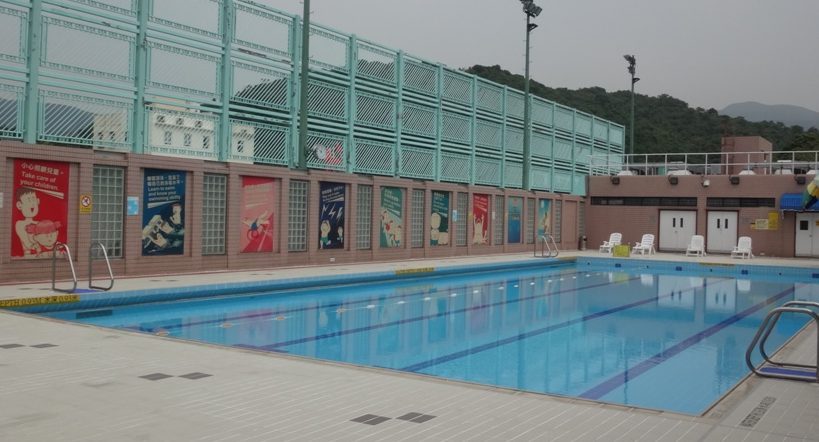
Mui Wo Swimming Pool closed for cleaning after discovery of faeces

Mui Wo Swimming Pool closed for several hours today after the discovery of faeces in the pool.

The Leisure and Cultural Services Department announced this morning that the pool was “closed for cleaning and superchlorination following the discovery of a small amount of faeces.”

It reopened at 1pm.

“The department appeals to swimmers to be considerate and to keep the swimming pools clean. They are advised not to swim after a full meal and should use the toilet facilities if necessary before swimming,” the statement said.


Sustainable Lantau in name only, govt plans confirm

Plans for the new Sustainable Lantau Office (SLO) dispel any doubts about the role of conservation in Lantau development schemes.

It has no role at all.

The SLO, supposedly a multidisciplinary agency that will ‘balance’ development and conservation, will in fact be a unit within the Civil Engineering and Development Department (CEDD) dominated by engineers and planners.

The top three layers of management will all be engineers, planners or construction professionals. Of the top 16 posts, only one – four ranks down – will be a conservation specialist.

The Development Bureau set out the SLO’s priorities and staffing needs in a submission last month to the Legco establishment subcommittee, which deals with civil service appointments.

It sought permission to create four new senior positions at the top – three engineers and a planner – and to bring in 22 Civil Engineering and Development Department (CEDD) staff (the subcommittee endorsed the proposal except for one of the CEDD staff posts).

The paper repeats the environmental messages of earlier studies, including the main report,  the Sustainable Lantau Blueprint:

..the planning vision is to balance and enhance development and conservation with a view to developing Lantau into a smart, low-carbon community for living, work, business, leisure and study.

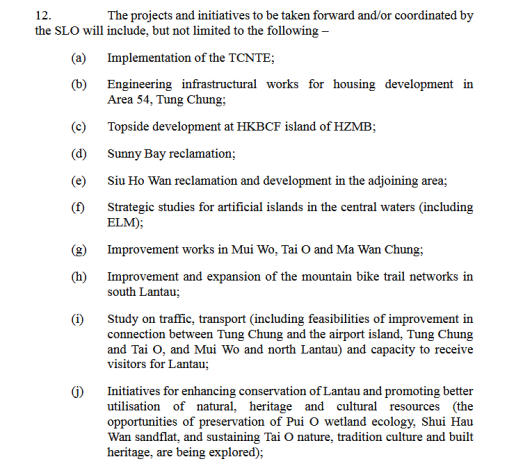
When it gets into the specifics of its priorities, it lists out a more than a dozen development projects (see below), including the Tung Chung expansion, the artificial island for the HK-Macau bridge border crossing and the controversial HK$248 million feasibility study into the East Lantau Metropolis.

By contrast, it doesn’t have a single conservation project on its agenda. Instead, refers to initiatives “that are being explored.”

The SLO was originally called the Lantau Development Office, but changed its name following criticism from Legco members that it gave too little weight to the environment.

In reality it is a unit dedicated to outlying islands development with a token nod to conservation. The original title was at least accurate.

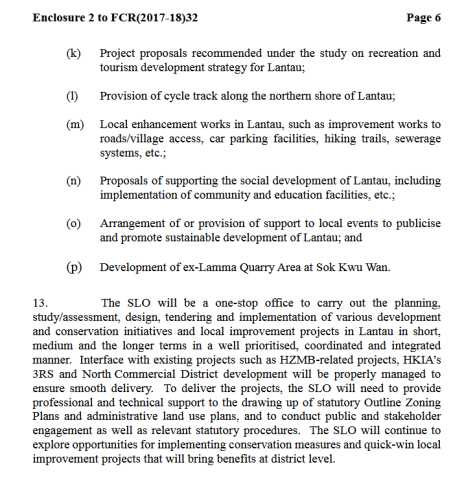
The SLO’s priorities, as set out by the Development Bureau:

Photo (top): Kau Yi Chau island, core of the ELM


Demand for answers on oil spill as cleanup continues

Five days after the collision of cargo ships in the Pearl River that released 9000 tonnes of palm oil, Lantau beaches appear to be nearly free of oil chunks and residue.

However, 13 beaches across Hong Kong remain closed and the government has been called on to answer key questions about the spill.

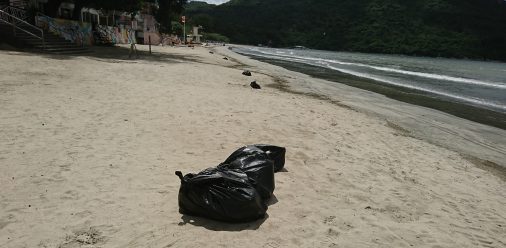
On Lantau, the oily residue has mostly been removed from Lower Cheung Sha and Tong Fuk beaches. On Pui O, the worst-hit local beach, FEHD cleaning staff filled dozens of bags of oil chunks as they cleaned up this morning.  Pui O, Upper Cheung Sha and Lower Cheung Sha beaches remain closed for bathing. Tong Fuk Beach is open.

Pui O Beach, Tuesday morning

On Lamma Island, which has been most heavily contaminated by the spill, the clean-up continued today at Nga Kau Wan Beach. Local resident and coastal cleanup activist Robert Lockyer said he estimated only about 10% of the material had been collected yesterday.

Congealed palm oil washed up on Yung Shue Wan, Lamma Island (Source: Robert Lockyer)

Two more Hong Kong beaches were closed this morning as a result of the spill, with Ken Ching, director of the Eco-Education and Resources Centre, warning that while the larger chunks had mostly been removed, he expects the situation to get worse next week.

Ching said that the water current will weaken by then, so a lot of the oil pieces will be trapped in coastal areas of the city.

He urged the government to increase the pace of its clean-up operation, adding that it would be helpful to know how much oil was spilled .

Dog owners also have been urged to keep their pets away from the affected beaches.

Lamma resident Sheila McClelland, a founder of the Lifelong Animal Protection Charity, says dogs could either choke or fall ill from ingesting the chunks of oil, SCMP.com reports . “Dogs love to eat fatty things. This can cause pancreatitis, a seriously life-threatening disease,” she said.

A dog roots among the oil residue on Yung Shue Wan Beach, Lamma (Source: Robert Lockyer)

Meanwhile, District Councillor Paul Zimmerman has asked Chief Secretary Matthew Cheung why it took “several days” and a series of media inquiries for the government to inform the Hong Kong public.

In an open letter he asks when the government learned of the spill, what action it took and who will foot the bill for the cleanup. He also seeks details of the accident, the names of the vessels involved and the nature of their cargo.

Windfall: Investor pockets 30% profit on Tung Chung parking space

As Hong Kong’s property price spiral continues, a Tung Chung investor has pocketed a cool HK$290,000 gain from the sale of a parking space.

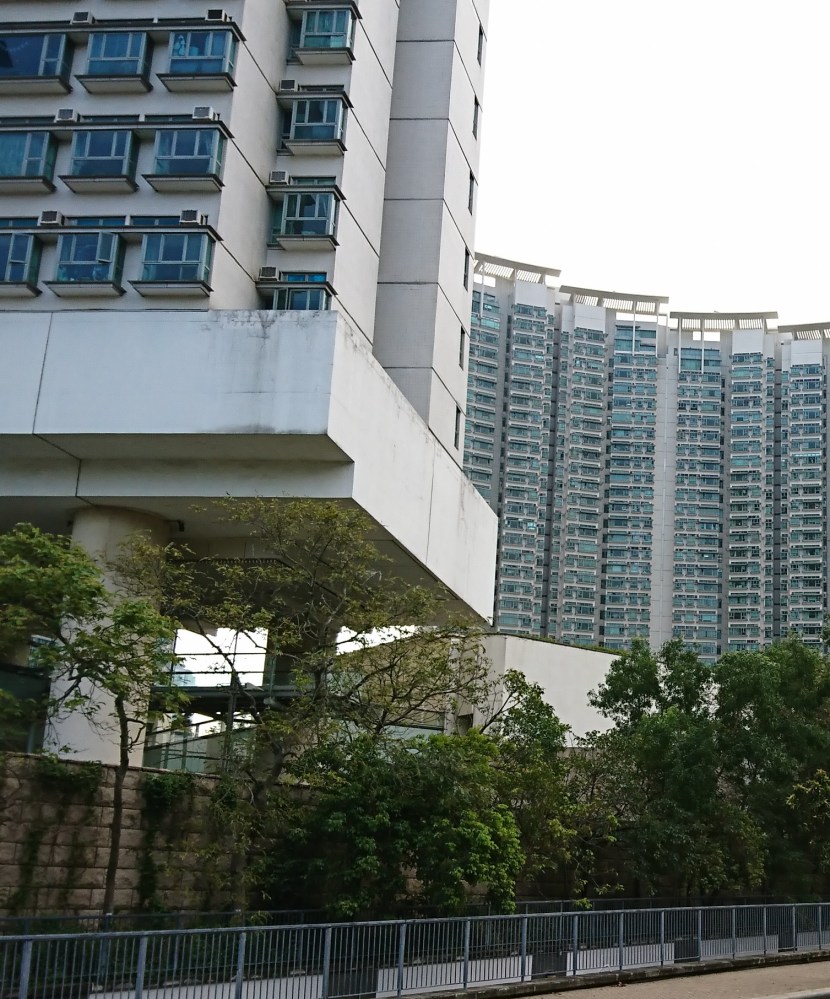
The ground floor parking space in Tung Chung Crescent, purchased in January for HK$1.04 million, sold again in July for HK$1.3 million.

But it’s not even the most expensive parking space in the private housing estate.

According to Centaline Tung Chung deputy regional manager Ivan Chan, another parking spot sold for HK$1.398 million – the most expensive in Tung Chung. Two other spaces sold for HK$1.328 million and HK$1.39 million, Ming Pao reported.

Tung Chung Crescent parking spots are popular for property investors because the number is limited and while only tenants can use them, anyone can buy or sell them.

In nearby Century Link a scheduled auction last Sunday of parking spaces was delayed because of a typhoon warning, but still received bids of HK$1.23-$1.3 million.