HK-Macau bridge is 10b yuan over budget and still has no start date

The main bridge portion of the Hong Kong-Zhuhau-Macau Bridge is 10 billion yuan (HK$11.8 billion) over its original budget of 15.7 billion yuan and appears likely to miss its year-end target opening date.

In a statement today, the Transport and Housing Bureau attributed the 64% overrun – the latest in a series of blowouts at the controversial project –  to an “escalation in the construction costs arising from the increase in labour and material costs as well as the refinement of the design and construction.”

It said the 10 billion yuan figure was based on contractors’ estimates. State Council had been advised of the overrun, while in Hong Kong the bureau would seek extra funds from Legco.

The statement added that three sides – Hong Kong, Macau and Beijing – had “agreed to make their best endeavours to… achieve the target of completing” the main bridge by the end of  the year. 

However, the commissioning date was still unclear and would be determined by a task force, it said.

For the Hong Kong public purse, the blowout is not quite as bad as it seems.

Under the original funding formula, the city contributed just 42% of the estimated cost and will shoulder the same portion of any additional expenditure.

And in the context of the entire scheme, the bridge itself is a relatively small cost.

The 29.6 km main bridge, which includes a 6.7km tunnel, is just one of four projects that are currently estimated to cost the SAR HK$118.5 billion.

According to the HZMB Authority, these are:

  • the main bridge (HK$7.95 billion)
  • Hong Kong Link Road – the viaduct and tunnel running along Lantau’s north coast to Chek Lap Kok (HK$25.0 billion)
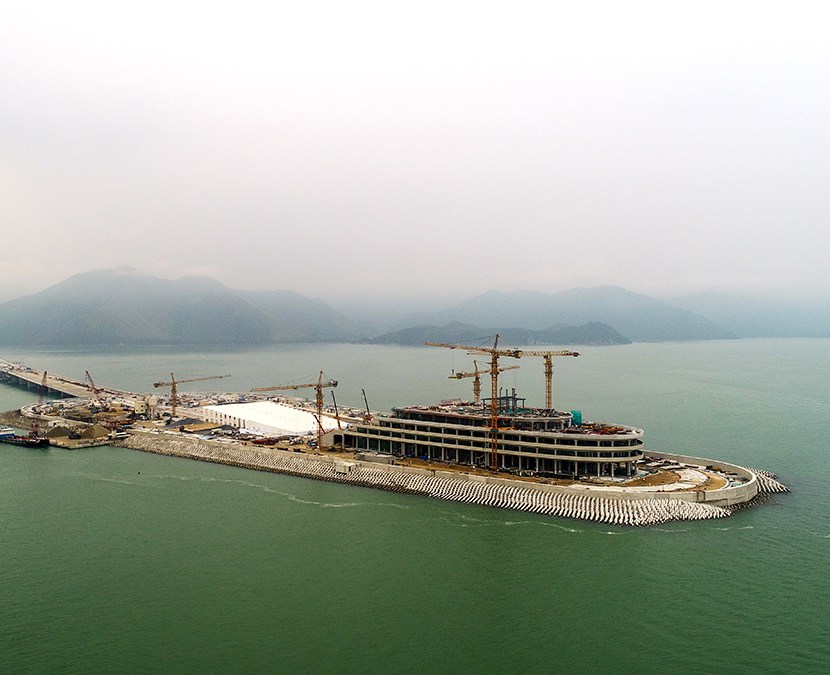
  • Boundary crossing facilities – 150ha of reclaimed land and the cargo and passenger clearance centres, public transport and other facilities being built on top (HK$38.9 billion – originally HK$30.4 billion)
  • Tuen Mun-Chek Lap Kok Link – a bridge and tunnel connection to Tuen Mun (HK$46.7 billion)

These estimates don’t include the other project, the freeway north from Tuen Mun toward the border, which has not yet been costed.

The bridge was originally scheduled to open in 2016, but has been delayed because of a series of mishaps, in particular at the Hong Kong end.

Since that target was missed, Hong Kong and mainland officials have said the bridge would be ready for service by the end of 2017. When Xi visited the project in July, he was assured the timetable would be met.

With less than seven weeks to go that seems unlikely.

Photo (top): Tunnel entrance near Lantau coast (Source: HZMB Authority)

N. Lantau water treatment plant to double to meet population growth

The Water Supplies Department says it needs to double the size of its north Lantau water treatment plant to cope with the development of Tung Chung and the airport district.

It proposes boosting the capacity of the Siu Ho Wan Water Treatment Works from 150,000 cubic metres a day to 300,000 cubic metres daily.

The department has not indicated how much the expansion plan will cost, but it will seek funds from the Legislative Council for research and design early next year and then carry out a study, Oriental Daily reports.

Construction is expected to start in 2021 and will be completed in 2025.

As well as expanding the Siu Ho Wan plant, it will install a pipe along South Lantau Road to increase the flow of water from Shek Pik Reservoir, and build a booster station to improve supply from Tai Lam Chung Reservoir.  It will also increase the capacity of the Pui Oi pumping station.

Under the Tung Chung extension plan its population is expected to increase from approximately 80,000 today to 268,000 in the mid-2020s.

Police arrest two drivers over fatal pile-up on N. Lantau freeway

Police have arrested two people and are seeking witnesses to a fatal chain collision on the North Lantau Highway yesterday morning.

A 55-year-old man surnamed Leung died in the five-car accident after his taxi ploughed into the back of a vehicle that had just collided with another.

The driver was rushed to Yan Chai Hospital with serious head injuries but was certified dead shortly after, police said in a statement.

Three others sustained minor injuries and were treated at North Lantau Hospital.

The pile-up began at 6:05am in the Kowloon direction near Sunny Bay when a Mercedes driven by a 64-year-old woman reduced speed because of congestion ahead but collided with a red taxi driven by a 42-year-old male.

The Mercedes came to halt in an inside lane but was then struck by Leung’s taxi from behind, according to Apple Daily.

The impact sent the Mercedes to an adjacent lane where it was hit again by a green taxi and a light goods truck.

Police arrested the drivers of the taxi and Mercedes that had initially collided and charged them with dangerous driving.

The Mercedes driver was released on bail pending further enquiries, including whether she had activated her hazard warning lights, police said. The male taxi driver is still being detained.

It is the fifth fatal accident on North Lantau Highway since the beginning of 2016.

At its meeting this afternoon, the Islands District Council traffic committee has scheduled a discussion on the recent spate of accidents on the freeway, including three within 41 minutes last month.

Anyone who has information is urged to contact the the special traffic investigation team on 3661 1300 or 3661 1348.


Photo (top): Apple Daily photo of accident scene

Lantau butterfly find points to climate change

The discovery of a tropical butterfly on North Lantau last month is a sign that ecological zones are shifting as a result of global warming, according to the Environmental Association.

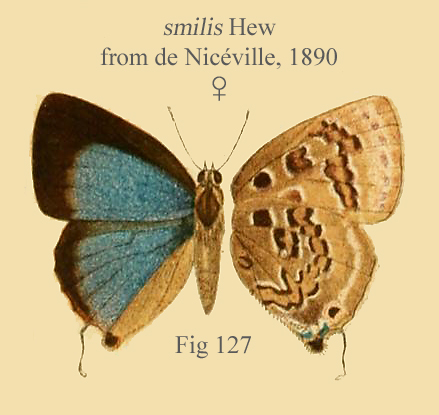
The butterfly, Deudorix smilis, was spotted at Sha Lo Wan on October 28 – the first sighting of this species in Hong Kong.

“It is normally found in areas deep within tropical ­regions like India and Indonesia,” Environmental Association chief secretary, Dr Yau Wing-kwong, wrote in a letter to the South China Morning Post.

But it is not a one-off.

Another tropical butterfly, the Prosotas nora, was first seen in Hong Kong in November 2015 and has now made the city a permanent home, Yau said, noting that it is now enjoying “a baby boom.”

He pointed out that climate studies have shown that for every ­degree of global warming, the isotherm, or line of average temperature, will move by more than 160km.

This discovery sends a strong signal, indicating that global warming is moving ecological species northwards, as isotherms … simultaneously move north.

Although much climate change evidence is derived from complex mathematical models and data, it is beginning to affect the ecological world on a much wider, quicker and bigger scale than ever before. This is a clear, strong message and warning that we all act together to combat global warming and climate change, before it is too late and irreversible.

The Environment Association is a privately-funded conservation promotion and education foundation.

Photo (top): Wikimedia

Govt to strengthen Tai O flood defences after Hato breach

The government is planning to strengthen flood control in Tai  O following complaints that a recently-installed embankment did not keep out storm surges.

The village was flooded by Typhoon Hato in August, despite the presence of a 220-metre long wall  built four years ago at cost of $150 million, prompting criticism from villagers and local leaders.

Drainage Services Department director Edwin Tong said last week the department would install a temporary flood-control flap that would increase the height of the embankment from 3.3 metres to 3.8 metres, Ming Pao reported.

He said a review showed that the embankment wasn’t high enough and that it had taken too long to move sandbags and install floodgates at Wing On and Tai Ping streets.

The temporary flap could be quickly erected as a typhoon approached, he said.

Typhoon Hato brought one of Hong Kong’s biggest ever storm surges, reaching a peak of 3.57 meters, second only to Typhoon Wanda in 1962, in which the water level reached 3.96 metres.


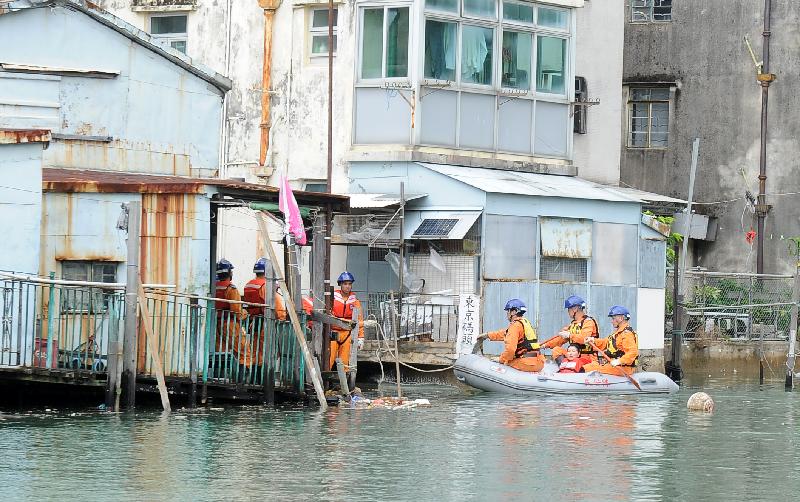
Photo (top): Government flood drill, Tai O, July 2017

Ferry company to hold consultation on islands services

Lantau residents who want to make their views known on the ferry service may have their chance next week.

New World First Ferry will host a meeting between passengers and executives next Friday evening.

But those who want to take part will need to hurry – deadline for applications is tomorrow (Sunday – see details below).

The number of participants is limited to 20.

Participants will be chosen through statistical sampling rather than on a first-come, first-served basis.

The meeting is open to Cheung Chau and Peng Chau passengers as well as those who use the Mui Wo route.

Most public transport licensees in Hong Kong are obliged by their licence conditions to hold regular consultations with passengers.

However, such meetings between First Ferry passengers and the ferry company are rare.

Information about the consultation is also scarce. It has posted a single notice at Central Ferry Pier, while the location of the event remains a secret.

By contrast, New Lantao Bus Co. holds regular meetings with passengers. It advertises them on its website but for for some reason gives extremely short notice.

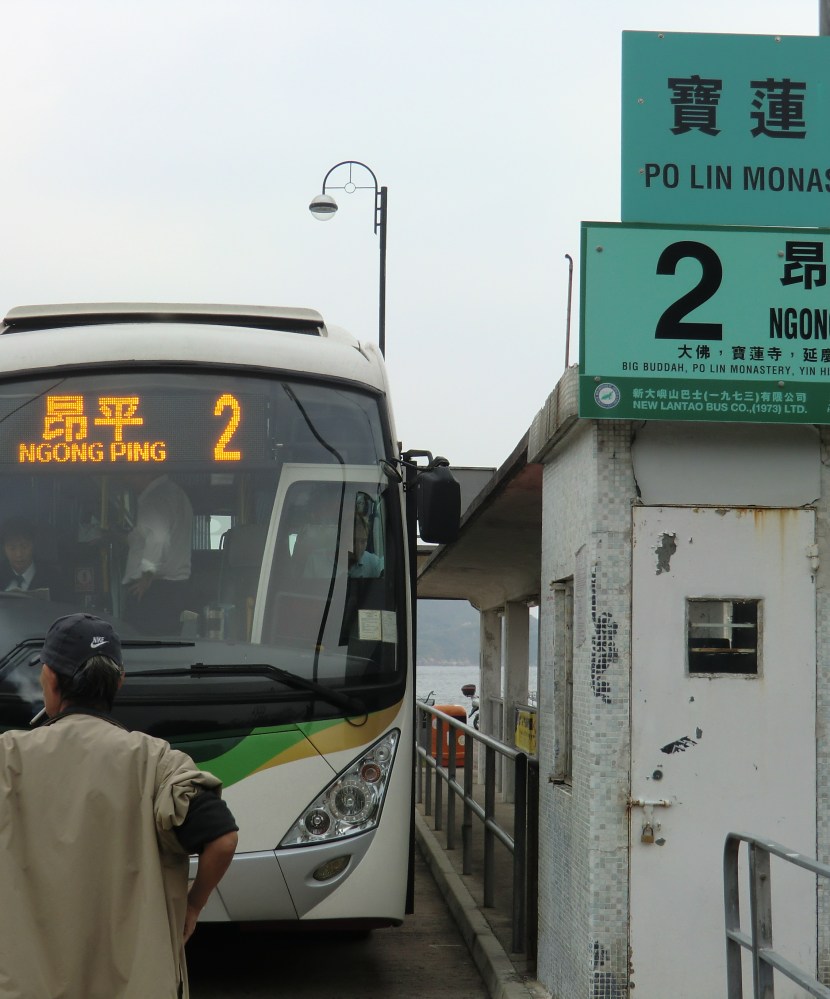
For the last two meetings, in Tai O in October and Ngong Ping in September, it gave just two days’ advance notice.

The First Ferry consultation comes at a time when island ferry services are under unprecedented pressure because of rising visitor numbers and, in Mui Wo, the pending arrival of an estimated 2000 new residents next August.

Because of the crush of passengers on some weekends and holidays on Cheung Chau, the company has just launched a scheme that gives Cheung Chau residents with a monthly pass priority over other passengers.

DETAILS

What: New World First Ferry Passenger Liaison Group consultation

When: 6:30-8:30pm, November 24

Where: To be advised

Enrolment: Email to ferry_ideas@nwff.com.hk or fill in enrolment form at Central Ferry Pier.

Deadline: On or before November 19

More information: Customer service hotline 2131 8181


Free bus and ferry rides for elderly on Sunday

Passengers 65 years and over can ride for free on buses and ferries on Sunday.

New Lantao Bus, KMB and Citybus and New World First Ferry are offering the free service to celebrate Senior Citizens’ Day.

For the ferry, passengers need show their senior citizen card. On NLB and Citybus buses, they should show their senior card or Hong Kong ID.

For KMB or Longwin buses, they should show their card or use the Elderly Octopus.

The offer does not apply to the MTR.

Mui Wo gym isn’t getting a workout

The government-run fitness centre in Mui Wo is the least-used in Hong Kong, according to figures compiled by a legislator.

Luk Chung-hung, Legco member for the pro-Beijing labour organisation FTU, says the Mui Wo centre was used at a rate of just 14% in 2015 and 2016.

Other under-used government gyms include those at Ap Lei Chau, Kowloon Park, Tseung Kwan O and Peng Chau.

By contrast Ngau Tau Kok, the most heavily-used Leisure and Cultural Services Dept (LCSD) fitness centre, has had a utilisation rate of 98% and 85% in the last two years.

Luk told a press conference last week that the figures show the utilization rate of all 74 gyms  is at a long-term low, Oriental Daily reports.

In most cases the less popular centres were the smallest.

Of the 17 least-used gyms in the first three months of the year, 13 were smaller than 100 square metres and had a utilisation rate of below 50%.  But of the 13 that were bigger than 170 square metres, just three were below the 50% mark.

The legislator said in some centres the equipment was old and damaged, while people were also deterred by the requirement that they register and attend a briefing in order to become a member.

Lu said all new gyms should be at least 100 sq metres in size. He called on the department to better resource the fitness centres and to review their “distribution, targeting and functions.”

UPDATE: According to Luk’s office, the LCSD formula for measuring utilisation is the number of users ÷ maximum user capacity.  The capacity number varies between peak and off-peak periods.  Every gym user needs has to sign their name before entering, so the number of users can be calculated by counting signatures.

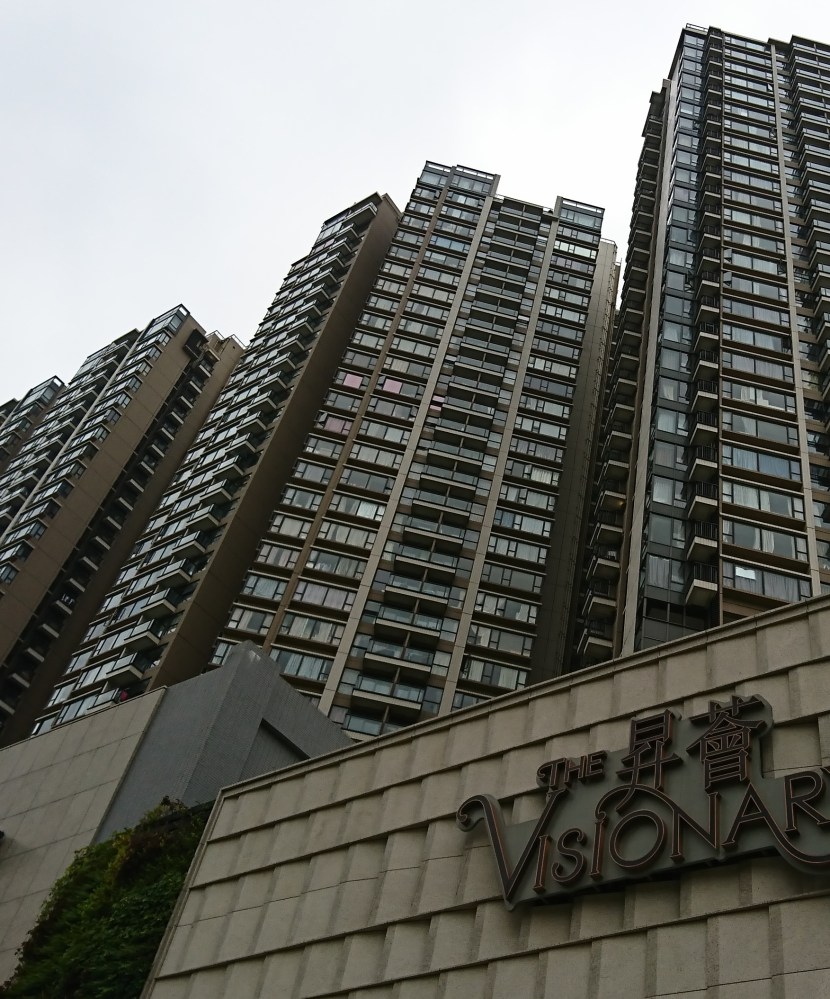
Visionary sale breaks record as Tung Chung prices resume ascent

A Visionary apartment has sold for a record local price as Tung Chung home prices resume their climb following a brief pause.

The Visionary property, a single bedroom, middle floor flat with a garden view, changed hands for $6.8 million this week. With usable area of 591 sq ft, that amounts to a price of $11,506 per sq ft, a new record high for one-bedroom units in Tung Chung, according to Ming Pao.

The original owner acquired it in December 2013 for $4.9 million, booking a profit of 39% over four years.

Across Hong Kong the market cooled slightly in the third quarter because of uncertainty ahead of the CE’s September policy address, but since then prices have continued upward.

A survey by Oriental Daily of 20 major housing estates found 17 posted price rises in the past month.

In Tung Chung, valuations at Caribbean Coast and Seaview Crescent rose 4.4% and 2.5% respectively.

In two transactions at Caribbean Coast this month, a two-bedroom apartment with usable area of 541 sq ft sold for $5.97 million, or  $11,035 per sq ft, while a ​​494 sq ft flat has just sold for $6.13 million, or $12,409 per sq ft.

A Midland Property manager told the paper that the average per sq ft rate in Tung Chung is now around $10,400, with homes now selling at around $6 million.

A low-floor home in Seaview Crescent, which had fallen to $8.75 million in estimated value in Q3, has risen two months in a row. it is now worth around $9,020,000, 2.5% higher than a month ago.

Eight units changed hands at Tung Chung Crescent last month with an average price of $11,032.

Remembering old Mui Wo

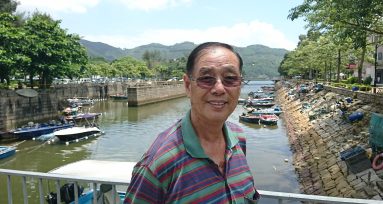
David Kam, a 13th generation resident of Luk Tei Tong, has seen more change in Mui Wo than all of his ancestors together.

When he was born in 1944, Lantau had no roads, no ferry to Central and no telephones. Villagers raised cattle and grew rice as they had done since the area was first settled nearly a thousand years ago.

Silvermine River, 1950

In a history of Mui Wo he co-authored and published last year, David describes Lantau as “a self-contained kingdom.”

He reminds us that it is a collection of 20-odd villages, many of which we know today – Chung Hau, Pak Ngan Hung, Tai Tei Tung and so on. Of these David says Luk Tei Tung is the oldest, with a heritage of 400 years.

Mui Wo’s history goes back even further than that. It was a site for salt production as far back as the Song times. Salt production stopped centuries ago, but the pans remained until the remaking of the old township in the 1980s.

Legend has it that the last Song emperor was crowned in Mui Wo. Though that is likely myth, the imperial court, on the run from the Mongol invaders, spent several months on Lantau and descendants of some of those courtiers live in Tung Chung villages.

Ferry pier, early 1950s

David recalls that until very recently, Mui Wo was ‘Lantau’s front door.’ Summertime Silvermine Bay was crowded with Hong Kong holidaymakers.

“As far as Hong Kong people were concerned, the islands included only Cheung Chau and Lantau, and Lantau meant Mui Wo,” David says.

The Mui Wo that David grew up in in the 1950s was a different universe. He was born towards the end of the Japanese occupation, when the only transport connection was a kaido to Cheung Chau.

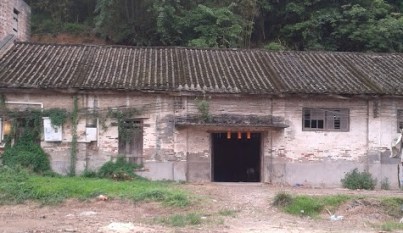
David’s family home in Luk Tei Tong

He had one pair of shoes that he would wear only when at school; he would take them off on the journey to and from home.

His spare time was taken up with work on the family farm. His would tend the family cattle herd, seeing see them off to the mountains in the morning and back down again in the afternoon.

The ties between the humans and their cattle were strong, David recalls. When he was seven years old, his mother decided to sell the family bull to a farmer from Cheung Chau. But when the buyer arrived, she swears she saw a tear in the bull’s eye and changed her mind.

David Kam

Change came slowly to Mui Wo, and then in a rush.

South Lantau’s first road was built in the 1950s – basically the same coastal road today that connects Mui Wo to Shek Pik. In the early ‘60s it was extended all the way to Tai O as part of the Shek Pik Reservoir project.

It was the dam, not the road, that had the bigger impact. It dried up the flow of Mui Wo’s three rivers, making wetland rice farming impossible. Villagers turned to melons and other fruit.

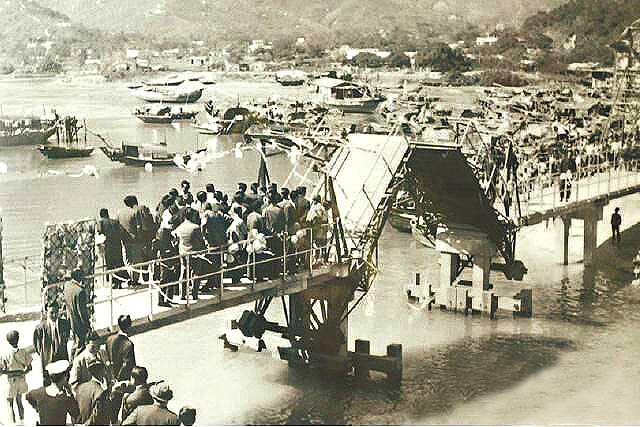
Five Cent Bridge circa 1950

But those were still good times, David recalls.

“The 1950s to the ’80s were probably Mui Wo’s golden years. Post-war development was fast. It was a self-sufficient era. Farmers were growing crops, fishermen were catching fish.

“In the mornings near the Five Cent Bridge the fishermen would sell their catch and gather for breakfast. There would be barbecue under the famous banyan tree.”

The big changes came in the 1980s, when the government tore down the stilt houses on Silvermine River and built public housing on Ngan Kwong Wan Road.

The Chung Hau market stores – now the site of the playground and the hotel – that were the centre of commercial and social life were also demolished. The salt pans disappeared under the government building and wet market.

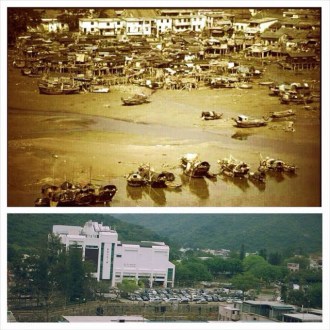
Silvermine River in 1950s (top) and 2000s (below)

Then in 1998, the Tung Chung line opened. Villagers continued to move out and city people coming to Lantau headed first to Tung Chung, forgetting about Mui Wo.

David is disappointed by the current development plans for Lantau, which he thinks overlooks Mui Wo. He has his own vision for Lantau development, involving major reclamation of the sea between Chi Ma Wan, Mui Wo and Hei Ling Chau.

“Since the MTR line opened, the mythology of Mui Wo has disappeared,” reflects David. It’s no longer the front door. “Lantau is now Tung Chung, Ngong Ping and Chek Lap Kok.”


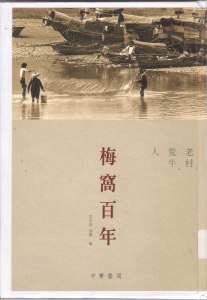
Title: A Hundred Years of Mui Wo – Old Villages, Wild Cattle, People  梅窩百年: 老村、荒牛、人 (Chinese only)

Publisher: Chunghwa Book Co.

Author: David Kam & Yau Yat

On sale: Village Bakery, Mui Wo & online

Excerpt:  (In Chinese)


Photo (top): Five Cent Bridge circa 1970