
Category: HK politics
Lam promises Lantau conservation cash and a start on Shek Kwu Chau
Cash for local conservation projects, a solar power trial and the start of work on the Shek Kwu Chau incinerator top the list of measures affecting Lantau in Carrie Lam’s first policy address.
Lam announced she would make available funding for “countryside conservation initiatives” in areas of Lantau, including Pui O, Tai O and Shui Hau. She said the government would

The Environment and Conservation Fund is a government body, set up in the mid-90s, which in its last funding round in 2013 was granted $5 billion.
A new body, the Countryside Conservation Office, may also be a source of funds for Lantau conservation. It has a $1 billion kitty and a brief to “co-ordinate conservation projects that promote sustainable development of remote countryside.”
Another green project on the drawing board is the implementation of large-scale floating solar farms on the surface of Shek Pik and a dozen other Hong Kong reservoirs, following successful trials at Shek Pik and Plover Cove.
The project with possibly the biggest impact on South Lantau in the coming years could be is the Shek Kwu Chau incinerator – officially known as ‘the integrated waste management facilities.’ Work on the project, just one kilometre off Lantau’s south coast, is due to get underway soon.
The EPD issued a tender for the $21 billion project last December. Lam said the government intended to
Complete the tendering exercise and commence the design and construction works for the phase 1 project of the Integrated Waste Management Facilities for [municipal solid waste] treatment.
As reported earlier, most Lantau commuters will likely qualify for the planned fare subsidy scheme.
In other initiatives:
* A “district cooling system” is under consideration for the new development projects at Tung Chung and the HK-Macau bridge landing zone. A district cooling system is a centralised system of chilled pipes that can cool multiple buildings.
* Lam confirmed the government would go ahead with a review of the city’s heavily-subsidised ferry services, including the possibility of extending the licensing period or even offering subsidies for vessel replacement.
* The CE said she would encourage “the extension of optical fibre networks to villages in rural and remote areas.” Currently 117,000 people in 380 villages lacked access to high-speed fibre, Lam said.
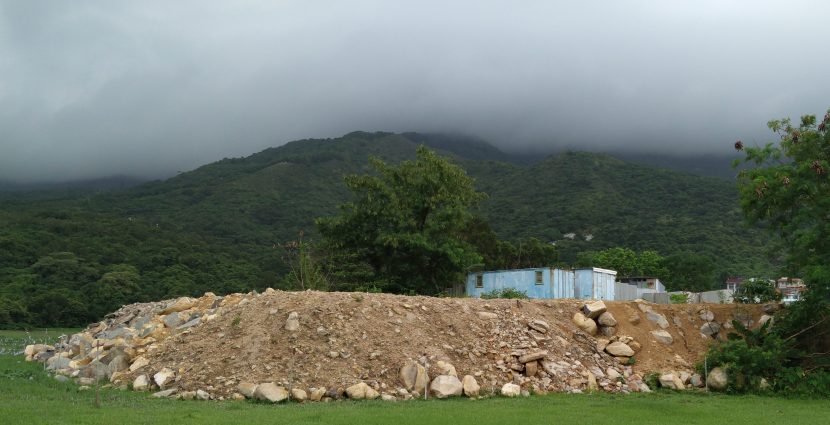
Photo (top): Pui O – ready for conservation?
Convicted democracy activist Nathan Law arrives at Tong Fuk prison
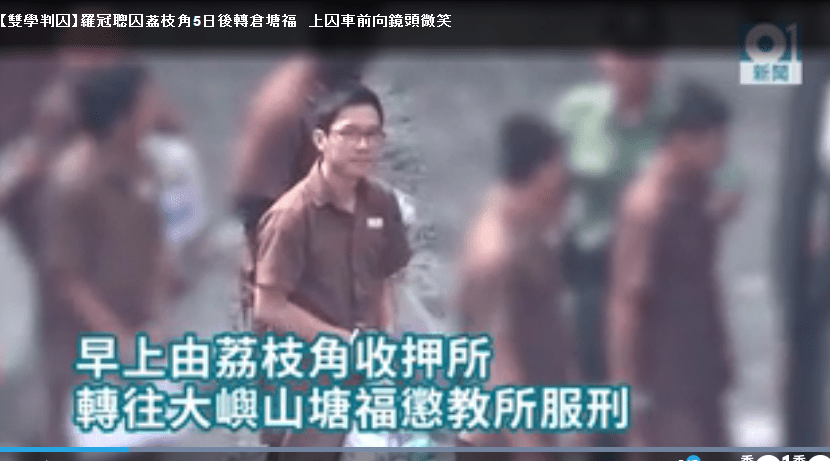
Nathan Law, former legislator and one of three high-profile democracy activists jailed last week, will serve his sentence at the Tong Fuk Correctional Institution.
Law was transferred to the medium-security male prison this morning from Lai Chi Kok Reception Centre at 9:30am, HK01 reported. He appeared calm and nodded to reporters as he boarded the prison van, the paper said.
Law, 24, last year became the youngest person to be elected to Legco, but was one of four legislators expelled in July under retrospectively-revised rules over oath-taking.
He is to serve eight months in jail for his role in the 2014 Umbrella Movement. He and fellow activist Joshua Wong were originally sentenced to community service for unlawful assembly, but prosecutors appealed and prison sentences were imposed.
Wong, the high-profile leader of the young pro-democracy campaigners, will serve his six-month sentence at Pik Uk Correctional Institution at Clearwater Bay until his 21st birthday in October, when he will be transferred to an adult prison.
The third activist, 26-year-old Alex Chow, former general secretary of Hong Kong Federation of Students, will serve seven months at Pik Uk Prison, a maximum security prison next to the juvenile facility housing Wong.
Since 2014, the government has brought 39 court cases against 26 democracy activists.
Photo (top): Nathan Law boarding prison van (Source: HK01 video)
A masterclass in waffle: govt officials meet Lantau community
In Hong Kong, public consultations are like elections; they happen but they mean little.
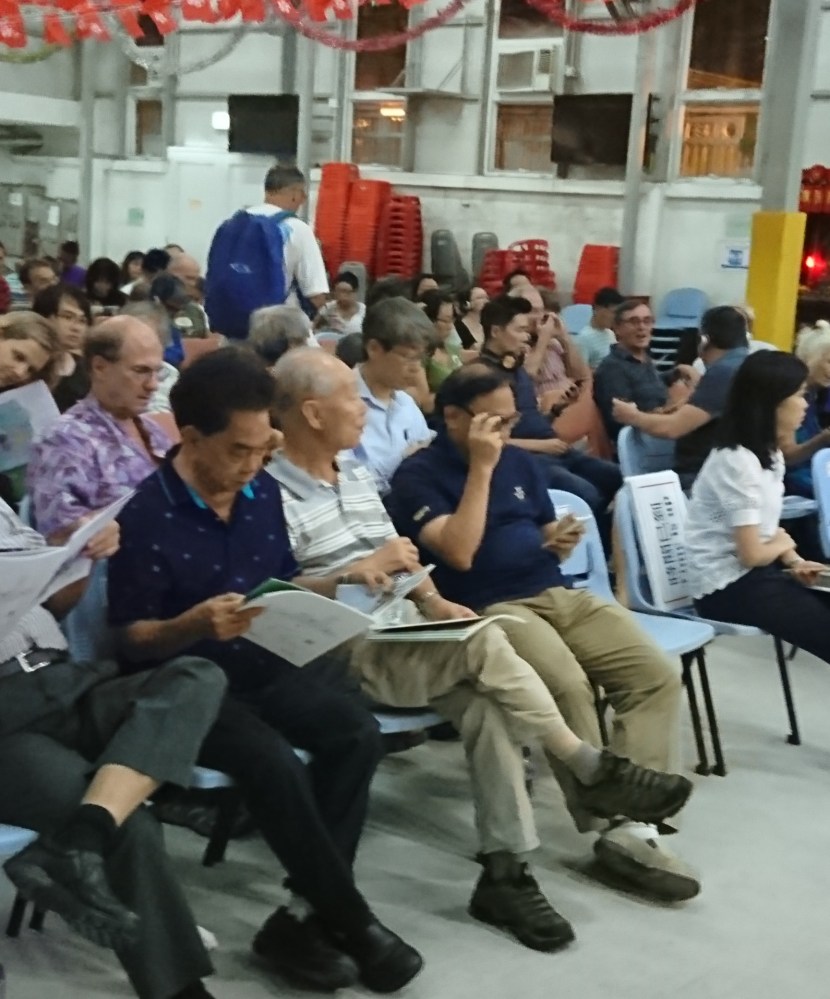
Last night’s meeting between officials from the CEDD and the Planning Dept and the Lantau community was a prime exercise in box-ticking.
After the forum Mui Wo resident Tom Yam, an outspoken critic of the development plans, posted an open letter to Robin Lee, the CEDD director for Lantau, pointing out the brief and tokenistic nature of the event.
If there were a highlight, it was probably from Robin Lee himself, who gave us a masterclass in dissimulation. If he were in Legco, he could singlehandedly sustain a filibuster.
Despite, or because of this, he occasionally managed get on multiple sides of the same issue.
On the vexed topic of cattle – something he acknowledged he knew nothing about – Lee suggested people should learn to live with cattle and buffalo while at the same time the animals should be shipped off elsewhere.
He railed against the idea that the Sustainable Lantau Office was loaded in favour of engineers over conservation experts (as reported yesterday, the top three layers of management are all engineers and planners), or that engineers lacked environmental knowledge.
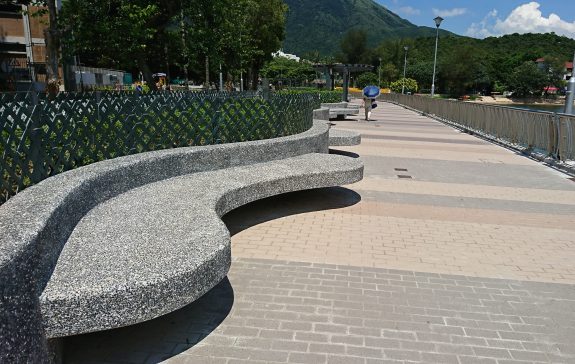
Lee said all engineers had to work with the environment, and he personally had been working on environmental issues since he graduated. Perhaps this is what he means:
The meeting had time for just 15 questions in 45 minutes. A slight majority was sympathetic to development plans, and the rest were critical in various ways, including Tai O’s Lou Cheuk-wing, who called for more development at that end of the island.
If one thing emerged it is that Mui Wo will be at the centre of the action, both in development plans and disputes over land use.
The Sustainable Lantau Blueprint urges the preservation of Mui Wo’s “rural township character,” but officials made it clear last night it will be a major population growth centre, starting with the new HOS apartments next year. The East Lantau Metropolis (ELM) envisages a freeway and an MTR running through it.
Meanwhile, since ELM was announced in 2014, there’s been a sharp rise in land deals between Mui Wo villagers. Watch this space.
SCMP’s lost mission
Alibaba COO Joe Tsai was one of the big names at RISE yesterday, but if you went hoping for an insight into a media title grappling with digital, you’d have been disappointed.
There was almost nothing that we didn’t hear at the time of the acquisition, rather confirming the view that the Alibaba crew are billionaire dilettantes not terribly interested in their new media toy.
They’ve been at it for 18 months but neither Tsai nor SCMP CEO Gary Liu could share a single number about page views, ad sales or investment.
Carrie Lam to review land supply plans
New Chief Executive Carrie Lam has promised to reopen public debate over the government’s land supply policies.
She says she will set up an expert panel to hold large-scale discussions on future land supply, which she acknowledges has been a controversial topic, with public opposition to the building of homes in country parks and plans for massive sea reclamation off Lantau.
Lam said she would wait for the report of the Housing Society, which was commissioned by the previous government to examine the potential for building homes in the Tai Lam and Ma On Shan country parks.
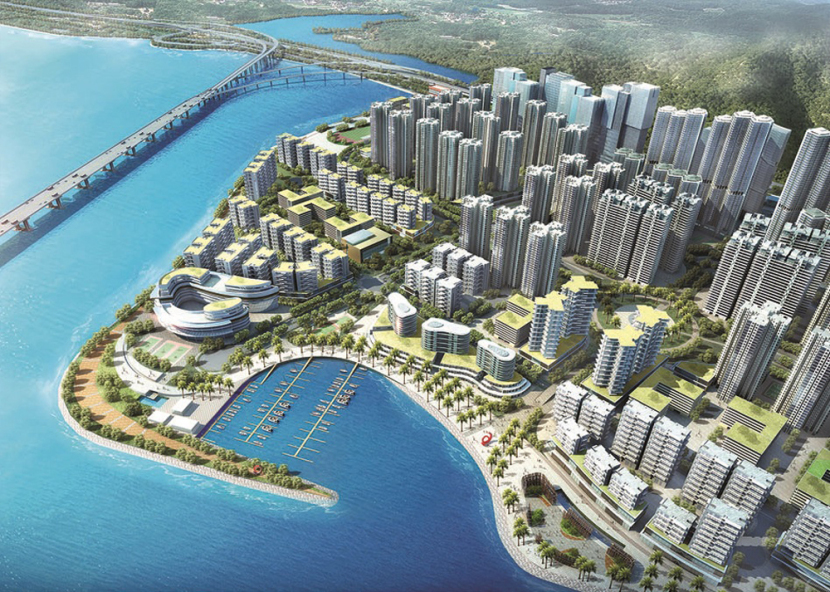
She did not specifically refer to the East Lantau Metropolis (ELM), but it has certainly created heated debate. The plan to build a new CBD on 1000 ha of reclaimed land between Lantau and Hong Kong is the government’s biggest land supply project, sparking wide community opposition and claims that the consultation ignored public opinion.
The Leung government’s decision build on a greenfield site in Wang Chau rather than on a brownfield site owned by a rural major landowner is yet another controversy.
Photo: Scale model of Tung Chung after completion of extension project in 2023
Hong Kong, a cautionary tale

The fireworks are done, the barricades are down and the PLA has returned to barracks.
The weekend celebration of Hong Kong’s two decades under Beijing rule was marked by Xi Jinping himself, joining local dignitaries in the obligatory toasts to the ‘success’ of one-country two systems.
From their viewpoint it is a success – Hong Kong remains a source of wealth and under direct party control.
But most citizens would labour to identify any aspect of their lives that has improved. The city today is vastly more unequal, unfair, unhappy and unstable than in 1997. Once a freewheeling trading port with no interest in politics, political tension now infects even the smallest of local affairs. Continue reading
Eddie Chu: Pan-dems, greens must target village elections
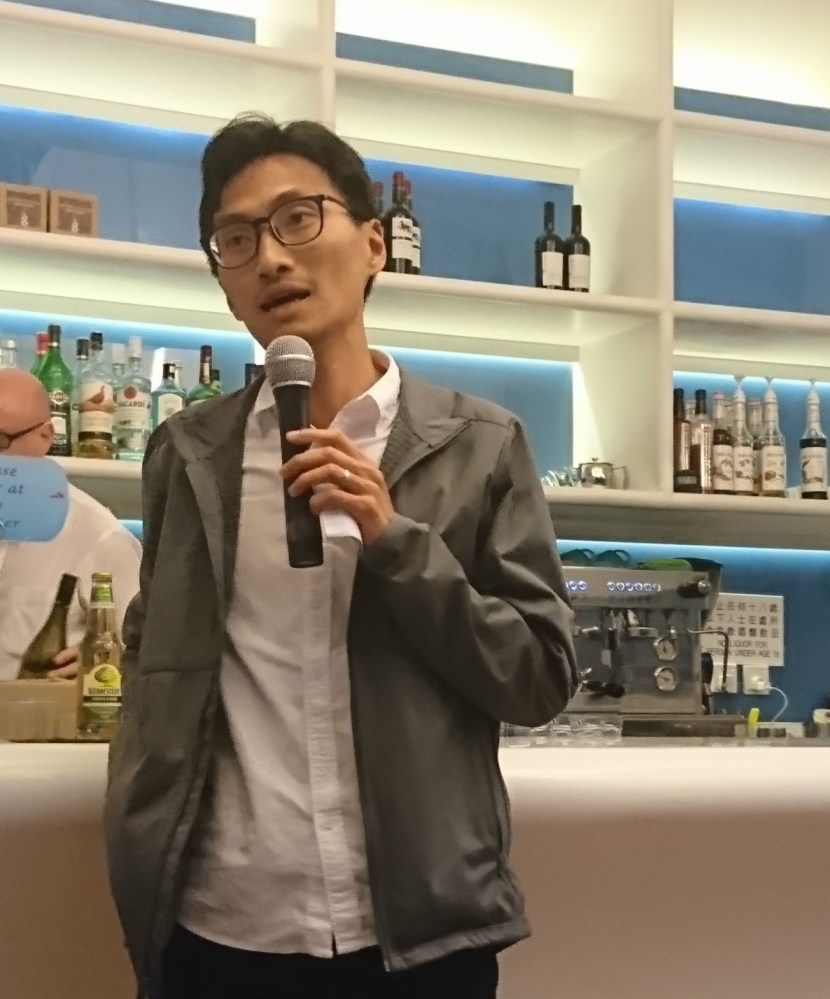
Legco member and rural land justice campaigner Eddie Chu has called on democrats and environmentalists to contest the coming 2019 village elections.
Speaking at a Living Islands Movement meeting on Friday, Chu most of the 1500 village representatives in Hong Kong villages are uncontested.
“We don’t have our candidates from the environmental or democratic movements. It’s such a huge gap,” he said.
Village elections are important because the government uses the local level support to lend legitimacy to projects such as the East Lantau Metropolis and the Macau Bridge, he said.
Chu was dubbed ‘king of the voters’ after he was elected to Legco with more votes than any other candidate ast last year’s poll. He said that as Legco member covering rural Lantau and western New Territories he had a “certain mandate” to become involved in the politics of Heung Yee Kuk and rural areas generally.
“In my experience during the election, many villagers, including indigenous villagers, are supportive of my election platform – conserve the environment and stop white elephant infrastructure projects – but they don’t have the confidence to come out. They want to come out as a group.”
Chu aims to create a new alliance among rural representatives to “create a new area for bargaining with the establishment. I think that is very crucial in building up our foundation,” he said.
He also pointed out the Heung Yee Kuk, the indigenous rural landowners peak body, was living on borrowed time.
“The kuk itself is under serious crisis itself because they don’t have the support of Hong Kong general public and Beijing is considering whether to abandon them. They need to shift their basic position. That’s my message to Kenneth Lau, the kuk leader: “If you want the kuk to continue to exist and have influence, then you have to democratise yourself.”
A 2015 survey by local think tank Civic Exchange found that 65% of Hong Kong people wanted a change to the small house policy.

We can build in country parks – if we protect them
The Leung government is going about its country park housing plan in exactly the wrong way.
It has already identified two sites and has hired a property developer with no known environmental expertise to evaluate them.
What are the chances that the Housing Society will conclude that the Tai Lam and Ma On Shan country parks are in fact unsuitable for development?
It’s a short-term salami-slicing approach with easy-to-predict consequences: after green-lighting those two sites, other locations will be found for ‘evaluation,’ then a few more and then more again. After a decade, fresh areas of country park adjacent to the developed sites will be designated as ‘low ecological value’ by virtue of the environmental destruction next door.
In a couple of decades, having exhausted the park boundary areas, government leaders and developers will lead us to understand that any development at any location in any country park is acceptable. Destruction of the country park system will be complete.
Instead of this contrived process that galvanises public opposition we could take a holistic approach to both housing and environmental protection.
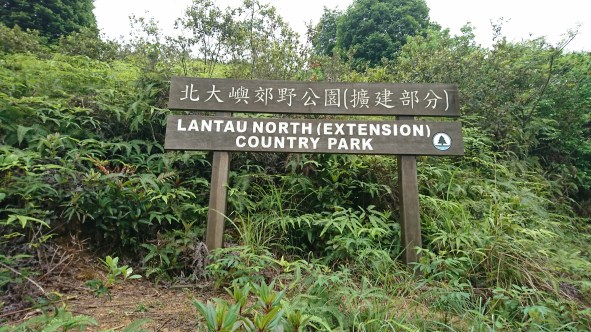
The background is that the country park system grew up in an ad hoc way in the 1970s, mostly comprising land too steep or rocky or remote for development. But it also left ecologically important sites outside the parks.
So let’s commission an independent expert panel – no government officials, no party hacks, no cronies – to identify the ‘low-ecological value’ sites on country park borders as well as the ecologically important sites not protected.
In doing so way we set markers for what is and isn’t ecologically important and build up a bank of land to for the years to come.
Once we’ve created the new park borders, let’s pass a law to guarantee they are inviolate for the next 50 years. And let’s protect those ecologically sensitive sites that can’t be added to parks by creating a body of law and a team of enforcement officers that will punish those who damage them.
We will lose some country park land, but extend protection to vulnerable sites. It shows a government willing to defend the city’s natural heritage while also making progress on housing and at the same time demonstrate an ability to collaborate with civil society.
It is the exact opposite to the current initiative. In delegating to the Housing Society Leung has made it clear he sees country parks as a storehouse of land for development, regardless of environmental impact or public expectation.
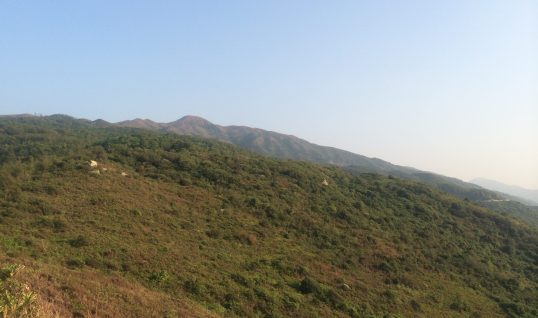
Fan Lau, Lantau South Country Park
This is an autocrat’s way of getting things done. It’s also another sign that we live in a construction state, primed to continually identify new development projects at public expense. The ‘Belt-Road’ scheme is the ultimate expression of this.
Lantau has been subject to these one after the other: the Macau Bridge, the Shek Kwu Chau incinerator and on the horizon, the East Lantau Metropolis.
During the Lantau development consultation last year government officials repeatedly assured citizens that south Lantau would remain a green zone protected by its country park status. We know now that that protection means nothing.
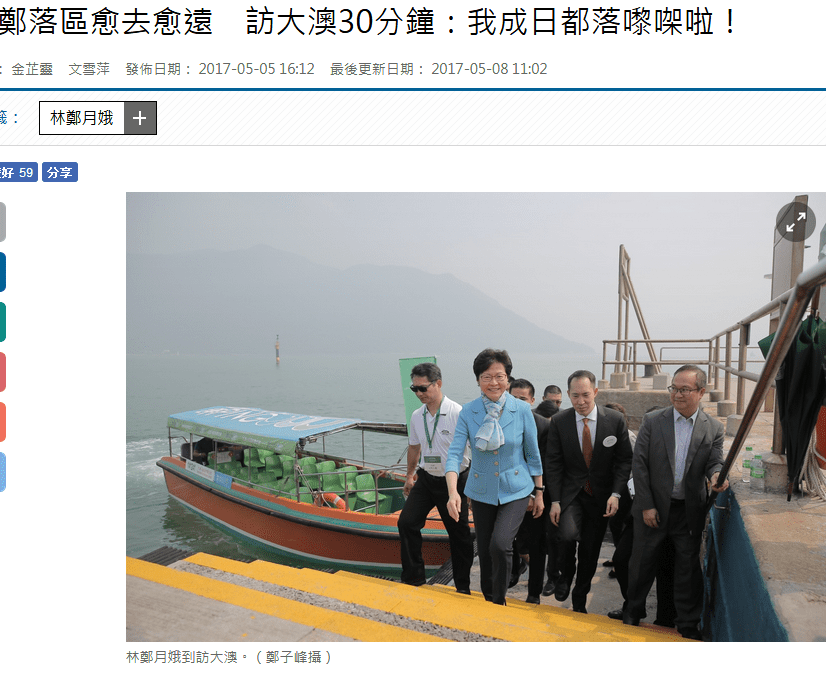
Carrie Lam makes flying visit to Tai O
Chief executive-elect Carrie Lam made a lightning visit to Tai O on Friday, one of a number of locations she has dropped in on since winning the CE poll in March.
She spent an hour in the town late Friday afternoon, taking part in the fifth anniversary ceremony for the Tai O Heritage Hotel and then strolling around the town with Tai O rural committee chief Lou Cheuk-wing, HK01.com reported.
She shook hands with a salted fish store owner and met people at the Tai O Community Hall. Lam reportedly agreed to look into upgrading the paths between the village’s distinctive stilt homes, which Lou said were being worn out from the increasing number of tourists.
Apart from Tai O, Lam has also visited Sha Tin, Tsuen Wan, Kwun Tung, Hung Hom and Central.

Eddie Chu wins in landslide, warns of violence to come
Conservation and pro-democracy candidate Eddie Chu Hoi-dick has become the biggest election story after winning a seat with a record number of votes and warning of “a storm” of violence in rural Hong Kong.
Chu, 38, a former Ming Pao journalist, topped the poll for NT West, which runs from South Lantau north to the Shenzhen border, with 82,000 votes – a record for any single candidate. He campaigned on a platform of Heung Yee Kuk reform, Hong Kong self-determination and conservation, including opposition to the East Lantau Metropolis.
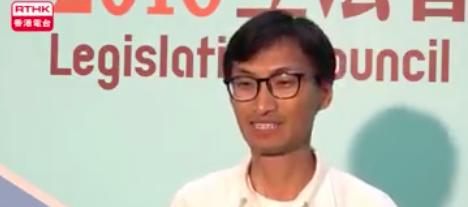
Eddie Chu at his media conference this morning
Chu broke down in tears briefly at a press conference this morning after thanking his supporters and family. He said he was followed on the last day of the election campaign by a car that he was told belonged to a Yuen Long landlord. Continue reading
 Lantau Confidential