Lantau internet: More fibre on its way

South Lantau’s internet is finally starting to catch up to the rest of Hong Kong, with more fibre connectivity promised.

Telco HGC and partner Top Express have just launched a high-speed fibre service in the Mui Wo villages of Luk Tei Tong, Tai Tei Tung and Pak Ngan Heung and are now targeting Cheung Sha, Tong Fuk and Pui O.

They have letterboxed households in those areas offering 1000 Mbps for HK$358 per month, with the first six months free. However, their estimate of November 30 2017 service start is likely ambitious. Top Express’s initial offer in Mui Wo, in January last year, promised start of service by May 2016 – a year ahead of actual delivery.

While optical fibre is accessible to 84% of Hong Kong households, according to PCCW, much of rural Hong Kong is still serviced by early generation copper networks, delivering effective downlink speeds of about 5Mbps.

Top Express, a specialist in building utility infrastructure, says it plans to extend optical fibre to 600 of the SAR’s 774 villages and lease out the capacity to a telecom service provider.

For most of South Lantau, PCCW is the sole fixed network operator. It upgraded its network in Ham Tin, Pui O and Tong Fuk last year to provide 100 Mbps down/30Mbps up.

It is also promised to bring fibre to Mui Wo as part of its rural Hong Kong upgrade programme, but has offered no specifics.

In a statement emailed to Lantau News, HGC said it “has been exploring different ways to extend high-speed and reliable residential broadband network service to outlying islands and village houses.”

Photo (above): Nokia Networks
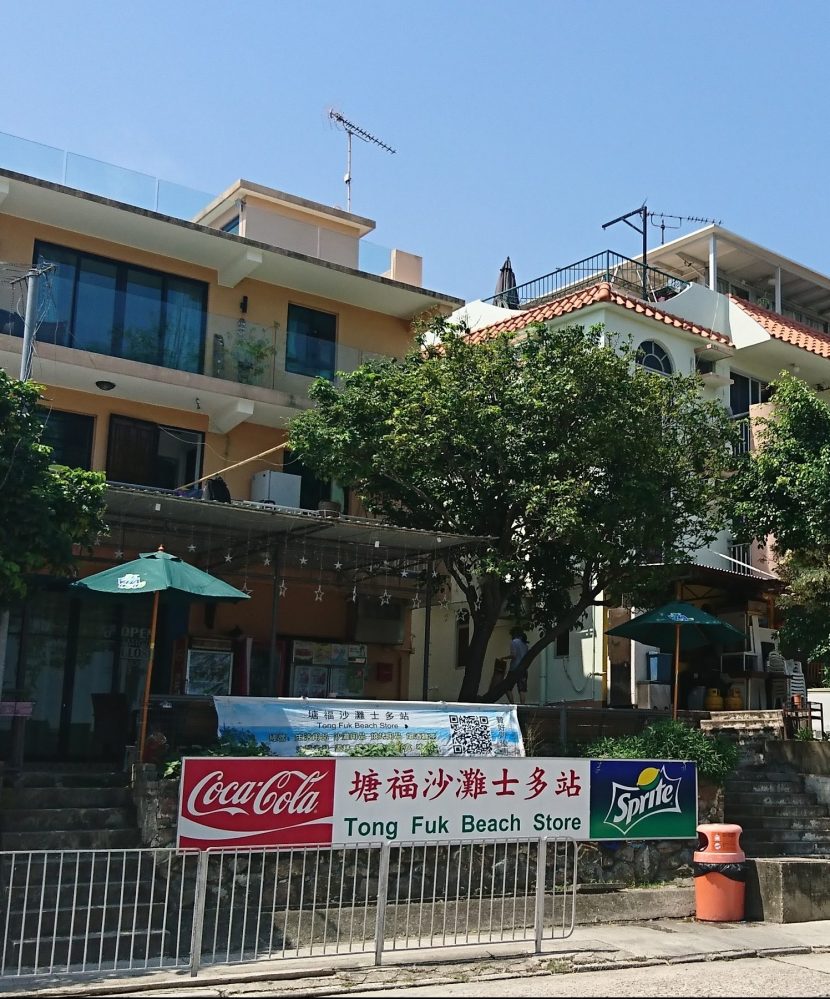


Police warning after spate of Tong Fuk burglaries

Lantau police have called on local residents to take extra security measures following a spate of burglaries in Tong Fuk.

Police have stepped up uniformed patrols after three burglaries in the past week, the last on Saturday morning on the eastern edge of the village.

Chief Inspector David Bennett of Lantau South police said householders should exercise “heightened vigilance.”

“Checking doors, windows, telling your neighbours to keep an eye out for your premises if you are away for days. Getting security enhancements – locks, door chains, window bars, motion sensor spotlights, etc will all help.”

South Lantau is a favoured target for mainland thieves because of the large number of accessible and poorly-secured premises. Burglaries often happen in clusters before offenders either get caught or return to the mainland.

Sea Ranch units sell for more than $3.5m in lively auction

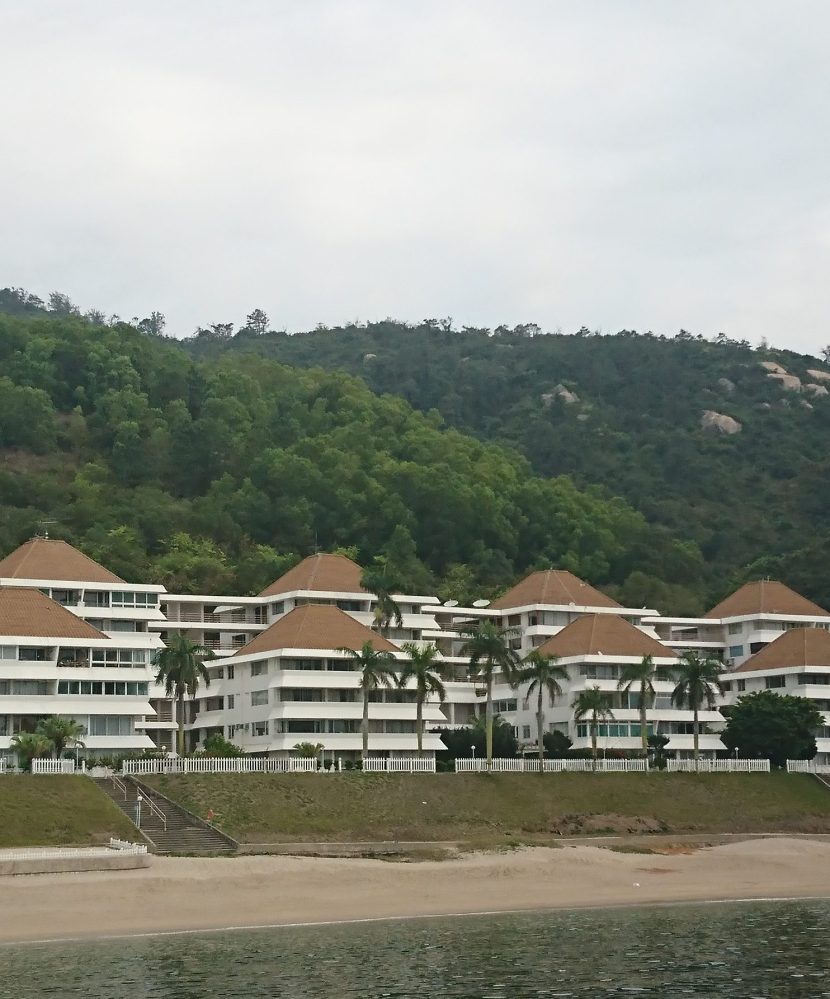
In another sign of Hong Kong’s extreme real estate market, buyers paid more than HK$3.5 million each for two Sea Ranch units in a fiercely-contested auction yesterday.

More than 60 people attended the auction, held under a court order after the former owner had accumulated HK$1.07 million in unpaid management fees over 11 years at the remote South Lantau location.

One buyer paid HK$3.55 million, or HK$2963 per square foot, for unit 5A, while another paid HK$3.7 million, or HK$2984 per square foot, for 5B, Economic Times reported.

Bidding for both units was intense, with more than two dozen bids received for each apartment. Bidding for both of the 1240 square-foot units began at HK$2.25 million and stepped up to increments as high as HK$200,000.

One of the buyers was seeking more floor or living space, while the other was seeking a family holiday property, Economic Times said.

The sales are part of a spurt of Sea Ranch transactions this year. Four properties have changed hands in the last ten weeks, compared to a single unit sold in the previous 15 months.  One apartment sold for a record $3252 per square foot last week, yielding a sale price of HK$2.0 million, according to property website GoHome.com.hk.

Another bridge on the way; govt unsure of impact on HK-Macau link

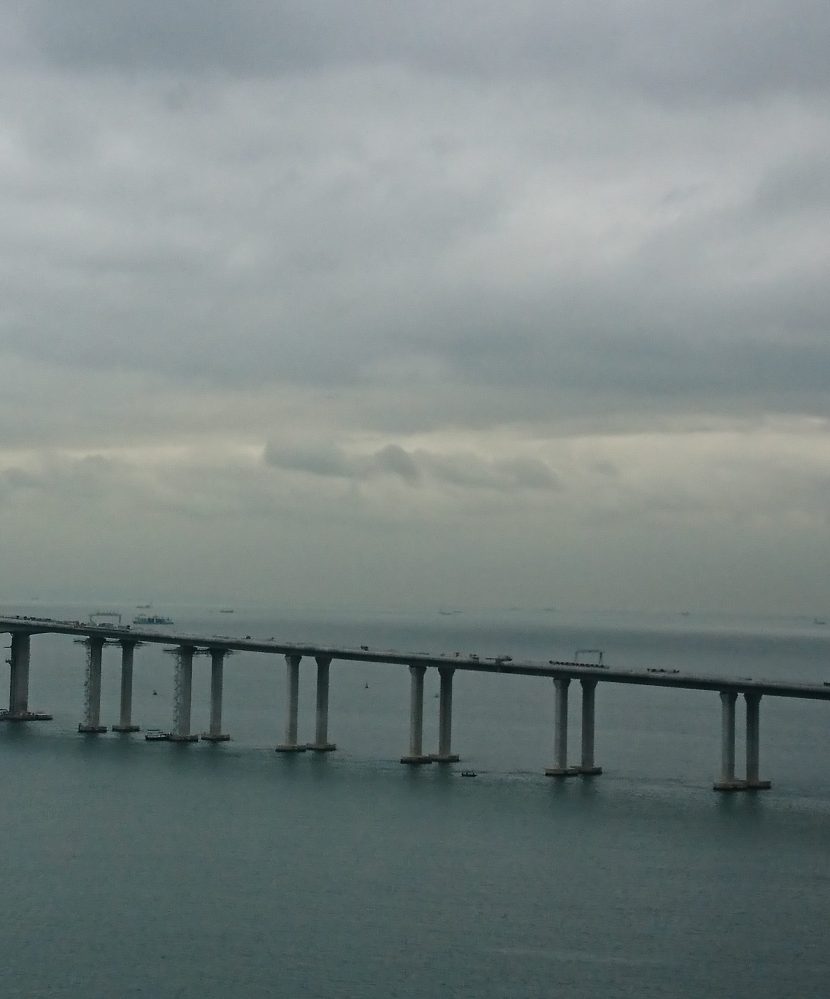
The government has made no assessment of how a second bridge across the Pearl River mouth will impact on the Hong Kong-Zhuhai-Macau (HZM) Bridge, a senior official admits.

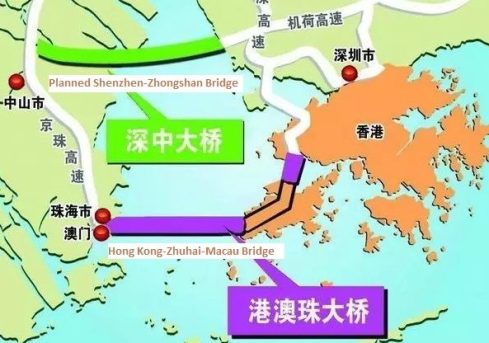
The Shenzhen-Zhongshan bridge, to be built just 30km north of the HZM structure, will be completed as early as 2023. A third bridge, the Humen Second Bridge, 60km north of Hong Kong, will begin carrying traffic from 2019.

Legco member Jimmy Ng, who represents one of the industrial functional constituencies, said businesses “have great concern for the economic development of Lantau Island” because of the Shenzhen crossing.

In a written reply, Development Secretary Eric Ma said the Hong Kong government “has not conducted any comprehensive assessment on the daily traffic flow” or other aspects of the Shenzhen-Zhongshan bridge.

The Shenzhen-Zhongshan Bridge (green) will be just 32km north of the HZM Bridge (purple)

Ma also acknowledged the government had made no forecast of the likely traffic flow or economic value of the HZM bridge and related projects, which have cost around HK$130 billion. The last study to be carried out was in 2008, just before construction began.

Ma affirmed the government view that a series of developments on north Lantau and northwest Hong Kong would create fresh economic activity.  He said Lantau would become Hong Kong’s “double gateway” to the world and the Greater Pearl River Delta (PRD).

Photo: Artist’s impression of Shenzhen-Zhongshan Bridge

Bangladeshi man dies in Lantau cliff fall after illegal entry by boat

A Bangladeshi man died after a cliff fall in southwest Lantau early this morning after arriving illegally by boat from mainland China.

The man had tried to climb a cliff at Kau Ling Chung when he fell, losing consciousness, SCMP.com reported.

He was one of a party of ten who had come ashore at the remote site at around daybreak. Police received a call at around 8:30am, but took more than an hour to locate the group because they could not give their exact location.

“Police were first told they were hikers. They later revealed they were Bangladeshi illegal immigrants who arrived from the mainland by boat,” a police source said.

“Due to the strong current and high waves, our boats were unable to berth and pick up the group,” a police spokesman said, adding that a Government Flying Service helicopter was also unable to deploy due to bad weather.

The man was  rescued by Marine Police at 11am and taken to North Lantau Hospital, where he was pronounced dead.

The Post said people smugglers may have tried to bring the men into Hong Kong undetected under the cover of today’s bad weather.

After a rash of illegal arrivals on Lantau early last year, number of unauthorised entries has fallen sharply as a result of greater surveillance.  Most arrivals are from South Asian countries.

Photo: Kau Ling Chung (Lantau News)

ICAC arrests 21 over ‘fake concrete’ scam

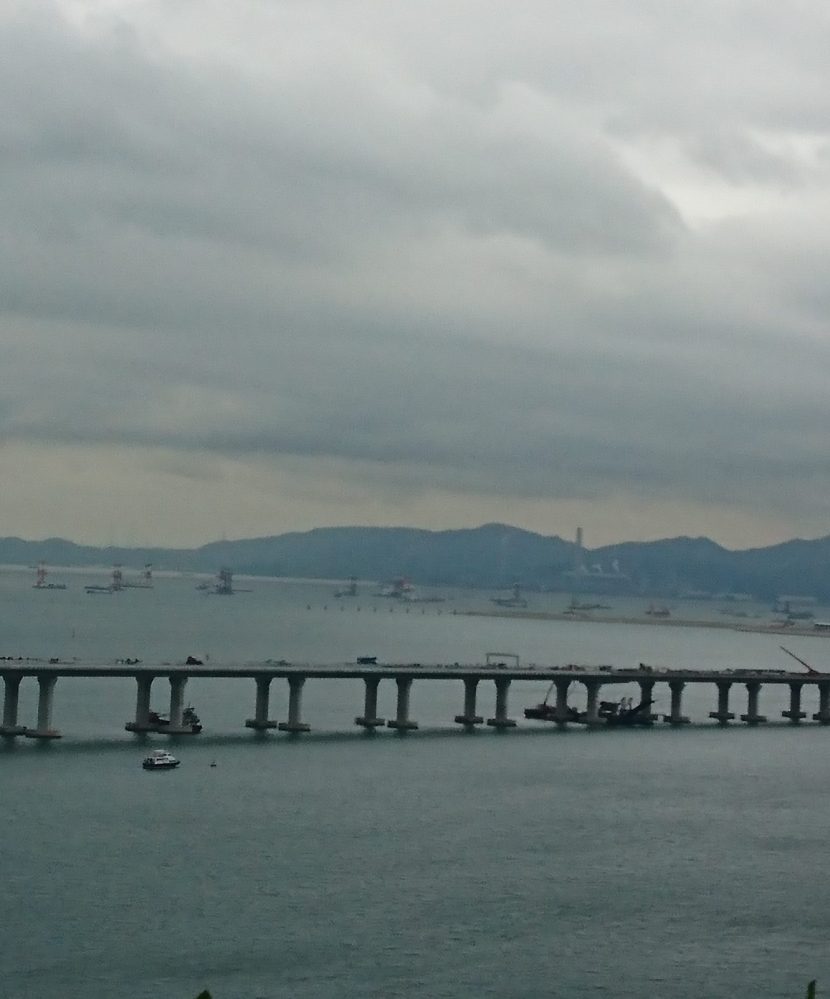
The ICAC has arrested 21 people suspected of involvement in faking test results for concrete supplied to the Hong Kong-Zhuhai-Macau bridge project.

The anti-graft agency said today it had detained two senior executives, 14 lab technicians and five lab assistants of a contractor to the Civil Engineering and Development Department (CEDD).

It said  had launched operation Greenfield last Tuesday to investigate a corruption complaint from the CEDD.

It was revealed that when some of the tests were not conducted within the set time frame in compliance with the contract requirements, the site laboratory technicians and laboratory assistants might have adjusted the times on the testing machines to cover up the irregularities.

During the ICAC operation, it was further revealed that some of the laboratory staff might have replaced the concrete samples by using a metal calibration cylinder and/or high strength concrete cubes to falsify the tests, so that the tests would appear to have been conducted properly. It was suspected that the above malpractice might have started in early 2015.

Two senior site laboratory technicians had certified the false test reports, and “might have corruptly connived at the submission of the false reports to the CEDD,” the ICAC said.

It said the contractor had been carrying out tests for the CEDD since 2013. The 21 staff have all been released on bail pending further inquiries.

Raymond KS Chan, a former head of Geotechnical Engineering Office, has said that if use of the fake concrete was widespread, affected sections of the bridge would have to be rebuilt.

Development Secretary Eric Ma said today officials would review the bridge construction to see if any improvements were needed, SCMP.com reports.

“If the situation is not that serious, reviewing the existing construction is already enough. Otherwise we will take serious measures and follow up actions. But I do not have any information in hands now,” Ma said.

Mui Wo apartment block tipped to fetch HK$350m

In another sign of rising interest in Mui Wo real estate, private housing estate Silver Waves Court is on the sale block and predicted to fetch an estimated HK$350 million.

The existing 20-year-old seafront estate is to be rebuilt into 18 two-storey detached houses, each with a separate garden.

Colliers International Real Estate, which is handling the sale, says the owner has approval from the Buildings Dept to redevelop the 31,721 square feet site.

Currently it has 16 separate homes with private gardens and an outdoor pool. It is fully-leased.

Colliers describes it as a “rare, high-end low-density luxury seaview villa development project,” Oriental Daily reports. Deadline for offers is June 16.

Another bridge scandal: Govt probing use of ‘fake’ concrete

In yet another Hong Kong-Macau bridge scandal, government departments are reviewing the concrete used in the project after reports that lab tests were falsified.

According to the Apple Daily a lab technician had certified ‘fake concrete’ made from sub-standard materials for contractors on the Hong Kong section of the bridge.  The ICAC has arrested a government laboratory staffer and is investigating others involved in certifying the results.

Development Secretary Eric Ma said yesterday the Highways Dept and CEDD are now reviewing the results of the lab tests, RTHK reports.

In the worst-case scenario the entire affected section of the bridge would have to be rebuilt, according to a former head of the Geotechnical Engineering Office, Raymond KS Chan. However, if the fake concrete affected just one or two localised sections, they could be separately replaced.

Legco may also get involved, with members expressing concern about the incident.

The chairman of Legco’s Transport Panel, DAB lawmaker Ben Chan, said he’s extremely concerned about the incident as it could jeopardise the safety of the bridge. He called on the government to fully investigate the allegations and get to the bottom of the matter.

Democrat member Lam Cheuk-ting described the alleged incident as “extremely serious,” and that because it involved public interest and safety the public had a right to know. He said he would ask the Transport Panel to discuss as soon as possible.

The incident is the latest in a series of accidents, delays and cost overruns that have hit the bridge project since it began in 2009.

Eddie Chu: Pan-dems, greens must target village elections

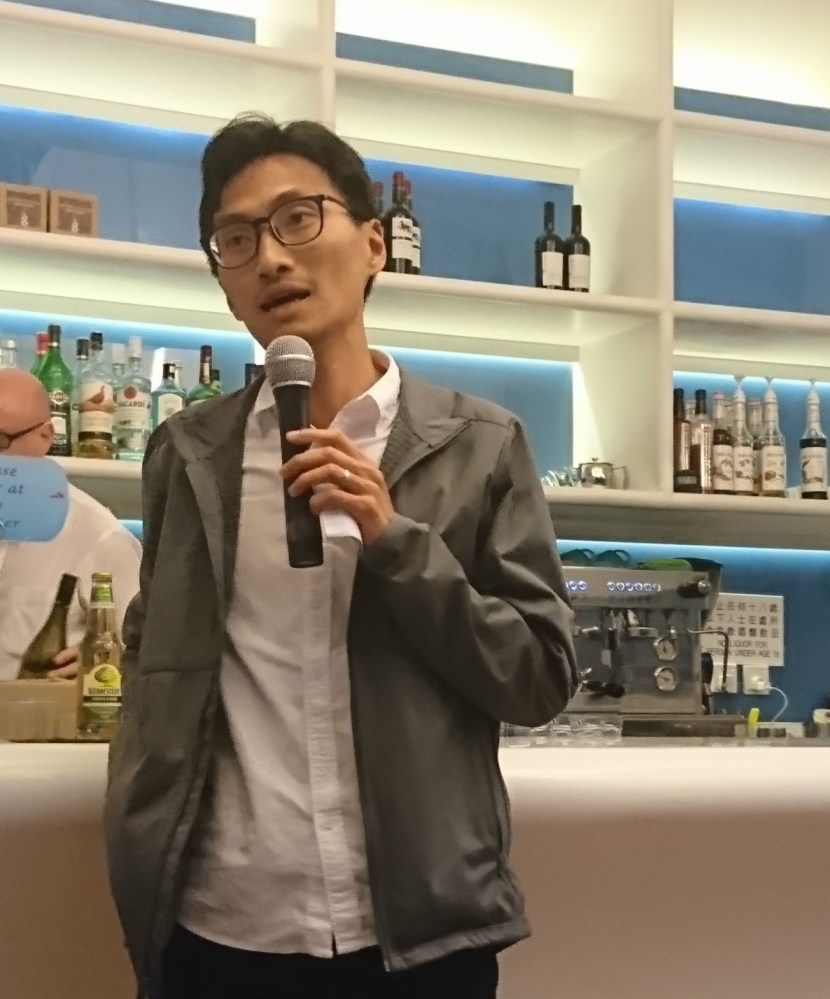
Legco member and rural land justice campaigner Eddie Chu has called on democrats and environmentalists to contest the coming 2019 village elections.

Speaking at a Living Islands Movement meeting on Friday, Chu most of the 1500 village representatives in Hong Kong villages are uncontested.

“We don’t have our candidates from the environmental or democratic movements. It’s such a huge gap,” he said.

Village elections are important because the government uses the local level support to lend legitimacy to projects such as the East Lantau Metropolis and the Macau Bridge, he said.

Chu was dubbed ‘king of the voters’ after he was elected to Legco with more votes than any other candidate ast last year’s poll. He said that as Legco member covering rural Lantau and western New Territories he had a “certain mandate” to become involved in the politics of Heung Yee Kuk and rural areas generally.

“In my experience during the election, many villagers, including indigenous villagers, are supportive of my election platform – conserve the environment and stop white elephant infrastructure projects – but they don’t have the confidence to come out. They want to come out as a group.”

Chu aims to create a new alliance among rural representatives to “create a new area for bargaining with the establishment. I think that is very crucial in building up our foundation,” he said.

He also pointed out the Heung Yee Kuk, the indigenous rural landowners peak body, was living on borrowed time.

“The kuk itself is under serious crisis itself because they don’t have the support of Hong Kong general public and Beijing is considering whether to abandon them. They need to shift their basic position. That’s my message to Kenneth Lau, the kuk leader: “If you want the kuk to continue to exist and have influence, then you have to democratise yourself.”

A 2015 survey by local think tank Civic Exchange found that 65% of Hong Kong people wanted a change to the small house policy.

We can build in country parks – if we protect them

The Leung government is going about its country park housing plan in exactly the wrong way.

It has already identified two sites and has hired a property developer with no known environmental expertise to evaluate them.

What are the chances that the Housing Society will conclude that the Tai Lam and Ma On Shan country parks are in fact unsuitable for development?

It’s a short-term salami-slicing approach with easy-to-predict consequences: after green-lighting those two sites, other locations will be found for ‘evaluation,’ then a few more and then more again. After a decade, fresh areas of country park adjacent to the developed sites will be designated as ‘low ecological value’ by virtue of the environmental destruction next door.

In a couple of decades, having exhausted the park boundary areas, government leaders and developers will lead us to understand that any development at any location in any country park is acceptable. Destruction of the country park system will be complete.

Instead of this contrived process that galvanises public opposition we could take a holistic approach to both housing and environmental protection.

The background is that the country park system grew up in an ad hoc way in the 1970s, mostly comprising land too steep or rocky or remote for development. But it also left ecologically important sites outside the parks.

So let’s commission an independent expert panel – no government officials, no party hacks, no cronies – to identify the ‘low-ecological value’ sites on country park borders as well as the ecologically important sites not protected.

In doing so way we set markers for what is and isn’t ecologically important and build up a bank of land to for the years to come.

Once we’ve created the new park borders, let’s pass a law to guarantee they are inviolate for the next 50 years.  And let’s protect those ecologically sensitive sites that can’t be added to parks by creating a body of law and a team of enforcement officers that will punish those who damage them.

We will lose some country park land, but extend protection to vulnerable sites.  It shows a government willing to defend the city’s natural heritage while also making progress on housing and at the same time demonstrate an ability to collaborate with civil society.

It is the exact opposite to the current initiative. In delegating to the Housing Society Leung has made it clear he sees country parks as a storehouse of land for development, regardless of environmental impact or public expectation.

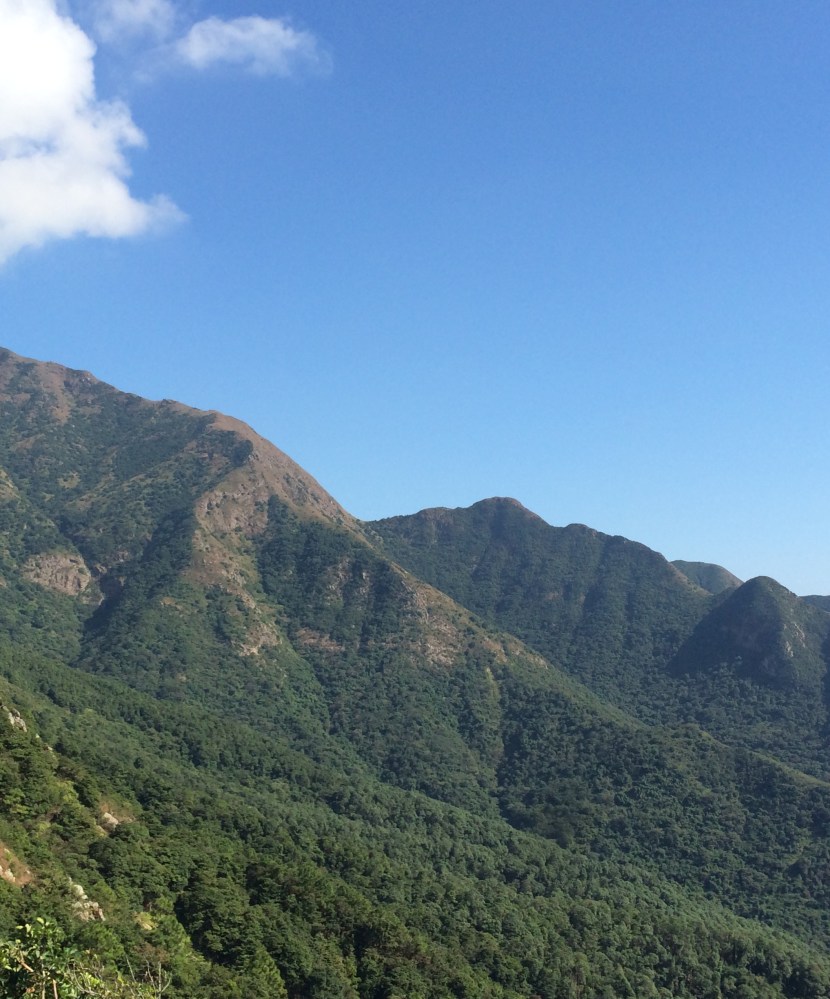
Fan Lau, Lantau South Country Park

This is an autocrat’s way of getting things done. It’s also another sign that we live in a construction state, primed to continually identify new development projects at public expense. The ‘Belt-Road’ scheme is the ultimate expression of this.

Lantau has been subject to these one after the other: the Macau Bridge, the Shek Kwu Chau incinerator and on the horizon, the East Lantau Metropolis.

During the Lantau development consultation last year government officials repeatedly assured citizens that south Lantau would remain a green zone protected by its country park status. We know now that that protection means nothing.