Lantau blueprint is just another sly sales pitch for East Lantau Metropolis

The Sustainable Lantau Blueprint is not terribly sustainable, is certainly not a blueprint and isn’t really about Lantau.

An actual blueprint explains how something will be done. The ‘blueprint’ released last week is a summary of projects already underway and some boilerplate about economic growth, along with a glowing endorsement of the East Lantau Metropolis (ELM).

It’s a poor return on what was supposed to have been three and a half years of effort, first by the Lantau Development Advisory Committee (LanDAC), followed by six months of public engagement and then further work by the CEDD.

Residents might be relieved that most of LanDAC’s ideas – a cable car to Sunset Peak, a wedding centre at Cheung Sha, an inflatables playground at Silvermine Bay and so on – were struck down.

But few people took any of those proposals seriously; the sole purpose seemed to be to convey the impression that the committee of business cronies and government supporters actually cared about the Lantau economy.

Instead, the real object of this exercise has been to bake the ELM into the planning process.

We shouldn’t be surprised. Since Beijing took control of the city 20 years ago, Hong Kong has become addicted to development projects of escalating cost – the Central bypass, Kai Tak Cruise Terminal, the high-speed rail link and, on Lantau, the Macau bridge and the Shek Kwu Chau incinerator.

It is a national phenomenon. As a weekend New York Times story put it:

“… critics say construction has become an end unto itself. Fueled by government-backed loans and urged on by the big construction companies and officials who profit from them, many of the projects are piling up debt and breeding corruption while producing questionable transportation benefits”

No Chinese official has ever been sacked for building a bridge or an airport. The ‘belt-road’ scheme now being peddled by the Beijing agitprop machine appears to be a way of exporting this economic model as well as excess production capacity.

China shows an ominous resemblance to the ‘construction state’ that dominated the Japanese economy in the 1990s and early 2000s, at one point accounting for 18% of GDP. As with Japan, China’s love affair with concrete is fuelled by the ready access to bottomless funds and the lack of an institutional brake.

The ELM, involving reclamation of 1000 ha and an estimated cost of HK$400 billion, will be the city’s biggest ever project. It deserves careful consideration but instead has been shunted through a series of committees before its inevitable approval.

As critic Tom Yam has pointed out, ELM’s forecast population of 9 million exceeds even the government’s own projection of a peak population of 8.22 million.

Housing aside, the blueprint struggles to explain the economic rationale for this new business district. Here’s a random sample:

“The CBD3 [ie, ELM] can be positioned as a new and smart financial and producer services hub to boost our economic development, provide a large number of employment opportunities, and lead to a more balanced development pattern in Hong Kong.”

This has as much depth as a tourist brochure yet is supposed to justify filling in a sizeable chunk of the harbour at a cost of hundreds of billions of dollars.

It is because the case for the ELM is so unconvincing that the blueprint slyly pitches it as a salve to the current housing crisis. It’s not.

Even if Legco decides to fund this palest of wan pachyderms, it won’t be providing housing or ‘producer services’ until the middle of the 2030s. You find that spelt out in the report, although if you comb the fine print you will see it conceded the ELM is for ‘long-term.’
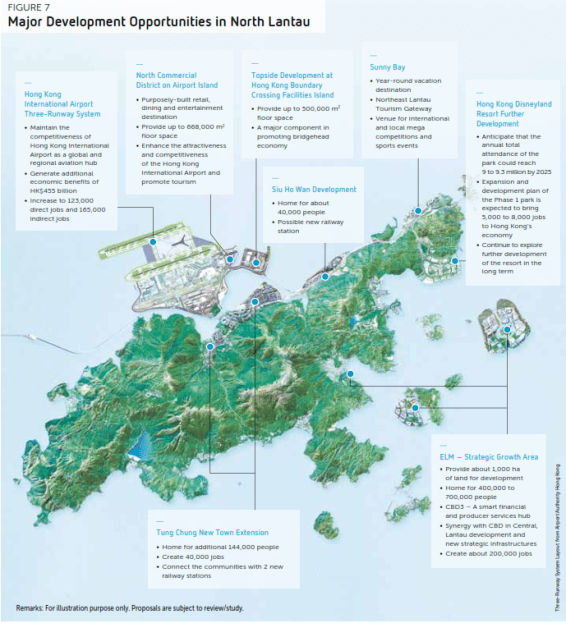
Lantau’s greatest development hits

The shallowness of the blueprint shows in two critical areas – transport and conservation.

Transport is the island’s pressing priority, but on this the blueprint has little to offer, except to remind us that the MTR is planning two new stations in Tung Chung and possibly a third in Siu Ho Wan (by happy coincidence the site of an MTR Corp development).

For the island’s south, it suggests expanding the ferry network. A nice idea, but basically a reprise of the 2007 proposal for “island-hopping ferries.”

The best Hon Chi-keung, Permanent Secretary for Development, could offer is that government would study how to improve the Lantau traffic network’s “ability to receive visitors.”  That’s the kind of work that usually goes into a blueprint before it is published.

But transport is not just a problem caused by tourists. Peak hour transport in and out of Mui Wo is already close to capacity. No one has explained how ferry and bus services will cope with the extra load from the public housing now being built. As many as 1800 more people will start moving in next year, increasing local population by around 40%.

The same lack of clarity applies to conservation. The plan identifies areas that should be protected, but doesn’t explain how.  For the steadily shrinking Pui O wetlands – currently the subject of a judicial review – the report lamely suggests that “measures” to halt its destruction “are being explored.”

To push ahead with the ELM, the government seeks a record HK$248 million for a feasibility study. It’s too late to be passed during the current administration, however.

That means the incoming CE has the opportunity to demonstrate she will guided by facts, not gulled by grand schemes. She can demonstrate leadership and conserve both the city’s finances and its natural heritage by axing this reckless monument to greed and extravagance.
Govt eyeing light rail, MTR to connect Tung Chung and airport

Tung Chung residents could be able to ride to Chek Lap Kok via light rail or the Airport Express under proposals now being considered by government agencies.

But even if approved it will likely be years before either becomes a reality.

Transport Secretary Anthony Cheung has told Legco he is reviewing an Airport Authority study into the feasibility of a rail shuttle using spare capacity on the Airport Express line, running between the proposed Tung Chung East MTR station and Chek Lap Kok.

Cheung said the report, completed last month, to assess the feasibility of the light rail scheme “as well as how the matter should be taken forward.”

In January the government formally asked the MTR Corp to submit proposals for the construction of new stations at west and east Tung Chung to support new housing developments.

But Cheung admitted that the Tung Chung East station won’t be ready until 2026. Until then residents will travel to Tung Chung MTR via mini-bus.

He added that the Civil Engineering and Planning departments are investigating “different transport connectivity proposals” for public transport between the Hong Kong-Macau bridge border crossing, North Lantau and Chek Lap Kok airport.

One of the schemes is for a light rail system, in response to requests from the public and Legco. The study is expected to be completed by the end of this year.

Police seize endangered tortoise in $3.4m smuggling bust

Hong Kong police and customs seized illegal $3.4 million in contraband, including an endangered tortoise, after disrupting smugglers at Tai O on Tuesday night.

Acting on a tip-off, Marine Police and customs officers found a group of men loading packages aboard a speedboat in Tai O at about 8pm, Apple Daily reports.

As officers moved in, the speedboat took off and fled toward Chinese waters. Marine police intercepted the craft and forced it back toward Tai O port, but the driver of the boat escaped along with seven men on the shore.

Law enforcement officers seized 35 suspected smuggled goods at the scene including African spurred tortoise, which is on the UN endangered list and a CITES-protected species. The goods, which also included animal fur and amber among, had a total market value of about HK$3.4 million.

Photo: Melissa Mitchell (Baseballchck02 at en.wikipedia), Creative Commons

Tung Chung finally to get special needs school

Thirteen years after it was first proposed, a HK$335 million special needs school is finally going ahead in Tung Chung.

Thelloy Development Group has won a HK$268 million contract to build the school for moderately and severely intellectually disabled children.

It was originally slated to be built on the then-vacant block opposite Lantau North Hospital, but was forced to move after local residents rejected it on grounds of noise pollution, traffic congestion and because it was “not supported.”

The school on Chung Mun Rd will have 18 classrooms and boarding facilities for 60 children. The first classes are expected to be held in 2019.

According to Education Bureau figures from 2014, 130 special needs children live in Tung Chung and the outlying islands.

Lantau blueprint scraps worst ideas, talks up conservation, upholds ELM

After three and half years of aggressive development plans from the Leung government, the Sustainable Lantau Blueprint is a return somewhat to the status quo.

The blueprint, produced by the Development Bureau, is closely aligned with the 2007 Lantau Concept plan. It even says so on the cover.

It scraps proposals for intrusive tourist facilities, ignores calls for new roads and urges greater conservation of key areas such as Pui O Wetlands and cultural heritage.

Notably it has dumped many of the unpopular proposals from LanDAC, such as the plan to extend Ngong Ping 360 to Tai O, install a chairlift to Sunset Peak and build water-skiing facilities in Shui Hau and a spa in Cheung Sha.

However, it upholds the government’s biggest development plan – the massive East Lantau Metropolis (ELM), the site of a future CBD and housing on 1000 ha of mostly reclaimed land in the waters between Mui Wo and Hong Kong island.

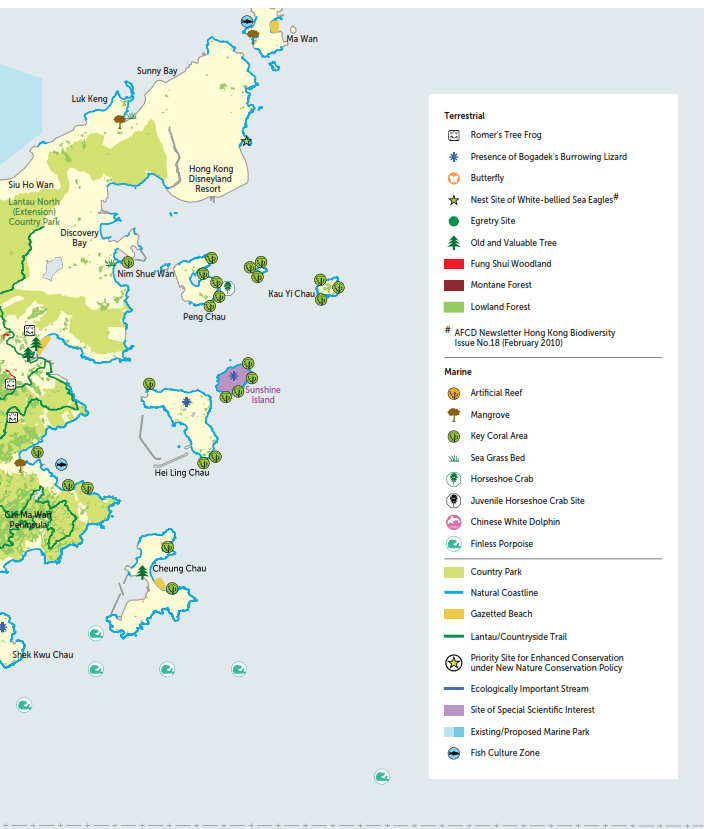
Above & below : What must be conserved 

On the positive side for the environment, the blueprint on a number of occasions acknowledges the need to “conserve sites of natural and cultural heritage importance,” although it doesn’t say how this would be done.

For example, it appears to have taken on board community anger over dumping on the Pui O wetlands.

[The wetland] is rich in biodiversity of wetland plants and macro-invertebrates and is reminiscent of the living of farmers a few decades ago. The water buffaloes living there now are part of that cultural history. … Pui O can be an important educational resource to showcase the rural history of Hong Kong and the valuable wetland flora and fauna.

But while it says measures to protect the wetland “are being explored,” it has no detail.

It also runs up against the logic of the ELM. While it calls for the retention of Mui WO’s rural character, it also endorses the government proposal to build a highway from North Lantau through the town to the ELM.

On the vexed issue of Lantau transport, the document, like the 2007 plan, urges greater use of ferries for round-island transport between villages such as Cheung Sha, Shek Pik and Yi O.  It also suggests convenient ‘hop-on hop-off’ short-distance transport services for South Lantau Rd and expanded cycling and mountain bike paths.

While the report has discarded many of LanDAC’s excessive development ideas, it has some of its own, including a beach volleyball court at Cheung Sha, a water sports centre at Pui O, and “an adventure park at an appropriate location.” It argues for the addition of “supporting facilities” on local hiking trails, including signage, information kiosks, “and provision of maps, toilets and  emergency telephones.”

It also resurrects the government’s super-prison proposal from early in the last decade, suggesting Lantau’s correctional facilities may be relocated to Hei Ling Chau as a part of ELM.

Finally, and again without elaboration, it says it is exploring the feasibility of “themed camping grounds” in places such as Shui Hau, Tong Fuk, Pui O and Shek Pik.

Why you won’t die from snakebite and other advice from snake whisperer William Sargent

If you’re a Lantau resident, you’re bound to have come across the odd snake. If it’s a little too close for comfort the chances are you’ve also met our resident snake whisperer, William Sargent.

William’s fascination with snakes began as a boy during family holidays in Chi Ma Wan. Today he lives with in South Lantau and in recent years has become our local snake catcher.

As well as helping police retrieve and return snakes to the wild, William is a conservationist who proselytises for the care and protection of all animals in the wild.  He won worldwide fame recently when he posted a HK$10,000 reward for the return of baby owls snatched from their nest.

Speaking at a recent Living Islands Movement event, he shared the most common questions he is asked about snakes.

Why does Hong Kong have so many snakes?

Primarily because of habitat. With its large country parks, the city is a sanctuary for diverse species – barking deer, wild boar, sea turtle, civet cat, porcupine and pangolin – probably the most hunted creature in the world. The city is like a big wildlife reserve. By contrast, across the border, 12 of China’s 200 snake species are threatened.

How dangerous are Hong Kong’s snakes?

Hong Kong has more than 50 species. Take away the sea snakes, the rare, the non-venomous and the mildly venomous, there are about eight snakes that can potentially hurt you.

How many people die from snakebites?

Worldwide, tens of thousands of people die each year. In Hong Kong the annual death toll from various kinds of misadventure is:

Workplace falls – 33
Road accidents – 117
Snakebites (past 20 years) – 0

About 150 people here are bitten each year, but no deaths occur because of the ready access to quality medical care. Snakebite is not dangerous if you are a healthy adult and you have modern medical care.

Unless you have a pre-existing condition or an allergy, you’re not going to drop dead. If bitten you may have issues with nerve damage, but you’re not going to die.

Photo: Hamish Low

Why are snakes important?

Nature is all interconnected. You don’t have to love snakes. But I can’t understand people who say they like nature but hate snakes. Birds eat snakes, snakes eat a lot of pests.T he ironic thing – whatever they’ve killed or moved was probably doing them a big favour (eg, eating rats).

Hong Kong is like a sanctuary. Chinese Cobras are so common here but are listed as threatened species in China. They’re on the UN Red List – their population has dropped 50% in the last 20 years.

Last year in Shenzhen 68,000 wild python skins were confiscated in one bust. That’s just a single day. To put it into perspective, on this mountain [Chi Ma Wan] there’s one or possibly two Burmese Pythons. The scale of the snake trade in China is not sustainable.

Do snakes threaten humans?

Snakes can defend themselves pretty boldly but they do not chase you. There is no reason. In the animal kingdom, if something’s not attacking you, it puts itself at risk. From an evolutionary point of view, snakes have no ecological reason to chase prey it’s not going to eat.

The only time snakes chase someone is you suddenly come across one inside your house and it doesn’t know where to go.

What are the biggest threats to snake populations?

The No 1 enemy is deforestation. A big problem in Asia – in Indonesia it is terrible.

Human attitudes are also a problem. Three weeks ago I was called to a Cheung Fu home. There was a Rednecked Keelback in someone’s garden. And the woman got to him with a shovel.

I’m getting used to it but I think, what is the point? The police were on their way. They’ve called me in, the snake-catcher. If it’s any other animal would you come out of your house and bash it with a shovel? This attitude is very, very common.

(The text has been edited for space and clarity.)

Govt clips Pui O coastal conservation zone for sewage plant

The Town Planning Board has rezoned a slice of Pui O’s Coastal Protection Area (CPA) for a planned sewage treatment facility.

The board announced today it intends to rezone an area “south of South Lantau Road” for the planned treatment works. It does not specify the exact size or location of the rezoned slice of land.

Under the zoning plan approved in September 2014, 162.5 hectares of South Lantau land are designated as CPA, primarily in a strip between Pui O and Shui Hau.

The CPA is intended to protect areas of conservation or ecological importance in Hong Kong coastal zones. However, the controversy over dumping on designated CPA land in Pui O – now subject to a judicial review – has underscored the weakness of the current CPA regime.

Members of the public can make submissions to the TPB over the rezoning. They can view the draft plan between now and August 2 at the Islands District Office in Mui Wo, the South Lantao Rural Committee in Pui O and the Islands District Office, 20F, Harbour Building, Central.

The current Outline Zoning Plan (OZP) can be viewed at the TPB website.

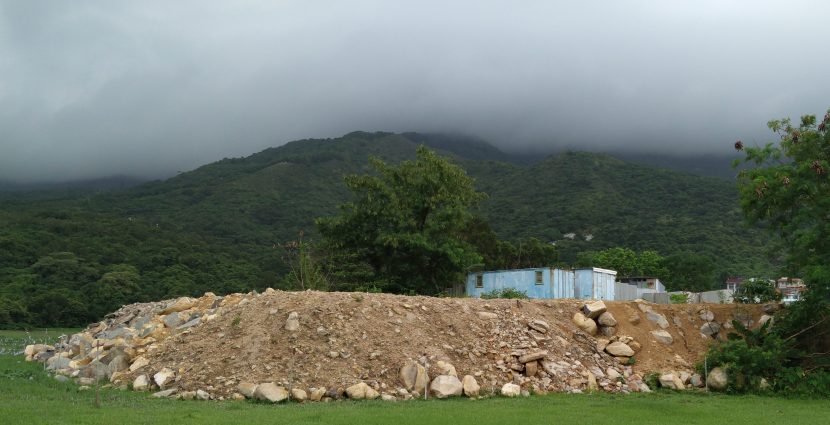
Photo: Dumping in Pui O wetland (file photo)

Ngong Ping 360 ready to return after 5 months maintenance

The Ngong Ping 360 cable car is ready to return to service after a five-month rope replacement programme.

It’s been the longest maintenance downtime for the local tourist attraction, which has been running a 6 km cable car between Tung Chung and Ngong Ping since 2006.

The company says the maintenance is complete and the service will restart some time in the next week.

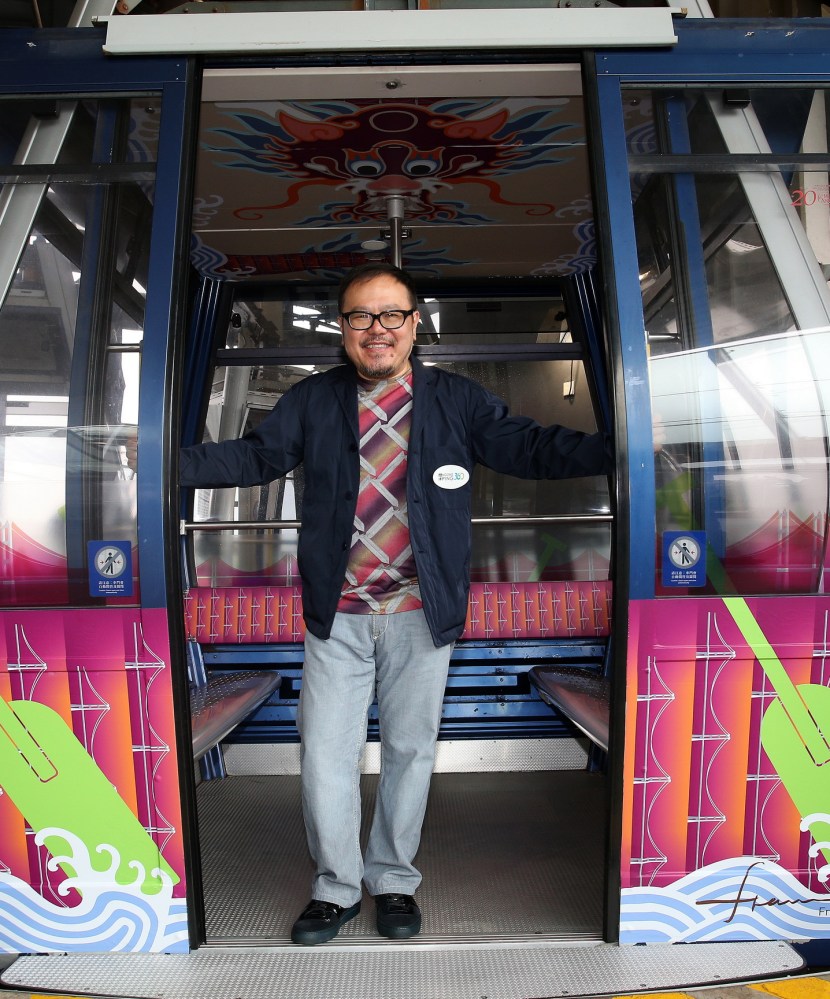
To celebrate the relaunch, Ngong Ping 360 commissioned local designers to create new designs for the passenger cabins using Lantau themes.

It also plans to trial electronic queuing using Facebook and WeChat to reduce waiting times.

The service is coming off a successful year in which it grew its customer numbers by 5.5% despite a 4.5% decline in the number of visitors to Hong Kong.

Photo: Artist Freeman Lau with his design inspired by Tai O dragon boat water parade


Body washed ashore near Tong Fuk

Police are investigating a body found washed ashore between Tong Fuk and Shui Hau.

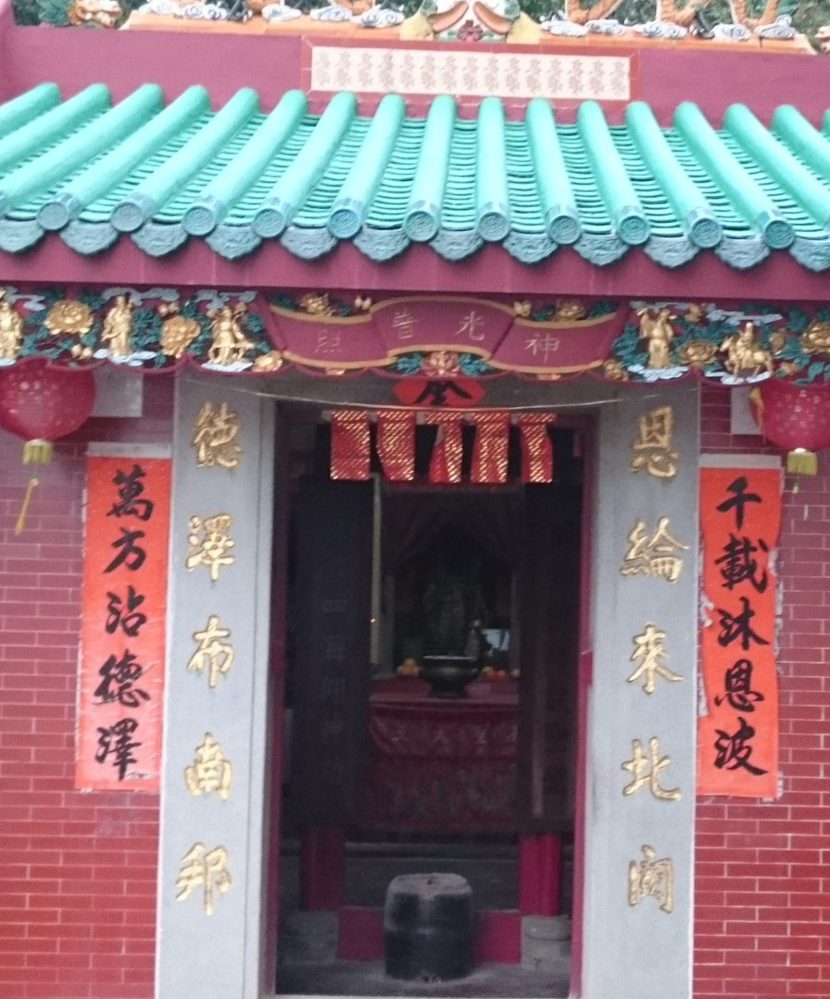
The body was discovered by a dragon boat team member near the Tong Fuk Temple at about 10am yesterday. The man is aged 50 to 60 years, about 160cm tall, and was clothed and wearing black socks, Sing Tao reported.

Police believe the body had been brought ashore after being in the water for possibly a week. It was already starting to decompose and some skin had begun to peel.

The body carried no identification. Police have arranged for a post-mortem to determine the cause of death and will check missing persons records.

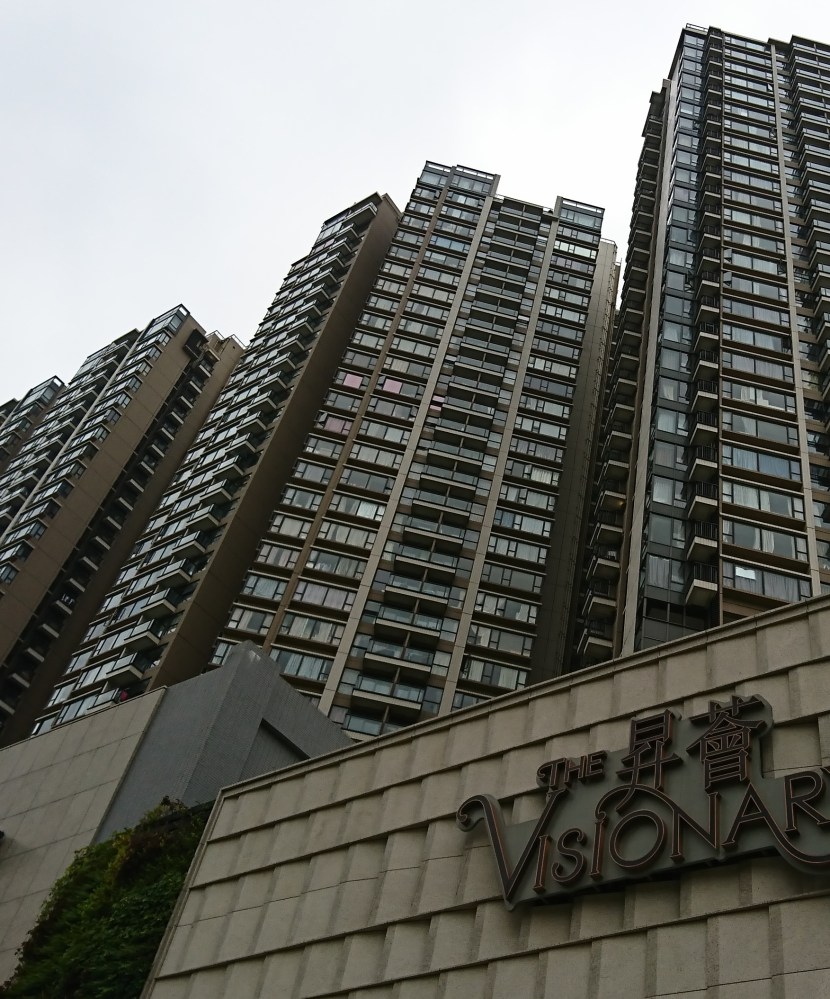
1br unit at Tung Chung’s Visionary sells for record $5.6m

One-bedroom units are in heavy demand at Tung Chung’s Visionary complex, with the price this month reaching a new high of $12,584 per sq foot.

A one-bedroom apartment in tower 10, with a usable area of 445 sq feet and lacking a sea view, sold last week for HK$5.6 million. The previous owner paid HK$3.67 million in December 2013.

The new buyer is an investor who is likely to lease the property for approximately HK$11,000 per month, Economic Times reported.

Nine Visionary flats changed hands in May, including six one-bedroom apartments, commanding prices of HK$5.0-5.6 million.

Tin Gwok-fai, Midland real estate manager at the Coastal Skyline branch, said Visionary’s stock is limited, in particular for one-bedroom units. Most of those sold will be leased, he said.