
Category: HZM Bridge
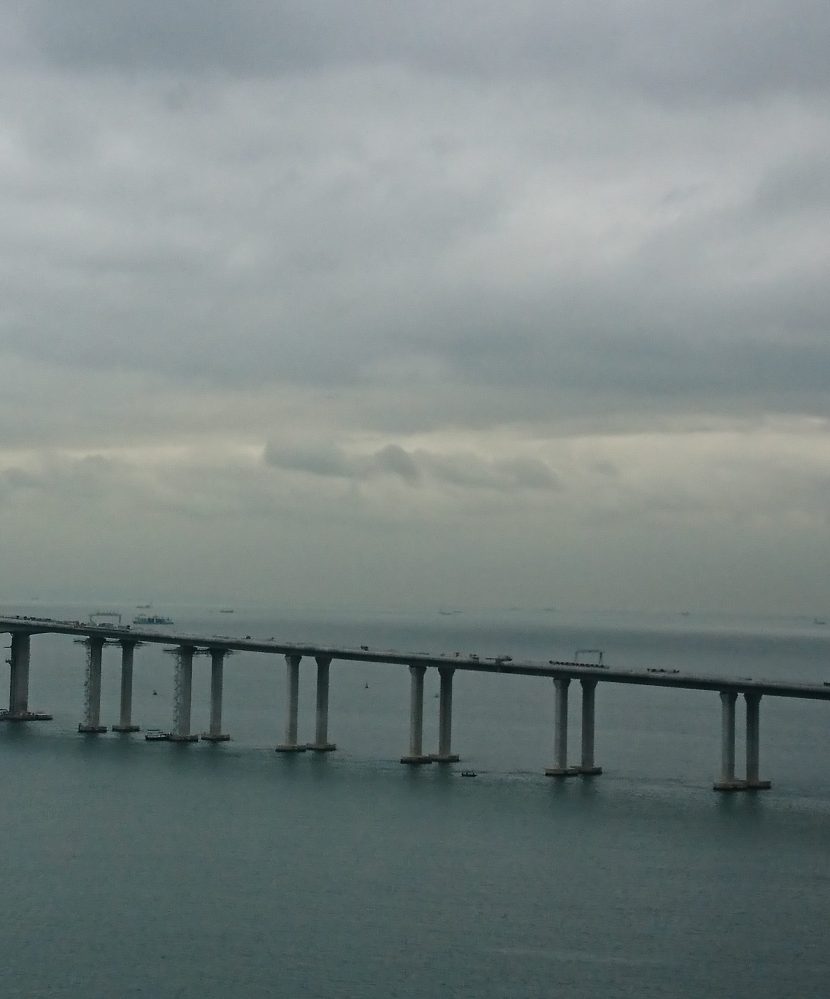
Govt brushes aside fears of bridge parking squeeze in Tung Chung
The Transport Dept has brushed aside concerns over a lack of parking spaces in Tung Chung after the opening of the Hong Kong-Macau Bridge.
Islands District Councillor and DAB vice-chairman Holden Chow says he was “disappointed” by the department’s attitude, which he believes will lead to bridge travellers taking up scarce parking spots in Tung Chung.
“The 650 parking spaces currently planned by the government are definitely not sufficient to meet future needs,” he told a council meeting last week. By comparison Macau and Hengqin at the other end of the bridge have 10,000 parking spots, he pointed out.
“There will certainly be a problem with parking spaces in Tung Chung Town Centre.”
In a written response, the Transport Dept said the government had built a public transport interchange which was accessible from all parts of the city via different types of transport.
“The government expects most visitors to and from the Hong Kong-Zhuhai-Macau Bridge will use public transport service,” it said.
However it said the department would consider the need for parking lots and other facilities on the bridge landing zone following the completion of a Development Bureau study.
The bridge, expected to open late this year or early next, has been forecast to carry 14,000 vehicles daily.
HK-Macau bridge foundations shift again
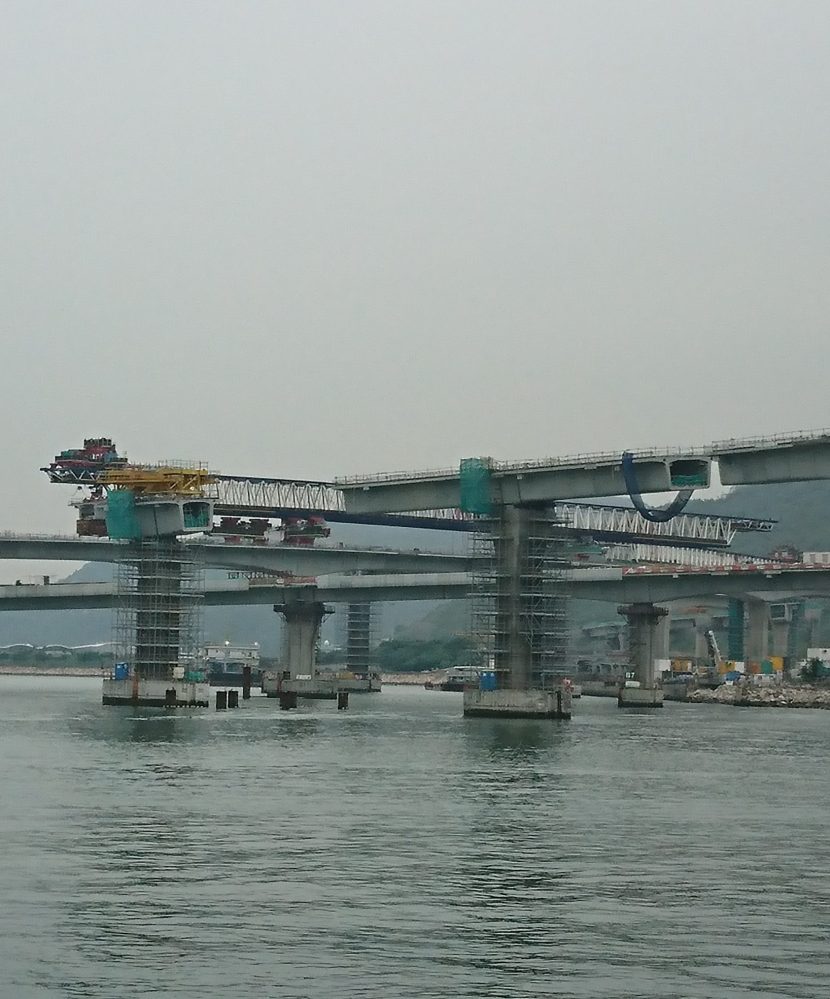
The foundations of a key part of the Hong Kong-Zhuhai-Macao Bridge have shifted again, the Highways Dept has revealed.
As many as 22 steel cylinders installed to stabilise reclaimed land for the bridge landing zone have shifted more than three metres, according to the Oriental Daily.
The Highways Dept and the contracting company have consolidated the cylinders – accounting for more than a quarter of the total – but have been unable to fix the source of the movement.
It is the latest in a series of engineering issues at the project, including shifting foundations, the collapse of a seawall and the falsification of tests on the concrete used in the bridge. Accidents have killed six workers and injured dozens, putting the project back by a year, experts have said.
The continual shifting of the foundations of the reclamation have prompted concerns that the project will be further delayed.
The 55-km bridge, originally intended to open last year, is currently scheduled to open by the end of 2017.

Another bridge on the way; govt unsure of impact on HK-Macau link
The government has made no assessment of how a second bridge across the Pearl River mouth will impact on the Hong Kong-Zhuhai-Macau (HZM) Bridge, a senior official admits.
The Shenzhen-Zhongshan bridge, to be built just 30km north of the HZM structure, will be completed as early as 2023. A third bridge, the Humen Second Bridge, 60km north of Hong Kong, will begin carrying traffic from 2019.
Legco member Jimmy Ng, who represents one of the industrial functional constituencies, said businesses “have great concern for the economic development of Lantau Island” because of the Shenzhen crossing.
In a written reply, Development Secretary Eric Ma said the Hong Kong government “has not conducted any comprehensive assessment on the daily traffic flow” or other aspects of the Shenzhen-Zhongshan bridge.
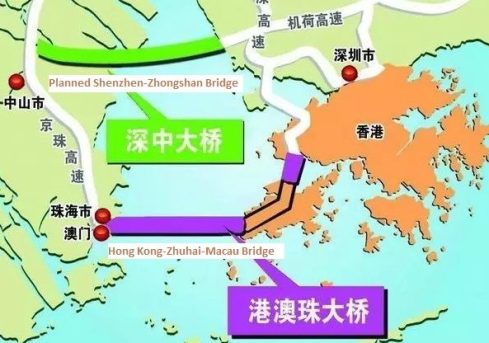
The Shenzhen-Zhongshan Bridge (green) will be just 32km north of the HZM Bridge (purple)
Ma also acknowledged the government had made no forecast of the likely traffic flow or economic value of the HZM bridge and related projects, which have cost around HK$130 billion. The last study to be carried out was in 2008, just before construction began.
Ma affirmed the government view that a series of developments on north Lantau and northwest Hong Kong would create fresh economic activity. He said Lantau would become Hong Kong’s “double gateway” to the world and the Greater Pearl River Delta (PRD).
Photo: Artist’s impression of Shenzhen-Zhongshan Bridge
ICAC arrests 21 over ‘fake concrete’ scam
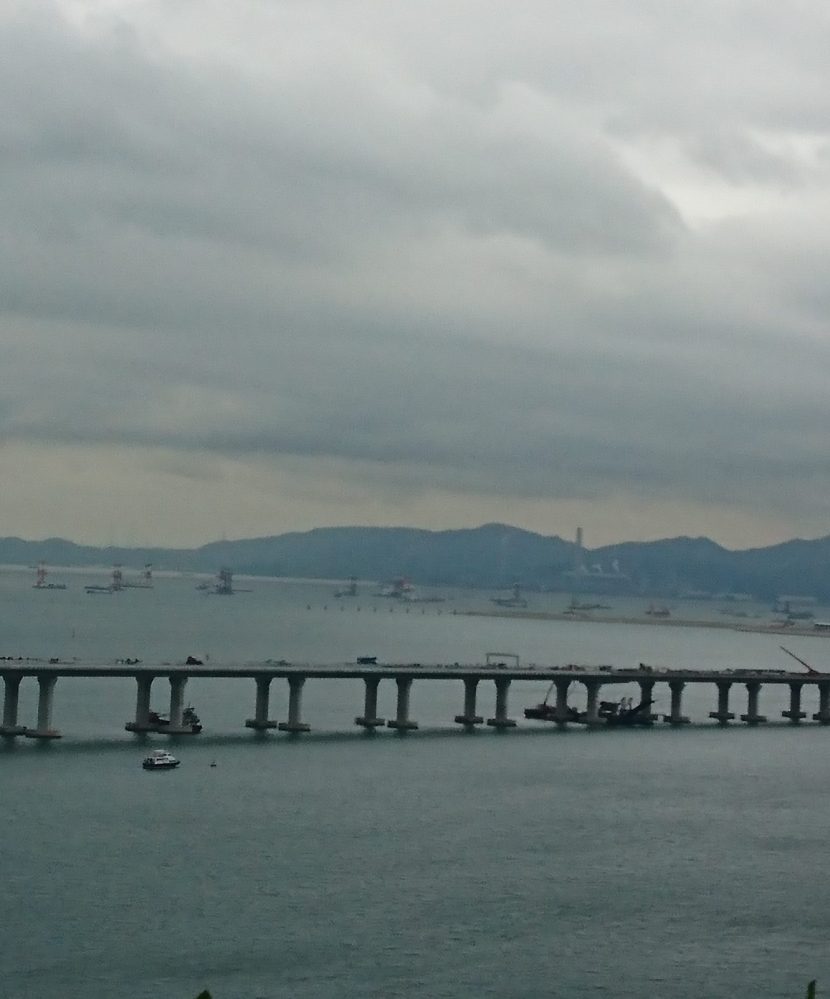
The ICAC has arrested 21 people suspected of involvement in faking test results for concrete supplied to the Hong Kong-Zhuhai-Macau bridge project.
The anti-graft agency said today it had detained two senior executives, 14 lab technicians and five lab assistants of a contractor to the Civil Engineering and Development Department (CEDD).
It said had launched operation Greenfield last Tuesday to investigate a corruption complaint from the CEDD.
It was revealed that when some of the tests were not conducted within the set time frame in compliance with the contract requirements, the site laboratory technicians and laboratory assistants might have adjusted the times on the testing machines to cover up the irregularities.
During the ICAC operation, it was further revealed that some of the laboratory staff might have replaced the concrete samples by using a metal calibration cylinder and/or high strength concrete cubes to falsify the tests, so that the tests would appear to have been conducted properly. It was suspected that the above malpractice might have started in early 2015.
Two senior site laboratory technicians had certified the false test reports, and “might have corruptly connived at the submission of the false reports to the CEDD,” the ICAC said.
It said the contractor had been carrying out tests for the CEDD since 2013. The 21 staff have all been released on bail pending further inquiries.
Raymond KS Chan, a former head of Geotechnical Engineering Office, has said that if use of the fake concrete was widespread, affected sections of the bridge would have to be rebuilt.
Development Secretary Eric Ma said today officials would review the bridge construction to see if any improvements were needed, SCMP.com reports.
“If the situation is not that serious, reviewing the existing construction is already enough. Otherwise we will take serious measures and follow up actions. But I do not have any information in hands now,” Ma said.
Another bridge scandal: Govt probing use of ‘fake’ concrete
In yet another Hong Kong-Macau bridge scandal, government departments are reviewing the concrete used in the project after reports that lab tests were falsified.
According to the Apple Daily a lab technician had certified ‘fake concrete’ made from sub-standard materials for contractors on the Hong Kong section of the bridge. The ICAC has arrested a government laboratory staffer and is investigating others involved in certifying the results.
Development Secretary Eric Ma said yesterday the Highways Dept and CEDD are now reviewing the results of the lab tests, RTHK reports.
In the worst-case scenario the entire affected section of the bridge would have to be rebuilt, according to a former head of the Geotechnical Engineering Office, Raymond KS Chan. However, if the fake concrete affected just one or two localised sections, they could be separately replaced.
Legco may also get involved, with members expressing concern about the incident.
The chairman of Legco’s Transport Panel, DAB lawmaker Ben Chan, said he’s extremely concerned about the incident as it could jeopardise the safety of the bridge. He called on the government to fully investigate the allegations and get to the bottom of the matter.
Democrat member Lam Cheuk-ting described the alleged incident as “extremely serious,” and that because it involved public interest and safety the public had a right to know. He said he would ask the Transport Panel to discuss as soon as possible.
The incident is the latest in a series of accidents, delays and cost overruns that have hit the bridge project since it began in 2009.
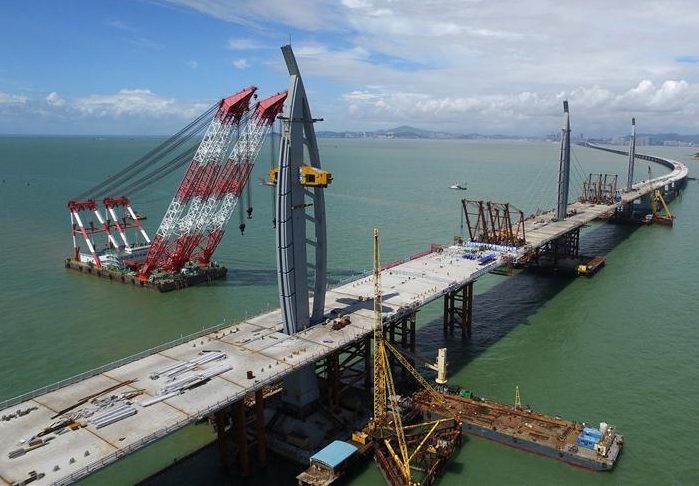
Hackers attack HK-Macau bridge project
In yet another failure at the HK$90 billion HK-Macau bridge project, it’s been revealed hackers attacked a server used by one of the contractors and locked up key files with ransomware.
Some of the files were destroyed in the attack, which took place at the site office of consultant engineers Arup Group in early March. The Arup team was working on the final bridge link to Scenic Hill on the south-east end of Chek Lap Kok island.
Staff discovered many files on the server could not be opened and received a ransom demand from hackers in order to open the files. The server had a large number of project-related material, including progress reports and blueprints that if stolen or destroyed could harm the progress of the project, Oriental Daily reported today.
The company feared that personal information belonging to a thousand employees who had worked on the project over the past five years, including their IDs and bank account details, had been compromised in the attack.
But the Highways Dept, which acknowledged the incident took place on March 2, said staff personal information had not been stored on the server.
After calling in police, the company was able to unlock a number of the ransomed files. A Highways Dept spokesperson confirmed that a number of files had been destroyed, but said no data had been leaked in the attack.
The department was unable to say how much the attack had cost the project. It said the hack did not hinder progress of the bridge construction, which was still on course to open by the end of the year.
The computer breach is the latest in a series of incidents that have plagued the seven-year-old project, that include delays, cost overruns, the deaths of nine workers and hundreds of injuries.
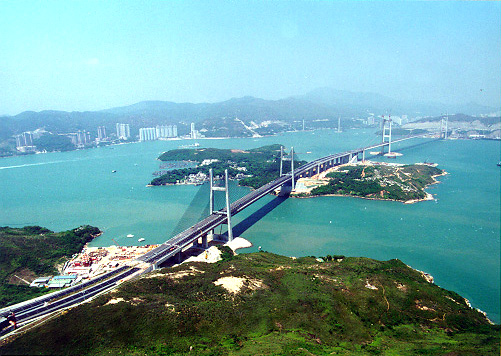
North Lantau freeway to charge toll both ways
The bad news is motorists will have to pay a toll in each direction on the Lantau Link freeway. The good news is it won’t cost any more.
The new rule will take effect on December 15, a result of the opening of the Hong Kong-Zhuhai-Macau bridge, also expected at the end of the year.
The current toll of $30 is in fact the two-way toll, but it is charged once once because virtually all traffic on the road is two-way.
That will change with the arrival of the bridge, which will allow drivers to head for destinations across the Pearl River.
However, it won’t change for taxis. To ensure they won’t be discouraged from airport pickups, they will still be permitted charge a HK$30 surcharge both ways.
Highways Dept accused of cover-up over seawall collapse, mud slick
Yet another engineering failure, resulting in a massive mud spill, has been revealed at the scandal-plagued Hong Kong Zhuhai Macau Bridge (HZMB).
The Highways Dept only yesterday acknowledged the collapse, at the southeast end of Chek Lap Kok, more than two years after the event.
Newspaper HK01 reported Monday that the failure released tonnes of mud into Tung Chung Bay, creating a brown slick. It published satellite photos from Google and the Lands Dept showing the discoloured water.
The paper and Civic Party law-makers have accused the Highways Dept of covering up the accident, the latest in a series of incidents in the HK$130 billion project. Continue reading
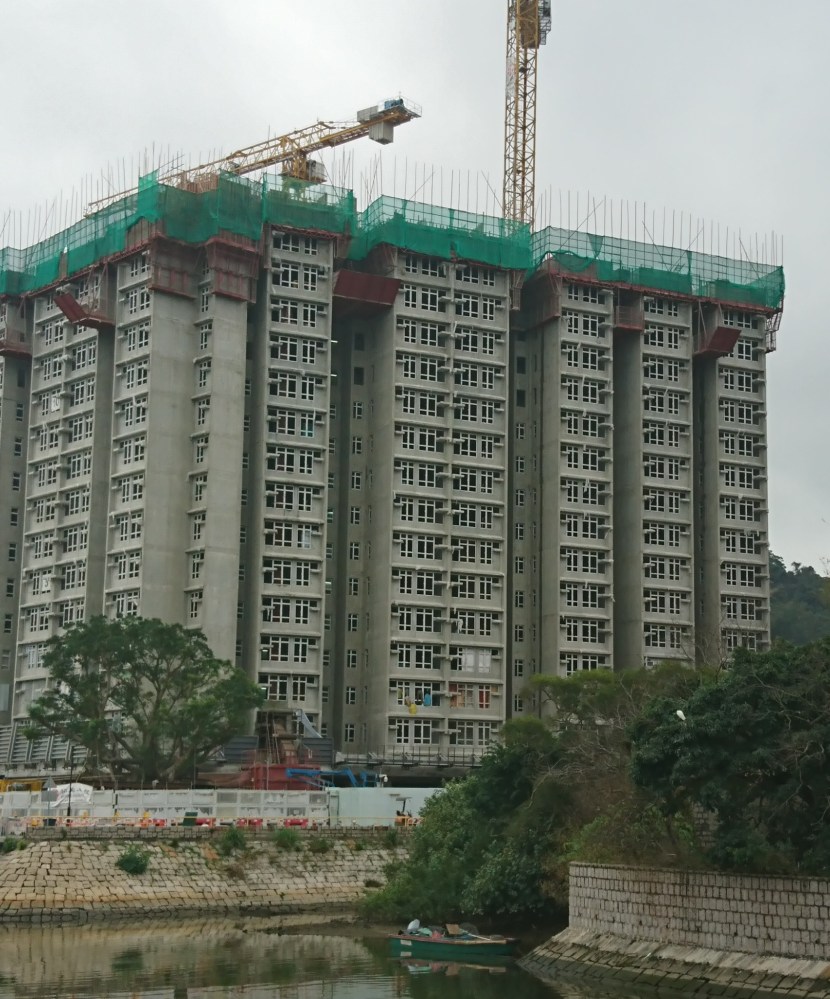
Mui Wo home prices set to soar, says CBRE
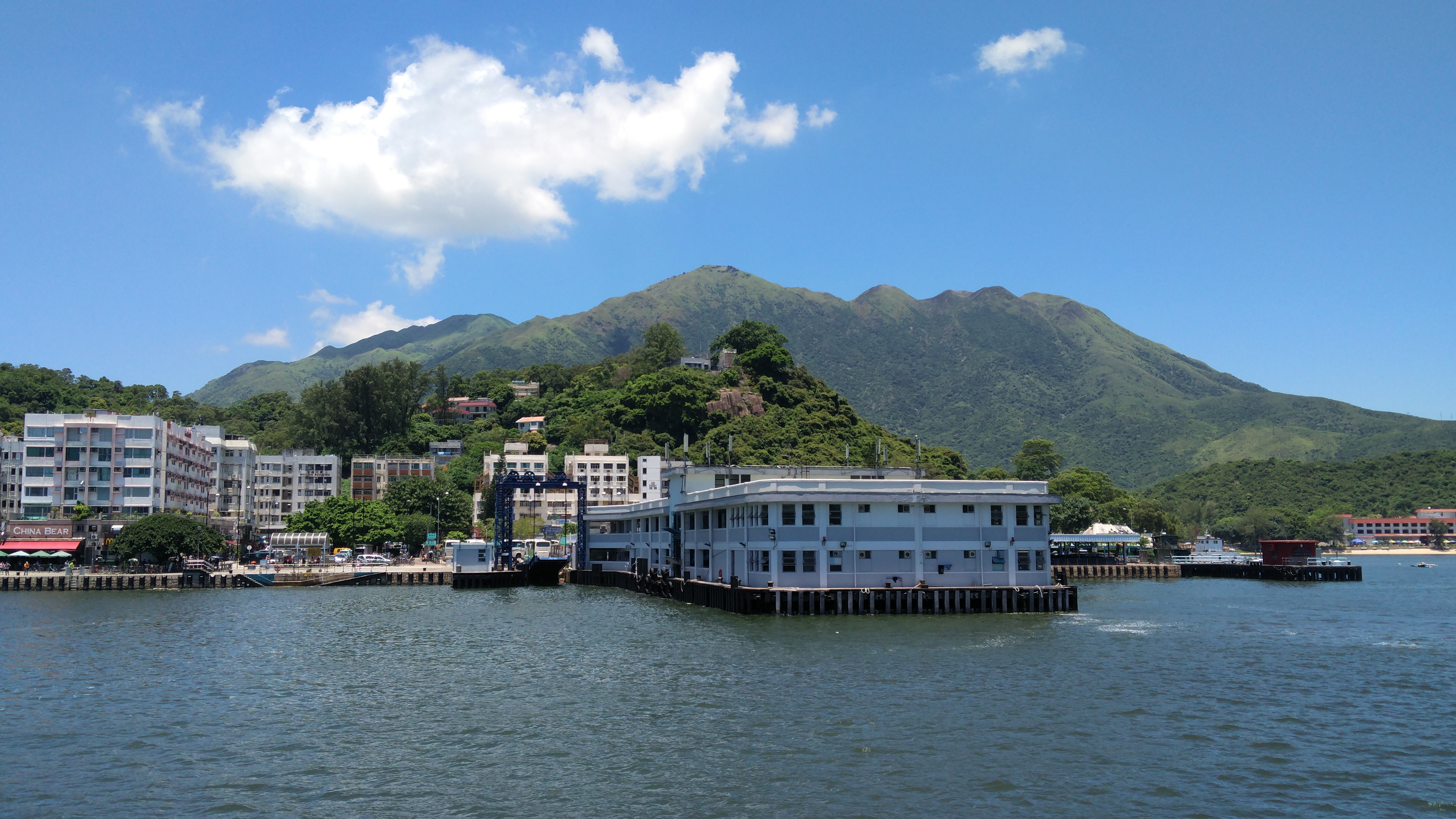
Mui Wo property prices are set to rise sharply, a senior Hong Kong real estate figure predicts.
Kam Hung-yu, a Hong Kong managing director at global estate giant CBRE and a former president of of the Hong Kong Institute of Surveyors, predicts a major hike in residential valuations.
Writing in the Economic Journal he says the Housing Authority will start selling its new Mui Wo apartments in August. Mui Wo prices currently are at around $7000-$8000 psf, but after subsidies this will fall to as low as HK$5000.
“Some Hong Kong people believe the location is not attractive because it is too far [from the city],” he wrote. But he says citizens who qualify for the HA ‘green form’ subsidy should genuinely consider it. “This most likely is a housing market with very strong potential to rise in value,” he wrote. Continue reading
Rethinking Lantau development

Highlights from submission to the Development Bureau (full submission here).
No Vision, No Data, No Conservation
The decision-making process on Lantau’s future appears to be explicitly designed to exclude community input. From day one LanDAC membership has been almost wholly drawn from the real estate, tourist and logistics industries, along with government political supporters and appointees. The public rightly doubts the genuineness of this ‘consultation.’
The government plan offers no vision for the island: what will it be like to visit, live or work in Lantau in 2026, 2036 or beyond? The report doesn’t say. At the same time it tries to micro-manage tourist development in ways that are counter-productive. Continue reading
 Lantau Confidential