
Tagged: country parks
Land task force chief urges caution on country park development
The chairman of the land supply task force has warned on the need to “proceed with caution” in building homes in country parks.
Speaking after the task force’s latest meeting, Stanley Wong said the idea needs to meet higher thresholds than existing statutory requirements, RTHK reported.
He said the government “had not formed a view on whether or how to develop country parks” and would “leave it to the public engagement” to see the level of support.
 However, despite Wong’s careful words, the task force has already mapped out the process in which country parks can be turned into housing:
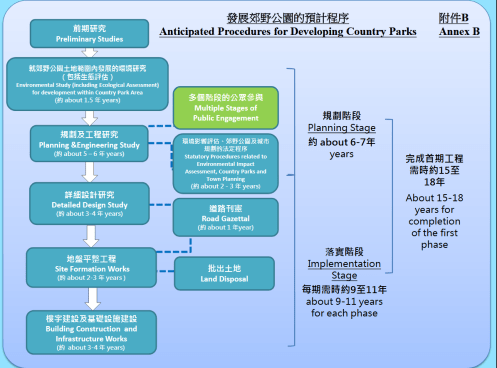
Source: Task Force on Land Supply
The previous Chief Executive, CY Leung, asked a non-profit developer, the Housing Society, to evaluate two possible park locations as possible sites for housing development. The Housing Society expects to make a preliminary report as early as Q2 2019.
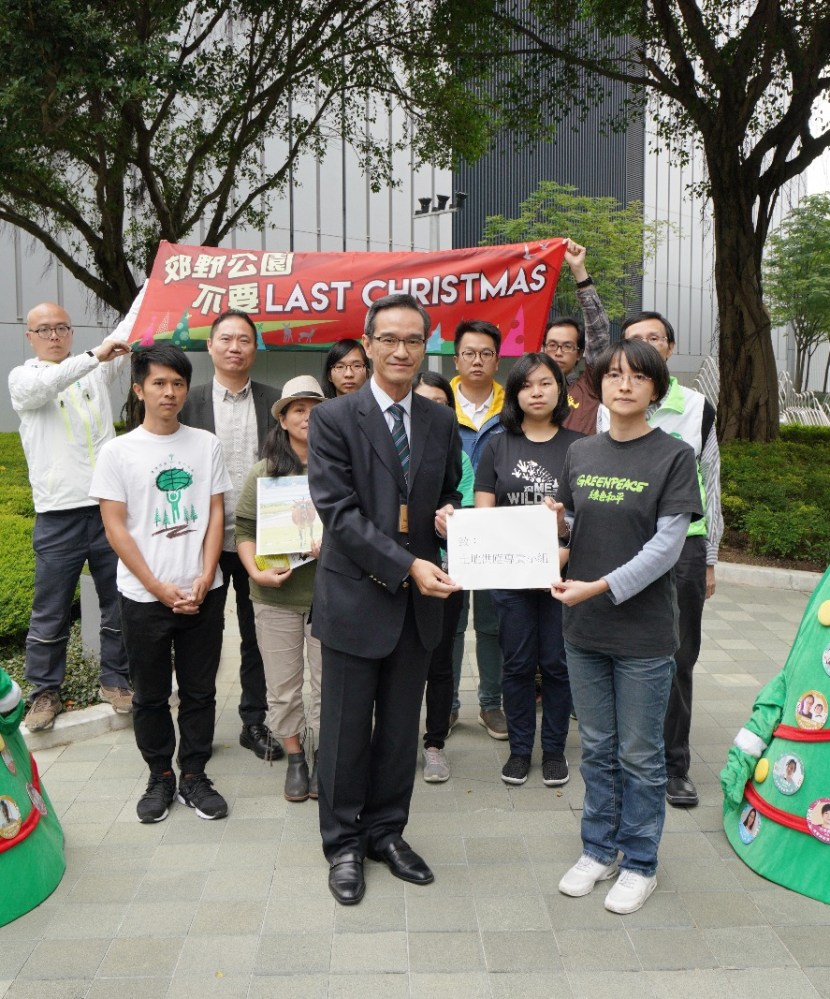
After the meeting, Wong accepted a petition from 14 local green groups, including Greenpeace, Designing Hong Kong, Trailwatch and LBA.
They said in a statement that the Country Parks Ordinance forbids development in the city’s parks, and called on the government to re-examine the use of idle land, brownfields land and land used by golf and other private clubs to meet housing needs.
One clear decision the task force seems to made is to have rejected a proposal to fill in Plover Cove Reservoir for housing.
A paper submitted to the group pointed out that as the site was “located at an area of relatively high ecological and conservation value and away from major transport infrastructures, it did not conform with” the city’s planning framework.
Photo: Stanley Wong meets green group representatives (Greenpeace Hong Kong)
We can build in country parks – if we protect them
The Leung government is going about its country park housing plan in exactly the wrong way.
It has already identified two sites and has hired a property developer with no known environmental expertise to evaluate them.
What are the chances that the Housing Society will conclude that the Tai Lam and Ma On Shan country parks are in fact unsuitable for development?
It’s a short-term salami-slicing approach with easy-to-predict consequences: after green-lighting those two sites, other locations will be found for ‘evaluation,’ then a few more and then more again. After a decade, fresh areas of country park adjacent to the developed sites will be designated as ‘low ecological value’ by virtue of the environmental destruction next door.
In a couple of decades, having exhausted the park boundary areas, government leaders and developers will lead us to understand that any development at any location in any country park is acceptable. Destruction of the country park system will be complete.
Instead of this contrived process that galvanises public opposition we could take a holistic approach to both housing and environmental protection.
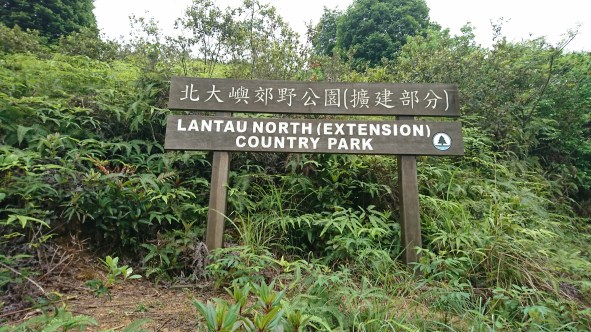
The background is that the country park system grew up in an ad hoc way in the 1970s, mostly comprising land too steep or rocky or remote for development. But it also left ecologically important sites outside the parks.
So let’s commission an independent expert panel – no government officials, no party hacks, no cronies – to identify the ‘low-ecological value’ sites on country park borders as well as the ecologically important sites not protected.
In doing so way we set markers for what is and isn’t ecologically important and build up a bank of land to for the years to come.
Once we’ve created the new park borders, let’s pass a law to guarantee they are inviolate for the next 50 years. And let’s protect those ecologically sensitive sites that can’t be added to parks by creating a body of law and a team of enforcement officers that will punish those who damage them.
We will lose some country park land, but extend protection to vulnerable sites. It shows a government willing to defend the city’s natural heritage while also making progress on housing and at the same time demonstrate an ability to collaborate with civil society.
It is the exact opposite to the current initiative. In delegating to the Housing Society Leung has made it clear he sees country parks as a storehouse of land for development, regardless of environmental impact or public expectation.
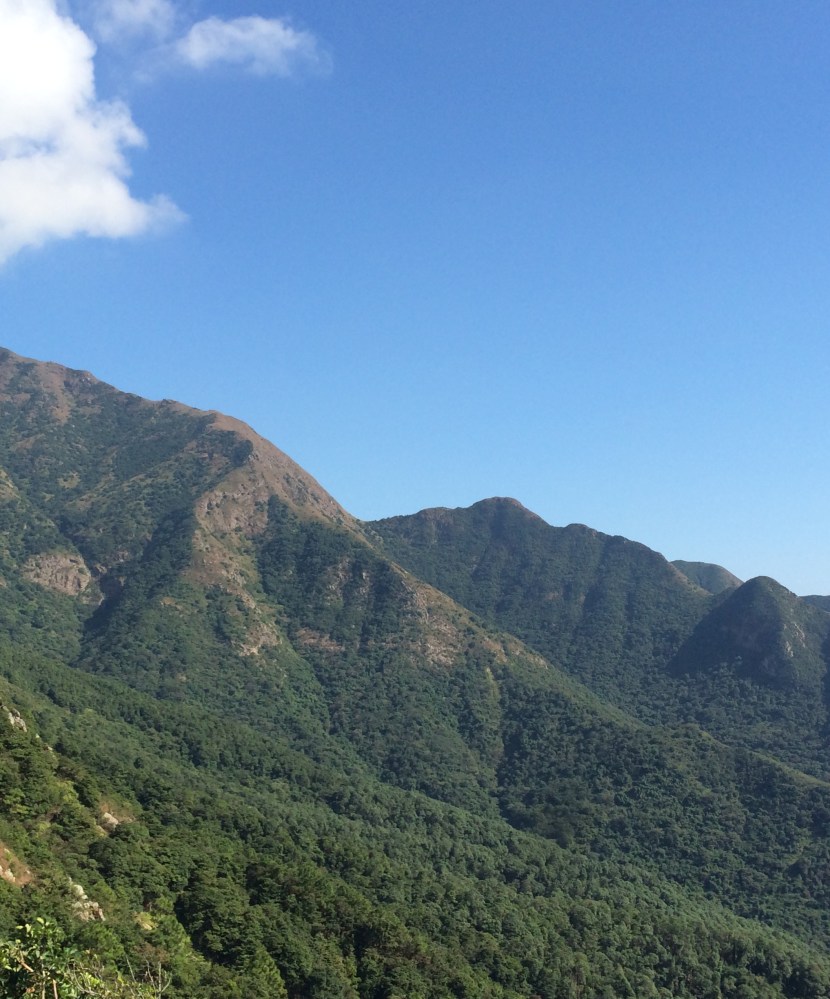
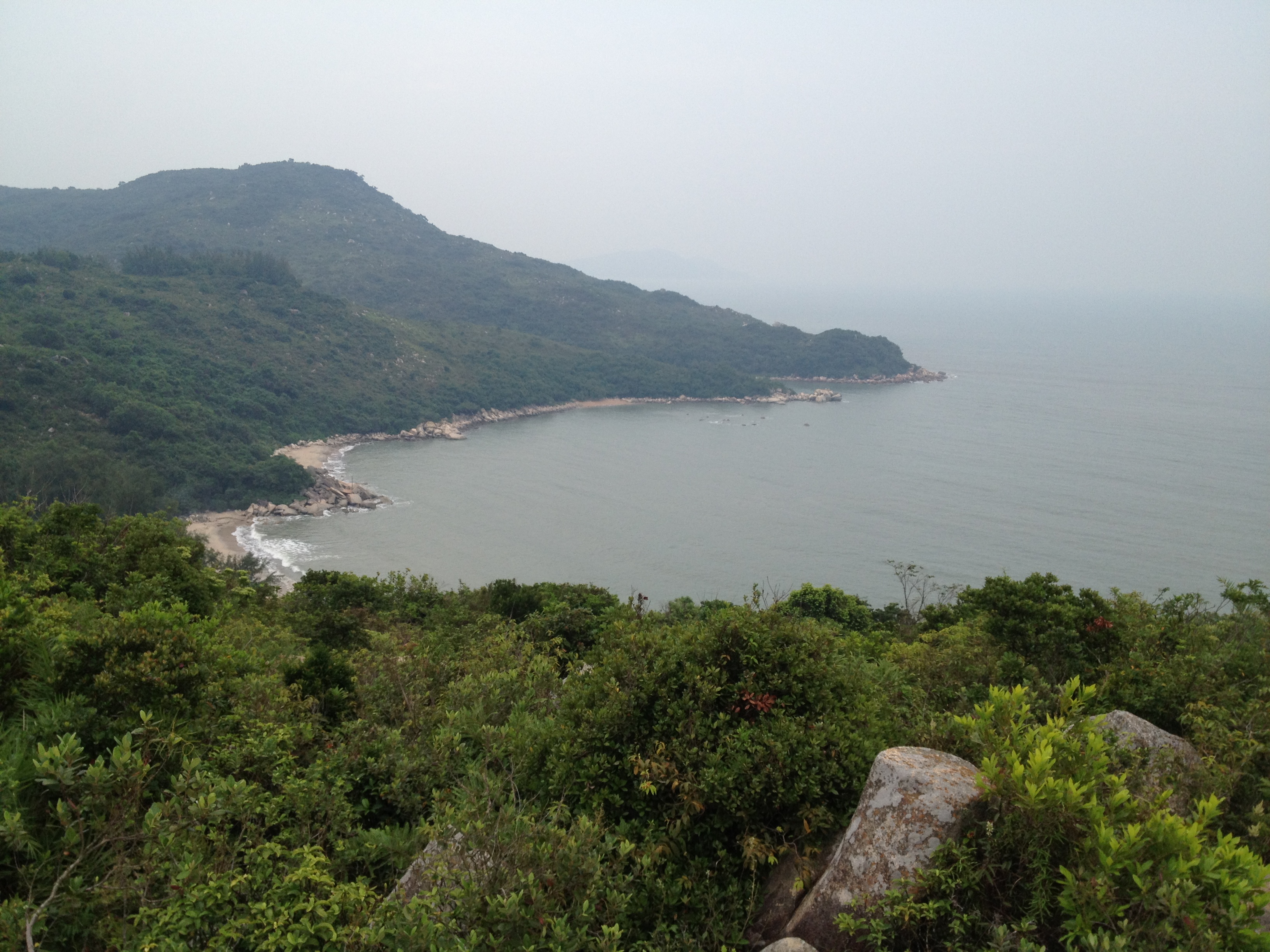
Fan Lau, Lantau South Country Park
This is an autocrat’s way of getting things done. It’s also another sign that we live in a construction state, primed to continually identify new development projects at public expense. The ‘Belt-Road’ scheme is the ultimate expression of this.
Lantau has been subject to these one after the other: the Macau Bridge, the Shek Kwu Chau incinerator and on the horizon, the East Lantau Metropolis.
During the Lantau development consultation last year government officials repeatedly assured citizens that south Lantau would remain a green zone protected by its country park status. We know now that that protection means nothing.
Park politics
Across the mainland, enthusiasm may have waned for Chairman Mao’s vision of turning cities into forests of smokestacks, but Hong Kong’s ambition to engorge the territory with concrete still burns bright.
In the past decade alone, monuments like the Stonecutters Bridge, the Guangzhou rail link, the Central-Wanchai bypass, and the Macau bridge have been built out of wads of taxpayer cash .
So when former Exco member Franklin Lam describes Lantau as the “ugly duckling” of Hong Kong, he is part of a grand tradition.
Treading the same cement path as Development Secretary Paul Chan, who opened up the topic five months ago, Lam has created a minor flap with his call for the “green development” of Lantau country parks. His remarks carry weight not just because any such suggestions feed the city’s concrete addiction. As a member of the just-created Lantau Development Advisory Committee he is in a position to do something about it.
(For those wondering, he is not cleverly trying to stoke support for artificial islands by making even those seem a better option than the trashing of country parks. Lam actually said that the marine environment is more valuable than the parks, though he didn’t say why, nor did he have anything to say about the all-but extinct pink dolphin.)
It’s not that we don’t need to have a debate about housing and land-use, or that there aren’t sections of country parks of minimal environmental value (usually as the result of deliberate abuse).
But here’s what Bill Talbot, who set up the country parks in 1965 and is now a World Bank and UN environment adviser, had to say to the Post in September:
“Experience worldwide shows that once development is allowed to invade parks and protected areas, the process continues and often accelerates. It is like the camel’s nose under the tent.”
That goes double in the deformed political economy of Hong Kong.
Hong Kongers are reminded of this daily in the current constitutional ‘consultation’, where advocates for the rich and powerful are queuing up to demand protections against the ravages of democracy. According to a SCMP reader poll in September, 70% of the population is opposed to country park development. But Lam and others know they don’t need wide public support. They just need to excise a few degraded corners of country parks, and from there the process will take care of itself.
 Lantau Confidential