
Category: Explainer
Explainer: Island District Council election 2019
If Hong Kong leaders were trying to avoid controversy ahead of the District Council election, banning Joshua Wong was maybe not the way to go about it.
The exclusion of the 23-year-old activist poll became a global news story – to the doubtless bemusement of anyone actually familiar with district councils.
They are elected bodies, yes, but they don’t perform any meaningful governance. They are a branch of the Home Affairs Bureau with no power to make decisions, pass laws or raise revenue, and no income other than government grants.
Historically, they grew out of the neighbourhood support groups known as kaifong associations (街坊會) that the British formed back in 1949 (this wikipedia entry traces their history).
The district councils were created as a bridge between the unelected government and the governed, and that is pretty much their role today.
Today the councils are dominated by the DAB and other pro-government parties including the rural umbrella body Heung Yee Kuk.
The Joshua Wong kerfuffle shows that, amid the worst political violence in 50 years, even the once-sedate District Council has become a political battleground.
With government support plumbing new depths over its inept handling of the protests, democrat forces are expected to perform strongly.
A hill to climb for democrats
But they have a hill to climb. Of the current 458 members in 18 District Councils, 327 are pro-government.
The gap is even more pronounced in the Islands District Council, where 16 out of 18 members are pro-government.
The Islands numbers are further distorted by the presence of eight ex officio members – rural committee chiefs who are automatically appointed. Our humble local body accounts for almost a third of the total number of ex officio councillors.
Though their influence has dimmed in the rest of the city they remain quite influential in the Islands council.
Case in point was the flap over the possible addition of an extra elected council seat.
Currently the Lantau electorate covers all of Lantau south and west of Tung Chung, including Shek Kwu Chau and the Sokos. It’s the largest electoral district of any kind in Hong Kong.
Many if not most elected council members agree it should be split in two because of its physical size.
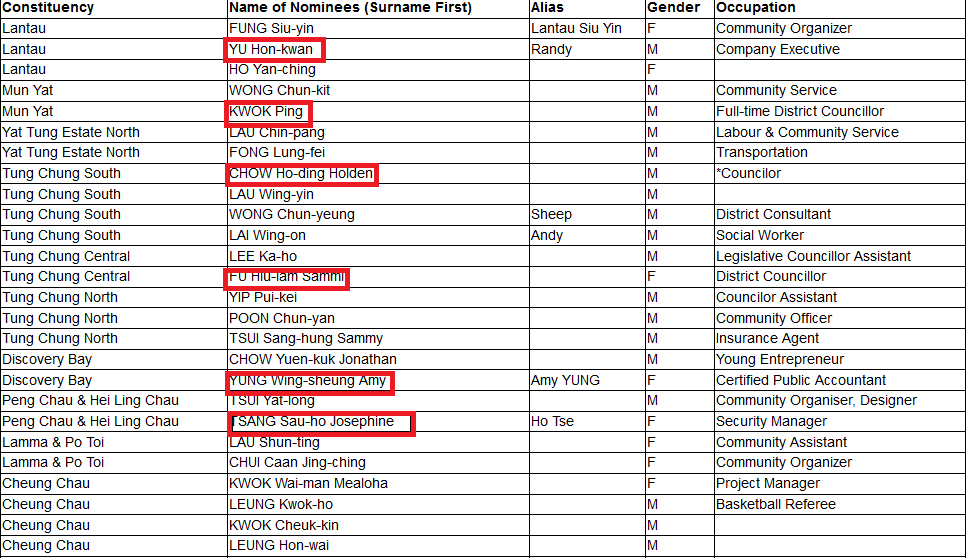
But Amy Yung, the Civic Party representative, complained that the current Islands chairman, Chow Yuk-tong, an ex officio appointee from Lamma, merely consulted with fellow rural chieftains in deciding not to add a new seat.
In a statement to the council in February 2018, she pointed out that while the rural appointees may not feel any impact, any decision made on a new electorate could have “far-reaching” consequences for elected members.
While the number of seats remains the same, there has been a slight restructuring for the 2019 poll; the seat of Yat Tung South has been abolished and replaced by Mun Yat.
From taxis to trash
For all their limitations, the district councils are important in several ways.
First, as a sounding board for the government. Notoriously, Carrie Lam did not test her unpopular extradition bill at any district council. Her government did put the Lantau Tomorrow Vision to a vote, however.
Second, it’s the only place where local issues are raised and dealt with. Concerns are aired and government bureaucrats are grilled on problems from taxis to trash.
Third, they are a handy source of information. The mostly bilingual pages of the Islands District Council provide records of council meetings as well as standing committees on topics such as Traffic and Transport and Tourism Agriculture Fisheries and Environmental Hygiene. The site has plenty of government papers on the nitty gritty of local services.
Fourth, the councils have an influence on the city’s politics beyond their regular remit of streetlights and bus services.
Between them the 479 members will get to choose 60 members of the chief executive election committee. One of the councillors also has the chance to be elected to a Legco ‘super-seat.’
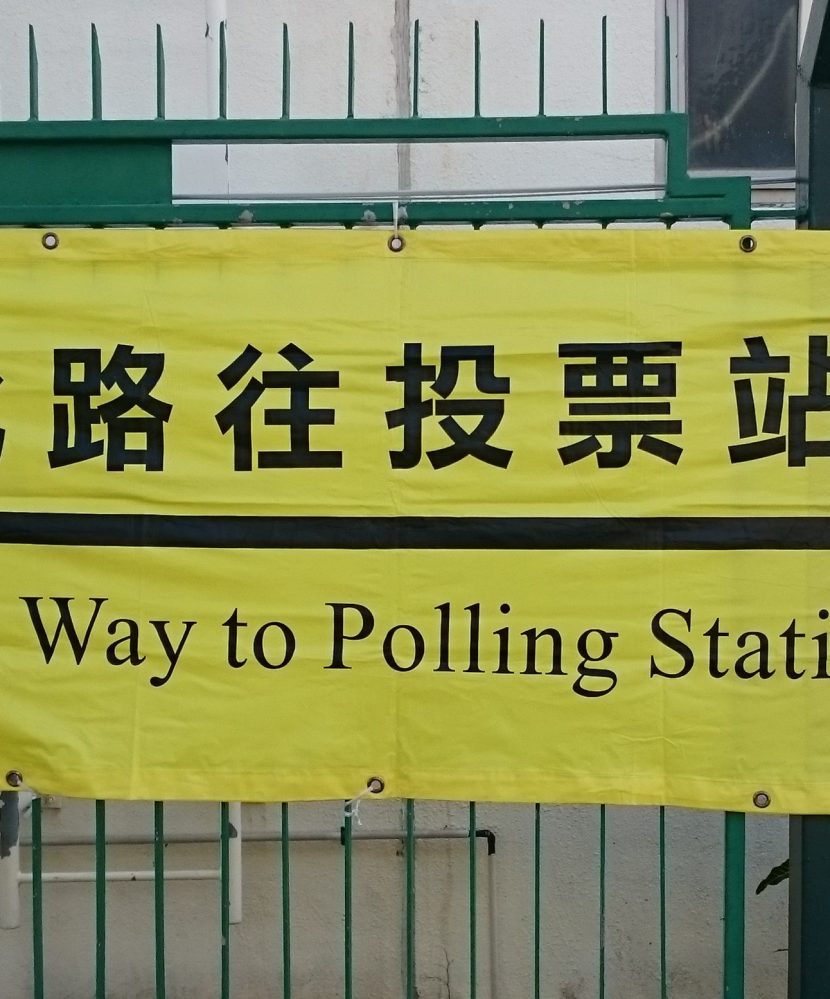
So, in this impassioned political season, there are plenty of reasons for you to get along to the polling booth on November 24.
(EXPLAINER) The by-election and Lantau
Q: What did we learn from the Sunday by-election?
It’s been widely interpreted as a defeat for the pan-Democrats – not least by the democrats themselves, who yesterday publicly apologised to supporters.
They won two of the four seats being contested and remain short of the one-third needed to veto key bills.
Q: So what happened?
For one, it seems the democrat candidates focused too much on ‘DQ’ – the disqualification of legislators that led to the by-elections in the first place. Voters may have been sympathetic but were also looking for a positive reason to vote for the dems.
Edward Yiu, the candidate for Kowloon West, has said he miscalculated by not doing enough door knocking in the housing estates. His campaign was run by Eddie Chu, who triumphed in New Territories West (which includes Lantau) in 2016. But his rural tactics may not have been suitable for the urban areas.
The dems were likely affected by the smaller voter turnout – their vote in the three geographical seats was down ten points or so. It may be voter fatigue, or it may be that localists declined to support moderates like Yiu. The reviews are still underway.
Q: How does this matter for Lantau?
None of the four constituencies directly involved Lantau, but apart from the setback for democratic forces, the result impacts here in a number of ways.
One small point to note is that Bill Tang, who represents Yat Tung North in the Islands District Council, failed in his attempt to win a New Territories East seat. An official with the pro-government HKFTU, he had held the Legco labour functional constituency seat from 2012-16 (no, it’s not clear how someone from Tung Chung gets to stand in NT East.)
More significantly, Lantau will not benefit from the advocacy of Edward Yiu and another candidate Paul Zimmerman, who ran unsuccessfully for the architectural constituency. Both are informed and committed on Lantau development and conservation issues. Zimmerman, for example, has called for changes in the Waste Disposal Ordinance – the law that allows landowners to dump landfill on their wetland plots with the guaranteed approval of the EPD.
Q: What happens next?
For Lantau, the biggest thing on the Legco calendar – quite possibly later this year – will be the request to fund a feasibility study into the East Lantau Metropolis (ELM).
Note this is not a study to examine its economic or financial viability. It will examine the best way to build the ELM, not to question any assumptions.
If approved it will be the first of many requests to tip taxpayer cash into the biggest project in Hong Kong’s history.
The feasibility study too is a record-breaker. The government was seeking approximately HK$250 million before it withdrew the bill after getting caught up in democrat filibustering last year.
Thanks to the DQs and last Sunday’s by-elections, there won’t be any more filibustering.
Mui Wo’s coming population boom
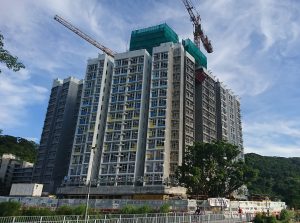
Around this time next year Mui Wo’s population will undergo a sharp expansion with the completion of two new public housing projects.
The new estates, Ngan Ho Court and Ngan Wai Court, will provide 700 new apartments, enough to support approximately 2000 new residents. That means the current Mui Wo population of around 5,500 will increase by 35% or more.
The bigger of the two will be Ngan Ho Court, at the end of Ngan Kwong Wan Road. It comprises two blocks, one 18 and the other 16 storeys, altogether containing 529 apartments.
Ngan Wai Court, which faces the rear of the Mui Wo clinic on Ngan Kwong Wan Rd, is a single 16-storey block with 170 homes.
Q: Why Mui Wo?
The Hong Kong government has built subsidised public housing since the 1950s. Today, 46% of the population lives either in public rental or subsidised sale flats. These new apartments are built under the Home Ownership Scheme (HOS), one of several different programmes aimed at increasing the supply of affordable housing. Dozens of HOS estates provide housing for hundreds of thousands of people, including in Yu Tung, Tung Chung, and Lung Hin, Tai O.
Q: Why this part of Mui Wo?
Most land in Mui Wo belongs to indigenous villagers whose privileges are enshrined in the Basic Law. Ngan Ho is officially zoned in Mui Wo Fringe, while Ngan Wai falls into no zoning plan at all. No indigenous villager in Mui Wo is giving up any of his entitlements to alleviate the housing crisis.
Q: When will people start moving in?
According to the builders, both housing estates will be completed by August 31 2018. New residents will start moving in after the date.
Ngan Ho Court
Q: Are these units to be rented or for sale?
For sale. The sale is carried out by ballot and according to certain eligibility criteria.
Q: These aren’t the first public housing projects in Mui Wo, right?
They’re not even the first on Ngan Kwong Wan Rd. The Ngan Wan Estate, built in 1988, has 400 rental apartments in four tower blocks, with a population capped at 1,300.
Q: That’s a lot of extra people moving in. Can our transport services cope?
We don’t know. The New Lantao Bus Company is considering running double-decker buses to Mui Wo. It says details of its preparations will be contained in a five-year plan for the Transport Department.
New World First Ferry said, in response to a query from Bob Bunker of Living Islands Movement:
“We are collecting the data from related governmental departments in order for us to review and devise the overall sailing arrangements in the following years. Please be assured that we will closely monitor the change of passenger demand and provide appropriate sailing arrangements.”
We will post the Transport Department’s reply when it arrives.
 Lantau Confidential